Source AC Capacitor for Air Conditioner, Motor, and Power Systems
Compare 30 AC Capacitor options from verified suppliers with varying capacitance, voltage, and certifications. Buyers can evaluate fixed and polypropylene types suitable for air conditioners, motors, and power applications.
Key considerations
Products List


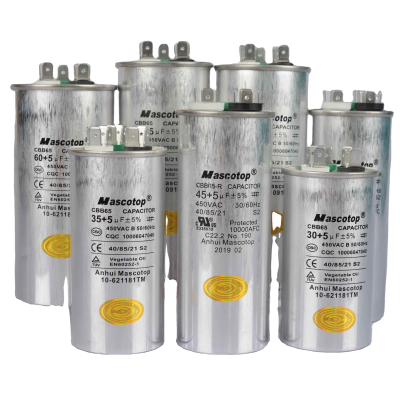

AC Motor Capacitor Air Conditioner Compressor Start Capacitor Air Conditioner Capacitor
$1050.00 - $3500.00
MOQ: 1 Sets


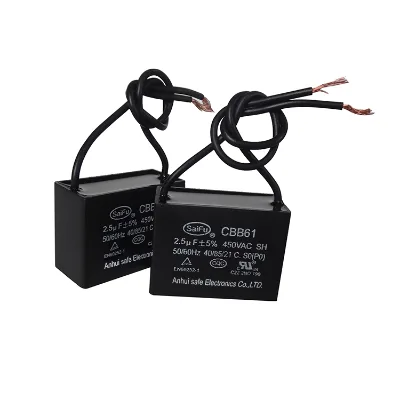
Comprehensive Sourcing Guide
Strategic Sourcing Guide for AC Capacitor Procurement
Navigating the global market for AC capacitors requires a disciplined approach that balances technical compatibility with rigorous supplier verification. The core keyword "AC Capacitor" encompasses a diverse range of components designed for specific motor applications, particularly within the HVAC and industrial power sectors. Buyers must distinguish between fixed capacitors, variable tuning units, and specialized polypropylene or aluminum electrolytic variants. This guide synthesizes observed market data to provide a framework for evaluating product attributes, compliance standards, and cost structures without relying on unverified supplier claims.
Technical Specifications and Component Architecture
The technical landscape of AC capacitors is defined by a complex interplay of capacitance values, structural designs, and dielectric materials. Based on observed product data, the market offers a wide spectrum of capacitance ratings, ranging from 1 microfarad (uF) to 100 uF. Specific models frequently appear with values such as 1uF, 7.5uF, 17.5uF, and 30uF, indicating that procurement strategies must be highly specific to the motor requirements of the end application. The structure of these components varies significantly; while some are identified as fixed capacitors, others are categorized under "padder" structures, suggesting different mounting or tuning mechanisms.
Material composition is a critical differentiator. The primary manufacturing material observed is polypropylene, which is essential for high-frequency coupling and general AC motor applications. However, the data also references aluminum electrolytic capacitors and liquid tantalum variants, though the latter are often associated with filtering rather than standard motor run applications. The dielectric medium is frequently noted as "air medium," which influences the thermal and electrical stability of the unit. Buyers must verify the specific dielectric type against their circuit design, as polypropylene capacitors generally offer superior self-healing properties compared to other dielectrics in high-voltage AC environments.
Voltage ratings are another variable that requires careful attention. While some listings specify a fixed 3V, a significant portion of the market offers voltage ratings "according to your requested" specifications. This flexibility is common in B2B procurement but necessitates a clear definition of the operating voltage during the inquiry phase to ensure the component can withstand the peak voltage of the AC supply without breakdown.
Compliance Standards and Certification Verification
In the global supply chain, adherence to international standards is non-negotiable for AC capacitors, particularly those used in air conditioning and motor applications. The observed market data highlights a cluster of certifications that buyers should prioritize. Products are frequently listed with CE, CQC, RoHS, and ISO certifications. The presence of UL certification is also noted as a high-confidence fact for specific models, indicating compliance with North American safety standards. Additionally, some listings reference ISOCE, which may imply a combination of ISO and CE compliance, though buyers should verify the exact scope of this designation.
It is crucial to distinguish between product-specific certifications and general corporate standards. While ISO 9001 and ISO 14001 are mentioned in background contexts, they represent management system standards rather than product safety approvals. Buyers should focus on the product-level certifications such as UL, CE, and RoHS, which directly attest to the safety and environmental compliance of the capacitor itself. The standard "383829" observed in the data likely refers to physical dimensions rather than a regulatory standard, and should be treated as a dimensional specification rather than a compliance mark.
Cost Drivers and Pricing Dynamics
The pricing structure for AC capacitors is influenced by a combination of material costs, production volume, and customization requirements. The observed price range in the market is extensive, spanning from $0.05 to $3,500. This vast disparity suggests that the market includes both low-cost, high-volume commodity components and specialized, high-voltage, or custom-engineered units. The "cheap" price attribute observed in some listings often correlates with high-volume orders and standard specifications, whereas "top ranking" quality labels may command a premium.
Minimum Order Quantity (MOQ) is a significant factor in the total cost of ownership. Data indicates an MOQ range from 1 to 500 units, with specific listings showing thresholds of 100 or 50 pieces. This variability allows buyers to source small batches for prototyping or large volumes for production. The "free samples" attribute is a common market feature, enabling buyers to validate technical specifications before committing to a larger order. However, the cost of shipping and the potential for sample fees in international trade should be factored into the initial budget.
Typical Applications and Usage Scenarios
AC capacitors are predominantly utilized in motor-driven systems, with a heavy concentration on air conditioning units, fans, and general power applications. The observed application data explicitly lists "Air Conditioner," "AC / Motor," "Power," and "Fan" as primary use cases. Specific models are designed for universal applications, supporting modes such as Auto, Cool, Dry, Fan, and Heat. The transmission distance and cooling methods, such as indirect cooling, are also relevant parameters for specific HVAC configurations.
The usage profile of the capacitor determines its required performance characteristics. For instance, polypropylene capacitors are highlighted for "high frequency coupling," while other variants are suited for "low frequency coupling." This distinction is vital for ensuring the capacitor can handle the specific harmonic content and switching frequencies of the motor drive system. The "padder" structure and "mechanical" control types observed in the data suggest applications where manual adjustment or specific mechanical mounting is required, often found in older or specialized industrial motor setups.
Supplier Evaluation and Sourcing Criteria
When evaluating potential suppliers, buyers must look beyond the marketing claims and focus on verifiable operational data. The origin of the products is a key indicator, with "China" and specifically "Ningbo Zhejiang China" cited as primary manufacturing locations. This regional concentration often implies a mature supply chain for electronic components but requires due diligence regarding export compliance and logistics.
Packaging is another critical evaluation point. The data shows a mix of "Surface Mount" packaging types and "Standard Export Packing" or "Carton" formats. For surface mount devices, the packaging must ensure protection against static discharge and physical damage during transit. For bulk orders, the robustness of the carton packaging is essential to prevent moisture ingress, which can degrade the performance of polypropylene and electrolytic capacitors.
Buyers should also assess the supplier's ability to handle customization. The availability of "Customization" is a high-confidence fact, allowing for tailored capacitance, voltage, and dimensional requirements. However, the extent of this customization and the associated lead times must be clarified. The "Universal" attribute suggests some products are designed for broad compatibility, reducing the need for custom engineering, but specific motor applications often demand precise matching.
Quality Control and Long-Term Procurement
Quality assurance in the AC Capacitor market is multifaceted, involving material integrity, dimensional consistency, and electrical performance. The observed quality attributes range from "Good" to "High" and "Top Ranking." While these terms are subjective, they should be backed by the supplier's quality control protocols and adherence to the listed standards like CE, CQC, and RoHS. The "High Quality Standar" (likely referring to high quality standards) implies a commitment to rigorous testing, which is essential for components that operate continuously in high-stress environments like air conditioning compressors.
Long-term procurement considerations include the stability of the supply chain and the consistency of product performance. The "Standard Export Packing" and "Carton" options suggest a focus on logistics efficiency, but buyers must ensure that the packaging maintains the integrity of the capacitors over long storage periods. Moisture and temperature control during storage are critical, as they can affect the dielectric properties of polypropylene and the electrolyte in aluminum capacitors.
Furthermore, the "Free Samples" availability serves as a low-risk method to validate quality before scaling. Buyers should utilize this opportunity to perform independent testing on capacitance, voltage withstand, and leakage current. The "Mechanical" control type and "Universal" nature of some products also suggest that long-term maintenance and replacement should be straightforward, reducing downtime in critical applications.
Comparative Analysis of Product Attributes
To facilitate decision-making, the following table summarizes the key attributes observed in the market, highlighting the variations buyers must navigate.
| Attribute Category | Observed Variations | Procurement Consideration |
|---|---|---|
| Capacitance | 1uF, 7.5uF, 17.5uF, 30uF, 1-50uF, 50-100uF | Match exactly to motor requirements; avoid generic substitutions. |
| Material | Polypropylene, Plastic, Aluminum Electrolytic | Polypropylene preferred for AC motor run applications; verify dielectric. |
| Structure | Fixed Capacitor, Padder | Ensure mechanical compatibility with mounting points. |
| Certification | CE, CQC, RoHS, ISO, UL, ISOCE | Verify specific certifications for target market (e.g., UL for North America). |
| MOQ | 1, 50, 100, up to 500 | Align order volume with inventory needs and cash flow. |
| Origin | China, Ningbo Zhejiang | Consider logistics costs and lead times from this region. |
| Application | Air Conditioner, Fan, Power, AC / Motor | Confirm specific motor type (compressor, blower, etc.). |
| Voltage | 3V, Custom/Requested | Do not assume standard voltage; request specific rating for safety. |
Final Procurement Recommendations
Sourcing AC capacitors effectively requires a balance of technical precision and supply chain vigilance. Buyers should prioritize suppliers who can demonstrate clear adherence to the observed standards (CE, RoHS, UL) and offer transparent customization options. The wide range of capacitance values and material types means that a "one-size-fits-all" approach is rarely viable. Instead, procurement strategies should be tailored to the specific application, whether it is a standard air conditioning unit or a specialized industrial motor.
By focusing on verifiable data points such as material composition, certification status, and dimensional specifications, buyers can mitigate the risks associated with unverified claims. The availability of free samples and flexible MOQs provides a strategic advantage for validating product quality before committing to large-scale orders. Ultimately, the goal is to secure a reliable supply of high-quality capacitors that ensure the efficient and safe operation of AC motor systems, leveraging the robust manufacturing capabilities observed in the Ningbo Zhejiang region while maintaining strict quality control protocols.
FAQs
What certifications do ac capacitors typically have?
Products frequently carry CE, CQC, RoHS, and ISO certifications. Some models also include UL certification for North American safety compliance, ensuring adherence to strict regulatory standards for motor applications.
Which capacitance values are available for AC Capacitor models?
Available values range from 1uF to 100uF, with specific models like 1uF, 7.5uF, 17.5uF, and 30uF commonly listed. Buyers must match these exact ratings to their specific motor requirements to ensure proper operation.
Can I request custom voltage ratings for ac capacitors?
Yes, many suppliers offer voltage ratings according to your requested specifications. This flexibility allows for tailored solutions, but you must clearly define the operating voltage to ensure the component withstands peak AC supply levels.
What is the minimum order quantity for ac capacitors?
Minimum order quantities vary from 1 to 500 units, with specific listings showing thresholds of 50 or 100 pieces. This range supports both small prototyping batches and large-scale production volume procurement needs.
How are ac capacitors packaged for export?
Packaging options include surface mount types, standard export packing, and cartons. Proper packaging is essential to protect components against moisture and physical damage during transit, especially for polypropylene and electrolytic variants.
Where are ac capacitors typically manufactured?
Products originate primarily from China, with specific manufacturing hubs in Ningbo, Zhejiang. This regional concentration indicates a mature supply chain, though buyers should verify logistics and export compliance for these locations.