Source AC Motor Warehouse Electric Forklift for Logistics, Warehousing, and Cold Storage
Compare 30 AC Motor Warehouse Electric Forklift options with varying lift heights, battery capacities, and load capacities. These units feature AC motors and are designed for industrial, logistics, and cold storage applications.
Key considerations
Products List


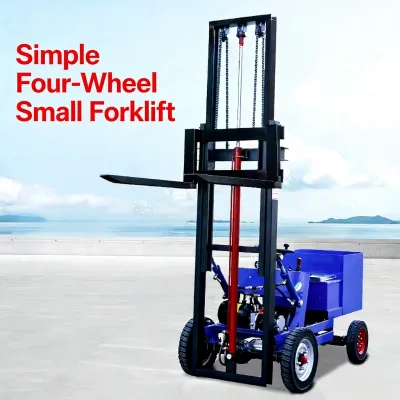
Energy Efficient Electric Forklift for Multi-Zone Warehouse Facilities
$12000.00 - $17333.00
MOQ: 1 Pieces




Comprehensive Sourcing Guide
Strategic Sourcing Guide for AC Motor Warehouse Electric Forklifts
The global shift toward electrification in material handling has made the AC Motor Warehouse Electric Forklift a cornerstone of modern logistics operations. For procurement professionals, identifying the right unit requires a disciplined approach that distinguishes between verified product attributes and general market expectations. This guide synthesizes observed data points and industry standards to provide a framework for evaluating electric forklifts, specifically those utilizing alternating current (AC) drive systems designed for indoor and warehouse environments. The focus remains on technical precision, compliance verification, and total cost of ownership rather than speculative marketing claims.
Technical Architecture and Drive System Specifications
The defining characteristic of the modern warehouse forklift is its propulsion system. The core keyword "AC motor" refers to the use of alternating current in the drive and hydraulic pumps, offering significant advantages over direct current (DC) systems in terms of maintenance and efficiency. Based on observed product data, these units frequently feature brushless AC motors with power ratings such as 7.5 kW. This specific configuration is critical for maintaining consistent torque throughout the discharge cycle, ensuring that lifting and travel speeds remain stable even as the battery depletes.
When evaluating the technical specifications, buyers must scrutinize the battery configuration and voltage requirements. The supply chain data indicates a wide range of battery capacities, including options like 76.8V paired with amp-hour ratings ranging from 150Ah to 410Ah. Some configurations utilize specific battery types, such as Lithium-ion, while others may offer Lead-Acid as an optional alternative. The voltage requirements can vary significantly; for instance, certain heavy-duty models operate on 240V systems, while others rely on high-voltage packs. Procurement teams must verify that the facility's charging infrastructure aligns with the specific voltage and capacity requirements of the selected model to avoid costly retrofitting.
The physical dimensions and load handling capabilities are equally critical. Observed models demonstrate a load center of 500mm, which is the standard distance from the fork face to the center of gravity for a standard pallet. The lifting height is a variable specification, with observed ranges spanning from 3000mm to over 5000mm, and specific models reaching heights greater than 5000mm. The turning radius is another key performance metric; data suggests a range from approximately 1550mm to 2300mm depending on the design. A tighter turning radius, such as the 1550mm observed in certain three-point design models, is essential for maximizing storage density in narrow-aisle warehouses.
Load Capacity and Operational Design
The structural integrity and design philosophy of the forklift determine its suitability for specific industrial applications. The market data reveals a standard load capacity range of 1.5 to 3.8 tons, with specific models designated for 1.5 to 3.5 tons or 1.6 to 2.0 tons. The "CPD" series models, such as CPD25, CPD30, and CPD35, represent common designations for electric counterbalanced forklifts with capacities of 2.5, 3.0, and 3.5 tons respectively. The maximum lifting weight for a 3.0-ton model is explicitly listed as 3000 kg, confirming the direct correlation between model designation and capacity.
Design variations play a pivotal role in operational flexibility. While the majority of warehouse units utilize a counterbalanced design to allow for loading from the front without outriggers, some specialized applications may feature a three-point design. The cab location is another variable; while some units feature a non-adjustable cab, others offer adjustable configurations to accommodate operators of different heights or specific safety requirements. The body length, excluding forks, typically ranges from 1850mm to 2500mm, influencing the overall footprint and maneuverability within tight aisles.
The steering method is another technical differentiator. Hydraulic power steering is a standard feature in many of these units, providing the operator with precise control during heavy lifting and high-speed travel. The rear-wheel specifications, such as the 400-8 tire size, are often selected for their durability and traction on smooth concrete surfaces typical of warehouse floors. Additionally, the bodywork construction, including C-shape steel door frames and chain hoist mechanisms, ensures the structural rigidity required for repeated lifting cycles.
Compliance, Certification, and Safety Standards
Navigating the regulatory landscape is a fundamental aspect of B2B procurement. While specific certification statuses like CE are noted in background data, buyers must treat these as observations rather than universal guarantees for every listed product. The primary responsibility lies in verifying that the equipment meets the safety standards of the destination country and the specific requirements of the workplace.
The product standards observed in the supply data, such as those covering 1.5-3.8 tons or 1.5T-3.5T, indicate that manufacturers adhere to load capacity classifications. However, these are internal or regional classifications and do not automatically equate to international safety certifications. Buyers should request third-party test reports and compliance documentation for the specific serial number of the unit being purchased. This verification process is essential to ensure that the forklift's braking systems, emergency stop functions, and stability features meet local occupational health and safety regulations.
Furthermore, the "Export-Standard Package" mentioned in product attributes suggests that the units are prepared for international shipping, which often includes specific packaging requirements to prevent damage during transit. However, this does not replace the need for a formal safety audit upon arrival. The waterproof feature observed in certain models is a significant asset for facilities that may experience moisture or require cleaning with water, but this claim must be validated against the specific IP rating required by the facility's hygiene protocols.
Cost Drivers and Financial Considerations
The total cost of ownership (TCO) for an AC motor electric forklift extends far beyond the initial purchase price. The observed price range of $599 to $21,333 USD highlights the vast disparity in costs based on capacity, battery technology, and feature sets. The lower end of this spectrum likely corresponds to smaller capacity units or those with basic configurations, while the higher end reflects heavy-duty models with advanced lithium batteries and extended lift heights.
Battery technology is a primary cost driver. Lithium-ion batteries, while offering longer lifespans and faster charging times, typically carry a higher upfront cost compared to lead-acid alternatives. The data indicates that battery configurations can vary from 10 pcs of 260Ah batteries to high-capacity lithium packs. Procurement teams must calculate the long-term savings from reduced maintenance and energy efficiency against the initial capital expenditure. Additionally, the weight of the unit, ranging from 4000kg to 4400kg, impacts shipping costs and may require specialized handling equipment at the destination.
The Minimum Order Quantity (MOQ) is another financial factor, with observed ranges between 1 and 20 units. Purchasing a single unit may incur higher per-unit costs compared to bulk orders, but it offers flexibility for pilot programs or small-scale operations. Buyers should also consider the cost of spare parts and the availability of service networks, as these ongoing expenses significantly influence the long-term viability of the investment.
Supplier Evaluation and Quality Assurance
Selecting a reliable supplier is critical for ensuring product quality and after-sales support. The supply data indicates that the place of origin for these units is primarily China, with specific mentions of Anhui province. While this provides a geographical context, it does not constitute a recommendation for any specific manufacturer. Buyers must conduct rigorous due diligence on potential suppliers, focusing on their manufacturing capabilities, quality control processes, and track record in the industry.
Quality control should be a central component of the procurement strategy. Buyers should verify that the supplier adheres to consistent manufacturing standards and provides detailed inspection reports for each unit. The "New" condition of the products is a standard expectation, but buyers must ensure that the units are factory-fresh and have not been previously used or refurbished without disclosure. The feature of "stable performance" is a common claim, but it must be substantiated by performance data and warranty terms.
Supplier evaluation should also include an assessment of their customization capabilities. The data confirms that customization is available, allowing buyers to tailor the forklift to specific operational needs, such as adjusting the cab location or selecting specific battery types. However, buyers must clearly define their requirements in the purchase order to avoid misunderstandings regarding the final product specifications.
Typical Applications and Operational Context
The versatility of AC motor electric forklifts makes them suitable for a wide range of applications. The primary use cases identified include warehouse logistics, industrial operations, and cold storage environments. The "Cold Storage / Indoor Warehouse" application highlights the suitability of these units for temperature-controlled environments, where the lack of exhaust emissions is a critical safety and health requirement.
The "Warehouse / Logistics / Industrial" application category suggests that these forklifts are designed for high-frequency lifting and transport tasks. The specific design features, such as the waterproof capability and stable performance, make them ideal for facilities that require frequent cleaning or operate in humid conditions. Additionally, the "Applicable industry" data points to farms, construction sites, and food and beverage processing plants, indicating that these units can be adapted for diverse environments beyond traditional warehousing.
The turning radius and lift height are key determinants of suitability for specific applications. A unit with a 1550mm turning radius is ideal for narrow aisles in high-density storage facilities, while a lift height exceeding 5000mm is necessary for multi-level racking systems. Buyers must align the technical specifications of the forklift with the physical constraints and operational demands of their specific facility to ensure optimal performance.
Long-Term Procurement and Lifecycle Management
Sourcing an electric forklift is a long-term commitment that requires careful planning for the entire lifecycle of the asset. The "Export-Standard Package" and "Full Vehicle Loading" attributes indicate that the units are designed for efficient transport, but the focus must shift to maintenance and longevity once the unit is in operation. The availability of spare parts, the ease of battery replacement, and the accessibility of service technicians are critical factors for minimizing downtime.
Buyers should also consider the environmental impact and sustainability goals of their organization. The electric nature of these forklifts aligns with corporate sustainability initiatives by reducing carbon emissions and noise pollution. However, the end-of-life management of the batteries must be planned, particularly for lithium-ion units which require specialized recycling processes.
Finally, the procurement process should include a clear definition of the warranty terms and support services. Given the complexity of AC motor systems and battery management, a robust warranty that covers both the motor and the battery pack is essential. Buyers should negotiate terms that include regular maintenance checks and training for operators to ensure the equipment is used correctly and maintained to manufacturer specifications. By focusing on these long-term considerations, organizations can maximize the return on their investment in AC motor warehouse electric forklifts.
FAQs
What battery options are available for these forklifts?
Lithium or Lead-Acid batteries are available as optional configurations. Buyers can select from various capacities ranging from 150Ah to 410Ah depending on the specific model requirements and operational needs.
How high can the lift height reach on these units?
Lift heights typically range from 3000mm to over 5000mm. Specific models are designed to exceed 5000mm to accommodate high racking systems in industrial warehouse environments.
Which load capacities are supported by the CPD series?
The CPD series supports capacities from 1.5 to 3.8 tons. Specific models like CPD30 handle 3 tons, while CPD35 handles 3.5 tons, covering standard industrial lifting requirements.
Can the cab location be adjusted for different operators?
Yes, some models feature an adjustable cab location to accommodate various operator heights. Other units have a non-adjustable cab design, so specifications must be verified before purchase.
What is the turning radius for these electric forklifts?
Turning radii vary between approximately 1550mm and 2300mm depending on the design. Three-point designs often offer tighter radii around 1550mm for narrow aisle operations.
How much does the minimum order quantity affect pricing?
Minimum order quantities range from 1 to 20 units, influencing per-unit costs. Bulk orders may offer better pricing compared to single unit purchases for pilot programs.
What customization options are available for these forklifts?
Customization is available to tailor units to specific operational needs. Buyers can request adjustments to battery types, cab locations, or other specifications to match their facility requirements.