Source Acidic Slag Welding Electrode for Castings Pumps and Steel
Find 30 listings for Acidic Slag Welding Electrode suitable for all grades of castings, pump casings, and alloy structural steel. Compare specifications including carbon content, operating temperature, and welding current to select the right low hydrogen type electrode for your project.
Key considerations
Products List


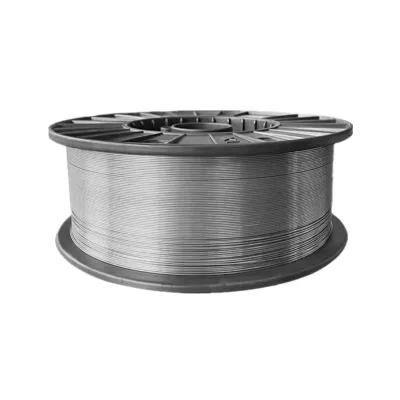


Premium Quality Welding Electrode for Instant Materials Refractoriness
$1888.00 - $2999.00
MOQ: 10 Tons


Comprehensive Sourcing Guide
Strategic Sourcing Guide for Acidic Slag Welding Electrodes
Understanding the Technical Profile of Acidic Slag Electrodes
When sourcing welding consumables, the distinction between acidic and basic slag systems is fundamental to process selection and weld quality. The specific category of acidic slag welding electrodes presents a unique set of operational characteristics that differ significantly from low-hydrogen or basic slag alternatives. In the context of available market data, these electrodes are often characterized by a specific chemical composition and functional behavior during the welding arc. The supplied product attributes explicitly identify the "Slag Characteristic" as "Acidic," which dictates the fluidity of the molten slag and the ease of removal post-welding. This characteristic is critical for buyers who require high deposition rates and smooth weld profiles, particularly in applications where post-weld cleaning is a constraint.
The technical specifications for these electrodes often include a "Welding Core Type" described as "Alloy Structural Steel." This indicates that the electrode is designed to deposit a weld metal with specific alloying elements suitable for structural applications. Furthermore, the data points to a "Type" designation of "L," which corresponds to "Low Temperature Low Alloy Steel Electrode." This classification suggests that the electrode is engineered to maintain toughness and ductility at reduced temperatures, making it suitable for environments where thermal stress is a concern. The "Operating Temperature" is noted as "120 (International Stardard)," a specific parameter that buyers must verify against their specific service conditions to ensure the electrode will not degrade under thermal load.
Another critical technical aspect is the "Welding Current" range, which is listed as "80-200 (International Stardard)." This range defines the electrical parameters required to maintain a stable arc and proper fusion. Buyers must ensure their power sources and welding procedures align with these current limits to prevent defects such as underfill or excessive spatter. The "Carbon Content" is specified as "Low Carbon," a vital factor for preventing cracking in the heat-affected zone (HAZ) of the weld. This low carbon profile, combined with the acidic slag, typically results in a weld that is easier to weld in various positions but may have lower impact toughness compared to basic slag electrodes in extreme conditions.
Compliance and Certification Verification
In the B2B procurement of industrial welding consumables, verifying compliance with international standards and certifications is non-negotiable. The market data indicates that suppliers for these products often provide "RoHS" and "ISO" certifications. Specifically, the "Certificate" field lists "RoHS, ISO for Resistance Welding Electrode" and "ISO, RoHS" in various contexts. While "RoHS" (Restriction of Hazardous Substances) is a standard for electronic components, its presence in welding electrode listings suggests a commitment to limiting hazardous materials in the consumable's coating or core. The "ISO" certification implies adherence to International Organization for Standardization protocols, which is essential for quality assurance in industrial settings.
Buyers must be diligent in distinguishing between general ISO certifications and specific standards for welding electrodes. The provided text mentions "ISO for Resistance Welding Electrode," which is a specific subset of welding technology. However, the core keyword focuses on "Acidic Slag Welding Electrode," which is typically associated with arc welding rather than resistance welding. This discrepancy requires the buyer to clarify with the supplier whether the ISO certification applies to the specific acidic slag product or if it is a general company certification covering a broader product line. The "Standard" field in the data lists dimensions such as "3.2mm/4.0mm/5.0mm" and "392129cm," which likely refer to wire diameters and packaging dimensions, respectively. These are not performance standards but rather physical specifications that must be cross-referenced with the relevant ISO welding standards (e.g., ISO 2560 for steel electrodes) to ensure the product meets the required mechanical properties.
The "Certificate" attribute also appears as "RoHS,ISO" without the specific qualifier "for Resistance Welding Electrode" in some entries. This suggests that the supplier may hold multiple certifications. For a buyer sourcing acidic slag electrodes, the primary verification should focus on whether the specific product batch holds a valid ISO certification for arc welding electrodes and whether the RoHS compliance is relevant to the specific alloy composition. The "OEM" attribute is marked as "Accaptable," indicating that suppliers are willing to produce under private label, which often requires the buyer to provide or verify their own quality control standards if the supplier's standard certifications do not fully align with the buyer's internal compliance requirements.
Cost Drivers and Pricing Dynamics
The pricing structure for acidic slag welding electrodes is influenced by a complex interplay of raw material costs, manufacturing complexity, and logistical factors. The observed listed price range in the market data spans from 0.1 to 13,000 USD. This vast range indicates that the "Acidic Slag Welding Electrode" is not a single SKU but a category encompassing various sizes, packaging formats, and specialized compositions. The lower end of the range likely corresponds to standard, small-diameter electrodes sold in bulk, while the upper end may reflect specialized, large-format, or custom-engineered solutions.
Material composition is a primary cost driver. The data lists "Carbon steel," "tungsten," and "Steel Alloy" as materials. While acidic slag electrodes are typically steel-core with a specific coating, the presence of "tungsten" and "Molybdenum" in the "Composition" field (Cu, W, Molybdenum) suggests that some listings may refer to tungsten-copper electrodes used in resistance welding, which are distinct from the acidic slag arc welding electrodes. Buyers must carefully parse the product descriptions to ensure they are comparing apples to apples. If the product is indeed a steel alloy electrode with an acidic slag coating, the cost will be driven by the price of steel and the specific flux ingredients. If the product involves tungsten or copper alloys, the cost will be significantly higher due to the precious metal content.
The "MOQ" (Minimum Order Quantity) range of 1 to 1000 units further influences the effective unit cost. A buyer ordering 1 unit will face a much higher per-unit price compared to a buyer ordering 1000 units. The "prod_packing" options, listed as "Carton or Plywood Case," also impact the final landed cost. Plywood cases are more expensive to manufacture and ship than cartons but offer superior protection for heavy or high-value shipments. The "Standard" packaging dimensions of "392129cm" suggest a specific carton size that affects shipping volume and freight costs. Buyers should calculate the total cost of ownership, including freight, by considering the packaging type and the weight of the electrodes, which is influenced by the "Carbon Content" and alloy density.
Typical Applications and Industry Usage
The application scope for acidic slag welding electrodes is broad, yet specific to the metallurgical properties of the deposited weld metal. The data explicitly states the "Application" as "All Grades of Castings, Pumps Casing." This indicates that these electrodes are suitable for repairing or fabricating cast iron and steel components used in fluid handling and heavy machinery. The "Welding Core Type" of "Alloy Structural Steel" reinforces this, suggesting the electrodes are used for structural repairs where strength and ductility are required.
The "Electrode Classify" field lists "Spot Welding," "Seaming Welding," and "Projection Welding." While these classifications are often associated with resistance welding, the presence of "acidic slag" in the core keyword suggests a potential overlap or a specific product line that bridges these technologies. However, in traditional arc welding, acidic slag electrodes are renowned for their ability to produce smooth, aesthetically pleasing welds with minimal spatter. This makes them ideal for applications where the weld appearance is important, such as in visible structural components or cosmetic repairs. The "Function" attributes, including "Gravity Electrode," "Low Hydrogen Type Electrode," and "Moisture-Proof Electrode," present a contradiction with the "Acidic" classification, as acidic electrodes are typically not low-hydrogen. This discrepancy highlights the need for buyers to verify the specific product data sheet to ensure the electrode matches the intended application, particularly regarding moisture sensitivity and hydrogen content.
The "Style" of the electrode is listed as "Customized," "Standard," and specific types like "Spot Welding Electrode" and "Seam Welding Electrode." This variety allows for tailored solutions in different industries. The "Apply in" field mentions the "Welding Equipment Industry," suggesting that these electrodes are used in the manufacturing of welding equipment itself or as consumables for heavy industrial maintenance. The "Operating Temperature" of 120 degrees suggests suitability for moderate thermal environments, making them appropriate for general fabrication and repair work rather than extreme high-temperature service.
Supplier Evaluation and Origin Analysis
Evaluating suppliers for acidic slag welding electrodes requires a thorough analysis of their origin, manufacturing capabilities, and customization options. The "prod_origin" is listed as "China" and "Wenzhou." Wenzhou is a well-known manufacturing hub in China, particularly for small to medium-sized industrial products. This location suggests that buyers can expect competitive pricing and a high degree of manufacturing flexibility. However, the concentration of suppliers in a specific region also means that buyers should conduct due diligence on individual suppliers to ensure they meet quality standards, as the region may have a mix of high-quality and lower-quality manufacturers.
The "Customization" attribute is marked as "Available," and "OEM" is "Accaptable." This indicates that suppliers are willing to produce electrodes with specific coatings, diameters, or packaging to meet buyer requirements. For a buyer sourcing acidic slag electrodes, this is a significant advantage, as it allows for tailoring the product to specific welding processes or material grades. The "Making Method" is listed as "Back-Casting," which is a specific manufacturing technique. Buyers should inquire about the quality control measures associated with this method to ensure consistency in the electrode coating and core alignment.
The "Condition" of the products is listed as "New" and "New for Customized Electrode," which is a basic but essential requirement. Buyers should verify that the "New" condition applies to the specific batch being ordered and that the electrodes have been stored properly to prevent moisture absorption, which can degrade the acidic slag coating. The "Product Type" is listed as "Ball," which may refer to a specific shape or component within the electrode assembly, or it could be a data entry error. Buyers must clarify this attribute to ensure it aligns with the expected form factor of the welding electrode.
Quality Control and Long-Term Procurement Considerations
Ensuring consistent quality in acidic slag welding electrodes is paramount for maintaining weld integrity and operational efficiency. The "Standard" field lists specific dimensions like "3.2mm/4.0mm/5.0mm" and "0.1 / 0.9 mm," which likely refer to wire diameters or coating thicknesses. Buyers should verify that these dimensions are within the acceptable tolerance ranges for their welding equipment. The "PCD" (Pitch Circle Diameter) of "98mm" and "ET" (Effective Thickness) of "15mm" with "4" holes suggest that some products may be electrode holders or related components rather than the consumable electrode itself. This distinction is critical for procurement accuracy.
Long-term procurement considerations involve building a relationship with suppliers who can provide consistent quality and reliable lead times. The "prod_packing" options of "Carton or Plywood Case" should be selected based on the shipping distance and the fragility of the product. For international shipments, plywood cases are often preferred to prevent damage. The "Lead Time" is not explicitly provided in the data, but the "MOQ" range of 1 to 1000 suggests that suppliers can accommodate both small and large orders. Buyers should negotiate lead times based on their production schedules and ensure that the supplier has the capacity to meet demand during peak periods.
The "Function" attributes, including "Moisture-Proof Electrode," highlight the importance of storage conditions. Even if an electrode is marketed as moisture-proof, acidic slag coatings can still absorb moisture if not stored correctly. Buyers should implement strict inventory management practices to ensure that electrodes are stored in dry environments and used within their shelf life. The "Welding Current" range of "80-200" should be regularly verified through test welds to ensure that the electrodes perform consistently over time. Any deviation in current requirements or weld quality should trigger a review of the supplier's quality control processes.
In conclusion, sourcing acidic slag welding electrodes requires a balanced approach that considers technical specifications, compliance, cost, and supplier reliability. By leveraging the available data and conducting thorough due diligence, buyers can identify suppliers who offer high-quality products that meet their specific operational needs. The key is to verify all attributes against the actual product requirements and to maintain open communication with suppliers to ensure continuous quality improvement.
FAQs
What certifications do acidic slag welding electrodes typically have?
These electrodes often carry RoHS and ISO certifications for quality assurance. The data indicates specific listings include RoHS and ISO for Resistance Welding Electrode, ensuring compliance with international standards for hazardous substances and industrial quality.
Which welding core types are compatible with acidic slag electrodes?
The welding core type is typically Alloy Structural Steel. This composition supports the Low Temperature Low Alloy Steel Electrode classification, suitable for structural applications requiring specific alloying elements and low carbon content to prevent cracking.
How is the packaging handled for these welding electrodes?
Packaging options include Cartons or Plywood Cases depending on the order. Standard dimensions are often 39*21*29cm, while wire diameters available range from 3.2mm to 5.0mm, ensuring safe transport for various industrial needs.
Can suppliers customize these electrodes for specific welding needs?
Yes, customization is available for these welding electrodes. Suppliers accept OEM requests and offer customized styles, allowing buyers to specify requirements while maintaining the acidic slag characteristic and low hydrogen type functionality.
What is the typical operating temperature for these electrodes?
The operating temperature is specified as 120 degrees according to international standards. This parameter ensures the electrode maintains stability during welding processes, making it suitable for general fabrication and repair work in moderate thermal environments.
Which applications are suitable for acidic slag welding electrodes?
These electrodes are suitable for all grades of castings and pump casings. The Alloy Structural Steel core makes them ideal for structural repairs where smooth weld profiles and high deposition rates are required for fluid handling and heavy machinery.