Source Adjustable Folding Spoke Handwheel for CNC Machines, Medical Devices, and Industrial Control
Compare 30 listings for the Adjustable Folding Spoke Handwheel designed for CNC machines, medical devices, and industrial control panels. Buyers can review specifications, materials like cast iron and steel, and customization options including logo printing and packaging details from verified Chinese suppliers.
Key considerations
Products List


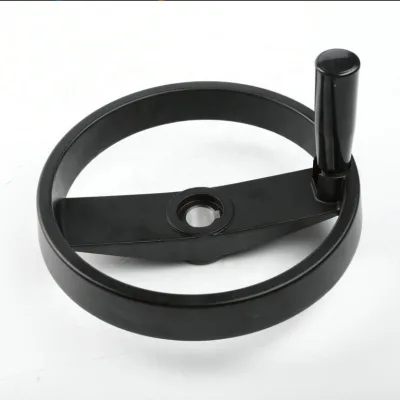


Ingks Solid Foldable Handle Handwheel Two-Spoke Handwheel with Foldable Handle
$1.20 - $1.58
MOQ: 100 Pieces


Comprehensive Sourcing Guide
Strategic Sourcing Guide for Adjustable Folding Spoke Handwheels
The procurement of adjustable folding spoke handwheels requires a nuanced understanding of industrial components that bridge mechanical functionality with ergonomic adaptability. These devices are critical in environments where precise manual control is necessary, particularly in machinery that demands frequent adjustments or compact storage solutions. The market for such components is diverse, with suppliers offering variations in material composition, mounting configurations, and certification standards. A buyer entering this space must navigate a landscape where product attributes vary significantly between listings, ranging from fixed models to highly customized solutions. This guide provides a structured approach to evaluating potential suppliers and products, ensuring that the final procurement decision aligns with technical requirements and operational safety standards.
Technical Specifications and Component Variability
When sourcing an Adjustable Folding Spoke Handwheel, the primary focus must be on the specific technical attributes that define the component's utility. The product landscape includes items described with specific model identifiers such as BDJDS-011, 100302, and BT. 100315, indicating that there is no single universal standard for this category. Buyers must verify the material composition, as observed listings include options made from Cast Iron, Steel, and Aluminum. The choice of material directly impacts the durability, weight, and resistance to environmental factors. For instance, steel and cast iron variants are often selected for heavy-duty applications requiring high torque resistance, while aluminum options may be preferred for lighter machinery or where corrosion resistance is a priority.
The physical dimensions and structural design are equally critical. Specifications observed in the market include standard sizes such as 12512, 16016, and 100 125 160 200, alongside more complex dimensions like 615.561(mm). The "spoke wheel" designation implies a specific structural integrity that must be maintained during the folding mechanism's operation. Buyers should scrutinize the mounting hole types, which can be round or square, and the hole placement, which may include keyboard and side top silk configurations. Furthermore, the folding mechanism itself must be verified; while some products are explicitly Non-Folding, the core keyword requires a functional folding capability. The presence of a "Tilted" or "Non-Tilted" attribute further refines the selection, ensuring the handwheel aligns correctly with the operator's reach and the machine's axis.
Compliance, Certification, and Standard Verification
Navigating the regulatory and certification landscape is a fundamental step in B2B procurement. The market data indicates a wide spectrum of certification statuses, ranging from specific international standards like ISO 9001, CE, RoHS, UL, and ISO, to more generic or customized claims. A buyer must not assume that every listed product possesses these certifications. Instead, the procurement strategy should involve a direct request for valid, current certification documents for the specific batch or model being purchased. The "International" and "National" standard labels observed in product descriptions suggest that compliance varies by region and intended market.
It is essential to distinguish between a product that is "Customized" to meet a specific standard and one that inherently meets a global standard. For example, while some listings mention "customed item" standards, others reference specific dimensional standards like 8010-25025 or D65 D80 D 100. These numerical references likely denote specific industry tolerances or dimensional classes rather than general safety certifications. Buyers should verify if the product adheres to the specific national or international standards required for their operational jurisdiction. The presence of "CE, RoHS, UL" on a listing is a strong indicator of compliance with electrical and safety regulations, but this must be confirmed against the actual product documentation rather than relying solely on the product title or summary attributes.
Cost Drivers and Pricing Dynamics
The pricing structure for adjustable folding spoke handwheels is influenced by a complex interplay of factors, including material costs, customization levels, and production volume. The observed price range in the market spans from 0.1 to 300 USD, a vast disparity that reflects the diversity of the product offerings. Low-cost items may be standard, non-customized steel or aluminum wheels with minimal packaging, while high-end items likely involve specialized materials, complex folding mechanisms, or custom branding.
The Minimum Order Quantity (MOQ) is another significant cost driver, with observed ranges extending from 1 to 500 units. Buyers seeking small quantities may face higher per-unit costs or limited supplier options, whereas larger orders can leverage economies of scale. The "Customized" attribute is a primary determinant of price; products that allow for logo printing, specific color variations, or unique dimensional modifications will inherently carry a premium. Additionally, the packaging method, whether "Carton Box with Wooden Case," "Carton," or "Standard Package," adds to the overall cost. A buyer must balance the initial unit price against the total landed cost, including packaging and potential customization fees, to determine the true economic value of a supplier's offering.
Typical Applications and Operational Context
Understanding the intended application is crucial for selecting the correct handwheel. The product attributes explicitly mention usage for "CNC Machine," indicating that these components are integral to precision manufacturing environments. In such settings, the handwheel must provide smooth, precise control without slippage or excessive play. The "Connection" type attribute suggests that these wheels are designed to interface directly with machine shafts or control mechanisms.
Beyond CNC applications, the versatility of these components allows for use in various industrial settings where manual adjustment is required. The "Wheelchair Wheels" attribute in some listings highlights a divergence in product lines, suggesting that the term "handwheel" can sometimes be conflated with mobility aids in broader market listings. However, for industrial procurement, the focus remains on the mechanical control aspect. The "Leg Rest Type: Across Both Sides" attribute, while seemingly specific to mobility, underscores the importance of ergonomic design in the broader category of wheel-based equipment. For industrial handwheels, the focus is on the "Condition: New" status and the "Surface Treatment: Chrome Plated" finish, which ensures longevity and resistance to wear in high-traffic machine environments.
Supplier Evaluation and Origin Analysis
Evaluating suppliers requires a careful assessment of their geographical origin and production capabilities. The data indicates that products originate from China, with specific mentions of Jiangsu as a production hub. This regional concentration suggests a mature supply chain for metalworking and mechanical components. However, the "prod_origin" field also lists general "China" entries, necessitating a deeper inquiry into the specific factory location to assess logistics and quality control consistency.
Supplier credibility should be verified through their ability to provide detailed product specifications and adherence to the "Customized" or "Non-Customized" nature of the order. The "Brand Name: ZHONG DE" example illustrates that some suppliers operate under established brand identities, while others may be generic manufacturers. Buyers should prioritize suppliers who demonstrate transparency regarding their "Standard" compliance and "Certification" status. The ability to offer "OEM" (Original Equipment Manufacturer) services and "Accepted Customzied Logo" options indicates a supplier's flexibility and capacity to meet specific client requirements. It is vital to confirm that the supplier's "prod_packing" methods, such as "Carton Box with Wooden Case," are sufficient to protect the product during international shipping, especially for heavy metal components.
Quality Control and Long-Term Procurement Considerations
Ensuring long-term reliability involves rigorous quality control measures at the point of manufacture and upon delivery. The "Condition: New" attribute is a baseline requirement, but buyers must also verify the integrity of the folding mechanism and the stability of the spoke structure. The "Hole Type: Round Hole and Square Hole" specification requires precise machining to ensure a secure fit with the machine shaft. Any deviation in these dimensions can lead to operational failure or safety hazards.
For long-term procurement, buyers should consider the availability of replacement parts and the consistency of the "Material" supply chain. If a supplier sources "Cast Iron" or "Steel" from multiple vendors, the quality of the raw material may fluctuate. Establishing a relationship with a supplier who can guarantee consistent material grades and surface treatments, such as "Chrome Plated," is essential for maintaining equipment performance. Additionally, the "Customization" aspect should be managed carefully; while "Available" customization offers flexibility, it introduces variables that can affect lead times and quality assurance. Buyers should define clear specifications for any custom elements to avoid misunderstandings and ensure that the final product meets the required operational standards.
Comparative Analysis of Product Attributes
To facilitate decision-making, buyers should compare key attributes across potential suppliers. The following table summarizes the critical variables observed in the market data, highlighting the range of options available.
| Attribute Category | Observed Variations | Procurement Consideration |
|---|---|---|
| Material | Cast Iron, Steel, Aluminum | Select based on load requirements and corrosion resistance. |
| Standard/Size | 12512, 16016, 615.561(mm), Custom | Verify exact dimensions against machine specifications. |
| Certification | ISO 9001, CE, RoHS, UL, ISO, None Listed | Request valid certificates for the specific model batch. |
| Customization | Available, Non-Customized, Custom Logo | Confirm if branding or dimensional changes are feasible. |
| Packing | Carton, Carton Box with Wooden Case, Standard | Ensure packaging protects against damage during transit. |
| Origin | China, Jiangsu | Assess logistics costs and supplier proximity to port. |
| Condition | New | Verify that items are not refurbished or used. |
This comparative approach allows buyers to systematically filter suppliers based on their specific needs. By focusing on the intersection of material, standard, and certification, a buyer can identify the most suitable partner for their project. The goal is to secure a component that not only fits the immediate technical requirements but also aligns with the long-term operational and safety goals of the organization.
FAQs
What materials are used for adjustable folding spoke handwheels?
These handwheels are commonly manufactured from cast iron, steel, or aluminum. The choice of material depends on the required durability and weight, with steel and cast iron suited for heavy-duty applications while aluminum offers corrosion resistance.
Can I request a customized logo on the handwheel?
Yes, customization is available for many models, including accepted customized logos. However, some listings specify non-customized options, so buyers must verify the specific customization capabilities of the supplier before placing an order.
Which certifications are typically available for these components?
Products may carry certifications such as ISO 9001, CE, RoHS, UL, or ISO. Buyers should not assume all items have these marks and must request valid documentation for the specific batch to ensure regulatory compliance.
How do I determine the correct size for my machine?
Standard sizes include dimensions like 125*12, 160*16, and 61*5.5*61mm. Buyers must match these specifications to their machine requirements, as models vary significantly from fixed sizes to custom dimensions.
Are these handwheels suitable for CNC machine applications?
Yes, many listings explicitly state usage for CNC machines. These components are designed for precise manual control in industrial environments, ensuring smooth operation without slippage during adjustment tasks.
What packaging options are available for shipping?
Packaging varies from standard cartons to carton boxes with wooden cases. The choice depends on the product weight and shipping distance, with heavier metal components often requiring reinforced wooden cases for protection.
Can I find suppliers in Jiangsu for these handwheels?
Yes, specific product origins list Jiangsu as a production hub in China. Buyers can target this region for sourcing, though general listings may also originate from other parts of China.