Source Adjustable Folding Shower Commode Chair for Elderly, Pregnant, Children
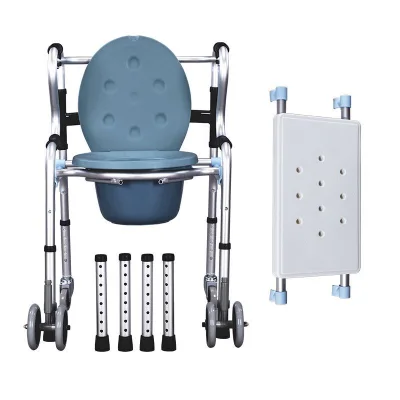
Explore 30 listings of Adjustable Folding Shower Commode Chair options from Zhejiang, China. Buyers can compare models like WA-4806 and KY8301A based on weight capacity, material, and folding features for home or facility use.
Key considerations
Products List


Aluminum Commode Chair Folding Commode Shower Wheel Chair for Disable Elder
$389.00 - $456.00
MOQ: 10 Pieces


Medical Commode Chair Moving Foldable Shower Commode Chair for Elderly
$11.90 - $15.90
MOQ: 100 Pieces


Folding Chail Handicap Portable Commode Shower Chair for Disabled to Toilet.
$85.00 - $90.00
MOQ: 50 Pieces



Comprehensive Sourcing Guide
Strategic Sourcing Guide for Adjustable Folding Shower Commode Chairs
The global demand for assistive bathroom equipment has intensified as populations age and accessibility standards evolve. For procurement professionals in the healthcare, facility management, and home care sectors, sourcing an Adjustable Folding Shower Commode Chair requires a disciplined approach that balances technical functionality with rigorous supplier verification. This guide outlines the critical factors for evaluating these products, drawing upon observed market data and established industry practices to ensure a secure and compliant supply chain.
Technical Specifications and Structural Integrity
When evaluating an Adjustable Folding Shower Commode Chair, the primary focus must be on the structural specifications that directly impact user safety and operational longevity. The core mechanical design typically involves a folding mechanism that allows for compact storage, a feature observed in multiple product listings as a standard attribute. Buyers should verify the specific dimensions of the seat and backrest, as these dictate the ergonomic fit for the end-user. Market observations indicate seat sizes ranging around 460mm by 410mm, with backrest dimensions approximately 395mm by 240mm. However, these figures are not universal; procurement teams must request exact dimensional data for each specific model to ensure compatibility with the target bathroom environment.
The load-bearing capacity is a non-negotiable specification. In the current market, products are frequently rated to support a maximum weight of 150kg (330lbs). This figure represents a critical threshold that must be verified against the intended user demographic. The structural frame material is another pivotal variable. While some units utilize steel for maximum rigidity, others employ aluminum alloys combined with reinforced nylon for the handrails to reduce overall weight without sacrificing strength. The seat board material often consists of HDPE (High-Density Polyethylene) or PE blow molding, which offers resistance to moisture and corrosion. The foot mats and seat mats are typically constructed from TPE (Thermoplastic Elastomer) and EVA (Ethylene-Vinyl Acetate) respectively, materials chosen for their non-slip properties and ease of cleaning.
Weight is a significant logistical factor. Observed product weights vary from approximately 2.8kg to over 32kg depending on the model and material composition. Lighter units, often weighing around 3kg, are preferable for users requiring frequent relocation, whereas heavier units with a net weight of 32.5kg may offer enhanced stability for institutional settings. The wheel configuration also varies, with front wheels often measuring 3 inches and rear wheels 5 inches, influencing maneuverability on wet surfaces. Buyers must confirm the specific wheel diameter and bearing type to ensure smooth operation in wet environments.
Compliance, Certification, and Regulatory Standards
Navigating the regulatory landscape for medical and assistive devices requires strict adherence to certification standards. While specific product listings may claim compliance with CE and ISO standards, procurement teams must treat these as claims requiring independent verification rather than guaranteed facts. The presence of CE marking indicates conformity with health, safety, and environmental protection standards for products sold within the European Economic Area. Similarly, ISO certifications, such as ISO 13485 for medical device quality management, are often cited in the industry, though the specific applicability to a given commode chair model must be confirmed.
Buyers should not assume that all products in a category automatically meet these standards. The verification process involves requesting valid certificates from the supplier and cross-referencing them with the issuing bodies. For products intended for the Chinese market or export, the origin location, often cited as Zhejiang, China, is a common production hub, but the specific factory's certification status is paramount. Documentation should explicitly state which ISO standards the product meets and the scope of that certification. Additionally, any claims regarding the material safety, such as the use of non-toxic PE or aluminum alloys, should be supported by material safety data sheets (MSDS) or third-party test reports.
Cost Drivers and Pricing Dynamics
The pricing structure for adjustable folding shower commode chairs is influenced by several distinct variables. The observed market range is broad, spanning from $0.01 to $1,300, a disparity that reflects differences in material quality, manufacturing complexity, and order volume. The primary cost driver is the material composition; aluminum alloy frames and reinforced nylon components generally command higher prices than standard steel or plastic alternatives due to their durability and weight-to-strength ratio.
Order volume plays a critical role in unit pricing. The Minimum Order Quantity (MOQ) observed in the market ranges from 1 to 300 units. Suppliers offering lower MOQs may charge a premium per unit to cover setup and logistics costs, while bulk orders typically benefit from economies of scale. Customization is another significant factor. Products marked as "Customized" or offering OEM (Original Equipment Manufacturer) support often incur additional costs for mold development, branding, and specific feature adjustments. Conversely, standard models with fixed specifications, such as those described as "Non-Customized," are generally more cost-effective.
Packaging also impacts the final landed cost. Units shipped in single PE polybags may have lower packaging costs but offer less protection during transit compared to those in carton boxes. The gross weight and dimensions of the packaging, such as a packing size of 670mm by 600mm by 270mm, directly influence freight charges. Buyers must calculate the total cost of ownership, including shipping, duties, and insurance, rather than focusing solely on the unit price.
Typical Applications and User Demographics
The versatility of adjustable folding shower commode chairs makes them suitable for a wide array of applications. The primary user base includes children, pregnant women, and the elderly, as indicated by product characteristics. For the elderly population, the chair provides a stable seating option for bathing, reducing the risk of falls associated with standing on slippery surfaces. The adjustable height feature, often ranging from 485mm to 550mm, allows for customization to fit different toilet heights and user statures, ensuring proper knee clearance and comfort.
In institutional settings such as nursing homes, hospitals, and rehabilitation centers, the durability and ease of cleaning are paramount. The "Multi-Function" and "Design Sense" attributes observed in certain models suggest that these chairs are designed to blend into various environments while providing essential support. The "Foldable" nature of the chairs is particularly valuable in facilities with limited storage space, allowing for efficient organization when not in use. For home care, the "Lightweight" and "Portable" attributes are crucial, enabling caregivers to move the chair easily between rooms or store it in closets.
The installation method is another consideration for different applications. Models supporting "Plug-in Connection" or "Screw Fixation" offer flexibility in how they are assembled and secured. For users requiring maximum stability, the screw fixation method may be preferred, while plug-in connections offer quicker setup for temporary arrangements. The application scope extends to individuals with mobility issues who require assistance with transfers, making the chair a critical component of a comprehensive care plan.
Supplier Evaluation and Verification Protocols
Selecting the right supplier is as critical as selecting the product itself. A robust evaluation process should begin with verifying the supplier's location and production capabilities. Many products originate from Zhejiang, China, a region known for its manufacturing infrastructure. However, the specific factory's capacity to meet quality standards and delivery timelines must be assessed. Buyers should request a detailed company profile, including business licenses and production capacity reports.
The supplier's ability to support customization is a key differentiator. While some products are "Non-Customized," many suppliers offer OEM services, allowing for branding and specific feature modifications. Buyers should inquire about the supplier's experience with similar projects and their flexibility in accommodating design changes. The "OEM/OEM: Support" attribute indicates a willingness to collaborate, but the extent of this support should be clarified in the contract.
Quality control processes are essential to mitigate risk. Buyers should ask about the supplier's internal quality assurance protocols, including in-process inspections and final product testing. The ability to provide pre-shipment samples is a strong indicator of a supplier's confidence in their product. Additionally, the supplier's response time and communication clarity are vital indicators of their reliability as a long-term partner.
Quality Control and Long-Term Procurement Considerations
Ensuring the long-term reliability of adjustable folding shower commode chairs requires a proactive quality control strategy. The observed specifications, such as the 150kg load-bearing capacity and specific material compositions, must be validated through independent testing. Buyers should consider engaging third-party inspection agencies to verify that the products meet the claimed specifications before shipment. This is particularly important for products intended for high-traffic environments where wear and tear are significant.
Long-term procurement considerations include the availability of spare parts and the durability of the product. The "Specialty" attributes, such as "Resistance to Heavy" and "Foldable" mechanisms, should be tested for longevity. Suppliers should provide warranties that cover structural failures and material defects. The "Installation Method" and ease of maintenance are also critical; chairs that are difficult to disassemble for cleaning or repair may incur higher long-term costs.
Buyers should also consider the environmental impact of the materials used. The use of recyclable materials like aluminum and HDPE is a positive attribute that aligns with sustainability goals. The packaging, whether PE polybags or carton boxes, should be evaluated for its environmental footprint. Finally, the lead time and supply chain resilience of the supplier are crucial for maintaining a steady inventory. Buyers should establish contingency plans to address potential disruptions, ensuring that the supply of essential assistive devices remains uninterrupted.
Comparative Analysis of Key Product Attributes
To facilitate decision-making, the following table summarizes the key attributes observed in the market for adjustable folding shower commode chairs. This comparison highlights the variability in specifications and helps buyers identify the features most relevant to their specific needs.
| Attribute Category | Observed Range/Values | Procurement Verification Focus |
|---|---|---|
| Load-Bearing Capacity | 150kg / 330lbs | Verify via third-party load testing; ensure margin of safety. |
| Material Composition | Aluminum, Steel, HDPE, PE, TPE, EVA | Confirm material grades and corrosion resistance properties. |
| Weight (Net) | 2.8kg to 32.5kg | Assess based on portability needs vs. stability requirements. |
| Seat Dimensions | ~460*410mm | Match to user body size and toilet clearance. |
| Wheel Configuration | Front: 3 Inch, Rear: 5 Inch | Check for non-slip tread and swivel capability. |
| Customization | Available / Non-Customized | Define scope of OEM/ODM requirements clearly. |
| Certifications | CE, ISO (Claimed) | Request valid certificates and verify scope. |
| Packing | PE Polybag, Carton Box | Evaluate protection level and shipping cost impact. |
By adhering to these guidelines and maintaining a rigorous approach to verification, procurement professionals can secure high-quality adjustable folding shower commode chairs that meet the diverse needs of their users while ensuring compliance and operational efficiency.
FAQs
What is the maximum load-bearing capacity for these chairs?
Most models support a maximum load of 150kg or 330lbs. This capacity is standard across many units but must be verified against specific model data sheets before purchase.
Can these chairs be customized for specific branding needs?
Customization is available for some models while others are non-customized. Buyers should check the specific product listing for OEM support and customization options before ordering.
Which materials are used for the seat and backrest boards?
Seat boards typically use HDPE or PE blow molding materials. These materials provide moisture resistance and durability suitable for wet bathroom environments.
How does the folding mechanism affect storage and transport?
The chairs are designed to be foldable for compact storage. This feature allows for efficient space management in both home and institutional settings when the unit is not in use.
What is the typical weight range for these assistive chairs?
Product weights vary significantly, ranging from approximately 2.8kg to over 32kg depending on the model. Lighter units are preferred for portability while heavier ones offer stability.
Are these chairs suitable for elderly and pediatric users?
Yes, the chairs are designed for applications involving children, pregnant women, and the elderly. Adjustable height features ensure ergonomic fit for various user demographics.