Source Adjustable Foldable Clothes Hook for Home, Shop, and Travel
Source an Adjustable Foldable Clothes Hook from 30 verified listings. Compare metal and plastic options with double hooks, nail-free installation, and custom logo support for home, retail, and travel storage needs; compare the available evidence and request quotations based on your requirements.
Key considerations
Products List


Wide Shoulder Clothes Hanger, Non Slip and Mult Functional with No Traces
$0.21 - $0.35
MOQ: 100 pieces
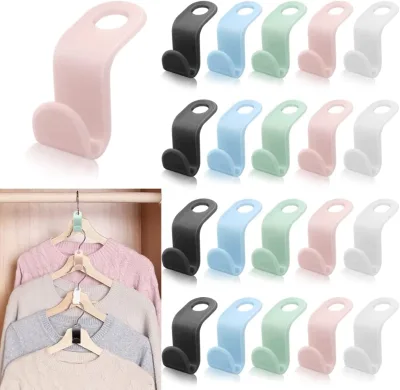


Detachable Hook Plastic Clothes Hanger for Easy Replacement and Maintenance
$0.10 - $0.90
MOQ: 10 Pieces


Plastic Hanger with Detachable Clips for Versatile Clothing Hanging Needs
$0.10 - $0.90
MOQ: 10 Pieces


Clothes Wall Mounted Hooks Double Single Hooks
$0.16 - $0.21
MOQ: 500 Pieces
Jinhua Hengyang Cross-Border Trade Limited Liability Company


Comprehensive Sourcing Guide
Adjustable Foldable Clothes Hook Sourcing Guide
Procuring adjustable foldable clothes hooks requires distinguishing between metal and plastic variants, as the supplied data indicates both material types are available in the market. Buyers must verify the specific material composition for their intended application, noting that some listings specify chrome-plated metal while others highlight plastic parts or eco-friendly materials. This distinction directly impacts durability and load-bearing capacity, which are critical for heavy garments versus lightweight accessories.
The customization landscape for these hooks is extensive, with options ranging from logo acceptance to tailored dimensions and colors. Suppliers often offer OEM and ODM services, allowing buyers to specify unique features like double hooks or question mark styles. However, the observed data shows a wide variance in packaging, from simple bags to wooden cases, which suggests that packaging standards must be explicitly defined in the purchase order to ensure product protection during transit.
Product Scope and Observed Listing Signals
The product scope for adjustable foldable hooks spans diverse usage occasions, including home environments, clothing shops, and general storage needs. Listings indicate applications for tops, trousers, and underwear, with some models designed specifically for behind-doors or wall-mounted installations. Buyers should confirm that the specific hook style, such as flat or multifunctional designs, aligns with their retail or residential storage requirements before finalizing a supplier.
Observed listing signals reveal significant variability in product specifications, including model numbers like ULD-0718233 and sy001, alongside standard sizes and customized dimensions. The market presence is worldwide, yet origin points are frequently cited as Ningbo, China, or generally China. This geographic concentration suggests a mature supply chain, but buyers must verify the specific production location to ensure consistency with their logistics and quality expectations.
Technical Specifications to Verify
Technical verification must begin with the hook style and installation method, as the data highlights nail-free installation and hook-type mechanisms. Buyers should confirm whether the product features a double hook configuration or a single hook, and ensure the dimensional tolerance is within acceptable limits, such as the observed less than 5mm inclusive range. These physical attributes determine the hook's stability and its ability to support various garment weights without slipping or deforming.
Material thickness and standard dimensions are equally critical, with some listings specifying a 1cm thickness and others offering one-size-fits-all or fully customized sizes. The standard product size of 3028.566cm appears in some contexts, but buyers must not assume this applies universally. Instead, they should request detailed technical drawings to verify that the thickness and overall dimensions meet the specific spatial constraints of their storage areas or retail displays.
Compliance and Safety Documentation
Compliance documentation is essential for international trade, with CE certification appearing as a verified attribute for certain metal hook products. Buyers must request valid certificates to confirm that the products meet the safety standards required for their target markets, particularly for items intended for home or commercial use. Relying on general claims without physical proof of certification can lead to regulatory hurdles and potential product recalls in regulated regions.
Safety also extends to the materials used, with some suppliers emphasizing eco-friendly materials as a key feature. While the data mentions metal types like chrome-plated metal, buyers should verify that the plating process and material sourcing adhere to environmental and safety regulations. Ensuring that the product does not contain hazardous substances is a prerequisite for selling in markets with strict chemical compliance laws, such as the European Union or North America.
Cost Drivers and Commercial Terms
Cost drivers for adjustable foldable hooks are heavily influenced by material selection, customization levels, and packaging requirements. The observed MOQ of 3000 units suggests that economies of scale play a significant role in pricing, with lower prices potentially available for larger orders up to 60,000 units. Buyers should analyze the cost impact of custom logos, specific colors, and unique packaging options like wooden cases versus standard OPP bags, as these factors can significantly alter the unit price.
Commercial terms must clearly define delivery timelines and payment structures, with observed lead times ranging from 7 to 15 days. However, these figures are not universal and depend on the complexity of the customization and current production capacity. Buyers should negotiate clear terms regarding production delays and ensure that the single gross weight of 0.750kg is accounted for in shipping cost calculations to avoid unexpected logistics expenses.
Supplier Qualification and Quality Control
Supplier qualification requires a rigorous assessment of their ability to deliver consistent quality across varying material types and customization requests. The presence of multiple product models and standards in the data indicates a diverse supplier base, but buyers must verify that the supplier has the capacity to maintain the specified dimensional tolerances and material standards. Requesting pre-production samples is a critical step to validate that the final product matches the agreed-upon specifications before mass production begins.
Quality control protocols should include checks for structural integrity, particularly for the folding mechanism and hook strength. Since the data mentions both metal and plastic variants, the testing criteria must be tailored to the specific material to ensure the hook does not break under load. Implementing a third-party inspection during production or before shipment can help mitigate risks associated with inconsistent quality and ensure that the delivered goods meet the buyer's performance expectations.
Long-Term Procurement Checks
Long-term procurement success depends on establishing a reliable supply chain that can adapt to changing market demands and volume fluctuations. Buyers should monitor the supplier's ability to maintain consistent lead times and quality standards over multiple production cycles, especially when scaling orders from the base MOQ of 3000 units to higher volumes. Building a strong relationship with the supplier ensures better communication and faster resolution of any issues that arise during the production process.
Continuous evaluation of product performance in the field is necessary to identify any recurring defects or design flaws. Buyers should gather feedback from end-users regarding the durability of the hooks and their suitability for the intended applications, such as clothing shops or home storage. This feedback loop allows for iterative improvements in product design and manufacturing processes, ensuring that the sourcing strategy remains competitive and responsive to customer needs over time.
FAQs
Can adjustable foldable clothes hooks be customized with a logo?
Yes, adjustable foldable clothes hooks can be customized with a logo. The product page indicates that customized logos are accepted for these items. This allows buyers to brand their storage solutions effectively. Customization options are available for various materials including metal and plastic. Buyers should confirm specific design requirements with the supplier to ensure the final product meets their branding standards and quality expectations.
What is the typical lead time for adjustable foldable clothes hooks?
The typical lead time for adjustable foldable clothes hooks is 7-15 days. This delivery window allows for production and preparation of orders. Buyers should account for this timeframe when planning inventory replenishment. The lead time may vary based on order volume and customization needs. It is advisable to confirm the exact schedule with the supplier before placing a large order to avoid delays in receiving the goods.
Which certifications are available for adjustable foldable clothes hooks?
CE certification is available for adjustable foldable clothes hooks. This indicates compliance with European health, safety, and environmental protection standards. Buyers seeking certified products should verify the specific certification documents provided by the supplier. Not all items may carry this certification, so it is important to check the product details. CE certification adds value for markets requiring strict regulatory compliance for imported goods.
How are adjustable foldable clothes hooks packaged for shipping?
Adjustable foldable clothes hooks are packaged in various ways including bags, OPP bags, and wooden cases. The packaging method depends on the specific product type and order size. Bag packaging is common for smaller quantities, while wooden cases are used for larger shipments. This ensures protection during transit. Buyers should specify their preferred packaging method to ensure the products arrive in good condition and meet their logistical requirements.
What is the minimum order quantity for adjustable foldable clothes hooks?
The minimum order quantity for adjustable foldable clothes hooks can be as low as 1 unit. However, some suppliers may require a higher MOQ, such as 3000 units. This varies significantly based on the supplier and product type. Buyers should check the specific MOQ for each item they are interested in. Lower MOQs are suitable for testing the market, while higher volumes may offer better pricing.
Where are adjustable foldable clothes hooks typically manufactured?
Adjustable foldable clothes hooks are typically manufactured in Ningbo, China. This location is a major hub for hardware and home storage products. Buyers can expect a wide range of suppliers in this region offering various materials and styles. The proximity to ports facilitates efficient shipping. Sourcing from this area often provides competitive pricing and a diverse selection of products to meet different market needs.