Source Adjustable Solar Panel Installation Clips for Home, Commercial, Industrial
Find 30 verified Adjustable Solar Panel Installation Clips from Chinese manufacturers. Compare stainless steel and steel options with ISO certifications, various surface treatments, and flexible MOQs for home, commercial, and industrial applications.
Key considerations
Products List


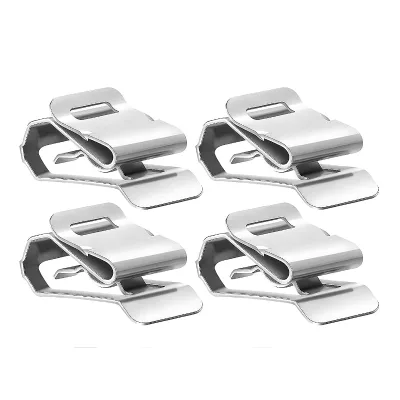
Solar Panel Mounting Stainless Steel Cable Fixing Wire Clip Solar Cable Clips
$0.03 - $0.03
MOQ: 500 Pieces

Solar Panel PV Mounting Wire Cable Edge Clip Metal Fixing Solar 2 Wire Cable Clips
$0.03 - $0.05
MOQ: 500 Pieces

Factory Solar Mounting Cable Clip Stainless Steel Solar Grounding Panel Clip Ground Clip
$0.01 - $0.02
MOQ: 1000 Pieces

Solar Panel Mounting PV Photovoltaic System Stainless Steel SUS304 Cable Clip
$0.04 - $0.05
MOQ: 2000 Pieces






Comprehensive Sourcing Guide
Strategic Sourcing Guide for Adjustable Solar Panel Installation Clips
Understanding Product Variants and Technical Specifications
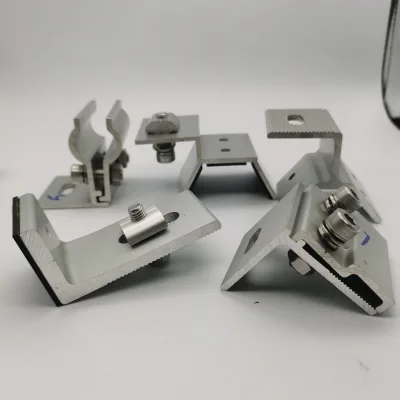
When sourcing Adjustable Solar Panel Installation Clips, buyers must first distinguish between the specific functional categories available in the current market. The core keyword often encompasses a broad spectrum of hardware, ranging from simple cable management solutions to structural mounting brackets. Based on observed product attributes, the market offers distinct types such as "Roof Bracket," "Roof Angle Bracket," and "Solar Panel Cable Management" clips. These are not interchangeable; a cable clip designed for securing conduit may not possess the structural integrity required for a roof angle bracket supporting the panel frame itself.
The material composition is a primary technical differentiator. Stainless Steel is a frequently observed material attribute, offering superior corrosion resistance essential for outdoor environments. However, Steel is also listed as a material option, which may require specific surface treatments to achieve comparable longevity. The standard specification for stainless steel variants often cites SS304, a grade known for its balance of strength and rust resistance. For steel-based clips, the standard may be listed simply as "Standard" or "other," necessitating a deeper inquiry into the specific alloy grade and coating thickness.
Dimensions and measurement systems also vary significantly. Some products adhere to the Metric system, while others may reference specific cross-sectional requirements such as "2*4mmsq" for cable clips. The "prod_model" identifiers, such as HINA, Belo130, Belo59, and Belo60, suggest that manufacturers utilize proprietary naming conventions for their adjustable mechanisms. Buyers should verify that the specific model number aligns with the panel dimensions and racking system they intend to use. The "Installation Site" attribute confirms that these products are engineered for both "Roof or Ground" applications, but the specific load-bearing capacity for ground-mounted systems often differs from roof-mounted variants due to wind uplift factors.
Compliance, Certification, and Standard Verification
Navigating the compliance landscape for solar installation hardware requires rigorous verification of certifications and adherence to international standards. The supply chain data indicates a high prevalence of ISO certifications, specifically "ISO 9001:2015," which validates the manufacturer's quality management systems. Additionally, product-level certifications such as "CE," "TUV," and "ISO" are frequently observed. These marks are critical for market access in Europe and other regions with strict safety regulations. However, buyers must treat these as observations of specific listings rather than universal guarantees for all adjustable clips.
Regarding technical standards, the observed data lists a wide array of international norms including "DIN," "ASTM/ASME," "JIS," "En," "ISO," "as," and "GB." This diversity highlights the need for buyers to specify the exact standard required for their project. For instance, a project in the United States may prioritize ASTM standards, while a European installation might mandate DIN or EN compliance. The "Standard" attribute also appears as a generic "Standard" or "UL 2703" in background contexts, though UL 2703 is a specific standard for solar module frames and clips. Buyers should verify if the supplier can provide test reports confirming compliance with the specific standard relevant to their jurisdiction, rather than relying on a generic claim.
The "Certificate" and "Certification" fields often overlap in product descriptions. A robust supplier will provide a certificate of conformity that explicitly references the standard (e.g., ISO 9001:2015) and the specific product line. It is essential to confirm that the certification covers the specific material and finishing process used, as a change in surface treatment can impact the product's compliance with environmental or fire safety standards.
Cost Drivers and Pricing Structure Analysis
The pricing structure for Adjustable Solar Panel Installation Clips is influenced by several dynamic factors, including material costs, customization levels, and order volume. The observed price range in the market spans from $0.01 to $3.50 USD per unit. This wide variance is not indicative of a single product tier but rather reflects the complexity of the item. A basic cable clip may fall at the lower end of this spectrum, while a heavy-duty, custom-finished roof angle bracket will command a higher price.
Material costs are a primary driver. Stainless Steel (SS304) generally incurs a higher base cost compared to standard steel, especially when accounting for the necessary surface treatments. The finishing process significantly impacts the final price. Options such as "Zinc," "HDG" (Hot-Dip Galvanized), "Phosphorization," "Black," "Geomet," and "Dacroment" represent different levels of corrosion protection and manufacturing complexity. HDG and Dacroment treatments, which offer superior longevity in harsh environments, typically add to the unit cost compared to standard zinc plating.
Order volume plays a decisive role in the final landed cost. The Minimum Order Quantity (MOQ) ranges from as low as 1 piece to as high as 5000 pieces. While some suppliers offer an MOQ of 10 PCS or 100 PCS to accommodate small-scale residential projects, larger commercial installations often require volumes that trigger tiered pricing. The "Supply Ability" of 500,000 Watts per week suggests that high-volume suppliers can offer competitive rates for large orders, whereas smaller suppliers may have higher per-unit costs due to limited economies of scale. Buyers should also consider the "Customization" factor; OEM services and custom finishes will invariably increase the unit price and may introduce setup fees or higher MOQ thresholds.
Typical Applications and Installation Scenarios
The versatility of adjustable solar clips allows them to serve multiple applications across different sectors. The "Application" attribute is frequently listed as "Commercial," "Home," or "Home & Industrial & Commercial," indicating that these components are suitable for a broad range of energy projects. For residential (Home) installations, the focus is often on ease of installation and aesthetic integration. Products described with features like "Easy Installation" and colors such as "Natural" or "Silver" are tailored to this segment, where visual appeal and quick deployment are priorities.
In commercial and industrial settings, the requirements shift toward durability and load-bearing capacity. The "Usage" attribute often includes "Pipe Clamp" and "Heavy Duty Clamp," suggesting that these clips are used to secure piping or heavy structural elements within the solar array. The "Type" classification of "Roof Bracket" or "Roof Angle Bracket" points to their critical role in securing the solar panels to the mounting structure. The "Installation Site" being "Roof or Ground" implies that the same product line may be adaptable to different mounting strategies, provided the specific load calculations are met.
For cable management, the "Solar Panel Cable Clip" and "Solar Panel PV Cable Clip" are essential for organizing and protecting the wiring. These clips often feature a "Measurement System" of Metric and are designed to hold cables of specific cross-sections, such as the observed "2*4mmsq" specification. The "Condition" is consistently listed as "New," ensuring that buyers receive fresh, un-degraded hardware. Whether for a small rooftop system or a large-scale ground-mounted farm, the correct selection of clip type ensures the structural integrity and electrical safety of the entire installation.
Supplier Evaluation and Operational Capabilities
Evaluating a supplier for Adjustable Solar Panel Installation Clips requires a holistic view of their operational capabilities and logistical reliability. The "prod_origin" is consistently identified as "China," with specific regions like "Zhejiang, China" noted. This geographic concentration suggests a mature supply chain ecosystem, but buyers should verify the specific factory location to assess logistics and potential trade barriers. The "Delivery Time" varies, with ranges observed from "7 Days" to "7-30 Days" and "15-30 Days." These timelines are critical for project scheduling; a supplier promising a 7-day lead time may have limited capacity for custom orders, whereas a 30-day window might accommodate larger production runs.
The "OEM" (Original Equipment Manufacturer) capability is a key indicator of a supplier's flexibility. The attribute "OEM: Acceptable" and "Custom: Yes" suggests that many suppliers can tailor products to specific brand requirements or engineering drawings. This is particularly important for large projects where branding or specific mechanical interfaces are required. The "Product Name" variations, such as "Stainless Steel Solar Panel Cable Clip," indicate that suppliers often specialize in specific niches within the broader category. Buyers should assess whether a supplier's specialization aligns with their specific needs.
Packaging is another operational factor. The "prod_packing" details, such as "20-25kg/Cartons+900kg/Pallets" or "Carton" and "Paper Box," affect shipping efficiency and product protection. Proper packaging prevents damage during transit, which is crucial for metal components that can be susceptible to corrosion or physical deformation. The "Supply Ability" of 500,000 Watts per week demonstrates that some suppliers have the capacity to handle large-scale orders without significant delays, a vital metric for commercial projects with tight deadlines.
Quality Control and Long-Term Procurement Strategy
Ensuring long-term reliability requires a robust quality control (QC) strategy that goes beyond initial inspection. The "Finishing" processes listed, including "Zinc," "HDG," "Phosphorization," and "Black," are not merely aesthetic choices but critical quality determinants. Buyers must verify the thickness and uniformity of these coatings, as they directly influence the product's resistance to corrosion and UV degradation. The "Surface Treatment" attribute, sometimes listed as "Customized" or "Zinc Plating," requires specific testing protocols to ensure the coating meets the required standards for the intended environment.
For long-term procurement, buyers should establish a relationship with suppliers who offer consistent quality and transparent communication. The "Condition" of the product being "New" is a baseline, but buyers should also request batch testing reports to ensure consistency across production runs. The "Standard" compliance, such as DIN or ASTM, should be verified through third-party testing where possible, rather than relying solely on the supplier's internal claims.
The "Feature" of "Easy Installation" is a quality attribute that reduces labor costs and installation errors. However, this feature must be validated through field testing or detailed installation manuals provided by the supplier. A clip that is easy to install but lacks structural integrity can lead to catastrophic failures. Therefore, the procurement strategy should balance ease of use with verified mechanical performance.
Finally, buyers should consider the lifecycle cost of the hardware. While a lower-priced clip might seem attractive initially, the cost of replacement due to premature corrosion or failure can far exceed the initial savings. Investing in stainless steel products with high-grade surface treatments like HDG or Dacroment often yields a better total cost of ownership over the 25+ year lifespan of a solar installation. By focusing on verified standards, robust certifications, and proven supplier capabilities, buyers can secure a reliable supply of Adjustable Solar Panel Installation Clips that meet both immediate project needs and long-term performance expectations.
FAQs
What certifications are available for Adjustable Solar Panel Installation Clips?
Many suppliers offer ISO 9001:2015, CE, and TUV certifications for these clips. Buyers should verify that the specific certificate covers the material and finishing process used, as compliance varies by listing rather than being universal for all products.
Which materials are commonly used for Adjustable Solar Panel Installation Clips?
Stainless Steel, specifically grade SS304, is a frequently observed material offering superior corrosion resistance. Steel is also used but often requires specific surface treatments like HDG or Zinc Plating to achieve comparable longevity in outdoor environments.
Can I find Adjustable Solar Panel Installation Clips with a low minimum order quantity?
Yes, some suppliers offer an MOQ as low as 10 pieces for small-scale projects. However, larger commercial installations often require volumes up to 5000 pieces to access tiered pricing and ensure supply chain stability for the specific model.
How long is the typical delivery time for Adjustable Solar Panel Installation Clips?
Delivery times generally range from 7 days to 30 days depending on order volume and customization. Suppliers with high supply abilities can often meet tight deadlines, while custom finishes may extend the production window toward the upper end of this range.
What surface treatments are available for Adjustable Solar Panel Installation Clips?
Common treatments include Zinc, HDG, Phosphorization, Black, Geomet, and Dacroment. These processes significantly impact corrosion resistance and cost, with HDG and Dacroment typically offering superior protection for harsh environments compared to standard zinc plating.
Which standards do Adjustable Solar Panel Installation Clips typically meet?
Products often comply with international standards such as DIN, ASTM/ASME, JIS, EN, ISO, and GB. Buyers must specify the exact standard required for their project, as compliance is not universal and depends on the specific product listing and intended jurisdiction.