Source Air Shaft Slitter Machine for Printing, Slitting, and Coating
Compare 30 Air Shaft Slitter Machine options from verified suppliers in China. Buyers can evaluate specifications like material capabilities, production time, and certifications to find suitable units for printing, slitting, and coating applications; compare the available evidence and request quotations based on your requirements.
Key considerations
Products List


Slitter Machine Air Expanding Shaft for 3m Roll Cutting Machine Air Shaft
$220.00 - $240.00
MOQ: 1 Pieces


Air Shaft with Expanding Leaf for Slitting Machine Fast Speed Airshaft
$150.00 - $5000.00
MOQ: 1 Pieces


$20000.00 - $60000.00
MOQ: 1 Pieces


Printing Packing Machinery Slitting Machine Air Shaft with Expanding Keys Strips
$1000.00 - $3000.00
MOQ: 1 Pieces

High Speed Slitting Machine Customized Key Bar Type Pneumatic Steel Air Shaft
$1000.00 - $3000.00
MOQ: 1 Pieces


$120000.00 - $140000.00
MOQ: 1 Pieces




Comprehensive Sourcing Guide
Air Shaft Slitter Machine Sourcing Guide
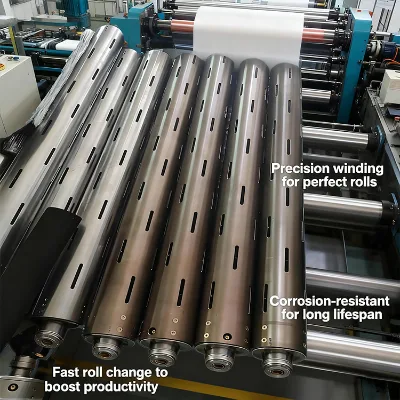
Procuring an Air Shaft Slitter Machine requires a disciplined approach to verifying mechanical compatibility and operational reliability. Buyers must first identify the specific application context, whether for high-speed slitting, tension control, or integration with existing printing presses like Heidelberg systems. The core component, often referred to as an air shaft or friction air shaft, serves as the central mandrel for winding and unwinding materials. Understanding the distinction between standard off-the-shelf units and customized solutions is critical, as the latter may involve spline structures or specific length requests tailored to unique production lines.
The sourcing landscape includes a wide variety of suppliers, primarily concentrated in industrial hubs such as Shanghai and Tai Cang in China. Listings often highlight capabilities in processing metal, aluminum, and stainless steel, with surface treatments ranging from oxide coatings to rubber finishes. Buyers should recognize that while many products appear similar, the underlying material composition—such as aluminum bodies versus steel or carbon fiber options—significantly impacts durability and performance. Evaluating these material choices against the specific weight and tension requirements of the slitting process is essential for long-term operational success.
Product Scope and Observed Listing Signals
The observed market signals indicate a broad range of product configurations, with prices varying significantly from low-cost components to high-end systems reaching up to $140,000. This disparity often reflects the complexity of the unit, such as whether it is a simple air shaft or a complete high-speed slitting machine with integrated tension control. Most listings show a minimum order quantity of one, suggesting that suppliers cater to both individual replacement part purchases and full machine acquisitions. Buyers should carefully distinguish between standalone shafts and complete machinery, as the latter involves more complex integration and support requirements.
Customization is a prevalent feature, with many suppliers offering tailored solutions for specific machine models or operational needs. Attributes such as "customized" and "request" for length indicate that standard sizes may not always fit specialized equipment. The product names often include terms like "Leaf Type" or specific model codes, which can help in identifying the exact mechanical interface required. It is crucial to verify if the listed product is a new unit or a refurbished part, as condition affects both performance and warranty coverage.
Technical Specifications to Verify
Technical verification must begin with the structural design, particularly the spline configuration and the type of air inlet valve. The air shaft body material is a key differentiator, with options including aluminum, steel, stainless steel, and even carbon fiber for high-performance applications. Buyers should confirm the material of the two sides and the inlet valve, as these components are subject to high wear and tear. The surface treatment, such as rubber coating or oxide finish, also plays a vital role in grip and corrosion resistance, directly affecting the quality of the slit material.
Length and diameter specifications are critical for compatibility with existing rolls and machinery. While some listings provide standard ranges, others require custom requests, necessitating precise measurement of the current setup. The production time for standard parts may be listed as in-stock, while customized units typically require 12-15 days. Buyers must ensure that the specified model, such as FR-1600 or other identifiers, matches the technical requirements of their slitting process. Verifying the working method, such as round knife cutting, ensures that the shaft supports the intended cutting mechanism.
Compliance and Safety Documentation
Compliance with international standards is a non-negotiable aspect of sourcing industrial machinery. Many suppliers list certifications such as CE and ISO, which indicate adherence to European safety and quality management systems. However, buyers should verify the specific scope of these certifications, as they may apply only to certain components or the final assembled machine. The presence of ISO9001 suggests a robust quality management process, but it does not guarantee that every individual unit meets the same rigorous standards without proper oversight.
Safety documentation must include detailed manuals for operation and maintenance, particularly for high-speed slitting machines. Buyers should request evidence of risk assessments and compliance with relevant machinery directives. The certification "ISOUL" mentioned in some listings may be a typo or a specific regional standard, requiring clarification from the supplier. Ensuring that all electrical and mechanical components meet local safety regulations is essential to avoid legal liabilities and operational hazards.
Cost Drivers and Commercial Terms
Cost drivers for air shaft slitters include material quality, customization level, and the complexity of the surface treatment. Aluminum and stainless steel options typically command higher prices due to their superior corrosion resistance and weight properties. Customization, such as specific spline designs or non-standard lengths, adds to the manufacturing cost and extends the production time. Buyers should also consider the packaging method, with wooden cases or paper tubes offering varying levels of protection during transit, which can impact shipping costs and damage risks.
Commercial terms often include a production time of 15 days for standard items, but this can vary for customized orders. Buyers should negotiate clear terms regarding payment schedules, warranty periods, and after-sales support. The listed production time of "Normal Part 12-15days" suggests a baseline, but delays can occur due to supply chain issues or design changes. Understanding the total cost of ownership, including maintenance and potential downtime, is more important than the initial purchase price alone.
Supplier Qualification and Quality Control
Supplier qualification involves assessing their manufacturing capabilities and quality control processes. Buyers should verify if the supplier offers processing with material supplied or if they provide the raw materials, as this affects quality assurance responsibilities. The mention of "Nano Machining" as a processing level indicates a high degree of precision, which is crucial for the smooth operation of air shafts. Suppliers should provide detailed specifications and test reports to demonstrate the consistency of their products.
Quality control checks should include visual inspections for surface defects and dimensional verification of critical components. Buyers may request third-party inspection reports or conduct their own quality audits if the order volume justifies it. The place of origin, such as Shanghai or Tai Cang, can provide insights into the local industrial ecosystem and supplier expertise. Establishing a clear communication channel for technical queries and issue resolution is vital for maintaining a productive supplier relationship.
Long-Term Procurement Checks
Long-term procurement success depends on the availability of spare parts and ongoing technical support. Buyers should ensure that the supplier can provide replacement components, such as inlet valves or spline inserts, to minimize downtime. The condition of the product, whether new or refurbished, should be clearly documented to track performance over time. Regular maintenance schedules and training for operators can extend the lifespan of the air shaft and improve overall productivity.
Continuous evaluation of supplier performance is necessary to identify any trends in quality or delivery issues. Buyers should maintain a record of production times, defect rates, and customer service responsiveness. As technology evolves, staying informed about new materials and designs, such as carbon fiber shafts, can provide competitive advantages. Building a diversified supplier base can mitigate risks associated with single-source dependencies and ensure business continuity.
FAQs
How long does production take for an air shaft for a slitting machine?
Standard production time is normally 12 to 15 days for typical parts, and some standard configurations are kept in stock for faster dispatch. Custom air shafts with special lengths, materials, or spline structures may require additional time depending on the complexity. Buyers should confirm the exact production schedule before ordering, especially when the air shaft must match a specific slitting machine or Heidelberg printer setup.
What materials are available for the air shaft body and end components?
Air shaft bodies can be made from aluminum, steel, carbon fiber, or stainless steel, while the two side journals are offered in steel, aluminum, or stainless steel. The air inlet valve is available in steel or stainless steel. Aluminum is a common capability for machining, and oxide coating is used as a surface treatment. Buyers can request a material combination that suits their slitting application and load requirements.
Can an Air Shaft Slitter Machine be customized to specific requirements?
Yes, customization is available. Air shafts can be produced with requested lengths, spline structures, and different material combinations for the body, side journals, and air inlet valve. Standards listed include 1 inch to 10 inch and 1 inch to 360 inch ranges, plus custom configurations. Processing covers metal and nano machining, and processing with supplied material is supported. Buyers should provide drawings or specifications so the factory can confirm feasibility before quoting.
Which certifications do air shaft products typically carry?
Listed certifications include CE, ISO, and ISO9001, so products can be documented to meet these schemes. Certification coverage can vary between individual product listings, so buyers should request the applicable certificate copies for the exact model they intend to purchase. This helps verify conformity before shipment and supports import or audit requirements. Always confirm the current certification status with the supplier during the quotation stage.
What packaging is used when shipping an Air Shaft Slitter Machine?
Standard export cartons are used for smaller components, while wooden cases, wooden boxes, or paper tubes are used for air shafts and machine parts. Wood packaging suits export shipments by protecting surfaces and journals during handling. Buyers with special packing requirements should state them in the inquiry so the supplier can prepare suitable export packaging. Confirm packaging details together with shipping terms before confirming the order.
How do I choose between a leaf type and spline air shaft?
The choice depends on the roll core and the material being wound. A spline structure is listed as a standard option and suits applications needing uniform grip across the roll, while leaf type air shafts are also offered as a model option. Consider core size range, weight, and speed of your slitting line. Sharing your machine model and roll specifications with the supplier allows them to recommend the appropriate structure.
Can I supply my own material for processing an air shaft?
Yes, processing with material supplied is a supported trade arrangement. Under this mode, buyers provide the base material and the factory performs the metal processing, including nano-level machining and surface treatments such as oxide coating or rubber covering. This can help control material quality or meet specific project requirements. Buyers should discuss material acceptance conditions, processing scope, and inspection arrangements with the factory before sending material.