Source Airport Fuel Tank Truck for Aviation, Ground Support, and Emergency Use
Compare 30 Airport Fuel Tank Truck options from verified Chinese manufacturers. Buyers can evaluate specifications including tank volume, horsepower, and emission standards to select the right vehicle for aviation ground support operations.
Key considerations
Products List


Airport Specific Fuel Truck for Transporting Aviation Gasoline and Kerosene
$38888.00 - $68888.00
MOQ: 1 Pieces


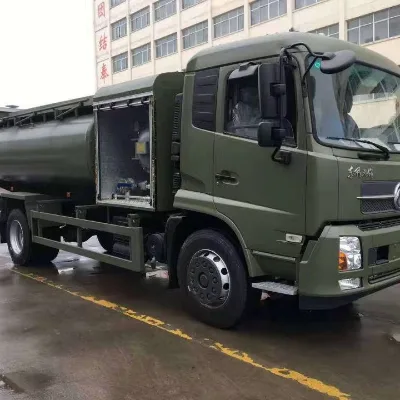

Water Tank Truck for Airport Port and Industrial Area Dust Control
$14000.00 - $15000.00
MOQ: 1 Pieces


Customized Edible Crude Oil Gasoline Diesel Tank Aviation Fuel Road Tanker Truck
$12200.00 - $66000.00
MOQ: 1 Unit
Comprehensive Sourcing Guide
Strategic Sourcing Guide for Airport Fuel Tank Trucks
Understanding Technical Specifications and Variants
When sourcing an Airport Fuel Tank Truck, buyers must first navigate a complex landscape of technical specifications that vary significantly based on the intended operational environment. The market offers a diverse range of models, each tailored to specific fueling rates, tank capacities, and chassis configurations. A critical observation from current market data indicates that tank volumes can range from approximately 5,000 liters to over 30,000 liters, with specific models designed for capacities between 5,001 and 10,000 liters, others for 10,001 to 15,000 liters, and heavy-duty units exceeding 15,000 liters. The geometric capacity of some units is recorded at 20,000 liters, while others are optimized for 8.5 cubic meters.
The powertrain configuration is equally diverse. Buyers will encounter models equipped with diesel engines ranging from 150 to 250 horsepower, as well as high-performance units delivering between 351 and 450 horsepower. Engine displacement for certain models falls within the 4 to 6-liter range. Transmission types vary, with some units featuring automatic transmissions while others utilize manual gearboxes. The drive wheel configuration is predominantly 4-wheel drive, often denoted as 4×, ensuring stability on airport tarmacs. The total mass of these vehicles can reach up to 11,495 kilograms for lighter models, while the specified gross mass for heavier variants can extend to 28,650 kilograms. The rated load quality typically hovers around 6,305 kilograms, with a preparation quality of approximately 4,995 kilograms.
Dimensions are a primary constraint in airport operations. Standardized dimensions for specific models include lengths of 8,700 mm, 9,550 mm, and 9,900 mm, with widths consistently around 2,500 mm and heights varying between 2,900 mm and 3,200 mm. For instance, one model measures 9,900 mm by 2,500 mm by 3,185 mm, while another is listed at 9,550 mm by 2,500 mm by 3,200 mm. Fueling capabilities are another critical technical differentiator. Maximum fueling rates under pressure can reach 1,000 liters per minute, whereas gravity-fed systems may operate at rates of 180 liters per minute. The storage type is universally noted as "Oil," and the mounting type for tanks is typically horizontal, though semi-underground positions are also available for stationary or specialized applications.
Compliance and Certification Verification
Compliance with international and local aviation safety standards is non-negotiable when procuring fuel tank trucks. The certification landscape is rigorous, often requiring adherence to specific international standards. Buyers must verify that the supplier can provide documentation for certifications such as ISO, IATA, and AHM (Air Transport Association of America). These standards are critical for ensuring that the vehicle meets the safety protocols required for handling aviation fuel. Additionally, tire certifications are essential; observed data indicates that tires must meet GCC and ISO standards to ensure durability and safety under heavy loads and high-speed taxiing conditions.
Emission standards represent another layer of compliance that varies by region and airport regulations. While some units are certified to Euro III standards, others may meet higher emission thresholds. It is imperative for buyers to confirm the specific emission standard applicable to their location, as airports often enforce strict environmental regulations. The production standards, including IATA and AHM, must be explicitly stated in the product documentation. Furthermore, the condition of the vehicle must be confirmed as "New" to ensure that all safety systems and mechanical components are in optimal working order. The storage of oil requires specific material compatibility, often involving metal construction to prevent contamination and ensure structural integrity.
Cost Drivers and Pricing Dynamics
The pricing of airport fuel tank trucks is influenced by a multitude of factors, resulting in a wide observed range from approximately 11.6 USD to 260,000 USD. This vast disparity is not indicative of quality differences alone but rather reflects the significant variation in specifications, capacity, and customization levels. The minimum order quantity (MOQ) is generally flexible, ranging from 1 to 50 units, which allows for both single-unit procurement for small airports and bulk purchasing for large fleets.
Several key cost drivers must be analyzed during the budgeting phase. First, the tank volume is a primary determinant; units with capacities exceeding 15,000 liters or those with specialized 20,000-liter geometric capacities command higher prices. Second, the horsepower and engine displacement directly impact the cost, with high-horsepower engines (351-450 hp) being more expensive than standard 150-250 hp units. Third, the transmission type plays a role; automatic transmissions often carry a premium over manual counterparts due to their complexity and ease of operation in tight airport environments.
Customization is another significant cost factor. While customization is available for most models, the extent of this customization—ranging from color options to specific packing requirements like "Nude" or "RO-RO"—will affect the final price. The origin of the product, primarily China or Shanghai, influences logistics costs, but the base manufacturing cost remains a function of the technical specifications. Buyers should be aware that the "Standard Export Packing" or customer-specific packing solutions may incur additional charges. It is crucial to request detailed quotes that break down these variables to understand the true cost structure beyond the listed price range.
Typical Applications and Operational Scenarios
Airport fuel tank trucks serve a critical role in the logistics chain of aviation operations, primarily used for refueling aircraft on the tarmac. The specific application dictates the required specifications. For instance, models with a tank volume of 5,001 to 10,000 liters are suitable for smaller regional airports or for refueling smaller aircraft types. Conversely, units with capacities between 15,001 and 30,000 liters are designed for major international hubs where large commercial jets require rapid and high-volume refueling. The maximum fueling rate under pressure of 1,000 liters per minute is essential for minimizing aircraft turnaround time, a critical metric for airport efficiency.
The drive wheel configuration of 4× is particularly important for these applications, providing the necessary traction and stability on potentially slippery or uneven tarmac surfaces. The tire design, specifically radial tires, ensures a smooth ride and better load distribution, which is vital when transporting heavy loads of fuel. The storage capacity of 1 to 10 tons aligns with the load capacity requirements for various aircraft classes. Furthermore, the emission standard compliance ensures that these vehicles can operate in environmentally sensitive airport zones without violating local air quality regulations.
In addition to mobile refueling, some units are designed for semi-underground mounting or specific storage configurations, indicating versatility in their application. The shape of the tank, typically columnar, and the material, usually metal, are optimized for safe fuel transport. The position of the tank, whether horizontal or semi-underground, affects the center of gravity and handling characteristics, which are critical for maneuvering in tight airport corridors.
Supplier Evaluation and Sourcing Strategy
Evaluating suppliers for airport fuel tank trucks requires a meticulous approach to ensure reliability and compliance. Buyers should prioritize suppliers who can demonstrate a clear track record of meeting international standards such as ISO, IATA, and AHM. The origin of the product, often listed as China or Shanghai, should be verified against the supplier's actual manufacturing capabilities. It is essential to confirm that the supplier offers customization options, as airport requirements can be highly specific.
The production standard, including IATA and AHM, should be explicitly documented in the supplier's portfolio. Buyers must verify the condition of the vehicles, ensuring they are supplied as "New" units. The packing method, whether "Standard Export Packing," "Nude," or "RO-RO," should be discussed to ensure it meets the logistical requirements of the buyer's location. The lead time and production capacity are also critical factors, though specific values should be confirmed directly with the supplier rather than assumed from general market data.
When evaluating suppliers, buyers should look for transparency in their certification processes. The presence of GCC and ISO certifications for tires and other components is a strong indicator of quality. Additionally, the ability to provide detailed technical specifications, including dimensions and fueling rates, is a sign of a professional supplier. Buyers should avoid suppliers who cannot clearly articulate their compliance with emission standards or who lack documentation for their production standards.
Quality Control and Long-Term Procurement Considerations
Quality control is paramount in the procurement of airport fuel tank trucks due to the high stakes involved in aviation safety. Buyers must implement rigorous inspection protocols to verify that the vehicles meet all specified technical requirements. This includes checking the tank volume, fueling rates, and emission standards against the provided specifications. The total mass, rated load quality, and preparation quality must be verified to ensure the vehicle can handle the intended operational loads safely.
Long-term procurement considerations involve looking beyond the initial purchase price to the total cost of ownership. This includes maintenance costs, fuel efficiency, and the availability of spare parts. The horsepower and engine capacity are key indicators of long-term performance and fuel consumption. Buyers should also consider the customization options available, as these can impact the longevity and adaptability of the vehicle to future airport needs.
The production standard, including IATA and AHM, should be a baseline for quality assurance. Buyers must ensure that the supplier has a robust quality control system in place, covering everything from material selection to final assembly. The condition of the vehicle, confirmed as "New," should be accompanied by comprehensive warranty and support agreements. Finally, the geographic origin and shipping logistics, such as RO-RO or standard export packing, should be factored into the long-term planning to ensure timely delivery and minimal disruption to airport operations.
Comparative Analysis of Key Specifications
To assist buyers in making informed decisions, the following table summarizes the key technical specifications observed in the market for airport fuel tank trucks. This comparison highlights the diversity in capacity, power, and dimensions that buyers must consider.
| Specification Category | Variant A (Light/Medium) | Variant B (Heavy Duty) | Variant C (High Capacity) |
|---|---|---|---|
| Tank Volume | 5,001-10,000 L | 10,001-15,000 L | 15,001-30,000 L |
| Geometric Capacity | ~8.5 m³ | N/A | 20,000 L |
| Horsepower | 150-250 hp | N/A | 351-450 hp |
| Engine Capacity | 4-6 L | N/A | N/A |
| Transmission Type | Automatic / Manual | N/A | N/A |
| Total Mass (Kg) | 11,495 | N/A | 28,650 (Gross) |
| Rated Load (Kg) | 6,305 | N/A | N/A |
| Dimensions (L x W x H) | 8,700 x 2,500 x 2,970 mm | 9,550 x 2,500 x 3,200 mm | 9,900 x 2,500 x 3,185 mm |
| Fueling Rate (Pressure) | 180 L/min (Gravity) | 1,000 L/min (Pressure) | 1,000 L/min (Pressure) |
| Emission Standard | Euro III | Euro | N/A |
| Certifications | ISO, IATA, AHM | GCC, ISO | ISO, IATA, AHM |
This table serves as a reference point for buyers to compare the capabilities of different models. It is important to note that specific values may vary by manufacturer and model, and buyers should always verify the exact specifications with the supplier before making a procurement decision. The diversity in these specifications underscores the need for a tailored approach to sourcing, ensuring that the selected vehicle aligns perfectly with the specific operational requirements of the airport.
FAQs
What tank volumes are available for airport fuel tank trucks?
Available tank volumes range from 5,001 to over 30,000 liters depending on the model. Specific units offer capacities between 5,001 and 10,000 liters, while others reach 15,001 to 30,000 liters or feature a geometric capacity of 20,000 liters.
Which transmission types are offered for these vehicles?
Both automatic and manual transmission types are available for airport fuel tank trucks. Buyers can select automatic systems for ease of operation or manual gearboxes depending on their specific operational preferences and requirements.
Can customization be requested for the product specifications?
Yes, customization is available for most models to meet specific airport needs. Options include customized colors, specific packing methods like Nude or RO-RO, and tailored dimensions to fit unique operational environments.
What certifications are required for airport fuel tank trucks?
Required certifications often include ISO, IATA, and AHM standards for production and safety. Tire certifications must also meet GCC and ISO standards to ensure durability and compliance with aviation safety protocols.
How does the fueling rate vary across different models?
Maximum fueling rates vary significantly based on the system type. Units can achieve up to 1,000 liters per minute under pressure, while gravity-fed systems typically operate at a rate of 180 liters per minute.
What is the typical horsepower range for these trucks?
Horsepower ranges from 150 to 250 hp for standard models and up to 351 to 450 hp for high-performance units. Engine displacement for certain models falls within the 4 to 6-liter range to support these power levels.