Find Alkali-Free Shotcrete Concrete Accelerator for tunnels, mines, and slopes
Source 30 verified options for Alkali-Free Shotcrete Concrete Accelerator designed for rapid setting in construction projects. Compare specifications like setting time, strength, and application methods from suppliers in China.
Key considerations
Products List






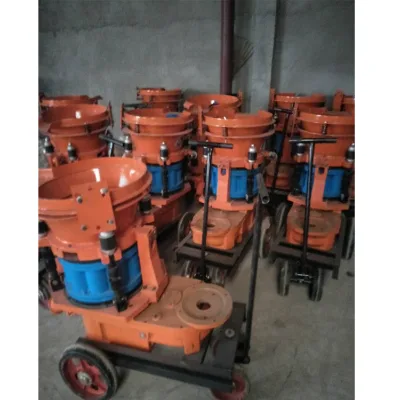


Shotcrete Pump Concrete Sprayer for Spray Refractory Sprayer Materials
$12000.00 - $19999.00
MOQ: 1 Sets

Comprehensive Sourcing Guide
Strategic Sourcing Guide for Alkali-Free Shotcrete Concrete Accelerators
Understanding Product Specifications and Technical Attributes
When sourcing alkali-free shotcrete concrete accelerators, buyers must first distinguish between the chemical admixture and the machinery used to apply it. The market presents a complex landscape where specific product models, such as the GP-20JT, AFA, SNJ, and SIDLEY SA06, represent different categories of equipment or chemical formulations. For the chemical accelerator itself, the primary technical focus is on the formulation that ensures rapid setting without introducing harmful alkalis that could degrade the concrete matrix over time.
The core chemical attributes for a high-quality alkali-free accelerator include a specific pH range, typically observed between 3.0 and 3.5 (3.0±0.5), which indicates the necessary acidity to activate the cement hydration process without causing corrosion. The alkali content is a critical metric; verified products must maintain an alkali content of less than or equal to 1% to meet the "alkali-free" designation. Furthermore, the chloride ion content must be strictly controlled, with observed standards requiring values below 0.05% to prevent reinforcement corrosion. These chemical constraints are non-negotiable for structural integrity in modern construction.
In terms of physical application, the accelerator is designed for wet-mix shotcrete processes. The recommended application temperature range is between 5°C and 35°C, ensuring that the chemical reaction proceeds correctly under varying environmental conditions. The setting time is a pivotal performance indicator; buyers should look for products offering an initial setting time that is adjustable, typically ranging from 3 to 5 minutes. This adjustability allows contractors to tailor the mix to specific site requirements, whether for vertical tunneling or overhead spraying. The product's physical appearance is generally a powder, often described as white or grayish-brown, and it must be stored in sealed containers to maintain a shelf life of 12 months.
Compliance, Certification, and Safety Standards
Navigating the regulatory landscape is essential for any procurement strategy involving construction chemicals. While specific certification statuses for every listed product cannot be universally asserted without individual verification, the supply chain generally adheres to recognized international standards. Buyers should verify that the product carries CE marking and ISO9001 certification, which indicate compliance with European safety directives and quality management systems, respectively. These certifications are critical for projects in regions where regulatory bodies mandate strict adherence to quality protocols.
Safety is another paramount consideration. The product must be classified as non-flammable, a characteristic that significantly reduces fire hazards during storage and transport. The packaging standards are equally important; products are often shipped in 25kg bags or 200-liter drums, with bulk delivery options available for large-scale projects. The standard for packaging often aligns with export requirements, such as 40-foot flat rack containers, ensuring that the goods remain secure during international transit.
Buyers must also verify the specific standard associated with the product model. For instance, certain models are explicitly designated as "alkali-free accelerators," a classification that differentiates them from traditional calcium chloride-based accelerators which are known to cause corrosion. The absence of alkalis is a specific chemical requirement that must be confirmed through the product's technical data sheet. Additionally, the bonding strength of the accelerator must be high to ensure the shotcrete adheres properly to the substrate, a factor that is often tested and verified in laboratory settings before commercial release.
Cost Drivers and Procurement Economics
The pricing of alkali-free shotcrete accelerators is influenced by a variety of factors, including raw material costs, manufacturing complexity, and logistics. The observed price range in the market is extensive, spanning from $0.50 to $350,000 USD. This wide variance reflects the difference between small-scale chemical samples and large industrial machinery or bulk chemical shipments. For the chemical accelerator itself, the cost is primarily driven by the purity of the ingredients and the specific formulation required to meet the alkali-free and low-chloride specifications.
Minimum Order Quantity (MOQ) is a significant cost driver. The market shows an MOQ range from 1 unit to 5,000 units, with specific chemical products often having an MOQ of 1 ton. This flexibility allows small contractors to test products without committing to massive inventory, while large infrastructure projects can negotiate bulk rates. The lead time is another economic factor; many suppliers offer products that are "in stock," which can expedite project timelines and reduce storage costs. However, for custom formulations or large bulk orders, lead times may vary, requiring careful planning.
Shipping methods such as EXW (Ex Works), FOB (Free on Board), CIF (Cost, Insurance, and Freight), and CFR (Cost and Freight) significantly impact the final landed cost. Buyers must calculate the total cost of ownership, including freight, insurance, and customs duties, rather than focusing solely on the unit price. The sample policy, which often includes a 500g free sample with the buyer covering shipping fees, allows for cost-effective testing before full-scale procurement. This approach minimizes the financial risk associated with adopting a new supplier or product formulation.
Typical Applications and Industry Use Cases
Alkali-free shotcrete accelerators are primarily utilized in the construction industry, where their rapid setting and high bonding strength are critical for safety and efficiency. The applications are diverse, ranging from tunneling and mining to slope stabilization and structural repairs. The accelerator is particularly valuable in wet-mix shotcrete applications, where the concrete is mixed with water before being pumped to the nozzle. The fast-setting nature of the accelerator allows for immediate support in unstable ground conditions, preventing collapse and ensuring worker safety.
The product is also suitable for industrial applications, where specific performance requirements may dictate the use of high-strength shotcrete. The theoretical spraying displacement of associated machinery, such as the GP-20JT, can reach 35 cubic meters per hour, highlighting the scale at which these accelerators are deployed. The maximum spraying height and width capabilities, such as 15.8 meters upward and 13.5 meters horizontally, indicate the versatility of the system in complex construction environments.
In tunneling projects, the accelerator enables the application of a thin, strong layer of shotcrete that hardens quickly, providing immediate ground support. In slope stabilization, the high bonding strength ensures that the shotcrete adheres firmly to the rock face, preventing erosion and landslides. The adjustable setting time allows contractors to optimize the mix for different geological conditions, ensuring that the concrete sets at the optimal rate for the specific application.
Supplier Evaluation and Quality Assurance
Selecting a reliable supplier requires a rigorous evaluation process that goes beyond price comparisons. Buyers should verify the supplier's ability to provide consistent quality, as evidenced by their adherence to ISO9001 standards and CE certification. The supplier's capacity to offer samples, such as the 500g free sample policy, is a strong indicator of confidence in their product quality. This allows buyers to conduct independent tests to verify the pH value, alkali content, and setting time before committing to a large order.
Quality control should be a continuous process, involving regular testing of the product against the specified parameters. Buyers should request batch-specific test reports that confirm the chloride ion content is below 0.05% and the alkali content is within the acceptable limit of 1%. The supplier's ability to provide technical support and guidance on the application process is also crucial, as improper mixing or application can compromise the performance of the accelerator.
The supplier's logistics capabilities are equally important. Buyers should assess the supplier's ability to meet lead times and handle shipping methods such as EXW, FOB, CIF, or CFR. The packaging standards, such as the 25kg bag or 200-liter drum, should be verified to ensure they meet the requirements for international transport and storage. The supplier's reputation in the industry, particularly their experience with alkali-free formulations, is a key factor in the evaluation process.
Long-Term Procurement and Performance Considerations
Sourcing alkali-free shotcrete accelerators is not just a one-time transaction but a long-term partnership that requires careful planning. The shelf life of the product, typically 12 months in the original sealed container, necessitates a procurement strategy that balances inventory levels with usage rates. Buyers should avoid overstocking to prevent degradation of the product, while also ensuring sufficient supply to avoid project delays.
The long-term performance of the shotcrete is directly linked to the quality of the accelerator. The 1-hour strength of the shotcrete, which should be at least 8MPa, is a critical metric for early-age structural integrity. Buyers should monitor the performance of the shotcrete over time to ensure that the accelerator continues to meet the required standards. Any deviation in performance should be investigated immediately to prevent potential structural failures.
Furthermore, the environmental impact of the accelerator should be considered. The alkali-free formulation is designed to minimize the risk of corrosion and environmental damage, making it a sustainable choice for modern construction projects. Buyers should verify that the supplier adheres to environmental regulations and provides documentation on the product's environmental safety.
In conclusion, sourcing alkali-free shotcrete concrete accelerators requires a comprehensive understanding of technical specifications, compliance requirements, cost drivers, and supplier capabilities. By focusing on these key areas, buyers can ensure the procurement of high-quality products that meet the demanding requirements of modern construction projects. The integration of rigorous quality control measures and long-term performance monitoring will further enhance the reliability and success of the procurement strategy.
FAQs
What is the alkali content limit for this accelerator?
The alkali content must be less than or equal to 1% to meet the alkali-free designation. This strict limit prevents reinforcement corrosion and ensures long-term structural integrity in concrete applications.
How fast does the product set after mixing?
The initial setting time is adjustable and typically ranges from 3 to 5 minutes. This flexibility allows contractors to tailor the mix for specific site requirements like vertical tunneling or overhead spraying.
Which certifications should the product possess?
Verified products should carry CE marking and ISO9001 certification. These indicate compliance with European safety directives and quality management systems required for many international construction projects.
Can I get a sample before placing a large order?
Yes, a 500g free sample is available for testing purposes. The buyer is responsible for paying the shipping fee, allowing for cost-effective verification of pH and setting time before procurement.
What is the minimum order quantity for this chemical?
The minimum order quantity is 1 ton for the chemical accelerator. This flexibility supports small contractors testing products while allowing large infrastructure projects to negotiate bulk rates effectively.
How long is the shelf life in sealed containers?
The shelf life is 12 months when stored in the original sealed container. Buyers should balance inventory levels with usage rates to prevent product degradation over time.