Source Traditional Design Synthetic Thatch for Hotels, Resorts, and Gardens
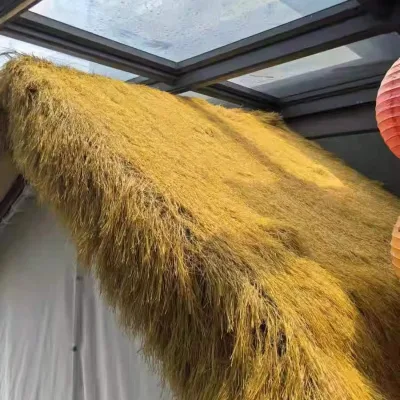
Compare 25 listings for Traditional Design Synthetic Thatch suitable for hotels, resorts, and garden landscaping. Options include PE and PP materials with waterproof and fire-resistant features, offering customization and long service life for decorative roofing and ground cover applications; compare the available evidence and request quotations based on your requirements.
Key considerations
Products List


Artificial Thatch of Non Combustible Construction Material Synthetic Straw
$2.30 - $3.00
MOQ: 500 Pieces


Vintage Style Artificial Thatch, Synthetic Thatch for Backyard Tropical Themed Decoration
$1.82 - $4.12
MOQ: 500 Square Meters


Fireproof Landscape Artificial Thatch Cost of Synthetic Thatch for Beach
$1.60 - $1.70
MOQ: 500 Pieces


Durable Fire Retardant Artificial Thatch Custom Widths of 2m and 4m
$1.18 - $6.48
MOQ: 300 Square Meters

Versatile Fire Retardant Artificial Thatch Available in 2m and 4m Width
$1.18 - $6.48
MOQ: 300 Square Meters
Comprehensive Sourcing Guide
Traditional Design Synthetic Thatch Sourcing Guide
Buyers seeking Traditional Design Synthetic Thatch must first distinguish between natural thatch replicas and fully artificial grass systems, as the supplied data indicates a split in product types ranging from roof thatch to landscaping grass. The observed listings reveal specific models like MG568 and MG032, which are explicitly categorized as roof thatch with natural shapes, while other entries describe artificial thatch or synthetic grass suitable for gardens and recreation. This distinction is critical because the functional requirements for a hotel roof differ significantly from those for a sports ground or decorative landscaping feature.
Procurement teams should verify whether the specific product variant supports the intended application, such as waterproofing and fire resistance for hospitality venues or UV stability for outdoor recreation areas. The data confirms that some units offer customization and after-sales service, while others are non-customized with specific surface treatments like printing. Understanding these variations ensures that the selected material aligns with the project's aesthetic goals and performance needs, preventing the mismatch of a decorative garden product for a structural roofing application.
Product Scope and Observed Listing Signals
The market for Traditional Design Synthetic Thatch presents a wide range of options, with observed prices spanning from 1 to 800 USD and minimum order quantities varying from 1 to 1000 pieces. This broad spectrum suggests that buyers can source small sample batches or large commercial orders, but the price variance likely reflects differences in material composition, such as PE versus PP blends, and the complexity of the manufacturing process. Buyers must carefully evaluate the unit price against the specific model number, as the data lists distinct models like CZR-08 and MG-S003A, each potentially carrying different cost structures and feature sets.
Listing signals indicate that some products are packaged in cartons with specific standard dimensions, while others are defined by their yarn form and shape, such as straight-cut monofilament yarns. The presence of both "Natural" and "Artificial Thatch" classifications in the same dataset requires buyers to scrutinize the product description to confirm the visual texture and material feel. It is essential to verify if the "Straw Yellow" color and "Flat Type" cross-profile match the desired traditional aesthetic, as these visual attributes are key to achieving the authentic look required for resorts and restaurants.
Technical Specifications to Verify
Technical verification must begin with the material composition, as the data explicitly lists PE and PP as the primary materials used in these synthetic thatch products. Buyers should confirm the specific blend ratio and yarn length, noting that some listings specify "Long" yarn forms which may impact the density and durability of the final product. The distinction between "Particles" and "Monofilament" yarn shapes is also significant, as it affects the visual texture and how the material interacts with light and weather, directly influencing the realism of the traditional design.
Dimensional consistency is another critical technical factor, with observed standards ranging from 555535cm to 10050cm and specific piece sizes like 47cm50cm. Buyers must ensure that the selected product's size, such as the 500*500mm specification for roof thatch, aligns with the installation requirements of the project. Additionally, the ground cloth complexity and base requirements, such as a cement base, must be confirmed to ensure the product can be properly installed and secured, especially for applications in hotels and resorts where safety and stability are paramount.
Compliance and Safety Documentation
Safety compliance is a primary concern for synthetic thatch used in public spaces like hotels and resorts, particularly given the observed functional claims of being waterproof and fire-resistant. Buyers must request specific test reports to validate these claims, as the data lists these attributes but does not provide the underlying certification numbers or testing standards. It is vital to verify that the fire resistance meets local building codes for the specific region where the product will be installed, ensuring that the material does not pose a hazard in high-traffic or enclosed areas.
Environmental and material safety documentation should also be reviewed, especially since the products are made from PE and PP plastics. Buyers need to confirm that the manufacturing process, described as machinery-based with printing surface treatments, adheres to environmental regulations regarding chemical usage and waste disposal. While the data mentions an "International Class" grade, this is a general descriptor rather than a specific certification, so procurement teams should seek detailed material safety data sheets (MSDS) to ensure the product is free from harmful substances and safe for human contact in recreational or landscaping settings.
Cost Drivers and Commercial Terms
The commercial landscape for Traditional Design Synthetic Thatch is influenced by several cost drivers, including the level of customization, the complexity of the surface treatment, and the specific model selected. The data shows that some products are customized while others are non-customized, and this distinction often correlates with price points and minimum order quantities. Buyers should anticipate higher costs for custom orders that require specific logos, colors, or dimensions, as these processes add complexity to the manufacturing and packaging stages.
Payment terms and logistics are also significant factors, with observed minimum order quantities ranging from 1 to 1000 pieces and lead times that may vary based on the product's origin in China. The packaging standard of 555535cm or 100*50cm affects shipping efficiency and costs, so buyers should calculate the total landed cost including freight and duties. Additionally, the availability of after-sales service, such as the 2-year warranty mentioned for some models, should be factored into the total cost of ownership, as it provides long-term value and reduces the risk of premature replacement.
Supplier Qualification and Quality Control
Supplier qualification requires a thorough review of the manufacturer's capabilities, particularly their ability to handle the specific processing and surface treatment techniques required for high-quality synthetic thatch. The data indicates that products undergo machinery processing and printing, which suggests a need for suppliers with advanced manufacturing equipment and quality control systems to ensure consistency in color and texture. Buyers should verify the supplier's experience with similar projects, such as those for hotels and resorts, to ensure they can deliver the required aesthetic and functional standards.
Quality control protocols must be established to verify the durability and performance of the synthetic thatch, especially given the claimed usage life of 10 to 15 years or up to 20 years. Buyers should request samples to test the material's resistance to moths, termites, and fire, as these are key functional attributes listed in the product data. Establishing a clear inspection plan that includes checks for yarn shape, base stability, and overall construction integrity will help ensure that the delivered products meet the project's specifications and performance expectations.
Long-Term Procurement Checks
Long-term procurement success depends on verifying the product's longevity and maintenance requirements, as the data lists usage lives ranging from 10 to 20 years. Buyers should confirm the specific conditions under which these lifespans are guaranteed, including exposure to UV radiation, temperature fluctuations, and mechanical wear. Understanding the maintenance needs, such as cleaning protocols for the printed surface or the stability of the cement base, is essential for ensuring the product remains functional and aesthetically pleasing over its intended lifespan.
After-sales support and warranty terms are critical components of a long-term procurement strategy, with some listings offering a 2-year service period. Buyers should clarify the scope of this service, including whether it covers material defects, installation issues, or performance failures, and how claims are processed. Establishing a clear communication channel with the supplier for ongoing support ensures that any issues can be addressed promptly, protecting the investment and maintaining the quality of the Traditional Design Synthetic Thatch in the long run.
FAQs
What is the expected service life of Traditional Design Synthetic Thatch?
The expected service life ranges from 10 to 20 years depending on the specific model selected. Products like the MG568 and MG032 are rated for 10-15 years, while others such as MG539 and MG009 offer a 20-year lifespan. This durability ensures long-term value for hotels, resorts, and restaurants using these materials for roofing or decoration.
Can Traditional Design Synthetic Thatch be customized for specific projects?
Yes, customization is available for many Traditional Design Synthetic Thatch products. Buyers can request customized sizes and styles to fit unique architectural needs. While some items like the Synthetic Thatch model are non-customized, others allow for tailored specifications. This flexibility supports diverse applications in landscaping, gardens, and commercial venues requiring specific aesthetic outcomes.
What materials are used to make Traditional Design Synthetic Thatch?
Traditional Design Synthetic Thatch is primarily made from PE or a blend of PP and PE materials. These polymers provide essential properties such as waterproofing, fire resistance, and termite resistance. The materials are processed using machinery and may feature surface treatments like printing to achieve a natural straw yellow color, ensuring durability and aesthetic appeal for various outdoor and indoor uses.
What are the standard specifications for Traditional Design Synthetic Thatch?
Standard specifications vary by model, with common sizes including 500*500mm and 100*50cm. Packaging standards often measure 55*55*35cm or 47cm*50cm per piece. Models like MG-S003A and CZR-08 represent specific product lines. These dimensions help buyers calculate coverage area and logistics requirements accurately, ensuring the selected thatch fits the intended installation space efficiently.
What after-sales service is provided for Traditional Design Synthetic Thatch?
An after-sales service period of 2 years is typically provided for Traditional Design Synthetic Thatch products. This support ensures customer satisfaction and addresses any potential issues post-installation. Additionally, online service options are available for further assistance. This commitment to service complements the product's durability, making it a reliable choice for long-term projects in hospitality and landscaping sectors.
Is installation support offered for Traditional Design Synthetic Thatch?
Installation support is offered for Traditional Design Synthetic Thatch products. Buyers can access professional installation services to ensure proper fitting and safety. This is particularly useful for large-scale applications in hotels, resorts, and restaurants. The availability of installation services helps streamline the project process, reducing the burden on buyers and ensuring the thatch performs optimally in its intended environment.