Source All-in-one Inverter Battery Storage Container for Commercial, Industrial, and Hybrid Grid Uses
Compare 30 verified options for the All-in-one Inverter Battery Storage Container designed for commercial, industrial, and hybrid grid applications. These units feature LiFePO4 batteries, hybrid inverters, and various capacities ranging from 50kWh to 1000kWh.
Key considerations
Products List

All in One Integrated Solar Battery Energy Storage Container for Fast Deployment
$130000.00 - $150000.00
MOQ: 1 Sets

Customized All in One 3.72mwh Battery Energy Storage System Container
$110000.00 - $125600.00
MOQ: 1 Sets

Customized All in One 5mwh Container Battery Energy Storage System
$142800.00 - $143650.00
MOQ: 1 Sets

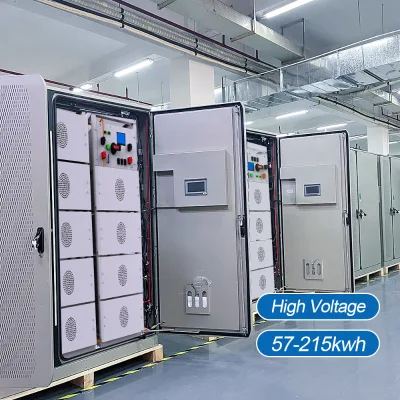


Advanced Storage System Battery Container for Renewable Energy Applications
$110.00 - $150.00
MOQ: 1 KWH


Reliable 600kw 800kw Solar Energy Storage Battery Container for Businesses
$110.00 - $150.00
MOQ: 1 KWH


All-in-One System Integrating 5.5kw Inverter and 10kwh Energy Storage Battery
$1390.00 - $1435.00
MOQ: 1 Sets


Industrial Energy Storage Container Integrated with PCS and Battery Cabinets
$1.00 - $10000.00
MOQ: 1 Pieces


$65000.00 - $150000.00
MOQ: 1 Boxes
Comprehensive Sourcing Guide
Strategic Sourcing Guide for All-in-One Inverter Battery Storage Containers
The global transition toward renewable energy has accelerated the demand for integrated energy storage solutions, particularly the "all-in-one" inverter battery storage container. These systems consolidate the battery energy storage system (BESS), power conversion equipment, and thermal management into a single, pre-assembled unit. For B2B procurement professionals, sourcing these units requires a disciplined approach that distinguishes between marketing terminology and verified technical specifications. The following guide outlines the critical factors for evaluating suppliers, validating product attributes, and ensuring long-term operational reliability based on current market data and technical standards.
Technical Architecture and Core Specifications
When evaluating an all-in-one storage container, the primary focus must be on the integration of the battery chemistry, the inverter topology, and the system voltage architecture. The supplied product data indicates a prevalence of Lithium Iron Phosphate (LiFePO4) chemistry, often referred to as LFP, which is favored for its thermal stability and extended cycle life compared to other lithium-ion variants. Buyers should verify that the specific unit under consideration explicitly lists "Grade-A LiFePO4" cells, as this designation implies a higher standard of quality control and consistency in energy density.
The system voltage is a critical parameter that dictates compatibility with existing grid infrastructure. Observed specifications in the market include nominal voltages of 768V and 400V, with AC output options ranging from 230V/400V to 127V/220V. The choice between these voltages depends heavily on the scale of the commercial application. Higher voltage systems, such as the 768V configuration, are typically optimized for larger commercial energy storage containers to minimize current and reduce transmission losses. Conversely, lower voltage systems may be more suitable for specific industrial applications or smaller commercial sites.
Inverter selection is equally vital. The data confirms the availability of hybrid inverters, which allow the system to operate in grid-tied, off-grid, and hybrid modes. This flexibility is essential for facilities with intermittent power needs or those seeking to maximize self-consumption of solar generation. The communication interface is another key technical differentiator. While some units offer basic RS485 connections, advanced systems provide a suite of interfaces including CAN, RS-232, Smart WiFi, and 4G capabilities. These interfaces enable remote monitoring, real-time data analytics, and integration with Building Management Systems (BMS), which are prerequisites for modern smart grid operations.
Compliance, Certification, and Safety Standards
Procuring energy storage equipment without rigorous verification of compliance and certification poses significant financial and safety risks. The market data highlights specific standards such as IEC62619 and CE, which are critical for battery safety and electromagnetic compatibility. IEC62619 is the international standard for secondary lithium cells and batteries used in industrial applications, covering safety requirements for electrical, mechanical, and environmental stress. Buyers must request the actual test reports associated with these certifications rather than accepting a supplier's claim at face value.
Protection ratings are another non-negotiable aspect of compliance. The observed data includes Protection Grades of IP67 and IP65. An IP67 rating indicates that the unit is dust-tight and can withstand temporary immersion in water, making it suitable for harsh outdoor environments. An IP65 rating offers protection against water jets, which is generally sufficient for covered outdoor installations or indoor industrial settings. The specific rating required depends on the installation site's environmental exposure. Additionally, the presence of a built-in Battery Management System (BMS) is a mandatory safety feature. The BMS monitors cell voltage, temperature, and state of charge to prevent overcharging, deep discharging, and thermal runaway.
The physical dimensions of the container also play a role in compliance, particularly regarding shipping and installation. Standard dimensions observed include 162612452175mm and 88010501600mm. These variations suggest that the market offers both large-scale containerized solutions and compact cabinet units. Buyers must ensure that the selected unit's footprint and weight (e.g., 1000kg for certain models) align with the structural load-bearing capacity of the installation site. Furthermore, the cooling method, typically air cooling in the observed data, must be verified against the ambient temperature conditions of the deployment location to ensure the system does not overheat during peak load operations.
Cost Drivers and Economic Considerations
The price range for all-in-one inverter battery storage containers is vast, spanning from $0.22 to $150,000 USD. This extreme variance is not indicative of product quality differences alone but reflects the diversity in capacity, configuration, and included services. A unit priced at the lower end of the spectrum likely represents a single battery module or a very small-scale system, whereas the higher end corresponds to fully integrated, high-capacity commercial energy storage containers with capacities ranging from 50kWh to over 1MWh.
Capacity is the primary cost driver. The market data lists capacities such as 50kWh, 70kWh, 100kWh, and systems up to 1.2MWh. The cost per kilowatt-hour (kWh) generally decreases as the system size increases due to economies of scale in manufacturing and logistics. However, buyers must also consider the "system energy range," which can vary from 50-100kW to 100-200kW. The power rating (kW) determines the rate at which energy can be delivered, while the capacity (kWh) determines the total energy stored. A high-power, low-capacity system will have a different cost structure than a high-capacity, low-power system.
Packaging and logistics also influence the final landed cost. The observed data mentions "Wooden Case," "Container," and "Wooden Case with Pallet" as packing options. For international procurement, the choice of packaging affects shipping volume and insurance costs. A unit packed in a standard shipping container may offer better protection and consolidation opportunities for bulk orders, whereas individual wooden cases might be more suitable for smaller, distributed deployments. Additionally, the Minimum Order Quantity (MOQ) ranges from 1 to 1,000,000 units. Buyers with lower volume requirements may face higher per-unit costs or limited customization options, while those with high-volume needs can negotiate better pricing and tailored specifications.
Typical Applications and Deployment Scenarios
The versatility of all-in-one storage containers allows them to serve a wide array of commercial and industrial applications. The primary use case identified is "Commercial Energy Storage Container" and "Commercial Industrial Solar Energy Storage Systems." These units are ideal for businesses looking to reduce electricity costs through time-of-use arbitrage, where energy is stored during off-peak hours and discharged during peak pricing periods.
For facilities with on-site solar generation, the integration of a hybrid inverter is particularly valuable. The data notes the compatibility with "Bifacial Topcon High Efficiency" solar panels, suggesting that these storage systems are designed to work seamlessly with advanced photovoltaic arrays. The mounting type, available as "Roof/Ground Mounting," provides flexibility in how the solar and storage components are arranged. Ground-mounted systems are often preferred for large-scale industrial parks, while roof-mounted configurations are suitable for commercial buildings with limited land area.
The system's communication capabilities enable integration into smart grid environments. With interfaces like 4G and Smart WiFi, these units can participate in demand response programs, where the utility provider signals the system to reduce load or discharge energy during grid stress events. This capability is increasingly important for commercial entities seeking to enhance grid stability and potentially earn revenue through grid services. Furthermore, the "Online Support" and "OEM/ODM" acceptance indicate that suppliers are willing to customize the software and hardware to meet specific operational requirements, making these systems adaptable to unique industrial processes or remote microgrid applications.
Supplier Evaluation and Quality Assurance
Selecting a reliable supplier is as critical as selecting the right product specifications. The market data indicates that products originate from specific regions in China, including Jiangsu and Guangdong. While these regions are known for their manufacturing capabilities, buyers must conduct thorough due diligence to verify the supplier's track record. The presence of "OEM/ODM" acceptance suggests that many suppliers are manufacturers capable of custom production, but this also requires careful vetting of their intellectual property and quality control processes.
Quality assurance should focus on the warranty terms and cycle life expectations. The data shows warranty periods of up to 10 years and cycle life ratings ranging from 6,000 to over 8,000 cycles. A supplier offering a 10-year warranty demonstrates confidence in the longevity of their product, but buyers must scrutinize the terms of the warranty, including what constitutes a failure and the process for claims. The cycle life rating of 6,000 to 8,000 cycles is a strong indicator of the battery's durability, but it is essential to understand the conditions under which this rating is achieved, such as depth of discharge and operating temperature.
Technical support is another key evaluation metric. The availability of "Online Support" is a baseline expectation, but buyers should assess the depth of this support. Does it include remote diagnostics, firmware updates, and on-site troubleshooting? The communication ports listed, such as RS485, CAN, and RS-232, should be supported by comprehensive documentation and software tools that allow for seamless integration with the buyer's existing infrastructure. Additionally, the "Brand Name" visibility, such as AMIBA, can be a factor in assessing market reputation, though buyers should not rely solely on brand recognition without verifying technical performance data.
Long-Term Procurement and Lifecycle Management
Sourcing energy storage systems is a long-term investment that extends beyond the initial purchase. Buyers must consider the total cost of ownership, which includes installation, maintenance, and eventual decommissioning. The "10 Years" warranty period aligns with the typical lifecycle of commercial energy storage projects, but buyers should plan for potential battery replacement or module upgrades after this period. The "Grade-A" cell designation suggests a longer lifespan, but real-world performance will depend on the operating environment and maintenance practices.
Scalability is another long-term consideration. The modular nature of many storage containers allows for capacity expansion as energy needs grow. Buyers should verify that the system architecture supports the addition of new units without requiring a complete system overhaul. The "Hybrid Grid" connection capability ensures that the system can adapt to changes in grid regulations or the addition of new renewable energy sources.
Finally, buyers should establish a clear protocol for end-of-life management. While the data does not explicitly detail recycling programs, the use of LiFePO4 chemistry is generally more environmentally friendly than other lithium-ion types. However, proper disposal and recycling of the battery packs are essential to comply with environmental regulations. Buyers should inquire about the supplier's take-back programs or partnerships with recycling facilities to ensure a sustainable lifecycle for the equipment. By focusing on these long-term factors, procurement professionals can secure a reliable, efficient, and sustainable energy storage solution that meets their organization's needs for years to come.
FAQs
What battery type is used in these containers?
These containers primarily use Grade-A LiFePO4 or Lithium Ion batteries. The specific chemistry ensures thermal stability and extended cycle life, with options reaching up to 8000 cycles for commercial applications.
Can the system operate with a hybrid grid connection?
Yes, the system supports hybrid grid connections using hybrid inverters. This allows operation in grid-tied, off-grid, and hybrid modes to maximize solar self-consumption and provide backup power during outages.
Which communication interfaces are available for monitoring?
Available interfaces include CAN, RS485, RS-232, Smart WiFi, and 4G. These ports enable remote monitoring, real-time data analytics, and seamless integration with Building Management Systems for smart grid operations.
How long is the warranty period for the battery?
The warranty period can extend up to 10 years for specific models. Buyers should verify the specific terms regarding cycle life and failure conditions to ensure the coverage matches their operational requirements.
What is the nominal voltage of the energy storage system?
Nominal voltages observed in the market include 768V and 400V. Higher voltage systems like 768V are optimized for larger commercial containers to minimize transmission losses, while lower voltages suit smaller industrial sites.
Are these units suitable for outdoor installation?
Yes, units feature protection grades of IP65 or IP67 for outdoor use. An IP67 rating allows temporary water immersion, making them suitable for harsh environments, while IP65 protects against water jets.
What is the minimum order quantity for these containers?
The minimum order quantity ranges from 1 to 1,000,000 units depending on the supplier. Lower volume orders may have higher per-unit costs, while high-volume needs allow for better pricing and customization options.
Which certifications verify the safety of the battery?
Certifications include IEC62619 and CE for battery safety and electromagnetic compatibility. Buyers must request actual test reports to verify compliance with these international standards before finalizing procurement.