Source Alloy Drop Earrings for Gift Decoration and Business
Find 30 Alloy Drop Earrings for Gift options suitable for decoration, health, and gifting. Buyers can compare materials like stainless steel and copper, styles including star fashion and natural designs, and customization services from suppliers in China.
Key considerations
Products List


Fashion Accessories Christmas Tree Earrings for Girls Woman Holiday Gift
$0.48 - $0.63
MOQ: 1000 Pieces


Fashion Tassel Earrings for Women Simple Jewelry Peacock Sapphire Earrings
$0.99 - $1.19
MOQ: 12 Pieces

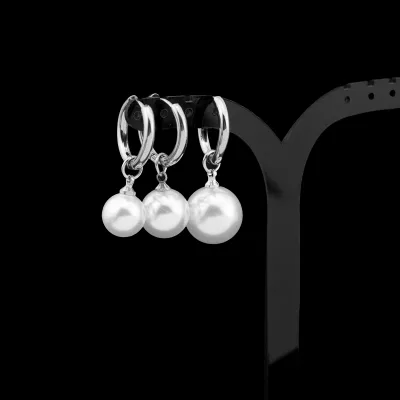


Comprehensive Sourcing Guide
Strategic Sourcing Guide for Alloy Drop Earrings as Gifts
The global market for fashion jewelry continues to expand, with alloy drop earrings emerging as a versatile category for corporate gifting, seasonal promotions, and retail resale. When sourcing "Alloy Drop Earrings for Gift," buyers must navigate a complex landscape of material definitions, design variations, and supply chain logistics. This guide provides a disciplined approach to evaluating suppliers and products, ensuring that procurement decisions align with quality standards and budgetary constraints without relying on unverified claims. The following sections detail the technical specifications, compliance requirements, cost structures, and evaluation criteria necessary for a successful sourcing strategy.
Understanding Material Composition and Design Variability
The term "alloy" in the jewelry industry refers to a mixture of metals, often used to achieve specific aesthetic properties, durability, and cost-efficiency. In the context of drop earrings, the material composition is a primary differentiator. While some listings specify "Stainless Steel" or "Copper" as the base metal, others simply categorize the item under the broader "Alloy" designation. This variance requires buyers to verify the exact metallurgical composition before placing orders, as the base metal dictates the plating adhesion, weight, and potential for skin irritation.
Design attributes further define the product's suitability for gifting. Observed market data indicates a strong preference for "Star Fashion" and "Natural" styles, alongside specific geometric shapes such as "Round," "Oval," and "Square." The "Customized" design capability is a critical feature for gift buyers, allowing for brand integration or thematic alignment with events like Christmas, where "Christmas Tree" motifs are prevalent. Additionally, the "Design" attribute often includes specific dimensional requirements, such as "10mm earrings, 12mm earrings, 14mm earrings," which must be clearly communicated to the supplier to ensure the final product meets the intended visual scale.
Color options are equally diverse, ranging from "Gold" and "Silver" to specialized plating finishes like "Rhodium," "Rose Gold," "Yellow Gold," and "Black Gold." These plating options are essential for achieving a premium look at a lower cost point compared to solid precious metals. However, the longevity of these platings depends heavily on the underlying alloy quality and the thickness of the plating layer, factors that should be scrutinized during the sampling phase.
Technical Specifications and Packaging Standards
Technical specifications for alloy drop earrings extend beyond the physical dimensions of the jewelry itself to include packaging and standardization. The "prod_model" identifier is a crucial reference point for buyers, with models such as "A880," "SK-A009," "LY002," "OJ001," "CA," and "825477613907" appearing in various listings. These model numbers serve as unique identifiers for specific design iterations, ensuring that the correct product is reproduced during mass production.
Packaging plays a significant role in the "Gift" usage category. Products are frequently supplied in "Customized Card" formats or "OPP Bag" packaging. For high-end gifting, the ability to request "Strong Carton" or "Customer's Requirement" packaging is vital. The standard dimensions for some products are listed as "821cm," which provides a baseline for logistics planning, though buyers should verify if these dimensions apply to the earring itself or the packaging unit. Furthermore, the "prod_standard" may refer to physical dimensions or quality benchmarks, such as "SGS" certification, which must be clearly distinguished from packaging standards.
The "Power Source" for these items is consistently "Non Power," indicating that they are passive accessories without electronic components. This simplifies the compliance requirements regarding electrical safety but shifts the focus entirely to material safety and structural integrity. The "Type" is broadly categorized as "Apparel & Accessories" or specifically as "Eardrop," which helps in classifying the product for customs and inventory management systems.
Compliance, Certification, and Safety Verification
For buyers sourcing products for international markets, particularly in North America and Europe, compliance with safety standards is non-negotiable. The "Certificate" attribute often cites "SGS" as a verification standard. SGS is a recognized inspection, verification, testing, and certification company, and the presence of an SGS certificate suggests that the product has undergone specific testing for heavy metals, nickel release, and other hazardous substances. However, buyers must not assume that every product labeled with an alloy description automatically possesses this certification.
The "Standard" attribute in some listings explicitly mentions "SGS," while others list "customized" standards. This discrepancy highlights the need for buyers to request specific test reports for each batch. Compliance checks should focus on the "Nickel Release" limits, as nickel is a common allergen found in many alloys. Additionally, the "prod_standard" may refer to physical tolerances, such as the "821cm" measurement, which must be consistent across the production run to ensure uniformity.
Buyers should also verify the "OEM/ODM" acceptance status. While many suppliers indicate "OEM Acceptable" or "Accept," this confirms their willingness to customize the product but does not guarantee adherence to specific regulatory frameworks. It is essential to include compliance clauses in the purchase agreement, requiring that all finished goods meet the destination country's safety regulations, regardless of the supplier's initial claims.
Cost Drivers and Pricing Dynamics
The pricing of alloy drop earrings is influenced by several key factors, including material costs, plating thickness, design complexity, and order volume. The observed price range in the market spans from $0.43 to $27.51 USD, a wide disparity that reflects the difference between basic fashion pieces and premium, heavily plated items. The lower end of the spectrum typically corresponds to simple designs with standard plating, while the higher end may involve intricate "Customized" designs, "925 Sterling Silver" components, or specialized "Rhodium" plating.
The "MOQ" (Minimum Order Quantity) is another significant cost driver. The observed MOQ range varies from 2 to 1000 units, with specific listings indicating an MOQ of "30PCS." Lower MOQs allow for smaller, more frequent orders, which is beneficial for testing new designs or managing cash flow, but they often come with a higher unit cost. Conversely, higher MOQs can secure better pricing but require a larger upfront investment and carry the risk of inventory obsolescence.
Other cost factors include the "Delivery Time," which is listed as "20-30days" for certain models. Longer lead times can impact the overall cost of goods sold if they delay market entry or require expedited shipping fees. Additionally, the "Payment Way" options, such as "Bank Transfer," "Paypal," "Moneygram," and "Western Union," can influence transaction costs and currency exchange risks. Buyers should negotiate payment terms that align with their financial policies and risk tolerance.
Supplier Evaluation and Operational Capabilities
Evaluating a supplier for alloy drop earrings requires a holistic assessment of their operational capabilities, location, and service offerings. The "prod_origin" is frequently listed as "China" or more specifically "Guangzhou, China," a major hub for jewelry manufacturing. While this location offers access to a robust supply chain and skilled labor, it also necessitates rigorous due diligence regarding logistics and communication.
The "Service" attribute often includes "OEM/ODM," indicating the supplier's ability to handle custom orders. Buyers should verify the supplier's capacity to handle "Customized" designs, including the ability to produce "Customized Card" packaging and specific model variations. The "Suitable Business" attribute lists potential partners such as "Jewelry Wholesaler," "Distributor," "Jewelry Maker," and "Fa" (likely referring to fashion retailers), suggesting that the supplier has experience serving diverse client types.
When evaluating suppliers, buyers should look for those who provide transparent information about their "prod_packing" methods, such as "OPP Bag" or "Strong Carton." The ability to accommodate "Customer's Requirement" for packaging is a strong indicator of flexibility and customer service orientation. Additionally, the "Keyword" "Jewelry Earring Accessories" and "Other: Sourcing Agent" suggest that some suppliers may act as intermediaries, which can add value but also introduce complexity in communication and quality control.
Quality Control and Long-Term Procurement Strategy
Implementing a robust quality control (QC) strategy is essential for maintaining product integrity in the alloy earrings market. Given the variability in materials and plating, buyers should establish clear acceptance criteria for color consistency, plating durability, and structural strength. The "Design" attribute, which includes specific dimensions like "10mm, 12mm, 14mm," should be verified against physical samples to ensure that the mass-produced items match the approved prototype.
Long-term procurement considerations involve building a relationship with suppliers who can consistently deliver high-quality products over time. This includes monitoring the "Delivery Time" to ensure it remains within the agreed "20-30days" window and verifying that the "Certificate" status remains valid for subsequent batches. Buyers should also consider the "Application" scope, which includes "Indoor" and "Outdoor" use, to ensure the earrings are durable enough for their intended market.
To mitigate risks, buyers should implement a phased ordering strategy, starting with small trial orders to validate the supplier's quality and reliability before committing to larger volumes. Regular audits and third-party inspections can provide additional assurance that the "Alloy" composition and "Plating" quality meet the specified standards. By focusing on these strategic elements, buyers can secure a reliable supply of high-quality alloy drop earrings that meet the demands of the gift market while maintaining cost efficiency and brand integrity.
Conclusion
Sourcing alloy drop earrings for gifting requires a meticulous approach that balances aesthetic appeal, material quality, and supply chain reliability. By understanding the nuances of material composition, verifying technical specifications, and adhering to strict compliance standards, buyers can navigate the complexities of the market effectively. The wide range of price points and MOQs offers flexibility, but it also demands careful evaluation of supplier capabilities and quality control processes. With a disciplined strategy focused on transparency and verification, buyers can establish a sustainable procurement pipeline that delivers value to their customers and supports long-term business growth.
FAQs
What materials are used for alloy drop earrings?
Alloy drop earrings are typically made from stainless steel, copper, or 925 sterling silver. Some listings also specify base metals like alloy mixtures, and plating options include rhodium, rose gold, yellow gold, and black gold to achieve specific finishes.
Which certifications verify safety for these earrings?
SGS certification is a recognized standard for verifying safety and compliance in this category. Buyers should request specific test reports for heavy metals and nickel release, as not all alloy products automatically possess this certification without explicit verification.
How long is the delivery time for custom orders?
The standard delivery time for these items is typically 20 to 30 days. This lead time applies to production runs and should be confirmed with the supplier, as it may vary based on order volume and specific customization requirements like packaging.
Can suppliers handle custom designs and packaging?
Yes, suppliers generally accept OEM and ODM services for customized designs and packaging. Options include customized cards, OPP bags, or strong cartons based on customer requirements, allowing for brand integration and thematic alignment for gifting purposes.
What is the minimum order quantity for these earrings?
The minimum order quantity ranges from 2 to 1000 units depending on the supplier and product model. Specific listings indicate an MOQ of 30 pieces, while others may offer lower thresholds for testing new designs or managing initial inventory.
Where are these earrings manufactured?
These earrings are primarily manufactured in China, with specific production hubs located in Guangzhou. This region offers access to a robust supply chain and skilled labor, though buyers should verify specific factory locations for quality control and logistics planning.
What styles are available for these earrings?
Available styles include star fashion, natural designs, and specific motifs like Christmas trees. Geometric shapes such as round, oval, and square are common, with dimensions often specified as 10mm, 12mm, or 14mm to suit different aesthetic preferences.