Source Aluminum Fins for Condensers, Coolers, and HVAC
Find 30 listings for Aluminum Fins suitable for condensers, coolers, and air conditioning applications. Buyers can compare specifications such as alloy grades, thickness, and surface treatments from verified Chinese manufacturers.
Key considerations
Products List


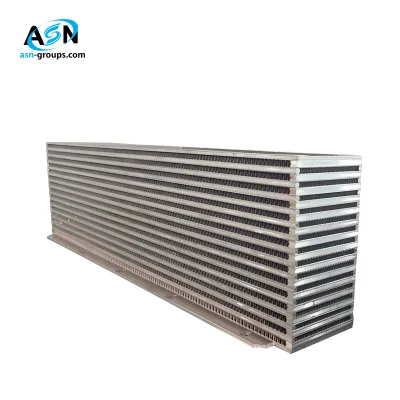
Aluminum Foil for Cooling Fins Air Conditioner Cooling Fins, Heater Cooling Fins
$2000.00 - $2400.00
MOQ: 5 Pieces


Universal Aluminum Fins for Transportation Equipment with Long Service Life
$58.00 - $899.00
MOQ: 1 Pieces




Comprehensive Sourcing Guide
Strategic Sourcing Guide for Aluminum Fin Components
Navigating the global market for Aluminum Fins requires a disciplined approach that distinguishes between raw material specifications, finished component capabilities, and the specific operational environments where these heat exchange elements are deployed. For procurement professionals, the complexity lies not only in identifying the correct alloy but in verifying that the manufacturing process, surface treatments, and structural integrity align with rigorous thermal and mechanical demands. This guide synthesizes available market data to provide a framework for evaluating suppliers, ensuring that procurement decisions are grounded in observable product attributes rather than unverified marketing claims.
Technical Specifications and Material Composition
The foundation of any successful procurement strategy for Aluminum Fins begins with a precise understanding of material composition and physical dimensions. The supply chain for these components is diverse, ranging from raw coil stock to finished radiator cores. Buyers must first verify the specific alloy grade, as the thermal conductivity and formability vary significantly between options. Market observations indicate a wide spectrum of available grades, including 1060, 1050, 1100, 3003, 3105, and 5052. Each of these alloys serves distinct purposes; for instance, the 1100 and 3003 series are frequently cited for their balance of workability and corrosion resistance, making them suitable for general-purpose heat exchangers.
Beyond the alloy, the physical geometry of the fin is critical. The data suggests that dimensions are often customized to fit specific application requirements, with width specifications typically falling under 1700mm. Thickness is another variable that demands strict attention. Observed ranges span from 0.01mm to 0.2mm, with specific standard thicknesses noted as 0.01mm, 0.02mm, 0.195mm, 0.095mm, 0.1mm, and 0.12mm. Procurement teams must ensure that the ordered thickness matches the thermal load requirements of the final assembly, as thinner fins offer higher surface area density but may compromise structural rigidity.
The manufacturing technique also dictates the final product's performance. Available processing methods include color coating, powder coating, spray coating, and PVDF treatments. These surface states are not merely aesthetic; they are functional barriers against corrosion and environmental degradation. For example, the "Double light Aluminum Foil" surface state and specific color options like blue, golden, or green are often associated with enhanced salt spray resistance. Buyers should request technical data sheets that confirm the specific coating thickness and adhesion properties, as these directly influence the lifespan of the component in harsh environments.
Compliance, Certification, and Regulatory Standards
In the B2B procurement landscape, compliance is as vital as technical performance. The aluminum fin market is characterized by a mix of international and regional certification standards. While some suppliers may claim adherence to broad standards, buyers must verify specific certifications against the actual product lot. Observed certifications in the market include CCC (China Compulsory Certification), ISO, CE, RoHS, and ISO9001. However, it is crucial to treat these as observations of specific product lines rather than universal guarantees for all aluminum fin products.
The presence of ISO9001 certification suggests a supplier has a documented quality management system, while CE and RoHS indicate compliance with European safety and environmental directives. For products destined for the Chinese market or those utilizing specific domestic supply chains, CCC certification may be a mandatory requirement. Buyers should not assume that a supplier's general corporate certification applies to every SKU they offer. Instead, procurement contracts must explicitly state that the delivered goods must carry the specific certification marks relevant to the destination market and the intended application.
Furthermore, the "Standard" attribute in the product data often refers to dimensional or structural norms, such as "Euro Standard" or specific packing standards like "807060cm." These are distinct from material certifications. A robust sourcing strategy involves cross-referencing the supplier's provided certification documents with the physical product markings. Discrepancies between the claimed standard and the actual product documentation can lead to customs delays or rejection at the point of entry. Therefore, verifying that the certification applies to the specific alloy and thickness ordered is a non-negotiable step in the compliance checklist.
Cost Drivers and Economic Factors
Understanding the cost structure of Aluminum Fins is essential for budgeting and negotiation. The primary cost drivers are the raw material price of the aluminum alloy, the complexity of the forming process, and the extent of surface treatment required. The observed price range in the market is extremely broad, spanning from $0.10 to $5,000 USD. This variance is not indicative of a single product type but rather reflects the difference between raw foil stock, simple fin strips, and complex, custom-engineered radiator cores.
Buyers must be wary of using average price points as a benchmark. A raw aluminum coil priced at the lower end of the spectrum will have a fundamentally different cost structure than a finished, coated, and packaged radiator component. The Minimum Order Quantity (MOQ) also plays a significant role in unit economics. Observed MOQs range from 1 unit to 1,000 units. High-volume orders often benefit from economies of scale, reducing the per-unit cost, but they require significant capital commitment and storage capacity. Conversely, low-MOG orders allow for flexibility but come with a higher unit price due to setup and handling costs.
Lead time is another economic factor that influences total cost of ownership. The observed lead time for these products is typically within 30 days. However, this can fluctuate based on the customization level, the availability of specific alloys, and the current global aluminum market volatility. Buyers should factor in potential delays when planning production schedules, as a 30-day lead time is an observation of current market conditions and not a guaranteed contractual term unless explicitly written into the purchase agreement. Additionally, packaging costs, such as the use of wooden pallets or export-standard crates, contribute to the final landed cost and should be included in the total cost analysis.
Typical Applications and Operational Context
Aluminum Fins are versatile components found across a wide array of industries, and their selection must be driven by the specific operational environment. The data highlights several key application areas, including air conditioning fins, moisture barrier packaging, and components for the medical field. The "Principle" of operation for many of these components is the "Mixing Heat Exchanger," indicating their role in transferring thermal energy between fluids or gases.
In the context of cooling systems, these fins are integral to condensers and coolers. The "Radiator Core Type" is often identified as "Tube-fin," which is a standard configuration for efficient heat dissipation. The "Cooling Fluid Type" can vary, with observations noting "Alcohol" as a potential medium, though water and refrigerants are also common in broader industry applications. The "Structure" of the fin, whether "Sealed Type" or "Piston Type," determines its integration into the larger assembly. For instance, a "Sealed Type" structure might be preferred in applications requiring hermetic sealing against contaminants, while a "Piston Type" might be used in specific mechanical cooling systems.
Beyond thermal management, Aluminum Fins serve roles in structural and decorative applications. The "Usage" category includes "Food Use" and "Kitchen Use," suggesting applications in food processing equipment where hygiene and corrosion resistance are paramount. Additionally, the "Application" field lists "Door & Window" and "Decorations," indicating that Aluminum Fins or similar aluminum products are used in architectural contexts. In these scenarios, the "Color" and "Surface State" become critical aesthetic and functional requirements. Buyers must ensure that the selected product meets the specific environmental challenges of its application, whether it is high humidity in a medical facility or exposure to salt spray in coastal industrial settings.
Supplier Evaluation and Quality Assurance
Evaluating a supplier for Aluminum Fins requires a multi-faceted approach that goes beyond price and lead time. The "Component" attribute confirms that the product is a "Radiator," but the supplier's capability to maintain consistency is what defines a reliable partnership. One critical aspect of supplier evaluation is the "Ideo Outgoing-Inspection" process. The observation that this inspection is "Provided" by some suppliers is a positive indicator of their commitment to quality control. Buyers should verify the scope of this inspection, including whether it covers dimensional accuracy, surface finish, and material integrity.
Customization capabilities are another key differentiator. The "Customization" attribute is marked as "Available," and specific customizations include "Logo," "Size," and "Thickness." A supplier that offers these options demonstrates flexibility and technical competence. However, buyers must assess the supplier's ability to manage the complexity of custom orders without compromising quality. The "Rolling Characteristics," such as "Finish Rolling," and the "Temper" range from "Soft" to "O - H112," indicate the level of control the supplier has over the material's mechanical properties.
Packaging is often an overlooked aspect of supplier evaluation, yet it is crucial for preventing damage during transit. The "prod_packing" attribute lists options ranging from "Wooden Pallet" to "Export Standard" and "Eye to Sky/Eye to Wall." These specific packaging methods are designed to protect the fins from moisture, physical impact, and corrosion. A supplier that adheres to "Export Standard" packaging is likely more experienced in handling international logistics. Buyers should request photos or videos of the packaging process to ensure that the protection measures are robust enough for the intended shipping route.
Long-Term Procurement Considerations
Sourcing Aluminum Fins is not a one-time transaction but a long-term relationship that requires ongoing management. The "Lead Time" of within 30 days is a baseline, but buyers should plan for variability in the supply chain. Establishing a relationship with a supplier that can accommodate fluctuating demand is essential for maintaining production continuity. The "Standard" attribute, which includes "coil, strip," suggests that the supplier may offer both raw and semi-finished goods, providing flexibility for future sourcing needs.
Sustainability and environmental compliance are increasingly important in long-term procurement. Certifications like RoHS and ISO9001 are not just checkboxes; they reflect a supplier's commitment to environmental standards and quality consistency. Buyers should regularly audit their suppliers to ensure that these standards are maintained over time. Additionally, the "Surface" treatments, such as "Salt Spray Resistance," are critical for the longevity of the product. In applications where the fins are exposed to harsh environments, the degradation of the surface coating can lead to premature failure. Therefore, long-term procurement strategies should include periodic testing of the surface properties to ensure they meet the original specifications.
Finally, the "Application" of the fins may evolve as the buyer's products change. A supplier that offers "Customized" solutions can adapt to these changes, whether it involves a new alloy grade, a different thickness, or a modified surface treatment. Building a partnership with a supplier that values innovation and customization will ensure that the procurement process remains agile and responsive to market changes. By focusing on these long-term factors, buyers can secure a stable supply chain that supports their business growth and operational efficiency.
FAQs
What certifications are available for Aluminum Fins?
Available certifications include CCC, ISO, CE, RoHS, and ISO9001. These marks verify compliance with specific regional and international standards, but buyers must confirm that the certification applies to the exact alloy and thickness ordered rather than assuming it covers all SKUs.
Which aluminum alloys are commonly used for fins?
Commonly used alloys include 1060, 1050, 1100, 3003, 3105, and 5052. Each grade offers distinct thermal conductivity and formability, with 1100 and 3003 series often selected for their balance of workability and corrosion resistance in general-purpose heat exchangers.
Can the thickness of Aluminum Fins be customized?
Yes, thickness can be customized to fit specific thermal load requirements. Observed standard thicknesses range from 0.01mm to 0.2mm, with specific options like 0.02mm, 0.1mm, and 0.12mm available, though thinner fins may compromise structural rigidity.
How long is the lead time for Aluminum Fins?
The typical lead time is within 30 days for production and delivery. This duration can fluctuate based on the level of customization, alloy availability, and global market volatility, so it should not be treated as a guaranteed contractual term without explicit agreement.
What surface treatments are applied to Aluminum Fins?
Surface treatments include color coating, powder coating, spray coating, and PVDF. These functional barriers, such as blue, golden, or green finishes, enhance salt spray resistance and protect against environmental degradation in harsh operating conditions.
What is the minimum order quantity for Aluminum Fins?
The minimum order quantity ranges from 1 unit to 1,000 units depending on the supplier. High-volume orders often reduce per-unit costs through economies of scale, while low-MOQ orders offer flexibility but typically carry a higher unit price due to setup costs.
Where are Aluminum Fins typically manufactured?
Products are typically manufactured in China. Buyers should verify the specific origin for each order, as the supply chain may involve different facilities, and the origin must align with the destination market's import regulations and certification requirements.