Source Amethyst Cluster Pendant Necklace for Gifts, Weddings, and Decor
Explore 30 listings for the Amethyst Cluster Pendant Necklace, comparing options made from stainless steel and crystal with various plating finishes. Buyers can evaluate customization support, chain types, and packaging details to find suitable pieces for weddings, gifts, or home decoration.
Key considerations
Products List






Comprehensive Sourcing Guide
Strategic Sourcing Guide for Amethyst Cluster Pendant Necklaces
The global market for women's jewelry has seen a sustained shift toward personalized, nature-inspired accessories, with the Amethyst Cluster Pendant Necklace emerging as a significant category for B2B procurement. Buyers entering this sector must navigate a complex landscape of material variations, plating technologies, and certification requirements. This guide provides a disciplined framework for sourcing these items, grounded in observed product attributes and industry standards. The focus remains on technical specifications, compliance verification, and supply chain resilience rather than speculative market trends.
Technical Specifications and Material Composition
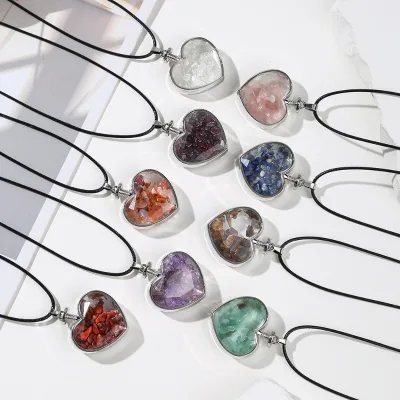
When evaluating amethyst cluster pendant necklaces, the primary technical differentiator lies in the material composition and the specific cut of the stone. Based on observed product data, the core material for the pendant often combines stainless steel with natural gemstones. Specifically, listings indicate the use of amethyst, lapis lazuli, green aventurine, tiger eye, and various grades of cubic zirconia or crystal. The "cluster" style typically implies a grouping of multiple stones or a specific arrangement that mimics a natural geode formation, though the exact geometric definition can vary by manufacturer.
The chain component is equally critical to the product's overall value proposition. Observed specifications reveal a diversity in chain types, ranging from leather ropes to link chains. The leather rope variant suggests a bohemian or fashion-forward aesthetic, while the link chain offers a more traditional, durable structure. In terms of plating, high-end listings frequently specify PVD (Physical Vapor Deposition) plating or IP (Ion Plating) technology, often resulting in a gold finish. This is distinct from standard electroplating, as PVD and IP methods offer superior adhesion and resistance to tarnishing. The standard weight for these items in observed datasets is approximately 30 grams, with a single gross weight often recorded around 0.150 kg when packaged.
Buyers must verify the specific model numbers associated with these specifications, such as QP202005 or N5033, as these identifiers often correlate with specific mold designs and stone settings. The standard length for these necklaces is frequently cited as 40cm, with some variations extending to 45cm or 50cm to accommodate different styling needs. The pendant shape is predominantly heart-shaped or charm-style, designed to appeal to a female demographic, including elderly consumers seeking comfortable, lightweight jewelry.
Compliance and Certification Verification
In the B2B jewelry sector, compliance is not merely a regulatory hurdle but a fundamental component of product quality assurance. Sourcing amethyst cluster pendants requires rigorous verification of material safety and environmental standards. Observed product attributes explicitly mention certifications such as SGS and Reach. These certifications are critical for ensuring that the metals and stones used do not contain prohibited levels of heavy metals like lead, cadmium, or nickel, which are common concerns in international trade.
The "SGS" certification typically refers to inspection, verification, testing, and certification services provided by SGS, a global leader in inspection and verification. This ensures that the product meets international safety standards. Similarly, "Reach" compliance indicates adherence to the European Union's Regulation on the Registration, Evaluation, Authorisation and Restriction of Chemicals. For buyers targeting the European market, verifying that the supplier holds valid Reach certificates is non-negotiable.
Furthermore, the "Feather Friendly" attribute observed in some listings suggests a commitment to ethical sourcing or specific material handling, though buyers should clarify the exact scope of this claim. It is essential to request the actual test reports from the supplier rather than relying on a generic statement. The production standards often reference specific measurements, such as "40+5CM," indicating a standard length with an extender chain. Buyers should confirm that the packaging, typically an OPP bag, meets local import requirements for labeling and material safety.
Cost Drivers and Pricing Dynamics
The pricing structure for amethyst cluster pendant necklaces is influenced by a confluence of factors, including material quality, plating technology, and customization complexity. The observed price range in the market spans from $0.10 to $318.24 USD, a wide disparity that reflects the difference between mass-produced fashion jewelry and high-end, hand-finished pieces. The lower end of the spectrum typically corresponds to items with standard cubic zirconia or lower-grade crystals, basic gold plating, and minimal customization. Conversely, the upper end of the price range is driven by the use of natural amethyst stones, high-grade PVD plating, and intricate cluster designs.
Material costs are a primary driver. Stainless steel provides a cost-effective base, but the inclusion of natural stones like amethyst or lapis lazuli significantly increases the unit cost. The grade of the stone, often described as "Aaaaa Grade" in some listings, directly impacts the price. Additionally, the plating process is a major cost variable. PVD and IP plating are more expensive than standard electroplating due to the equipment and energy required, but they offer longer-lasting finishes that justify a higher price point for the end consumer.
Customization is another significant cost factor. While many suppliers offer "Customization Available" or "OEM Accept" services, the extent of this customization dictates the price. Simple logo engraving via laser printing is relatively low-cost, whereas custom mold creation for unique cluster shapes or bespoke stone arrangements incurs substantial tooling and design fees. The Minimum Order Quantity (MOQ) also plays a role; observed ranges vary from 1 to 1000 units. Higher MOQs generally secure a lower unit price, but buyers must balance this with their inventory risk and cash flow constraints.
Typical Applications and Market Segmentation
Amethyst cluster pendant necklaces serve a diverse range of applications, extending beyond personal adornment to include corporate gifting and promotional activities. The observed product attributes list applications such as promotion gifts, wedding decorations, souvenirs, home decoration, holiday gifts, business gifts, and art collectibles. This versatility makes the product attractive to a broad spectrum of B2B buyers, from retail fashion chains to corporate event planners.
For the retail sector, the "Fashion" and "Love" style attributes align with current trends favoring romantic and nature-inspired designs. The heart shape and amethyst stone appeal to consumers seeking symbolic value, making these necklaces popular for Valentine's Day, anniversaries, and bridal parties. The "Elderly" suitability noted in some specifications suggests a market segment focused on comfort and classic design, which is often overlooked in favor of trendy, youthful styles.
In the corporate and promotional sector, the "Decoration" and "Gift" applications are paramount. The ability to customize the pendant with laser-printed logos or specific patterns allows companies to create branded merchandise that retains aesthetic appeal. The "Standard" size and "Single package size" of 8x8x8 cm make these items easy to distribute and ship, reducing logistics costs for bulk orders. Buyers should consider the specific application when selecting the chain type; for example, a leather rope might be preferred for a bohemian-themed corporate retreat, while a link chain might be more appropriate for a formal business gift.
Supplier Evaluation and Production Capabilities
Selecting the right supplier for amethyst cluster pendant necklaces requires a thorough evaluation of their production capabilities and quality control processes. Key indicators of a reliable supplier include their ability to support OEM (Original Equipment Manufacturer) and ODM (Original Design Manufacturer) requests. The observed data confirms that many suppliers accept OEM orders and support customization, but the depth of this support varies. Buyers should inquire about the supplier's capacity for high mirror polishing and their specific plating techniques, such as PVD or IP, to ensure the finish meets their quality standards.
Production time is another critical evaluation metric. The observed production time for these items ranges from 15 to 30 working days. This timeline can fluctuate based on the complexity of the design, the availability of raw materials, and the current order volume. Buyers must account for this lead time in their supply chain planning, especially for seasonal products like holiday decorations or wedding gifts. The place of origin is predominantly China, with specific mentions of Dongguan and Lingyun County, Guangxi Province. These regions are known for their jewelry manufacturing clusters, offering access to a robust supply chain and skilled labor.
When evaluating suppliers, buyers should request samples to verify the "High Mirror Polished" finish and the integrity of the stone setting. The "Product Type" is listed as "Pendant," but the actual construction of the cluster must be examined to ensure the stones are securely set and the metalwork is free of burrs or sharp edges. Additionally, the "Craft" details, such as the specific plating method, should be documented in the purchase agreement to prevent substitution with inferior materials.
Quality Control and Long-Term Procurement Strategy
Implementing a robust quality control (QC) strategy is essential for maintaining brand integrity and minimizing returns. Given the wide price range and material variations, a standardized QC protocol is necessary. Buyers should establish clear acceptance criteria for the "Aaaaa Grade" stones, ensuring that the color, clarity, and cut match the agreed-upon specifications. The plating thickness and adhesion should be tested to verify the "PVD Plated/IP Plated" claims, as these are common points of failure in jewelry manufacturing.
Packaging is also a critical aspect of quality control. The observed "1PC/OPP Bag" packing is standard, but buyers may require upgraded packaging for premium lines. The "Single gross weight" of 0.150 kg and "Single package size" of 8x8x8 cm provide a baseline for logistics planning, but actual weights may vary slightly due to stone density. Buyers should verify the weight and dimensions of the final packaged product to ensure accurate shipping calculations and cost estimation.
For long-term procurement, building a strategic partnership with suppliers who offer consistent quality and reliable lead times is more valuable than chasing the lowest price. The ability to customize and the availability of certifications like SGS and Reach are key differentiators. Buyers should also consider the environmental impact of their sourcing, looking for suppliers who adhere to ethical labor practices and sustainable material sourcing. The "Feather Friendly" attribute, while vague, hints at a potential focus on ethical considerations that could be leveraged in marketing.
In conclusion, sourcing amethyst cluster pendant necklaces requires a balanced approach that considers technical specifications, compliance, cost, and supplier reliability. By focusing on verified attributes and maintaining rigorous quality control, buyers can secure a supply chain that delivers high-quality products tailored to their specific market needs. The diversity of materials, styles, and applications offers significant opportunities for growth, provided that the procurement process is managed with precision and attention to detail.
FAQs
What materials are used for amethyst cluster pendant necklaces?
These necklaces typically combine stainless steel with natural gemstones like amethyst, lapis lazuli, and green aventurine. Some listings also include cubic zirconia or crystal, with plating options such as gold or PVD plating to enhance durability and appearance.
Which certifications should I verify for these necklaces?
You should verify that suppliers provide SGS and Reach certifications to ensure safety and compliance. These documents confirm the absence of prohibited heavy metals and adherence to chemical regulations, which is essential for selling in international markets.
How long does production take for custom orders?
Production time generally ranges from 15 to 30 working days depending on order complexity. This timeline accounts for the customization process, stone setting, and plating techniques like PVD or IP plating required to meet specific design requests.
Can I find necklaces with a specific chain type?
Yes, you can source options featuring leather ropes or link chains to match different styles. The leather rope offers a bohemian look while the link chain provides a traditional structure, both available in standard lengths like 40cm plus an extender.
What is the typical weight and packaging for these items?
The single gross weight is often around 0.150 kg with a single package size of 8x8x8 cm. Items are typically packed in individual OPP bags, though bulk packaging can be customized to meet specific shipping or retail requirements.
Which suppliers support OEM customization for this product?
Many manufacturers accept OEM orders and support customization services for logos or specific designs. Buyers should confirm the supplier's capacity for laser printing and high mirror polishing to ensure the final product meets their brand standards.
What is the price range for these necklaces?
Prices vary widely from 0.10 to 318.24 USD based on material quality and plating technology. Lower costs usually reflect standard cubic zirconia and basic plating, while higher prices correspond to natural stones and advanced PVD or IP plating finishes.