Source Animal Face Changing Wooden Puzzle for education, play, and gifts
Compare 30 listings for the Animal Face Changing Wooden Puzzle designed for early childhood development. Buyers can evaluate materials, certifications, and customization options from verified manufacturers in Zhejiang, China.
Key considerations
Products List

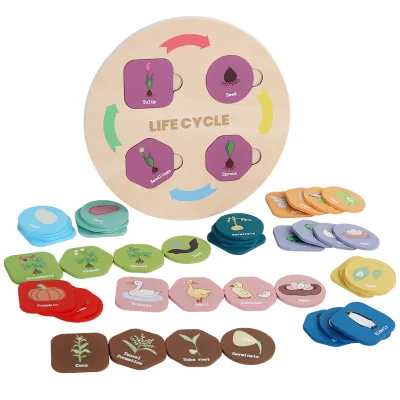
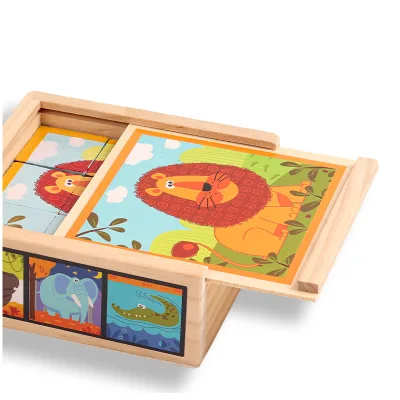


Wooden Three-Dimensional Animal-Shaped Puzzle for Early Education Puzzle
$5.60 - $6.00
MOQ: 100 Pieces

Wooden Children's Puzzle Animal Three-Dimensional for Early Education Puzzle
$2.60 - $3.00
MOQ: 100 Pieces


Wooden Dinosaur Cartoon Puzzle for Early Education and Color Cognition Puzzle
$1.00 - $1.90
MOQ: 100 Pieces


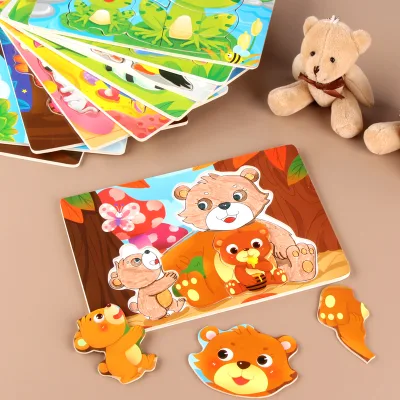
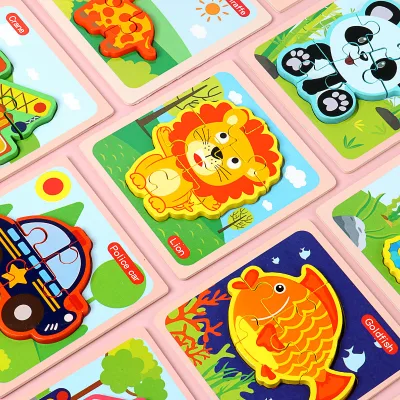

Children's Wooden Puzzle Puzzle with Face Changing Animal Building Blocks
$7.40 - $7.50
MOQ: 500 pieces


Comprehensive Sourcing Guide
Strategic Sourcing Guide for Animal Face Changing Wooden Puzzles
Understanding Product Specifications and Material Composition
When sourcing animal face changing wooden puzzles, buyers must first establish a clear understanding of the physical and functional specifications that define this category. These items are typically classified under wood and auxiliary toys, falling into the broader sector of DIY toys and educational games designed for children. The core material is consistently identified as wood, often sourced from sustainable options such as lotus wood, though specific timber types may vary by manufacturer. The construction often integrates wood with paper components to create the interactive "face changing" mechanism, where different animal features can be swapped to alter the puzzle's appearance.
The physical dimensions of these puzzles are critical for logistics and shelf-space planning. Observed specifications indicate a single package size ranging approximately from 23x22x7 cm to 30x14x8 cm, with individual product sizes often cited around 20x19.3x4.8 cm. The thickness of the wooden components is a vital structural detail, with standard measurements often reaching 2 cm to ensure durability during play. The weight of a single unit typically hovers around 0.35 kg, while the gross weight per package, including packaging materials, is generally around 0.750 kg. These metrics are essential for calculating shipping costs and determining the feasibility of air freight versus sea freight options.
The functional design of these puzzles targets specific developmental stages. While some listings suggest an age range of 3-8 years, other specifications broaden this to include toddlers aged 2-4 years, children aged 5-7 years, and older children up to 13 years. This wide range indicates that the complexity of the "face changing" mechanism can be adjusted to suit different cognitive levels. The primary function is developing intelligence and improving cognitive skills through play, specifically focusing on pattern recognition and fine motor skills. The puzzles are often marketed with keywords related to animal growth cycles, plant life, and general nature cognition, suggesting an educational narrative beyond simple assembly.
Compliance and Certification Verification Protocols
For any wooden toy entering the global market, particularly in North America and Europe, compliance with safety standards is non-negotiable. Buyers must verify that suppliers possess valid certifications that align with the destination market's regulations. In the context of wooden puzzles, the most frequently observed certifications include ASTM (American Society for Testing and Materials) and EN (European Norms) standards. Specific standards mentioned in the industry context include EN71 and ASTM F963-96a, which govern mechanical and physical properties, flammability, and chemical safety.
The certification landscape for these products often involves a dual verification process. Suppliers may claim compliance with both EN and ASTM standards simultaneously, reflecting the product's suitability for international trade. It is crucial to distinguish between the product's certification status and the manufacturing facility's quality management systems. While some background data might reference ISO 27001, this is an information security standard and is generally not a direct requirement for toy safety. Buyers should focus strictly on toy-specific safety certifications like CE (Conformité Européenne) and ENASTM.
Verification of these certifications requires more than just a request for a document. Procurement teams should demand third-party test reports that explicitly cover the specific model numbers being sourced, such as KN-065 or HC-AL031. The test reports must confirm that the wooden materials are free from harmful substances like lead or phthalates and that the mechanical design prevents choking hazards for the targeted age groups. For the "face changing" feature, the mechanism must be robust enough to withstand repeated manipulation without breaking into small, swallowable parts. Buyers should also ensure that the "EnCE" or "CE" marking on the product packaging is accurate and corresponds to the notified body that issued the certificate.
Cost Drivers and Pricing Structure Analysis
The pricing of animal face changing wooden puzzles is influenced by a complex interplay of material costs, labor intensity, and order volume. The observed price range for these items in the market spans from $0.39 to $7.50 USD per unit. This significant variance is not arbitrary but is driven by several key factors. The primary cost driver is the quality and type of wood used. Premium hardwoods or sustainably sourced lotus wood will command a higher price point compared to softer, more common timber. Additionally, the complexity of the "face changing" mechanism adds to the manufacturing cost; puzzles with intricate sliding parts or multiple interchangeable pieces require more precise machining and assembly time.
Packaging is another substantial cost component. The market shows a divergence between simple paper carton packaging and more elaborate color box packaging. Color boxes often include custom printing, which increases the unit cost but enhances the product's retail appeal. The choice between shrink wrap and rigid boxes also impacts the final price. Furthermore, the customization level requested by the buyer plays a pivotal role. Suppliers offering OEM (Original Equipment Manufacturer) and ODM (Original Design Manufacturer) services, such as custom branding or unique puzzle designs, will typically charge a premium over standard off-the-shelf models.
Order volume is the most direct lever for price negotiation. The Minimum Order Quantity (MOQ) for these products typically ranges from 10 to 5,000 units, with a common baseline of 40 sets or 40 pieces. Purchasing at the lower end of the MOQ spectrum will result in a higher unit cost due to the fixed costs of setup and production runs. Conversely, orders approaching the 5,000-unit threshold can significantly reduce the per-unit price. Buyers should also consider the "Sample time," which is often cited as 3-5 days. Rushing the sample phase or requesting expedited production can incur additional fees. Shipping terms, such as "by Sea" for bulk orders, also affect the landed cost, with sea freight being the most economical option for large volumes despite longer lead times.
Typical Applications and Market Segmentation
Animal face changing wooden puzzles serve a diverse range of applications, extending beyond simple entertainment to become valuable tools in educational and promotional contexts. The primary usage category is "kids playing," where the product functions as a recreational tool that engages children in imaginative play. The specific theme of animal faces and growth cycles makes these puzzles particularly effective for early childhood education, helping children learn about nature, biology, and animal characteristics.
In the commercial sector, these puzzles are frequently utilized for promotional purposes. Brands often commission custom versions of these puzzles to distribute at trade shows, as corporate gifts, or as part of marketing campaigns aimed at families. The "European & American" style mentioned in product attributes suggests a design aesthetic that appeals to Western markets, making them suitable for international distribution. The "DIY Toys" classification indicates that these products are often used in workshops or educational settings where children assemble the puzzles themselves, fostering a sense of accomplishment and creativity.
The target demographic is broad, covering unisex audiences from toddlers to pre-teens. The age range of 2 to 13 years allows for a wide market penetration. For the younger segment (2-4 years), the puzzles act as sensory and motor skill developers. For the older segment (5-13 years), the focus shifts to cognitive development, problem-solving, and understanding complex concepts like life cycles. The "Function: Developing Intelligence" attribute underscores their role in cognitive training. Additionally, the "Promotion" usage category highlights their utility in brand awareness campaigns, where the educational value adds a layer of perceived quality to the promotional item.
Supplier Evaluation and Operational Capabilities
Selecting the right supplier for animal face changing wooden puzzles requires a rigorous evaluation of their operational capabilities and reliability. The origin of these products is predominantly China, with specific manufacturing hubs located in Zhejiang province. This regional concentration suggests a mature supply chain with specialized expertise in wooden toy manufacturing. Buyers should verify the supplier's "Place of Origin" to ensure it aligns with their ethical sourcing policies and logistics preferences.
A critical aspect of supplier evaluation is their capacity for customization. The market data indicates that "Customization" is available, and many suppliers support OEM and ODM services. This means buyers can request changes to the puzzle design, branding, or packaging to match their specific requirements. However, the extent of customization must be clearly defined in the contract. Suppliers should demonstrate a proven track record of handling custom orders without compromising on quality or safety standards.
The lead time and sample process are also vital indicators of supplier reliability. A standard sample time of 3-5 days suggests a responsive production environment. Buyers should test this responsiveness by requesting a sample before committing to a large order. The sample should be evaluated for build quality, the smoothness of the face-changing mechanism, and the accuracy of the printed graphics. Additionally, the supplier's ability to handle different packaging types, from paper cartons to color boxes, should be confirmed. The "Selling Units" being listed as "Single item" implies that the supplier is capable of handling both bulk orders and smaller, unit-based shipments, offering flexibility in fulfillment strategies.
Quality Control and Long-Term Procurement Considerations
Implementing a robust quality control (QC) protocol is essential for maintaining the integrity of the supply chain for wooden puzzles. Given the mechanical nature of the "face changing" feature, QC checks must focus on the durability of the moving parts. Inspectors should test the mechanism repeatedly to ensure it does not jam or break under normal play conditions. The wooden components must be free from splinters, sharp edges, and rough surfaces that could injure a child. Visual inspections should verify that the printing on the wood and paper components is clear, non-toxic, and aligned correctly.
For long-term procurement, buyers should consider the scalability of their supplier relationship. As order volumes grow, the supplier must be able to maintain consistent quality and adhere to the agreed-upon lead times. The "prod_packing" method, often "by Sea" for large orders, requires careful coordination to prevent damage during transit. Buyers should specify packaging requirements that include shock absorption and moisture protection, especially since wood can be susceptible to humidity changes.
Sustainability is another long-term consideration. With the increasing demand for eco-friendly products, buyers should inquire about the sourcing of the wood and the adhesives used in the puzzle construction. Ensuring that the materials are sustainably harvested and that the production process minimizes waste can enhance the brand value of the final product. Finally, maintaining open communication channels with the supplier regarding any changes in regulations or standards is crucial. The toy industry is subject to frequent updates in safety standards, and a proactive supplier will keep buyers informed to ensure continued compliance. By focusing on these technical, operational, and strategic factors, buyers can secure a reliable supply of high-quality animal face changing wooden puzzles that meet both market demands and safety expectations.
FAQs
What certifications do these wooden puzzles have?
These puzzles hold ASTM, CE, and EN certifications to ensure safety compliance. Specific models like KN-065 and HC-AL031 meet EN71 and ASTM F963-96a standards. Buyers should verify third-party test reports for the exact model to confirm mechanical safety and material purity.
How can I customize the puzzle design or branding?
Customization is available for these wooden puzzles through OEM and ODM services. Suppliers support changes to branding, packaging, and design elements like the animal face mechanism. Buyers can request specific modifications while maintaining the core educational function and safety standards.
What is the minimum order quantity for these puzzles?
The minimum order quantity typically starts at 40 pieces or 40 sets depending on the supplier. Some vendors may accept orders as low as 10 units, while larger volumes up to 5000 units are common. Buyers should confirm the specific MOQ with the manufacturer before placing an order.
Which age groups are suitable for these animal puzzles?
These puzzles are designed for children ranging from 2 to 13 years old. Specific listings target age groups of 3-8 years, 2-4 years, 5-7 years, and 8-13 years. The complexity of the face-changing mechanism can be adjusted to suit different cognitive development stages.
What are the standard dimensions and weight of the package?
Single package sizes generally range from 23x22x7 cm to 30x14x8 cm. The product itself often measures around 20x19.3x4.8 cm with a thickness of 2 cm. The single gross weight is typically 0.750 kg, while the net weight is approximately 0.35 kg.
Can I get samples before placing a bulk order?
Yes, suppliers typically provide samples within 3 to 5 days. This sample time allows buyers to verify the quality of the wood, the face-changing mechanism, and the printing accuracy. Samples are essential for confirming that the customization and safety standards meet your requirements.
What materials are used to construct these puzzles?
The puzzles are primarily constructed from wood, sometimes specified as lotus wood. Some models integrate wood with paper components to create the interactive face-changing feature. The materials are chosen for durability and safety, ensuring they are free from harmful substances like lead or phthalates.