Source Anterior Light-Cured Dental Composite for Fillings, Restorations, and Whitening
Find 30 listings for anterior light-cured dental composite from global suppliers. Compare models like SD-CM01 and UL-LC506, check certifications such as CE and ISO, and review shade options including A1, A2, and A3 for various dental applications.
Key considerations
Products List


Dental Filling Material Composite Resin Teeth Original Gc Light Cure Composite
$10.00 - $12.00
MOQ: 20 Pieces

Dental Resin Material Original Gc Light Cure Composite for Teeth Filling
$10.00 - $12.00
MOQ: 20 Pieces


New Arrived Dental Filling Material Gc Light Cure Composite with Cheap Price
$10.00 - $12.00
MOQ: 20 Pieces


Original Japan Gc Light Cured Composite Material Dental Resin for Teeth Repair
$10.00 - $12.00
MOQ: 20 Pieces




Comprehensive Sourcing Guide
Strategic Sourcing Guide for Anterior Light-Cured Dental Composite
Procuring anterior light-cured dental composite materials requires a rigorous approach that balances aesthetic precision with clinical reliability. For buyers in the dental supply chain, the selection process must move beyond simple price comparisons to a detailed analysis of material properties, regulatory compliance, and supply chain stability. The market for these materials is global, yet the specific attributes of the product—such as shade availability, curing mechanisms, and packaging standards—vary significantly between manufacturers. This guide outlines the critical factors buyers must evaluate to ensure the acquisition of high-quality dental health materials suitable for anterior restorative procedures.
Technical Specifications and Material Properties
The foundation of a successful procurement strategy lies in understanding the precise technical specifications of the composite resin. Anterior composites are distinct from posterior materials due to their emphasis on translucency, polishability, and shade matching. When evaluating potential products, buyers must verify the specific model numbers and standard configurations provided by the supplier. For instance, specific product lines may be designated by model identifiers such as SD-CM01 or SD-M26A, which often correlate with specific formulation characteristics.
Shade selection is a primary technical consideration. The available shades for anterior applications typically include the VITA classical shades, such as A1, A2, A3, A3.5, and A03. Some advanced formulations may also include the PA series (e.g., PA2, PA3, PA3.5) or B-series shades like B1 and B2 to accommodate a broader range of patient dentition. A comprehensive inventory should offer a spectrum ranging from A1 to A4 to ensure that dental professionals can achieve seamless color matching. The physical weight of the product is another critical specification; standard units may vary, with some syringes or tubes weighing approximately 3.6g per piece, while others might be 4g or 31g per piece depending on the packaging format.
Furthermore, the curing mechanism must be explicitly confirmed. The core keyword "light-cured" indicates that the material requires a specific wavelength of light for polymerization. Buyers should verify that the product is compatible with standard dental curing lights and that the manufacturer specifies the curing time and light intensity requirements. The standard packaging often comes in syringes of 2.7ml or 4g units, or in boxes containing multiple pieces, such as 10 pieces per box. Understanding these volumetric and weight specifications is essential for inventory management and cost-per-unit calculations.
Regulatory Compliance and Certification Verification
In the medical device sector, regulatory compliance is non-negotiable. Buyers must ensure that all sourced dental composites meet the necessary international and regional standards. The supplied data indicates that products in this category often carry CE and ISO certifications. These certifications are critical indicators that the manufacturer adheres to specific quality management systems and safety standards. For example, a product labeled with "CE, ISO" or "CE" certification suggests compliance with European health, safety, and environmental protection standards.
However, buyers should not assume that every listed product possesses the same certification status. It is imperative to request current certification documentation for each specific model number, such as SD-M37 or UL-LC506, before finalizing a purchase. The presence of a "standard" designation in product attributes should be cross-referenced with the actual regulatory documents to ensure the product meets the specific standards required in the buyer's target market. Additionally, while some background information may mention other certifications like FSC, the primary focus for dental composites should remain on medical device certifications like CE and ISO, as these directly relate to patient safety and material biocompatibility.
Cost Drivers and Pricing Dynamics
The pricing of anterior light-cured dental composites is influenced by several factors, including the complexity of the shade range, the volume of the packaging, and the level of certification. The observed price range in the market spans from $3 to $46 USD per unit, reflecting a significant variance based on product tier and specifications. Lower-priced items may correspond to basic shade ranges or smaller packaging volumes, while higher-priced items likely include advanced aesthetic properties, larger syringes, or more comprehensive certification packages.
Minimum Order Quantity (MOQ) is another significant cost driver. The market data shows an MOQ range from 1 to 50 pieces, with specific products often requiring an MOQ of 10, 20, or 20 boxes. For small clinics or startups, an MOQ of 10 pieces may be manageable, whereas larger distributors might negotiate lower per-unit costs by ordering in bulk, potentially meeting an MOQ of 20 boxes. Buyers must calculate the total cost of ownership, including shipping and handling, which can be substantial given the "Standard Exported Carton" packaging requirements. The weight of the product, ranging from 0.3g per piece to 31g per piece, also impacts freight costs.
Typical Applications and Clinical Utility
Anterior light-cured dental composites are primarily designed for restorative procedures in the front of the mouth. The application is explicitly noted as "Dental Areal" and "Dental Orthodontic Dentists Usage." This indicates that the material is suitable for direct restorations, such as filling cavities, repairing chipped teeth, and cosmetic bonding. The versatility of these materials allows them to be used in various dental departments, specifically the Orthodontic Department, where aesthetic repairs are often required alongside orthodontic treatment.
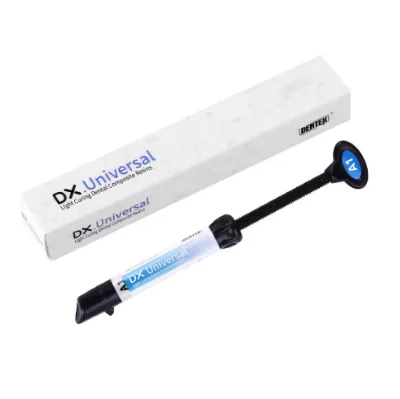
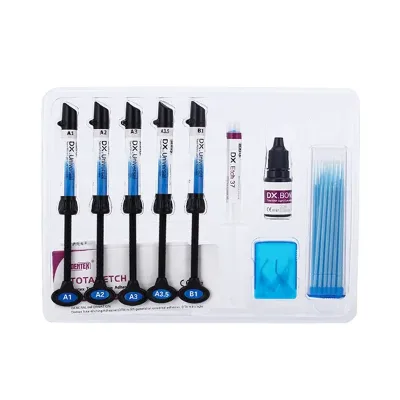
The specific usage scenarios include filling auxiliary materials and general dental health maintenance. Products like the "Dentex Dx Flow Dental Light Cure Composite" and "Dentex Dx Universal Dental Light Cure Composite" suggest a range of viscosities and applications, from flowable composites for small defects to universal composites for general restorations. The availability of multiple shades ensures that these materials can be used for anterior teeth where aesthetics are paramount. Buyers should verify that the product's application aligns with the specific needs of their client base, whether they serve general practitioners, specialists, or orthodontic clinics.
Supplier Evaluation and Origin Analysis
When evaluating suppliers, the origin of the product is a key factor. The supplied data indicates that products originate from China and Japan. While both regions have established manufacturing capabilities, buyers should verify the specific factory credentials. One data point mentions a "13 Years" factory history, which can be a proxy for stability and experience, but this should be confirmed through direct supplier communication. The "Global" trade market status suggests that these products are intended for international distribution, which implies that the supplier should have experience with export logistics and compliance.
Buyers should assess the supplier's ability to provide consistent stock levels. The attribute "Stock: Yes" is a positive indicator, but it should be validated against the supplier's actual inventory management systems. Additionally, the customization availability is a significant differentiator. If a buyer requires specific packaging or shade modifications, the supplier must confirm their capacity for customization. The "Standard Exported Carton" packing method is a baseline requirement, but buyers should inquire about options for custom labeling or specialized packaging to meet local regulatory or branding needs.
Quality Control and Long-Term Procurement Considerations
Quality control in the dental composite market extends beyond the initial purchase. Buyers must establish protocols for verifying the validity of the products upon receipt. The "Validity Date" is a critical attribute, with some products listed as having a 3-year shelf life. Ensuring that the received stock has sufficient remaining validity is essential to prevent waste and ensure clinical efficacy. Buyers should also check the "1PC: 0.3G" or similar weight specifications to ensure that the product has not degraded or lost volume during transit.
Long-term procurement considerations involve building a relationship with suppliers who can guarantee consistent quality and supply. The "Factory: 13 Years" metric suggests a potential for long-term partnership, but buyers should conduct regular audits or request quality reports. Furthermore, the "Standard" product designation should be maintained consistently across orders. Buyers should also consider the lead times associated with different models, such as SD-CM17A or UL-LC502, to ensure that inventory levels are maintained without interruption.
Comparative Analysis of Product Attributes
To facilitate decision-making, the following table summarizes key attributes observed in the market for anterior light-cured dental composites. This comparison highlights the variability in models, certifications, and specifications that buyers must navigate.
| Product Model | Origin | Certification | Standard/Spec | Available Shades | Weight/Volume | MOQ |
|---|---|---|---|---|---|---|
| SD-CM01 | China | CE, ISO | Standard | A1, A2, A3, A3.5, A03 | 4g | 10 PCS |
| SD-M26A | Japan | CE | 4g, 2.7 ml/pc | A1, A2, A3, A3.5, PA2, PA3, PA3.5 | 31 G/PCS | 20 PCS |
| SD-M26 | China | CE | 2.7ml/Syringe | A1, A2, A3 | 3.6g/PCS | 20 PCS |
| SD-M37 | China | CE | A1, A2, A3, A3.5 2ml | A1, A2, A3, A3.5 | 0.3G/PC | 20 box |
| SD-CM17A | China | CE | Standard | A1, A2, A3 | - | - |
| UL-LC506 | China | CE | 4g | A1, A2, A3, A3.5, B1, B2 | 4G | - |
| UL-LC507 | China | CE | - | A1, A2, A3, A3.5, A4, B1, B2 | - | - |
| UL-LC502 | China | CE, ISO | 141511cm | - | - | - |
This table illustrates the diversity in the market. While some models offer a wide range of shades including B-series and PA-series, others are limited to the A-series. The origin also varies, with some products coming from Japan and others from China, which may influence the perceived quality and pricing. The MOQ varies significantly, from 10 pieces to 20 boxes, requiring buyers to align their order sizes with their inventory needs.
Final Procurement Recommendations
In conclusion, sourcing anterior light-cured dental composite materials requires a meticulous approach that prioritizes technical specifications, regulatory compliance, and supplier reliability. Buyers should focus on verifying the specific model numbers, shade ranges, and certification status of each product before making a purchase. The observed price range and MOQ variations necessitate a tailored procurement strategy that balances cost efficiency with the need for high-quality, clinically effective materials. By maintaining a focus on quality control and long-term supplier relationships, buyers can ensure a steady supply of dental health materials that meet the rigorous demands of modern dental practice.
FAQs
What certifications do anterior light-cured dental composites typically hold?
Most products carry CE and ISO certifications to ensure safety and quality. Specific models like SD-CM01 and UL-LC502 explicitly list these marks. Buyers must verify current documentation for each model before purchase.
Which shade ranges are available for anterior restorative procedures?
Available shades include A1, A2, A3, A3.5, and A03 for standard matching. Advanced formulations may also offer PA series or B-series shades like B1 and B2. A comprehensive inventory should cover A1 to A4 for seamless color matching.
How is the Minimum Order Quantity determined for these materials?
MOQ values vary by product, ranging from 10 to 20 pieces or 20 boxes. Specific models like SD-CM01 require 10 pieces, while others may need 20 pieces or 20 boxes. Buyers should align order sizes with their inventory needs.
What is the typical validity period for these dental composites?
The validity date for these materials is typically three years from manufacture. This shelf life ensures clinical efficacy upon receipt. Buyers should check the remaining validity to prevent waste and ensure product quality.
Can buyers request customization for packaging or product specifications?
Customization is available for specific product lines to meet unique requirements. Suppliers may offer options for labeling or specialized packaging formats. Buyers should confirm capacity for these modifications before finalizing orders.
From which countries do these dental composite products originate?
Products originate from China and Japan, with varying manufacturing standards. Some models like SD-M26A come from Japan, while others are sourced from China. The global trade market status indicates international distribution capabilities.
What are the standard packaging formats for these dental materials?
Standard packaging includes syringes of 2.7ml or 4g units, and boxes containing multiple pieces. Some products are packed in 10 pieces per box with standard exported carton shipping. Weight varies from 0.3g to 31g per piece.