Source Anti-Aging Bird-Proof Net for Gardens, Farms, and Orchards
Find and compare 30 listings for the anti-aging bird-proof net designed for garden protection, farm pest control, and orchard safety. Buyers can evaluate features like tear resistance and usage methods from verified suppliers in China.
Key considerations
Products List


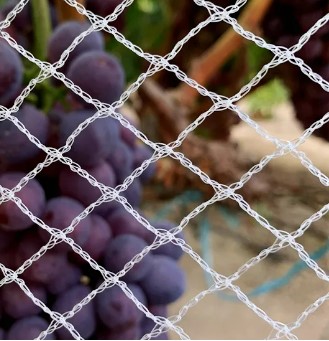
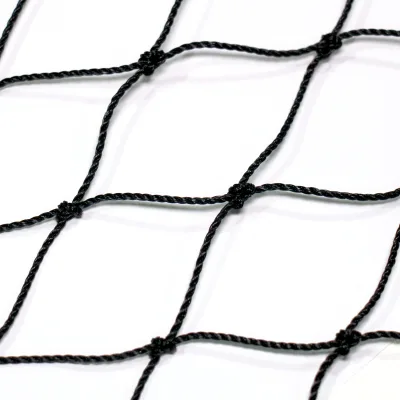


Comprehensive Sourcing Guide
Strategic Sourcing Guide for Anti-Aging Bird-Proof Netting
Understanding Material Composition and Durability Claims
When sourcing anti-aging bird-proof netting, the primary technical differentiator lies in the polymer base material and the specific engineering of the mesh structure. Based on current market observations, the dominant materials utilized for these protective barriers are Polyethylene (PE) and Polypropylene (PP). While PE is frequently cited for its robustness in outdoor environments, PP variants are also available, often selected for specific tensile strength requirements or cost-efficiency in lighter applications. Buyers must recognize that the material designation is not merely a label but a determinant of the product's lifespan and resistance to environmental degradation.
The "anti-aging" attribute is a critical performance claim that requires rigorous verification. In the context of these products, this feature is often described as "Thickened and Encrypted," suggesting a denser weave and potentially enhanced UV stabilization to prevent rapid breakdown under sunlight exposure. The observed service life for these nets is typically cited as five years, which stands in contrast to a shelf life of one year, indicating that the product is stable during storage but designed for long-term deployment. However, the term "Anti-Agin" appears in product attributes, which may refer to specific treatments against biological aging or simply be a variation in terminology for anti-aging. Procurement teams should not assume that all listed products meet a universal standard for longevity without testing. Instead, the focus should be on verifying the material thickness and the encryption density of the mesh, as these physical attributes directly correlate with the net's ability to withstand wind loads and UV radiation over time.
Technical Specifications and Dimensional Flexibility
The technical landscape of bird-proof netting is characterized by significant variability in dimensions and customization options. Unlike standard construction materials, these nets often come in "Non-standard" models, requiring buyers to define precise requirements before ordering. The observed product models range from specific pre-defined sizes, such as 610m or 210m, to highly flexible configurations where width can span from 1 to 100 meters and length from 10 to 100 meters. This flexibility is essential for covering diverse agricultural and industrial areas, including large orchards, greenhouses, and commercial poultry facilities.
A comparison of typical specification profiles highlights the diversity in the market:
| Specification Category | Standardized Options | Customized/Variable Options |
|---|---|---|
| Dimensions | 610m, 4M5M, 2*10m | Width 1-100m, Length 10-100m |
| Material | PE, PP | Custom blends based on application |
| Mesh Type | Safety Net, Packaging Net | Encrypted, Thickened variants |
| Color | Green, Black, White | Custom color matching |
| Model Number | SJ-004 | Non-standard, Contact for details |
The "Usage Method" is another critical technical parameter. The nets are engineered to be deployed in three primary configurations: Suspended Type, Covered Type, and Fenced Type. The Suspended Type is ideal for overhead protection in orchards, while the Covered Type is suited for greenhouse structures. The Fenced Type is often used for perimeter protection. The choice of deployment method influences the required tensile strength and knot density of the net. Furthermore, the product attributes indicate that the nets are designed to prevent bird pecking and insect infestation, serving a dual function in pest control. Buyers must ensure that the mesh size is appropriate for the specific pest type, as the "Pest Control Type" is noted as eco-friendly, implying a physical barrier approach rather than chemical intervention.
Compliance, Certification, and Origin Verification
In the global supply chain for agricultural netting, the origin of manufacture plays a significant role in quality consistency and logistical planning. The observed supply base is heavily concentrated in China, with specific manufacturing hubs identified in Binzhou City (Shandong Province), Wuhan, Hebei, and Jiangsu. These regions are known for their textile and plastic manufacturing capabilities. However, the "Standard" attribute for these products varies widely, ranging from "Customized" to "Multiple models" or specific dimensional standards like 4M*5M. This lack of a unified international standard for "anti-aging" performance means that buyers cannot rely on a generic certification mark.
Instead of assuming compliance, procurement teams must verify the specific standards applied to each batch. The product attributes list "Standard Packaging" and "Box" or "Carton / Woven Bag / Box" as common packing methods, which can serve as a proxy for the supplier's attention to detail. A supplier offering "Standard Packaging" alongside "Customized" standards suggests a hybrid approach where the core product meets baseline expectations but can be tailored. Buyers should explicitly request documentation regarding the UV resistance testing protocols used by the manufacturer. While no specific certification bodies are listed in the observed data, the "Sustainable" feature noted in some product attributes suggests that environmental compliance may be a differentiator. It is imperative to ask suppliers for test reports that validate the "Five Years" service life claim, as this is a significant performance promise that requires empirical backing.
Cost Drivers and Minimum Order Quantity Dynamics
The pricing structure for anti-aging bird-proof nets is influenced by material costs, customization levels, and order volume. The observed price range is exceptionally broad, spanning from $0.06 to $5,100 USD. This variance is not indicative of a single product line but rather reflects the difference between small-scale sample orders and large-scale industrial deployments. The lower end of the price spectrum likely corresponds to basic PE or PP nets with standard dimensions, while the higher end encompasses custom-engineered solutions with specialized coatings, larger surface areas, or complex packaging requirements.
Minimum Order Quantity (MOQ) is a critical factor in the procurement strategy. The observed MOQ ranges from as low as 2 units to as high as 100,000 units. This wide range indicates a market that accommodates both small agricultural pilots and massive commercial contracts. For buyers with limited budgets, targeting suppliers with an MOQ of 2 or similar low thresholds allows for product testing before committing to large volumes. However, buyers must be aware that lower MOQs often come with higher unit costs due to the setup and handling fees associated with smaller batches. Conversely, orders approaching the 100,000-unit threshold may benefit from economies of scale but require significant upfront capital and storage capacity. The "Selling Units" attribute, which notes "Single item" availability for some products, further supports the feasibility of small-scale purchasing. Buyers should negotiate based on the total cost of ownership, including shipping and potential re-ordering costs, rather than focusing solely on the unit price.
Supplier Evaluation and Quality Assurance Protocols
Evaluating suppliers for anti-aging bird-proof netting requires a multi-faceted approach that goes beyond simple price comparison. The "Brand Name" attribute, such as "BATAWA," suggests that some suppliers operate under established brand identities, which can be a proxy for reliability. However, the presence of "Non-standard" models and "Contact us to obtain and customize" standards indicates that many suppliers operate as OEM or ODM providers. In these cases, the buyer's ability to define the technical specifications becomes a key part of the supplier evaluation process.
Quality control should focus on the physical integrity of the net. Key inspection points include the "Thickened and Encrypted" nature of the mesh, the uniformity of the color (Green/Black/White), and the strength of the "Plastic Rope" used for tying or belaying. The "Plastic Rope" attributes, such as "Skipping" or "Tied Belay," highlight the importance of the ancillary components used in installation. A supplier that provides high-quality ropes alongside the net demonstrates a holistic understanding of the product's application. Additionally, the "Service Life" of five years must be validated through accelerated aging tests or field trials. Buyers should request samples to test the "Tear-Resistant" claims, as this is a primary failure mode in outdoor environments. The "Place of Origin" should also be verified against the supplier's claimed location to ensure transparency and to assess the logistical lead times associated with shipping from regions like Shandong or Jiangsu.
Long-Term Procurement and Application Strategy
The long-term success of an anti-aging bird-proof netting project depends on aligning the product specifications with the specific application environment. The "Applicable Area" for some products is noted as greater than 800 square meters, suggesting that these nets are scalable for large commercial operations. However, the "Usage" attribute, which includes "animal control," indicates that these nets are versatile and can be adapted for various pest management scenarios. The "Function" of preventing bird pecking and insect infestation is a core requirement, but the "Eco-Friendly" nature of the pest control type adds a layer of sustainability that is increasingly important in modern agriculture.
Buyers should consider the "Time Used" attribute, which lists "300 Hours" for certain related products, as a benchmark for durability testing, even if it does not directly apply to the netting itself. This figure underscores the importance of understanding the operational hours and environmental stressors the net will face. For long-term procurement, establishing a relationship with a supplier who offers "Customized" solutions is advantageous. This allows for adjustments in mesh size, material thickness, and color to suit specific crop protection needs. The "Standard Packaging" and "Box" options ensure that the product arrives in good condition, ready for immediate deployment. Ultimately, the goal is to secure a supply chain that can consistently deliver nets that meet the "Anti-Aging" and "Tear-Resistant" criteria, ensuring a service life that justifies the initial investment and minimizes replacement costs over the five-year horizon.
FAQs
What materials are used for anti-aging bird-proof netting?
The primary materials used are Polyethylene and Polypropylene. These polymers determine the net's lifespan and resistance to environmental degradation, with PE often cited for robustness in outdoor environments.
How long is the service life of these nets?
The typical service life is five years for deployed products. This contrasts with a one-year shelf life, indicating the product is stable during storage but designed for long-term outdoor deployment.
Which customization options are available for these nets?
Customization is available for dimensions, colors, and mesh types. Buyers can specify non-standard models or request specific widths and lengths ranging from 1 to 100 meters based on their needs.
Can I find nets with specific usage methods?
Yes, nets are available in Suspended, Covered, and Fenced types. These configurations allow for overhead protection in orchards, coverage for greenhouses, or perimeter fencing depending on the application.
What is the minimum order quantity for these nets?
The minimum order quantity ranges from 2 units to 100,000 units. This wide range accommodates both small-scale pilot tests and large commercial contracts for agricultural or industrial use.
Where are these nets manufactured?
Manufacturing locations include Binzhou City, Wuhan, Hebei, and Jiangsu in China. These regions are known for their textile and plastic manufacturing capabilities, influencing logistics and supply consistency.
What features ensure the net is anti-aging?
Features include thickened and encrypted mesh structures with tear-resistant properties. These physical attributes help withstand wind loads and UV radiation to prevent rapid breakdown under sunlight exposure.