Source anti-bacterial high elasticity baby socks for newborns, toddlers, and infants
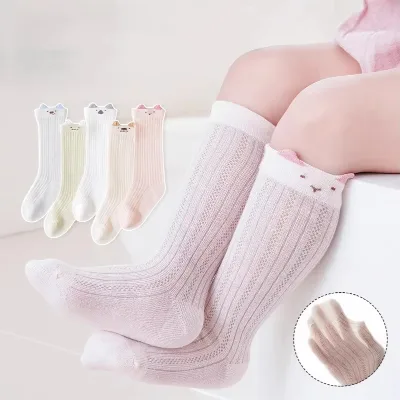
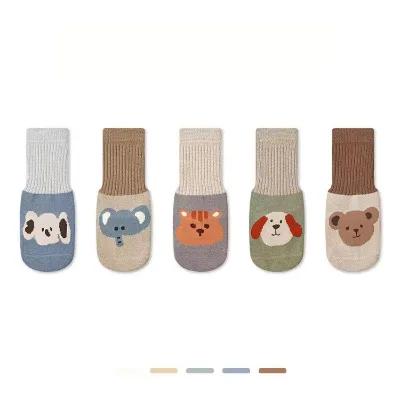
Explore 30 listings for anti-bacterial high elasticity baby socks designed for newborns, toddlers, and infants. Buyers can compare features like cotton material, non-slip bottoms, and varying elasticity levels to find suitable options for daily wear.
Key considerations
Products List




Comprehensive Sourcing Guide
Strategic Sourcing Guide for Anti-Bacterial High Elasticity Baby Socks
Understanding Product Specifications and Material Composition
When sourcing baby socks with a focus on anti-bacterial properties and high elasticity, the foundation of your procurement strategy lies in a precise understanding of technical specifications. The supplied product data indicates that cotton is a primary material standard, with specific listings noting "100% cotton" as a verified standard for certain models. This natural fiber is essential for baby products due to its breathability and softness, which are critical for sensitive infant skin. However, the presence of "Anti-Slip" and "Breathable" features in the observed data suggests that manufacturers often integrate specific knitting techniques or chemical treatments to achieve these functional goals without compromising the natural feel of the cotton.
High elasticity is a non-negotiable attribute for baby socks, as infants have delicate feet that require a snug fit without constriction. The observed data confirms the availability of both "Medium Elasticity" and "High Elasticity" options. For a product explicitly marketed as "high elasticity," buyers must verify the needle count and knitting density. The supply data references needle counts of "144n/168n/200n," which are industry indicators for the fineness of the knit. A higher needle count generally correlates with a tighter, more elastic fabric that retains its shape better after washing. While the data lists "Thickening" and "Normal" thickness options, the specific application for baby socks often leans toward "Medium" or "Normal" thickness to ensure breathability, though "Thickening" may be suitable for winter variations.
The age demographic is strictly defined in the data as "Babies" and "Children," with specific product models like "BAT-B03" and "BAT-B05" targeting these groups. The "Gender Suitability" is listed as "Unisex," which simplifies inventory management for buyers. However, the "Style" is noted as "Stockings," and the "Height" is described as "Middle," indicating a specific cut that covers the ankle but may not extend to the knee. Buyers must ensure that the "Anti-Slip" feature, which is a confirmed attribute in the dataset, is positioned correctly on the sole to prevent slipping on smooth surfaces, a critical safety factor for crawling and walking infants.
Compliance Verification and Certification Standards
In the realm of baby products, compliance and certification are paramount, yet the provided data presents a nuanced landscape. While the text explicitly mentions "OEKO-TEX," "BSCI," and "ISO 9001:2015," these are categorized as low-confidence background information. This distinction is vital for a disciplined procurement approach. Buyers should not assume that every supplier offering "100% cotton" or "High Quality" baby socks automatically holds these certifications. Instead, the presence of these terms in general market descriptions serves as a checklist for verification rather than a guarantee of current status.
The "Safety" attribute is confirmed as "Non-slip Bottom," which is a functional compliance requirement for baby footwear. However, regarding chemical safety and organic standards, the buyer must actively request current test reports. The data mentions "Average" as a product standard for some items, which is a vague descriptor that requires clarification. A rigorous sourcing process involves asking suppliers to provide documentation proving that the "Anti-Slip" coating is non-toxic and that the "100% cotton" material is free from harmful substances like formaldehyde or heavy metals.
Buyers should verify if the "Anti-bacterial" claim, which is central to the core keyword, is supported by specific test results. The supplied facts list "Anti-Slip" and "Breathable" as features but do not explicitly confirm "Anti-bacterial" test data for the specific models listed. Therefore, the procurement strategy must include a requirement for third-party laboratory testing to validate any anti-bacterial claims. The "Standard" of "100% cotton" is a strong starting point, but the treatment applied to achieve anti-bacterial properties must be disclosed. If a supplier claims compliance with "OEKO-TEX," the buyer must request the specific certificate number and verify its validity with the issuing body, as the background data does not confirm active certification for the specific SKUs.
Cost Drivers and Pricing Dynamics
The pricing landscape for baby socks is influenced by several distinct factors, as evidenced by the observed data. The listed price range spans from $0.16 to $20.00 USD. This wide variance indicates that price is not a linear function of the product but is heavily dependent on material quality, customization levels, and order volume. The "Feature" attribute lists "Cheaper Price" alongside "Good Quality," suggesting a competitive market where suppliers strive to balance cost and value. However, the "High Elasticity" and "Anti-bacterial" requirements often push the price toward the higher end of this spectrum due to the specialized yarns and finishing processes involved.
Minimum Order Quantity (MOQ) is a significant cost driver. The observed MOQ range is between 10 and 2000 units. The data explicitly states an MOQ of "100 Pairs" for certain custom orders, while other entries suggest a "Mini Order" capability. For buyers seeking high elasticity and specialized features, the MOQ may be higher to justify the setup costs for custom knitting patterns or chemical treatments. The "Supply Ability" is listed as "5000 Set/Sets Per Week," which indicates that suppliers have the capacity to handle large volumes, potentially allowing for better unit pricing on bulk orders.
Customization is a major factor in cost escalation. The data confirms that "Customization" is available, with options for "Custom" color, "Custom" size, and "Custom" packaging. The "Design" attribute notes that suppliers can work "According to Your Artwork or Samples." While this flexibility is valuable, it introduces additional costs for mold creation, sample development, and setup. The "Sample Time" is noted as "5-7 Days," and the "Delivery Date" is "15-25 Days." These lead times must be factored into the total cost of ownership, as expedited shipping or rush production fees can significantly impact the final landed cost.
Typical Applications and Seasonal Considerations
The application of these socks extends beyond simple foot covering; they are designed for specific developmental stages and environmental conditions. The data identifies "Spring / Autumn" and "Winter" as the relevant seasons. This duality suggests that the product line includes both lightweight, breathable options for warmer months and "Thickening" variants for colder weather. The "Breathable" feature is critical for preventing sweat accumulation, which can lead to skin irritation in babies. The "Anti-Slip" bottom is particularly important for the "Babies" age group, who are transitioning from crawling to walking and require stability on various floor surfaces.
The "Style" of "Stockings" and "Middle" height indicates a design that offers coverage without being restrictive. This is ideal for indoor use where temperature regulation is key. The "Unisex" nature of the product allows for broad market appeal, making it suitable for general retail or specialized baby stores. The "Age" specification of "Babies" and "Children" implies that the sizing must be precise. The data lists "S" and "Custom" sizes, highlighting the need for accurate size charts to ensure the "High Elasticity" fits correctly without being too tight or too loose.
In terms of usage, the "Non-slip Bottom" feature is a safety mechanism that prevents falls. This is a primary selling point for parents and caregivers. The "Good Quality" and "Nice Designs" attributes suggest that these socks are also used as fashion accessories, not just functional wear. The "1set/OPP Bag" and "1 Lot/OPP Bag" packaging details indicate that the products are often sold in sets, which is common for baby clothing to ensure matching pairs. The "120prs in One Export Carton" packing standard suggests that bulk buyers will receive large quantities in standardized export packaging, which is efficient for logistics but requires adequate storage space.
Supplier Evaluation and Capability Assessment
Evaluating a supplier for baby socks requires a multi-faceted approach that goes beyond surface-level claims. The data provides several key indicators of supplier capability. The "Supply Type" is listed as "in-Stock Items," which suggests that some suppliers maintain inventory for immediate shipment, reducing lead times for standard orders. However, the "Available Quantity" of "10000sets" and the "Supply Ability" of "5000 Set/Sets Per Week" indicate that these suppliers can handle significant volume fluctuations.
The "Origin" of the products is consistently listed as "Shanghai, China" or generally "China." This geographical concentration can be advantageous for logistics, as it allows for consolidated shipping from a major manufacturing hub. However, buyers should verify the specific factory location to ensure it aligns with their ethical sourcing policies. The "7 Days Sample Order Lead Time" is a strong indicator of a responsive supply chain, allowing buyers to quickly validate product quality before committing to large orders.
When evaluating suppliers, the "Needles" specification (144n/168n/200n) serves as a technical benchmark. Suppliers offering higher needle counts are likely capable of producing finer, more elastic fabrics. The ability to offer "Custom Package" and "Custom" designs demonstrates flexibility and a customer-centric approach. However, the "Standard" of "Average" for some items suggests that not all products are premium grade. Buyers must distinguish between standard and premium offerings by requesting detailed material specifications and testing reports.
Quality Control and Long-Term Procurement Strategy
Quality control in the baby sock industry must be rigorous, given the vulnerability of the end-user. The "Safety" attribute of "Non-slip Bottom" is a critical quality checkpoint. Buyers should implement a sampling plan that tests the durability of the anti-slip coating after multiple wash cycles. The "High Elasticity" claim must be verified through tensile strength tests to ensure the socks do not lose their shape or become too tight after repeated use. The "100% cotton" standard requires verification of fiber purity to ensure no synthetic blends are present that could cause allergic reactions.
Long-term procurement considerations involve building a relationship with suppliers who can consistently meet these quality standards. The "5-7 Days" sample time and "15-25 Days" delivery date provide a baseline for planning. However, buyers should negotiate terms that account for potential delays, especially during peak seasons. The "MOQ" of "100 Pairs" is a reasonable entry point, but buyers should aim to increase order volumes to leverage better pricing and priority production slots.
The "Feature" of "Good Quality" and "Cheaper Price" suggests a competitive market, but buyers should be wary of "Average" standards. Establishing a clear quality agreement that defines acceptable defect rates and specifies the required certifications (even if they are currently low-confidence in the general market) is essential. Regular audits and third-party inspections can help maintain consistency. The "120prs in One Export Carton" packing standard should be adhered to for efficiency, but buyers should also consider custom packaging options if brand differentiation is a priority.
Comparative Analysis of Product Attributes
To facilitate decision-making, the following table summarizes the key attributes observed in the supply data, highlighting the variations that buyers must navigate.
| Attribute Category | Observed Variations | Procurement Implication |
|---|---|---|
| Material | 100% Cotton, Average Standard | Verify fiber content; request purity tests for "100% cotton" claims. |
| Elasticity | Medium, High | Specify "High Elasticity" in technical specs; test for shape retention. |
| Thickness | Thickening, Normal, Medium | Match thickness to seasonal needs (Winter vs. Spring/Autumn). |
| Safety Features | Non-slip Bottom, Anti-Slip | Validate anti-slip coating durability and non-toxicity. |
| Customization | Custom Color, Size, Design, Package | Confirm MOQ and lead time impacts for custom orders. |
| Packaging | 1set/OPP, 120prs/Export Carton | Plan for storage and logistics based on carton specifications. |
| Lead Time | 5-7 Days (Sample), 15-25 Days (Delivery) | Factor these timelines into inventory planning and order scheduling. |
| MOQ | 10 to 2000 units (100 Pairs specific) | Negotiate MOQ based on order volume and product complexity. |
This comparative view underscores the importance of precise specification. While the market offers a wide range of options, the buyer's success depends on selecting the specific combination of material, elasticity, and safety features that align with their brand standards and customer expectations. By adhering to these disciplined sourcing practices, buyers can mitigate risks and ensure a steady supply of high-quality, safe, and functional baby socks.
FAQs
Can I find anti-bacterial high elasticity baby socks with 100% cotton material?
Yes, specific models like S051 are verified as 100% cotton. Buyers must request third-party test reports to confirm anti-bacterial claims since the provided data lists features like breathable and anti-slip but does not explicitly confirm anti-bacterial testing results for all listed models.
What is the minimum order quantity for custom anti-bacterial high elasticity baby socks?
The minimum order quantity is 100 pairs for custom orders. Some listings indicate a mini order capability, but specialized features like high elasticity and anti-bacterial treatments often require higher volumes to justify setup costs for custom knitting patterns or chemical treatments.
How long does it take to receive samples for anti-bacterial high elasticity baby socks?
Sample orders are supported with a lead time of 5 to 7 days. This allows buyers to quickly validate product quality before committing to large orders, though expedited shipping or rush production fees may impact the final landed cost.
Which suppliers offer anti-bacterial high elasticity baby socks with high elasticity specifications?
Suppliers offer both medium and high elasticity options for baby socks. Buyers should verify the needle count, such as 144n, 168n, or 200n, as higher counts generally correlate with tighter, more elastic fabric that retains its shape better after washing.
Can I get custom packaging for anti-bacterial high elasticity baby socks?
Yes, custom packaging is available for these products. Standard packing includes 1 set per OPP bag or 120 pairs in one export carton, but suppliers can design packages according to your artwork or samples to meet specific branding needs.
What are the delivery dates for anti-bacterial high elasticity baby socks from China?
The delivery date ranges from 15 to 25 days for standard orders. Suppliers located in Shanghai, China, have a supply ability of 5000 sets per week, allowing them to handle significant volume fluctuations while maintaining reasonable lead times.