Source Anti-Rotation Round Head Bridge Bolt for Building, Machinery, Chemical Industry
Find 30 verified listings for the Anti-Rotation Round Head Bridge Bolt suitable for building, machinery, and chemical industry applications. Buyers can compare specifications, grades, and finishes to identify the right fastener for their projects.
Key considerations
Products List


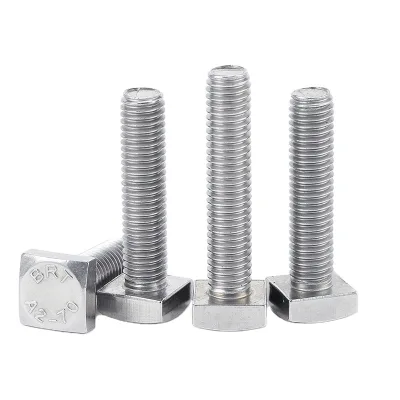
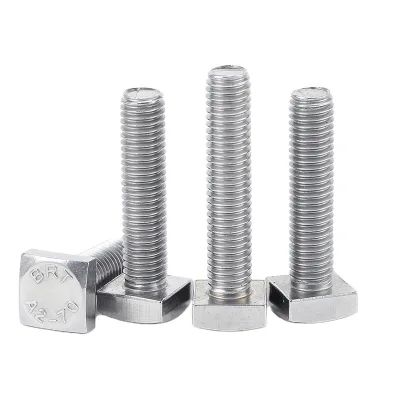


Square Head Bolts Hardware Fasteners T Head Bolts with Four Round Corners
$0.15 - $0.50
MOQ: 1000 Pieces


Comprehensive Sourcing Guide
Strategic Sourcing Guide for Anti-Rotation Round Head Bridge Bolts
Understanding Technical Specifications and Head Geometry
When sourcing anti-rotation round head bridge bolts, the primary technical differentiator lies in the head geometry and its interaction with the mating surface. The core keyword implies a specific design intent: a fastener that resists rotational torque during installation or under dynamic load, often utilized in bridge construction or heavy machinery where vibration is a constant factor. Based on the available product data, the market offers distinct variations in head styles, specifically distinguishing between "Round Head" and "Square Head" configurations. While the term "anti-rotation" often suggests a square or splined drive to prevent cam-out, the supplied inventory explicitly lists products with "Round Head" attributes alongside "Square Head" options. Buyers must verify if the "anti-rotation" capability is achieved through a specific thread design, a secondary locking feature, or a specialized washer interface rather than the head shape alone, as the data indicates both round and square head styles are available from the same supply pool.
The material composition is a critical specification for bridge applications. The observed data points to "Carbon Steel" and "High Strength Steel" as the primary materials. For bridge construction, the grade of the steel is paramount. The inventory lists specific grades such as "10.9," "12," and "Diy," alongside general descriptions. In a professional procurement context, a grade of 10.9 indicates a high-strength alloy steel suitable for structural connections, whereas "Diy" suggests a lower-grade material intended for general assembly rather than critical infrastructure. The thread specifications also vary significantly, with listings showing "UNF" (Unified National Fine) threads, "M4-M100" metric ranges, and specific sizes like "M8" or lengths of "70 mm." The size range extends from "6mm-48mm" up to "1/4"--2", indicating that buyers must clearly define the required diameter and length to ensure compatibility with existing bridge infrastructure. The thread type and size must be cross-referenced against the specific bridge component being fastened to prevent mismatched assemblies.
Compliance, Standards, and Certification Verification
Navigating the compliance landscape for bridge bolts requires rigorous verification against international and regional standards. The supplied product facts list a wide array of recognized standards, including "DIN," "GB," "ANSI," "BSW," "JIS," and "GOST." This diversity highlights a global supply chain where products may be manufactured to meet the specific regulatory requirements of the destination country. For bridge applications, which often fall under strict civil engineering codes, the buyer must confirm that the specific bolt lot complies with the relevant standard for the project location. For instance, a project in the United States would typically require compliance with "ANSI" or specific ASTM standards, while a project in China would rely on "GB" standards. The data also mentions "Hex Head Curved Bolts" and "Hex Bolt with a Hole," suggesting that the standard designation might be tied to the specific head profile or functional feature rather than just the thread pitch.
Certification and quality assurance are not explicitly detailed in the provided facts, but the presence of "High Quality" as a stated attribute and "Independent Mold Development" suggests that suppliers possess the capability to produce consistent, high-tolerance components. However, buyers should not assume certification status based on these marketing terms. The absence of specific certification names in the high-confidence facts means that the procurement team must request third-party test reports or mill certificates for every batch. The "Hot Galvanizing" and "Color-Zinc Plated" finishes mentioned in the data are critical for corrosion resistance, a non-negotiable requirement for outdoor bridge structures. The buyer must verify that the plating thickness and adhesion tests meet the specific environmental exposure requirements of the bridge site. While the data mentions "ASTM F1554" and "ASTM F3125" in the low-confidence background, these should be treated as potential reference points rather than guaranteed compliance markers. The buyer must explicitly ask the supplier to confirm if the product meets these specific ASTM standards for anchor bolts or structural fasteners before finalizing any order.
Cost Drivers and Pricing Variables
The cost of anti-rotation round head bridge bolts is influenced by a complex interplay of material grades, finishing processes, and order volume. The observed price range in the market data spans from 0 to 1000 USD, which likely reflects the difference between single-item samples and bulk pallet orders. The "Selling Units" are listed as "Single item," indicating that sample costs can be significant relative to the unit price of bulk orders. The material grade is a primary cost driver; bolts made from "High Strength Steel" with a grade of "10.9" or "12" will command a higher price than those made from standard "Carbon Steel" or "Diy" grade materials. The finishing process also adds to the cost; "Hot Galvanizing" is generally more expensive than "Color-Zinc Plated" due to the thicker zinc coating and the energy-intensive process required, offering superior protection against corrosion for long-term bridge durability.
Order volume plays a decisive role in the final unit price. The observed Minimum Order Quantity (MOQ) ranges from 1 to 10,000 units. This wide range suggests that suppliers are flexible, offering low MOQs for prototyping or small repair projects, while requiring larger volumes for standard infrastructure projects. The packaging specifications, such as "25kg/Carton" and "36carton/Pallet," indicate that logistics and handling costs are factored into the pricing structure. Buyers ordering in bulk should negotiate based on the pallet configuration to minimize shipping waste. Additionally, the "Customization" attribute is available, which can introduce variable costs. Customizing the "Headmark," thread type, or specific dimensions like the "70 mm" length or "M8" thread size will likely incur tooling fees or higher unit costs compared to standard off-the-shelf inventory. The "OEM" standard listed in the data further implies that private labeling and custom packaging are options that may affect the total cost of ownership.
Typical Applications and Performance Requirements
The applications for these fasteners are diverse, ranging from general machinery to critical infrastructure. The supplied data explicitly lists "Machinery," "Chemical Industry," "Environmental," and "Building" as application areas. For the specific keyword of "bridge bolt," the "Building" and "Environmental" categories are the most relevant, as bridges are structural building components often exposed to environmental stressors. The "Anti-rotation" feature is particularly valuable in environments subject to vibration, such as railway bridges or suspension bridges, where standard hex bolts might loosen over time. The "Square Head" and "Round Head" options provide different installation advantages; square heads may offer better grip for wrenches in tight spaces, while round heads might be preferred for aesthetic reasons or to prevent snagging in certain bridge deck configurations.
The performance requirements for bridge bolts extend beyond simple tensile strength. The "High Strength Steel" and grades like "10.9" indicate that these fasteners are designed to withstand significant shear and tensile loads. The "Hot Galvanizing" finish is essential for resisting rust and corrosion in outdoor environments, ensuring the longevity of the bridge structure. The "Common Bolt" connection type suggests versatility in how these fasteners can be integrated into various bridge assembly designs. However, the data also mentions "Hex Head Curved Bolts," which may be specialized components for specific bridge geometries where a curved profile is necessary to fit around other structural elements. Buyers must ensure that the selected bolt type matches the specific load-bearing and geometric requirements of the bridge project. The "Independent Mold Development" capability of suppliers suggests that custom shapes or specialized anti-rotation features can be engineered for unique bridge designs, though this requires careful coordination and validation.
Supplier Evaluation and Manufacturing Capabilities
Evaluating a supplier for bridge bolts requires looking beyond basic product listings to assess their manufacturing depth and quality control systems. The data highlights "Changlan Fastener" as a brand name and mentions "Ningbo, China" and "Hebei, China" as origins. While specific supplier names should not be recommended, the presence of these locations indicates a concentration of fastener manufacturing in these regions. Buyers should verify the specific factory capabilities, particularly the "Independent Mold Development" attribute. This capability suggests that the supplier can produce custom molds for unique bolt shapes, which is crucial for specialized anti-rotation designs. The ability to develop independent molds often correlates with a higher level of engineering expertise and quality control.
The "Quality" attribute is listed as "High Quality," but this is a self-reported claim. Buyers must validate this through site audits or third-party inspections. The "Sample" availability is a key indicator of supplier reliability; some suppliers offer "Free Samples," while others require a "Contact Us" approach. Free samples can be a valuable tool for testing the physical properties of the bolt, such as thread accuracy and coating adhesion, before committing to a large order. The "Specialty" of "Customized All Details" further emphasizes the supplier's flexibility. However, customization increases the risk of error if the communication of specifications is not precise. Buyers should evaluate the supplier's ability to handle complex customization requests, such as specific "Headmark" requirements or unique "prod_model" numbers like "LNK-22015" or "LNK-22018." The "prod_packing" options, including "Polybag for Inner, Carbon Box for Outer," also reflect the supplier's attention to logistics and product protection during transit, which is vital for maintaining the integrity of high-strength fasteners.
Long-Term Procurement and Quality Control Strategies
Sourcing bridge bolts is a long-term commitment that requires a robust quality control strategy to ensure safety and reliability over the lifespan of the infrastructure. The "prod_standard" ranges from "M4-M100" and "M6-M48," indicating that the supplier can provide a wide range of sizes. However, consistency across these sizes is critical. Buyers should implement a sampling plan that tests random units from each production batch for tensile strength, hardness, and coating thickness. The "Finish" options, such as "Zinc Plated" and "Hot Galvanizing," must be verified for compliance with corrosion resistance standards, as failure in this area can lead to catastrophic structural issues. The "Lead time" is not explicitly provided in the data, but the "MOQ" range suggests that suppliers may have varying production capacities. Buyers should establish clear lead time expectations and contingency plans for supply chain disruptions.
The "prod_origin" locations of "Ningbo" and "Hebei" are major industrial hubs, but buyers should verify the specific factory's adherence to international quality management systems. The "Standard" list includes "DIN, GB, ANSI, BSW, JIS, GOST," which implies the supplier has the capability to produce to multiple standards. However, the buyer must ensure that the specific bolts ordered are manufactured to the standard required by the local building codes of the bridge project. The "Customization" aspect allows for tailored solutions, but it also introduces variability. To mitigate this, buyers should require detailed technical drawings and specifications for all custom orders. The "prod_packing" methods, such as "25kg/Carton" and "36carton/Pallet," should be standardized to prevent damage during shipping. Finally, the "Sample" policy should be leveraged for initial validation, ensuring that the "High Quality" claim is substantiated by physical testing before scaling up to full production orders.
FAQs
What materials are used for anti rotation round head bridge bolts?
These bolts are primarily manufactured from Carbon Steel and High Strength Steel. Specific grades available include 10.9, 12, and general DIY grades to suit different structural requirements.
Which standards apply to these bridge bolts?
The products comply with multiple international standards including DIN, GB, ANSI, BSW, JIS, and GOST. Buyers must verify the specific standard required for their project location.
Can I request custom specifications for these fasteners?
Yes, customization is available for headmarks, thread types, and specific dimensions. Suppliers offer independent mold development to produce unique shapes or specialized anti-rotation features.
What finishes protect these bolts from corrosion?
Available finishes include Color-Zinc Plated and Hot Galvanizing. Hot Galvanizing provides superior protection for outdoor bridge structures exposed to harsh environmental conditions.
Where are these bridge bolts manufactured?
The products originate from manufacturing hubs in Ningbo and Hebei, China. These locations support a wide range of production capacities and customization capabilities.
What are the typical minimum order quantities?
Minimum order quantities range from 1 unit for samples up to 10,000 units for bulk orders. This flexibility allows buyers to prototype or source large infrastructure projects.