Source Anti-Slip Non-Woven Door Mat for Home Hotel Commercial
Source 30 anti-slip non-woven door mat options for home, hotel, and commercial use. Compare features like waterproofing, oil resistance, and customization to find the right fit for your sourcing needs.
Key considerations
Products List
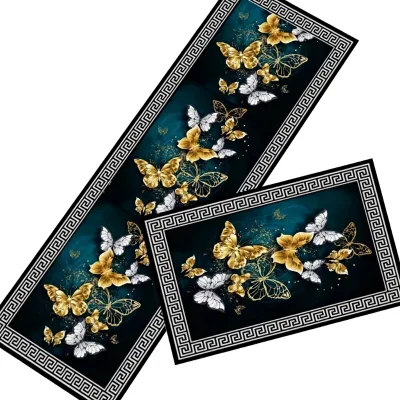


Hot Sale and Waterproof PVC Coil Door Mat with Non-Slipping Backing
$2.80 - $6.80
MOQ: 1000 Square Meters

Super Quality and Waterproof PVC Coil Door Mat with Non-Slipping Backing
$2.80 - $6.80
MOQ: 1000 Square Meters

High Quality and Waterproof PVC Coil Door Mat with Non-Slipping Backing
$2.80 - $6.80
MOQ: 1000 Square Meters


$2.30 - $2.50
MOQ: 300 Square Meters


Manufacturer Price Anti-Slip Embossed Floor Mat and Customized Door Mat
$2.51 - $2.66
MOQ: 500 Square Meters


Comprehensive Sourcing Guide
Strategic Sourcing Guide for Anti-Slip Non-Woven Door Mats
Understanding Product Composition and Technical Specifications
The procurement of anti-slip non-woven door mats requires a precise understanding of the material composition and technical construction that defines the product's performance. Based on available market data, the core material for these mats is consistently identified as Polyester Fiber, often categorized broadly as Chemical Fiber or Polyester. This material selection is critical because it directly influences the mat's ability to absorb moisture and resist dirt. The manufacturing process frequently employs "Needle Punched" or "Needle Spikes" technics, which mechanically interlock the fibers to create a dense, durable surface without the need for traditional weaving or knitting. This non-woven approach allows for a high degree of customization in texture and density.
The physical specifications of these mats vary significantly depending on the intended application and supplier capabilities. Surface weight is a primary indicator of quality, with observed ranges typically falling between 400g/Sqm and 800g/Sqm, though some specifications note a narrower band of 400g/Sqm to 700g/Sqm. The total weight of the finished product can range from 1.8kg/Sqm to 6kg/Sqm, suggesting a heavy-duty construction suitable for high-traffic areas. A critical component of the anti-slip functionality is the backing material. The supplied data indicates that PVC (Polyvinyl Chloride) is the standard backing material, with a thickness ranging from 0.8mm to 2.0mm. This backing is essential for preventing the mat from sliding on hard floor surfaces, a key requirement for safety in both residential and commercial environments.
Size specifications are equally diverse, catering to various entryway dimensions. Standard sizes often include 40x60cm, 50x80cm, and 60x90cm, but the market also supports fully customizable dimensions. Buyers should note that single package sizes for individual units are often recorded around 45x7x7 cm, with a gross weight of approximately 0.500 kg per unit. However, for bulk orders, the unit of sale may shift to square meters, with Minimum Order Quantities (MOQ) often set at 500 square meters. The shape is predominantly square or rectangular, and the product form is generally classified as a carpet or floor mat. Understanding these technical baselines allows buyers to accurately compare supplier offerings and ensure the selected product meets the specific load-bearing and dimensional requirements of their project.
Application Scenarios and Functional Performance
The versatility of anti-slip non-woven door mats makes them suitable for a wide array of environments, ranging from domestic use to large-scale commercial installations. The primary application locations identified include the kitchen, bathroom entrance, and general doorway areas. In these settings, the mat serves as a critical barrier against dirt, water, and oil, protecting the underlying flooring. The product features explicitly highlight "Oil-proof," "Waterproof," "Non-slip," "Dirt-resistant," and "Water-absorbing" capabilities. These attributes are not merely marketing terms but functional requirements that dictate the mat's suitability for specific zones. For instance, the water-absorbing nature of the polyester fiber is vital for bathroom entrances where moisture levels are high, while the oil-proof characteristic is beneficial for kitchen areas where spills are common.
Beyond residential use, the data indicates significant deployment in hotel, commercial, and decoration sectors. In commercial settings such as hotels and office buildings, the durability and ease of maintenance are paramount. The mats are designed to withstand heavy foot traffic while maintaining their anti-slip properties. The "Modern" design style and availability of "Cartoon Animation" or "Cute Animals" patterns suggest that these mats can also serve an aesthetic function, adding a decorative element to entryways. The "Customization" feature allows buyers to tailor the design to match specific branding or interior design themes. Furthermore, the product is noted for its suitability in "Outdoor" environments, implying a level of weather resistance that extends its utility beyond the immediate doorway.
The installation location is consistently listed as "Floor Carpet," indicating that these mats are designed to lie flat on the ground rather than being wall-mounted or suspended. The cleaning and maintenance instructions present a slight divergence in the data, with some sources suggesting "Machine washable" while others recommend "Hand Wash" or note "Waterproof" and "Stain Resistant" properties that might allow for simple wiping. This discrepancy highlights the importance of verifying the specific care instructions for the exact product variant being sourced. Regardless of the method, the "Stain Resistant" and "Waterproof" features ensure that the mats remain hygienic and visually appealing over time. The ability to be customized in color, with options ranging from specific "Weilong carpet" codes to "Any Color," further enhances their adaptability for different interior design schemes.
Cost Drivers and Pricing Dynamics
When evaluating the cost structure of anti-slip non-woven door mats, several variables influence the final price per unit or per square meter. The observed price range in the market spans from $0.10 to $9.40 USD, a wide spectrum that reflects differences in material quality, size, customization level, and order volume. The primary cost driver is the surface weight and density of the mat. Mats with a surface weight closer to the upper limit of 800g/Sqm will inherently cost more due to the higher consumption of raw polyester fiber. Similarly, the thickness of the PVC backing, which can vary from 0.8mm to 2.0mm, significantly impacts material costs. A thicker backing provides superior anti-slip performance and durability but increases the overall weight and material expense.
Order volume is another critical factor in pricing. The data indicates that while some suppliers may offer low MOQs as low as 1 unit for sample purposes, standard bulk orders often require a minimum of 500 square meters. This volume threshold suggests that the lowest price points are achievable only when purchasing in substantial quantities. The "Selling Units" are listed as "Single item" for small orders, but the transition to bulk pricing likely occurs at the 500 sqm mark. Additionally, customization costs play a role; while the product is available in standard patterns like "Cartoon Animation" or "Cute Animals," requesting specific custom colors or designs may incur additional setup or production fees.
The packaging method also contributes to the final cost. Options include "PP Woven Bag" or "Carton" packaging. Carton packaging is generally more expensive but offers better protection during shipping, which is crucial for maintaining the integrity of the mats, especially those with thicker backings. The lead time, observed at approximately 15 days, can also influence pricing dynamics, particularly if expedited shipping is required. Payment terms, such as "30% TT, 70% at Sight of Bl Copy," are standard in the industry but do not directly alter the unit price; however, they affect the cash flow and financial risk for the buyer. Buyers must balance the desire for lower unit costs with the necessity of meeting MOQs and the potential added costs of customization and specialized packaging to ensure the product arrives in optimal condition.
Supplier Evaluation and Compliance Verification
Selecting a reliable supplier for anti-slip non-woven door mats requires a rigorous evaluation process that goes beyond price comparison. The first step is verifying the supplier's ability to meet the specific technical specifications outlined in the product data. Buyers should request detailed product sheets that confirm the material composition (Polyester Fiber/Chemical Fiber), the backing material (PVC), and the exact surface weight and thickness ranges. It is essential to ensure that the supplier's production capabilities align with the "Needle Punched" or "Needle Spikes" technics mentioned in the specifications. Discrepancies in these technical details can lead to performance issues, such as inadequate water absorption or insufficient anti-slip properties.
Compliance and certification checks are equally important, although specific certification data is not explicitly provided in the source material. Buyers must proactively request documentation regarding safety standards, particularly for the PVC backing and the polyester fibers. In many regions, materials used in flooring must comply with specific flammability, formaldehyde emission, and chemical safety standards. Since the product is intended for use in hotels, commercial spaces, and homes, verifying that the mats meet local building codes and safety regulations is mandatory. Buyers should ask for test reports regarding the "Non-slip" and "Waterproof" claims to ensure they are backed by empirical data rather than marketing assertions.
The supplier's production capacity and lead time capabilities are also critical evaluation criteria. With an observed delivery time of 15 days, buyers should assess whether the supplier can consistently meet this timeline, especially during peak seasons. The ability to handle large orders, such as those exceeding 500 square meters, without compromising quality is a key indicator of a supplier's reliability. Additionally, the supplier's flexibility regarding customization should be evaluated. While the product offers "Customizable" sizes and colors, the supplier must demonstrate the ability to execute these customizations accurately and efficiently. Finally, reviewing the supplier's payment terms and ensuring they align with standard industry practices, such as the 30% deposit and 70% balance upon sight of documents, helps mitigate financial risks.
Quality Control and Long-Term Procurement Strategy
Implementing a robust quality control (QC) strategy is essential for ensuring that the anti-slip non-woven door mats meet the required performance standards. Given the wide range of observed specifications, buyers should establish clear acceptance criteria before production begins. Key QC checkpoints should include verifying the surface weight and thickness of the backing, as these are critical for durability and safety. Visual inspections should be conducted to ensure the "Cartoon Animation" or "Cute Animals" patterns are printed clearly and that the colors match the agreed-upon "Customized" or standard options. The "Machine washable" or "Hand Wash" care instructions should be validated through practical testing to confirm that the mats do not degrade or lose their anti-slip properties after cleaning.
Long-term procurement considerations involve building a sustainable relationship with suppliers who can consistently deliver high-quality products. This includes establishing clear communication channels for addressing any quality issues that may arise post-delivery. Buyers should also consider the environmental impact of the materials used, particularly the PVC backing and polyester fibers, and inquire about the supplier's sustainability practices. The ability to customize the product for specific projects suggests that a long-term partnership could lead to more efficient production runs and better pricing. Furthermore, maintaining a buffer stock of standard sizes can help mitigate supply chain disruptions, while the option for customized sizes allows for flexibility in future projects.
| Feature | Standard Specification | Buyer Verification Point |
|---|---|---|
| Material | Polyester Fiber / Chemical Fiber | Confirm fiber density and origin |
| Backing | PVC, 0.8mm - 2.0mm | Request thickness test reports |
| Surface Weight | 400g/Sqm - 800g/Sqm | Verify actual weight per square meter |
| Technics | Needle Punched / Needle Spikes | Inspect fiber interlocking quality |
| Customization | Available (Size, Color, Pattern) | Confirm lead time for custom orders |
| MOQ | 500 Sqm (Bulk) | Clarify sample order policies |
By adhering to these quality control measures and strategic procurement practices, buyers can ensure that the anti-slip non-woven door mats they source are not only cost-effective but also reliable and safe for their intended applications. The combination of technical precision, supplier diligence, and ongoing quality assurance creates a foundation for successful long-term procurement in this product category.
FAQs
What material is used for anti-slip non-woven door mats?
The mats are primarily made from Polyester Fiber, often categorized as Chemical Fiber. This material provides water-absorbing and dirt-resistant properties suitable for entryways. Some variants also feature a PVC backing for enhanced stability.
How thick is the backing on these non-woven mats?
The backing thickness typically ranges from 0.8mm to 2.0mm. This PVC layer ensures the mat remains non-slip on hard floors. The specific thickness may vary depending on the chosen model and surface weight requirements.
Can I customize the size and color of the door mat?
Yes, customization is available for both size and color. Buyers can select from standard sizes like 40x60cm or request fully customized dimensions. Colors can be matched to specific needs, including options like Weilong carpet codes or any custom color.
What is the minimum order quantity for bulk purchases?
The standard minimum order quantity is 500 square meters for bulk orders. However, single item units are available for smaller sample requests. This volume threshold helps secure competitive pricing for large-scale projects.
How long does it take to deliver the door mats?
The standard delivery time is approximately 15 days. This lead time applies to standard production runs. Expedited options may vary based on order volume and specific customization requirements requested by the buyer.
Are these mats suitable for outdoor use and hotels?
Yes, these mats are designed for outdoor, hotel, and commercial use. They feature oil-proof, waterproof, and non-slip attributes ideal for high-traffic areas. The durable construction ensures longevity in both residential and commercial environments.
What is the surface weight range for these mats?
The surface weight typically falls between 400g/Sqm and 800g/Sqm. This density contributes to the mat's durability and water absorption capacity. Heavier weights generally indicate a more robust product suitable for demanding applications.