Source Anti Static Fireproof Vinyl Flooring for Hospitals Schools Offices
Find 30 listings of Anti Static Fireproof Vinyl Flooring suitable for healthcare, education, and commercial facilities. Compare specifications including fire ratings, wear layers, and certifications from verified Chinese manufacturers.
Key considerations
Products List


Anti Slip Anti-Static PVC Floor Homogeneous Vinyl Flooring Direct Supplier
$5.00 - $8.00
MOQ: 350 Square Meters


Slip Resistant Anti-Static Anti-Bacterial PVC Vinyl Homogeneous Flooring
$5.00 - $8.00
MOQ: 500 Square Meters


Anti-Slip Waterproof Vinyl Floor Tile PVC Vinyl Linoleum Flooring
$5.00 - $12.00
MOQ: 1000 Square Meters


Acid Resistant Fireproof Slip Resistant Homogenous Vinyl Flooring
$5.00 - $12.00
MOQ: 1000 Square Meters

Flooring PVC Flooring Vinyl Antistatic Adhesive Vinyl PVC Floor Tile
$5.00 - $12.00
MOQ: 1000 Square Meters

High Quality Fireproof Wear Resistant Rigid Core Vinyl Flooring
$5.00 - $12.00
MOQ: 1000 Square Meters


Comprehensive Sourcing Guide
Strategic Sourcing Guide for Anti-Static Fireproof Vinyl Flooring
Understanding Technical Specifications and Material Composition
When sourcing anti-static fireproof vinyl flooring, buyers must first establish a clear understanding of the material composition and physical attributes that define product performance. The core material for these specialized flooring solutions is Polyvinyl Chloride (PVC), a synthetic plastic polymer known for its durability and versatility. In the context of high-performance commercial and industrial environments, the physical state of the product is typically observed as a block or sheet, designed to withstand heavy foot traffic and mechanical stress.
A critical technical parameter for buyers to verify is the wear layer thickness. Market observations indicate that the wear layer for these products generally ranges from 0.2mm to 0.7mm. This dimension is directly correlated with the product's longevity and resistance to abrasion. For applications requiring higher durability, such as hospitals or industrial factories, the upper end of this range is often preferred. The density of the material is another vital specification, with observed values falling between 9.2kg/M3 and 12.2kg/M3. This density range influences the floor's stability and its ability to resist indentation under heavy loads.
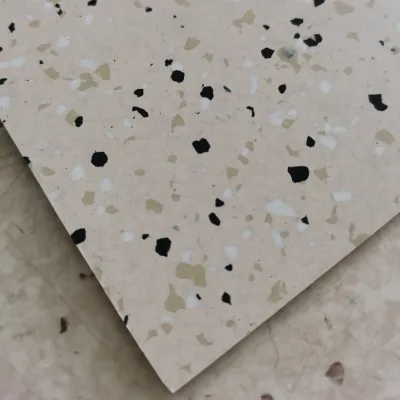
The surface treatment and aesthetic properties are equally important for specification compliance. The surface treatment is often described as a simple color application, though the visual finish frequently mimics a wood grain pattern. This design choice allows for a modern style that integrates well into various interior design schemes while maintaining the functional benefits of vinyl. The available width specifications vary, with common options including 6", 7", 7.25", and 9" widths. Buyers should note that thickness standards are also variable, with observed product standards ranging from 3.5mm to 6mm, and specific model variants available in configurations such as 2mm thickness.
Compliance, Certification, and Fire Safety Standards
Fire safety and chemical compliance are non-negotiable aspects of sourcing anti-static vinyl flooring, particularly for applications in healthcare, education, and industrial facilities. The primary function of the flooring must include fireproof capabilities. Observed fire ratings for these products include GB8624 B1, which is a specific standard for flammability, and Bf1-S1, a classification often associated with European safety standards. Buyers must verify that the specific product they intend to purchase holds the relevant fire rating for their local jurisdiction and the specific building code requirements of the installation site.
In addition to fire performance, the chemical composition of the flooring is a significant concern. Many modern specifications require products to be phthalate-free to ensure health and safety, particularly in environments with vulnerable populations such as schools and hospitals. The product features often highlight "Eco-Friendly" and "Health & Safety" attributes, alongside being recyclable. To validate these claims, buyers should look for recognized certifications. The supplied data indicates that ISO certification is a common attribute, with some products also carrying CE certification. Furthermore, specific eco-labels such as Floorscore may be present, indicating low emissions of volatile organic compounds (VOCs).
The anti-static property is a defining characteristic for this category. This feature is essential for environments like computer rooms, electrical factories, and offices where static electricity can damage sensitive equipment. The product functions are listed as including Anti-static, Waterproof, Soundproof, and Fireproof capabilities. Buyers should request test reports that specifically quantify the surface resistance to ensure it meets the anti-static requirements for their specific application. While background standards like EN13501-1 or ASTM E648 are mentioned in general industry knowledge, buyers must confirm that the specific supplier's product documentation explicitly references the standards they require, rather than assuming compliance based on general category knowledge.
Cost Drivers and Procurement Economics
The cost of anti-static fireproof vinyl flooring is influenced by several tangible factors, primarily material thickness, wear layer quality, and certification levels. The observed price range in the market for these products spans from $0.29 to $13 per unit, a significant variance that reflects differences in quality, thickness, and functional additives. Thicker products, such as those at 5mm or 6mm, generally command a higher price point compared to the 2mm or 3.5mm variants. Similarly, the inclusion of advanced features like enhanced antibacterial performance or specific fire ratings can drive costs upward.
Minimum Order Quantity (MOQ) is another critical economic factor. The observed MOQ range for these products is between 100 and 1000 units. Buyers with smaller project scopes may find the lower end of this range more accessible, while large-scale commercial projects can leverage the higher volumes to negotiate better pricing. The packaging method also impacts logistics costs. Products are typically supplied either as rolls (with paper tube packing and PP water-proofing) or in cartons. The choice between rolling and carton packaging depends on the dimensions of the product and the shipping method, with rolling being common for sheet goods and cartons for tile or block formats.
It is important to note that the "Lead Hardness" of the product is described with varying attributes, including "Hard" and "Semi-Rigid." This variation suggests that different product lines or formulations exist within the category, and the hardness level will affect the installation method and the overall cost. Buyers should clarify the specific hardness requirement for their project, as semi-rigid products may require different underlayment or installation techniques compared to harder variants.
Typical Applications and Functional Requirements
The versatility of anti-static fireproof vinyl flooring allows it to be deployed across a wide spectrum of environments. The primary usage categories identified include Household, Commercial, and Sports applications. However, the specific functional requirements often dictate the choice of product within these categories. For instance, the "Application" field frequently lists Healthcare, Education, Offices, Factories, Hospitals, Schools, and Industries.
In healthcare and hospital settings, the flooring must offer excellent antibacterial performance and be easy to clean. The product features often highlight "Excellent Antibacterial Performance" and "Easy to Clean" advantages, which are critical for maintaining hygiene standards in medical facilities. The waterproof and moisture-proof attributes ensure that the flooring can withstand frequent cleaning with disinfectants without degrading.
For industrial and electrical environments, such as computer rooms and electrical factories, the anti-static property is paramount. The flooring must prevent the accumulation of static electricity that could damage sensitive electronic equipment. The "Chemical Products Resistance" is noted as "Better," making these floors suitable for environments where spills of industrial chemicals might occur. Additionally, the soundproof and sound-absorbing features are valuable in offices, banks, and schools to reduce noise pollution and create a more conducive working or learning environment. The impact sound reduction is observed to be approximately +4 dB, a metric that buyers should verify against their acoustic requirements.
Supplier Evaluation and Product Verification
Evaluating a supplier for anti-static fireproof vinyl flooring requires a rigorous review of their product documentation and manufacturing capabilities. Buyers should not rely on general claims but must request specific data sheets for the products they intend to purchase. The product models observed in the market include COLORNIA NOVA, DECOLUX ELITE, DECOLUX SERENO, and KENEX LEGACY, among others labeled generically as "pvc floor." The existence of specific model names suggests a structured product line, but buyers must ensure that the specific model selected meets all technical criteria.
Verification of the "Origin" is also essential. The supplied data indicates that the products originate from China. While this is a common manufacturing hub, buyers should verify the specific factory location and ensure that the supply chain is transparent. The "Customization" attribute is listed as available, which allows buyers to tailor the product to specific needs, such as custom widths or colors. However, customization may impact lead times and costs, so this should be discussed early in the procurement process.
Buyers should also check the "Water Absorption" rate, which is observed to be <=3%. This low absorption rate is crucial for preventing mold growth and ensuring dimensional stability in humid environments. The "Surface Treatment" is noted as "Simple Color," but buyers should confirm that the color consistency is maintained across batches, especially for large projects. The "Metal Type" is listed as Aluminum Alloy in some contexts, which may refer to specific components or additives, but the primary material remains PVC.
Quality Control and Long-Term Procurement Considerations
Implementing a robust quality control (QC) strategy is vital for ensuring the longevity and performance of anti-static fireproof vinyl flooring. Buyers should establish clear acceptance criteria based on the observed specifications, such as the wear layer thickness (0.2-0.7mm), density (9.2-12.2kg/M3), and water absorption (<=3%). Regular sampling and testing during the manufacturing process can help identify deviations early. For example, verifying the fire rating (GB8624 B1 or Bf1-S1) through third-party testing can prevent the acceptance of non-compliant batches.
Long-term procurement considerations include the availability of replacement materials and the consistency of the product line. Since the product features include "Recyclable" and "Eco-Friendly" attributes, buyers should consider the end-of-life disposal options and ensure that the supplier can provide guidance on recycling or proper disposal. The "Package" options, such as rolling with paper tubes or packing with PP water-proofing, should be evaluated for their ability to protect the product during transit and storage.
The "Standard" specifications, ranging from 2mm to 6mm, and the "Width" options (6" to 9") provide flexibility, but buyers must ensure that the chosen specifications are compatible with their existing infrastructure and installation methods. The "Feature" of being "Phthalate Free" and "Health & Safety" compliant should be verified through current certification documents, as regulations regarding chemical content can change. Finally, the "Advantage" of being "Easy to Clean" should be validated through maintenance manuals provided by the supplier to ensure that the long-term upkeep costs remain low.
Summary of Key Specifications and Compliance
To facilitate a quick reference for buyers, the following table summarizes the key technical and compliance attributes observed in the market for anti-static fireproof vinyl flooring. This summary is based strictly on the provided data points and should be used as a checklist for supplier verification.
| Attribute Category | Observed Specification / Value | Verification Requirement |
|---|---|---|
| Material | PVC | Confirm material composition sheet. |
| Fire Rating | GB8624 B1, Bf1-S1 | Request current test certificates. |
| Certification | ISO, CE, Floorscore | Verify validity of certificates. |
| Wear Layer | 0.2mm - 0.7mm | Measure sample thickness. |
| Density | 9.2 - 12.2 kg/M3 | Check density test report. |
| Water Absorption | <=3% | Verify water absorption test data. |
| Anti-Static | Yes (Feature) | Request surface resistance test. |
| Thickness Standards | 2mm, 3.5mm, 4mm, 5mm, 6mm | Confirm specific model thickness. |
| Width Options | 6", 7", 7.25", 9" | Confirm availability of required width. |
| MOQ Range | 100 - 1000 | Negotiate based on project size. |
| Price Range | $0.29 - $13 | Request quote for specific model. |
| Origin | China | Verify factory location and audit. |
| Application | Hospital, School, Office, Factory | Match application to product features. |
| Features | Phthalate Free, Recyclable, Antibacterial | Check for specific feature claims. |
By adhering to these detailed specifications and verification steps, buyers can ensure they procure high-quality anti-static fireproof vinyl flooring that meets the rigorous demands of modern commercial and industrial environments. The focus on documented evidence, rather than general claims, ensures a procurement process that is both efficient and reliable.
FAQs
What certifications do Anti Static Fireproof Vinyl Flooring products typically hold?
Products typically hold ISO certification, with some variants also carrying CE certification and Floorscore. Buyers should verify specific fire ratings like GB8624 B1 or Bf1-S1 for their local jurisdiction before purchasing.
How thick is the wear layer on these vinyl flooring sheets?
The wear layer generally ranges from 0.2mm to 0.7mm depending on the specific product model. Thicker wear layers are often preferred for high-traffic areas like hospitals and industrial factories to ensure longevity.
Can this flooring be customized for specific project requirements?
Yes, customization is available for various attributes including width and color. Buyers should note that custom orders may impact lead times and costs, so early discussion with the supplier is recommended.
Which applications are suitable for Anti Static Fireproof Vinyl Flooring?
This flooring is suitable for healthcare, education, offices, factories, and computer rooms. It is also used in commercial and sports environments where fire safety and anti-static properties are critical for safety.
What is the minimum order quantity for these flooring products?
The minimum order quantity typically ranges from 100 to 1000 units depending on the supplier. Buyers with smaller project scopes may find the lower end of this range more accessible for initial orders.
How does the water absorption rate affect the flooring performance?
The water absorption rate is observed to be less than or equal to 3%, ensuring high dimensional stability. This low rate prevents mold growth and allows the floor to withstand frequent cleaning with disinfectants.