Source Anti Static ESD Wash Bottle with Bend Nozzle for SMT, Cleanroom, and Maintenance
Find 30 Anti Static ESD Wash Bottle with Bend Nozzle options from verified suppliers. Compare specifications including volume, material, and certifications for SMT production lines, cleanrooms, and chemical maintenance applications.
Key considerations
Products List


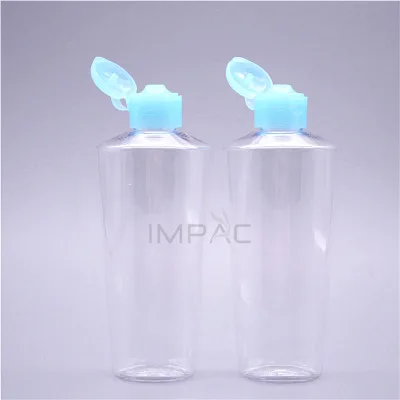
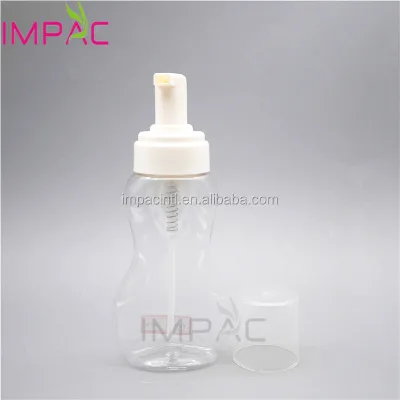
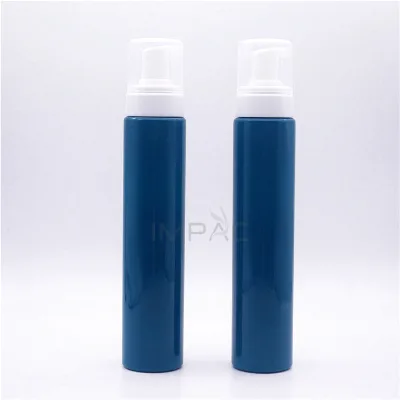
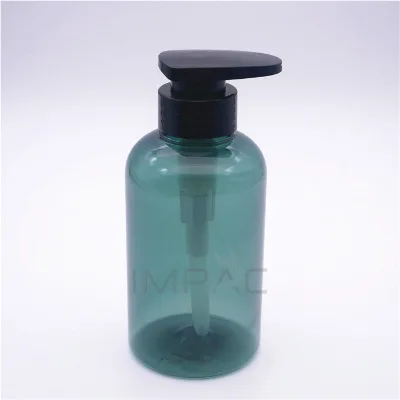
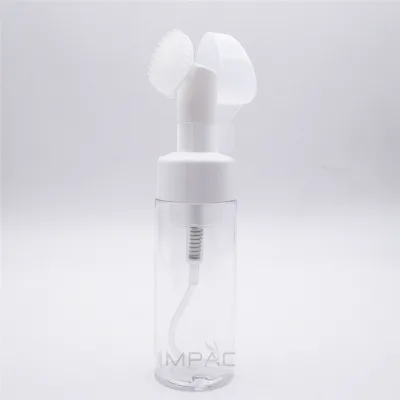
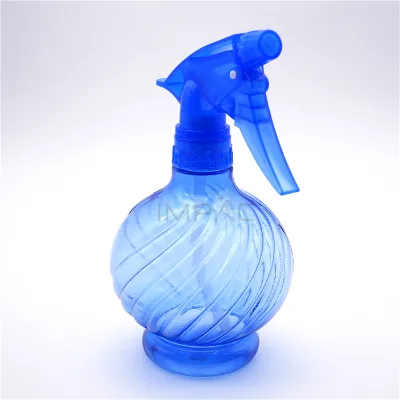


Antistatic Alcohol Bottle /ESD Alcohol Bottle / Plastic Bottle for Cleanroom
$1.00 - $2.00
MOQ: 100 Pieces









Comprehensive Sourcing Guide
Strategic Sourcing Guide for Anti-Static ESD Wash Bottles with Bend Nozzles
Procuring specialized fluid dispensing equipment for sensitive environments requires a rigorous approach that balances technical performance with supply chain reliability. The core keyword "Anti Static ESD Wash Bottle with Bend Nozzle" identifies a critical class of laboratory and industrial tools designed to prevent electrostatic discharge (ESD) while delivering precise chemical application. In sectors ranging from semiconductor manufacturing to chemical processing, the failure of a single bottle to meet ESD standards can result in catastrophic component damage. This guide synthesizes available product attributes and industry standards to provide a structured framework for evaluating potential suppliers and specifications without relying on unverified market claims.
Technical Specifications and Material Composition
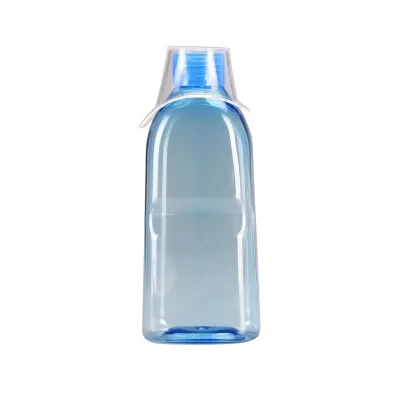
The foundational requirement for an ESD-safe wash bottle is the material composition, which must inherently resist the accumulation of static electricity. Based on observed product data, the primary materials utilized in this category include Polyethylene (PE) and general plastic formulations. These materials are selected for their dielectric properties and chemical resistance. The product attributes indicate a specific focus on "Anti-Static Blue Plastic Spraying Bottle" and "ESD Safe Bottle," suggesting that color coding (often blue) is a standard visual indicator for ESD compliance in many supply chains.
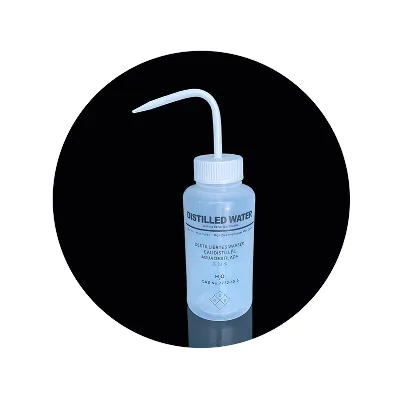
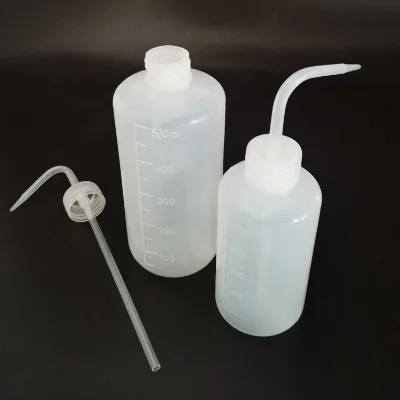
The geometry of the bottle is equally critical. The "bend nozzle" specification refers to a curved mouth or angled dispensing tip, which allows for precise application in hard-to-reach areas without contaminating the nozzle with the user's hand. The observed data lists "Curved Mouth Bottle" as a specific cap configuration. This design feature is essential for maintaining a sterile or clean environment while ensuring the liquid flow is directed accurately.
Volume capacity varies significantly across the market, with observed specifications ranging from 100ml to 500ml, and even custom sizes. Specific models are noted with standard volumes of 100ml, 150ml, 200ml, 300ml, and 450ml. Some listings indicate a standard of "6oz" or "8oz" (approximately 240ml), while others offer a "500ml or Customized" option. The extrusion amount per actuation is also a key technical parameter, with some units designed to dispense approximately 240ml per press, though this varies by nozzle design. Buyers must verify the specific flow rate and volume consistency for their intended chemical application, as the viscosity of the liquid (often chemical-based) interacts with the nozzle diameter to determine the actual output.
Compliance and Certification Verification
In the context of ESD safety and chemical handling, certification is not merely a formality but a prerequisite for operational safety. The observed product data explicitly lists "RoHS" and "CE" as certifications. RoHS (Restriction of Hazardous Substances) compliance ensures that the plastic materials and any metal components within the nozzle mechanism do not contain restricted hazardous substances, which is vital for environmental compliance and worker safety. The CE marking indicates conformity with health, safety, and environmental protection standards for products sold within the European Economic Area.
Furthermore, some product listings reference "ISO" certification alongside RoHS. While the specific ISO standard number is not provided in the raw data, the presence of this attribute suggests that manufacturers may adhere to International Organization for Standardization quality management systems. Buyers should verify the specific ISO standard (e.g., ISO 9001 for quality management or ISO 14001 for environmental management) rather than accepting the generic label.
It is crucial to distinguish between the certifications listed in product descriptions and the actual test reports required for ESD performance. The "Anti-Static" claim implies a surface resistivity rating, typically measured in ohms per square. While the provided text does not list specific numerical resistivity values, a buyer must request a test report confirming that the bottle meets the required ESD standard (often < 10^9 ohms/sq or < 10^11 ohms/sq depending on the industry standard). Relying solely on the "ESD Safe" product name without verifying the underlying test data is a significant procurement risk.
Cost Drivers and Pricing Dynamics
The pricing structure for ESD wash bottles is influenced by several factors, including material quality, customization level, and order volume. The observed price range in the market spans from $0.10 to $19.90 USD. This wide variance indicates that the cost is not uniform and depends heavily on the specific configuration. A basic 100ml PE bottle with a standard nozzle will likely fall at the lower end of this spectrum, while a customized 500ml bottle with a specific curved nozzle, logo printing, and high-grade ESD certification will command a higher price.
Minimum Order Quantity (MOQ) is another significant cost driver. The observed MOQ range is extensive, spanning from 1 unit to 10,000 units. For small-scale operations or prototype testing, suppliers with an MOQ of 1 are essential, though the unit cost will be higher. Conversely, large-scale procurement can leverage the lower end of the price range by ordering in bulk, potentially reaching the 10,000-unit threshold.
Customization is a primary factor increasing costs. The data confirms that "Customization" is available, including "Customized Logo Print" and "Size: 500ml or Customized." Adding a custom logo or altering the bottle dimensions requires mold changes or additional setup time, which increases the per-unit cost. Additionally, the "PANTONE" color specification suggests that specific color matching for branding or safety coding is an available but likely premium option. Buyers should evaluate whether the specific volume and color requirements justify the additional expense or if standard configurations suffice.
Typical Applications and Usage Environments
The versatility of anti-static ESD wash bottles makes them suitable for a diverse range of high-stakes environments. The product attributes explicitly list usage in "SMT Production Line," "Printing Workshop," "Electronic Component Maintenance Room," and "Computer Room." These are all settings where static electricity poses a direct threat to sensitive electronic components. In an SMT (Surface Mount Technology) line, a static discharge from a non-compliant bottle could destroy microchips or circuit boards, leading to significant financial loss.
The "Combustible & Explosive Area" usage tag highlights the safety criticality of these bottles. In environments where flammable solvents or chemicals are used, the generation of static sparks is a major hazard. ESD-safe bottles are designed to dissipate charge safely, preventing ignition. The "Cleanroom" application is also frequently cited, indicating that these bottles are used in controlled environments where particulate contamination must be minimized. The "Carton Box" or "OPP Bag" packing suggests that the bottles are designed to be transported and stored without compromising their cleanliness or ESD properties.
The "Chemical" application attribute confirms that these bottles are intended for holding and dispensing various chemical agents. The material, primarily PE and plastic, offers resistance to a wide range of chemicals, but buyers must verify compatibility with their specific solvent. The "Screw Cap" sealing type ensures a tight seal, preventing leakage and evaporation of volatile chemicals, which is essential for maintaining the integrity of the chemical and the safety of the storage environment.
Supplier Evaluation and Origin Considerations
When evaluating suppliers for ESD wash bottles, the geographic origin and manufacturing capability are key indicators of reliability. The observed data points to "China" and specifically "Jiangsu" and "Guangdong" as places of origin. These regions are known for robust manufacturing ecosystems, particularly in plastic molding and chemical packaging. However, the presence of a location does not guarantee quality; it is the supplier's adherence to standards that matters.
Buyers should look for suppliers who explicitly state their "Condition" as "New" and offer "Customization" services. The availability of "Carton" or "Carton Box" packing indicates a focus on bulk logistics and protection during transit. Some listings mention a brand name, such as "AOQUN BRUSH," though this appears to be associated with brush products rather than bottles, suggesting that buyers must carefully match the product category to the supplier's actual inventory.
The "Feature: Recyclable" and "Eco-Friendly" attributes indicate a growing trend toward sustainability. Buyers interested in green procurement should verify if the PE or plastic materials used are indeed recyclable and if the supplier has a take-back program or uses recycled content. The "Waterproof" attribute is also a standard expectation for these bottles, ensuring that the contents do not leak during handling or transport.
Quality Control and Long-Term Procurement
Ensuring long-term reliability requires a robust quality control (QC) strategy. The "New" condition of the products implies that they are manufactured to current standards, but buyers must implement incoming inspection protocols. Key QC checks should include visual inspection for defects in the "Curved Mouth Bottle" design, verification of the "Screw Cap" threading for leaks, and testing of the ESD properties using a surface resistivity meter.
The "Standard" specifications observed, such as "6oz 8oz" or "500ML or customized," should be treated as baseline requirements. Buyers must confirm that the actual delivered product matches these standards. The "Thickness: OTHER" specification suggests that wall thickness may vary, which can impact durability and chemical resistance. Thicker walls generally offer better chemical resistance but may be more expensive.
For long-term procurement, establishing a relationship with a supplier who offers "Customized Logo Print" and "Customized" volumes can streamline the supply chain. This allows for consistent branding and inventory management. The "Packing: 1PCS/OPP Bag" detail suggests individual packaging, which is beneficial for maintaining cleanliness in cleanroom environments. However, for large orders, bulk packing in "Carton" boxes is more efficient.
Buyers should also consider the "Filament Shape" and "Brush Material" attributes found in the data, even though they seem to refer to cleaning brushes. In a comprehensive sourcing strategy, these items might be part of a bundled procurement package for laboratory maintenance. Ensuring that the bottle and the cleaning tools are compatible (e.g., the nozzle size matches the brush head) can improve operational efficiency.
Conclusion
Sourcing anti-static ESD wash bottles with bend nozzles requires a meticulous approach that prioritizes material integrity, certification verification, and application-specific suitability. The market offers a wide range of options, from standard 100ml bottles to customized 500ml units, with prices varying significantly based on volume and customization. By focusing on verified certifications like RoHS and CE, confirming ESD performance through test data, and selecting suppliers with proven track records in regions like Jiangsu and Guangdong, buyers can secure reliable supplies for their critical operations. The ability to customize volume, color, and branding further enhances the utility of these products in diverse industrial settings. Ultimately, the goal is to ensure that every bottle delivered meets the stringent safety and performance requirements necessary to protect sensitive electronic components and maintain a safe working environment.
FAQs
What materials are used for anti static esd wash bottles?
These bottles are primarily made from Polyethylene (PE) and general plastic formulations. The material selection ensures dielectric properties that resist static electricity accumulation while providing necessary chemical resistance for various cleaning agents.
Which certifications verify the safety of these ESD bottles?
Products typically carry RoHS and CE certifications to ensure compliance with hazardous substance restrictions and European safety standards. Some listings also reference ISO certification, indicating adherence to quality management systems for reliable manufacturing processes.
How can I customize the volume and logo on these bottles?
Customization is available for volumes ranging from 100ml to 500ml and includes options for customized logo printing. Buyers can request specific sizes like 250ml or 500ml, though this may affect the unit price and minimum order quantity requirements.
Where are these anti static bottles typically manufactured?
The observed products originate from China, with specific manufacturing hubs located in Jiangsu and Guangdong provinces. These regions offer robust ecosystems for plastic molding and chemical packaging, supporting both standard and customized production runs.
What is the typical price range for these ESD wash bottles?
The market price ranges from 0.1 to 19.9 USD depending on configuration and order volume. Basic units fall at the lower end, while customized options with specific certifications or volumes command higher prices within this observed spectrum.
Can these bottles be used in cleanroom and explosive environments?
Yes, they are designed for use in cleanrooms, SMT production lines, and combustible or explosive areas. The ESD-safe design prevents static discharge that could damage sensitive components or ignite flammable chemicals during application.