Source Anti-Yellowing Epoxy Grouting Gun for Construction, Woodworking, and Footwear
Find and compare 30 anti-yellowing epoxy grouting gun options from verified Chinese suppliers. Buyers can review specifications for two-component epoxy grout, curing times, and bonding strength to select the right tool for construction, woodworking, and footwear applications.
Key considerations
Products List


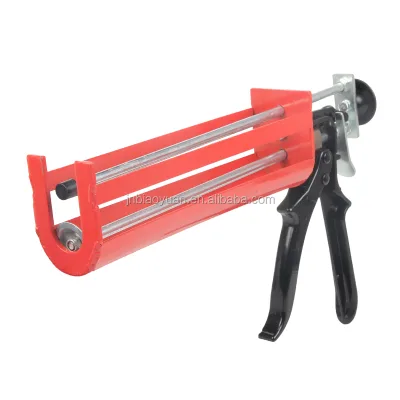

Dual Epoxy Gun for 400ml Double Cartridge Tile Seam Adhesive Caulking Tool
$1.75 - $2.25
MOQ: 500 Pieces


Colorful Gold Color Non Shrink Anti-Acid Grout Tool for House Remodeling
$4.69 - $5.89
MOQ: 1000 Pieces




Comprehensive Sourcing Guide
Strategic Sourcing Guide for Anti-Yellowing Epoxy Grouting Systems
Procuring specialized equipment and consumables for industrial adhesive application requires a nuanced understanding of the intersection between mechanical dispensing tools and high-performance chemical formulations. When researching the core keyword "anti-yellowing epoxy grouting gun," buyers must recognize that this term often encompasses two distinct but complementary product categories: the mechanical dispensing device and the specific epoxy grout formulation designed to resist discoloration. The supply chain for these items is characterized by a high degree of customization, varying power sources, and strict material standards. This guide provides a structured approach to evaluating suppliers, verifying technical claims, and managing procurement risks for these critical construction and manufacturing inputs.
Technical Specifications and Product Attributes
The foundation of a successful procurement strategy lies in a precise definition of technical requirements. The market offers a diverse range of dispensing mechanisms, ranging from manual operation to air-powered and cordless systems. For the specific application of epoxy grouting, the mechanical integrity of the gun is paramount. Buyers should verify the power source classification, as some units are designed as manual devices requiring significant operator force, while others utilize compressed air or battery power for consistent output. The material composition of the gun itself is another critical factor; high-quality units often feature handles made from Polypropylene (PP) to ensure durability and chemical resistance during extended use.
The chemical component, the epoxy grout, presents its own set of rigorous specifications. A primary differentiator in this category is the anti-yellowing capability. Advanced formulations utilize specific resin compositions, such as imported epoxy resin, combined with curing agents to achieve a morphology that remains stable under various environmental conditions. The anti-yellowing performance is often quantified by specific test metrics, such as a change in color value (ΔE) of less than 3 after 168 hours of exposure, a benchmark that buyers should explicitly request in supplier documentation. Furthermore, the grout's classification as a room-curing agent implies that it does not require external heat sources to harden, making it suitable for a wide range of on-site applications.
The physical characteristics of the grout also dictate the choice of dispensing equipment. Products described as having a smooth paste appearance and a working time of approximately 30 minutes require a gun capable of maintaining a steady flow without premature curing in the nozzle. The shelf life of the material, typically ranging around 12 months, necessitates inventory management strategies that align with production schedules. Additionally, the volume of the product, whether sold in 3.5kg sets or other configurations, directly influences the size and capacity of the required dispensing gun.
Compliance, Certification, and Standard Verification
In the B2B procurement of industrial adhesives and tools, compliance is not merely a formality but a prerequisite for market access and safety. While specific certification bodies vary by region, buyers must verify that the products adhere to relevant international and local standards. The supply data indicates that product standards often cover specific volume capacities, such as 50ml or 3.5kg, and material classifications like organic materials or structural adhesives. It is essential to confirm that the "anti-yellowing" claim is supported by third-party testing data rather than being a marketing assertion.
Buyers should request documentation regarding the composition of the product, specifically the ratio of the main agent to the promoter or curing agent. For two-component systems, the mixing ratio is a critical compliance factor; deviations can lead to incomplete curing or structural failure. The supply context mentions various mixing ratios, including 1:2, 1:4, and 1:10, which must be matched precisely to the equipment's metering capabilities. Furthermore, the origin of the product, often listed as China for these specific industrial goods, requires verification of the manufacturing facility's quality management systems.
Safety data sheets (SDS) are mandatory for all chemical products. These documents must detail the handling, storage, and disposal procedures for the epoxy resin and curing agents. The classification of the product as a structural adhesive implies that it must meet specific bonding strength requirements, often cited as greater than 8.5 MPa. Buyers should ensure that the supplier provides test reports verifying these mechanical properties against recognized industry standards. Additionally, the sealing type, such as rubber stoppers, must be compatible with the chemical composition to prevent leakage and contamination during storage and transport.
Cost Drivers and Pricing Dynamics
Understanding the cost structure of anti-yellowing epoxy grouting systems is vital for budgeting and negotiation. The price of these products is influenced by several factors, including the complexity of the resin formulation, the quality of the dispensing gun, and the scale of the order. The observed price range in the market spans from approximately $0.62 to $1600, reflecting the vast difference between small-scale manual dispensers and large, automated air-powered systems.
The Minimum Order Quantity (MOQ) is a significant driver of unit cost. Suppliers may offer lower unit prices for orders meeting high-volume thresholds, such as 50,000 pieces for certain gun models or 1,000 sets for the epoxy grout. However, smaller buyers may face higher per-unit costs due to lower MOQs, which can range from 1 to 5,000 units depending on the supplier's production capacity. The customization of the product, including specific packaging requirements like inner boxes or cartons, can also add to the overall cost.
Lead times are another critical cost consideration. A standard delivery time of 30 days is common, but this can vary based on the order volume and the specific customization requested. Buyers must factor in the potential for supply chain delays, especially when importing from overseas. The material cost of the epoxy resin, particularly if it involves imported components, can fluctuate with global market conditions, affecting the final price. Therefore, securing a fixed-price contract or a long-term agreement can help mitigate the risk of price volatility.
Typical Applications and Usage Scenarios
The versatility of anti-yellowing epoxy grouting systems makes them suitable for a wide array of industrial and commercial applications. The primary use case is in the construction industry, where the grout is applied to fill gaps and bond structural elements. The high bonding strength and structural adhesive classification make it ideal for heavy-duty applications where durability and load-bearing capacity are essential. The waterproof characteristic of the grout further extends its utility to areas exposed to moisture, such as bathrooms, kitchens, and outdoor facades.
Beyond construction, these products are widely used in woodworking, packing, and the footwear and leather industries. In woodworking, the grout provides a strong, aesthetic bond that resists yellowing over time, preserving the visual quality of the finished product. In the packaging and textile sectors, the grout's ability to bond diverse materials, including fiber and garment components, is highly valued. The automobile industry also utilizes these systems for interior and exterior assembly, where the anti-yellowing property ensures that components maintain their appearance despite exposure to sunlight and heat.
The specific application requirements often dictate the choice of equipment. For instance, the use of a cordless gun may be preferred in construction sites where access to compressed air is limited, while air-powered guns might be selected for high-volume factory settings. The working time of the grout, typically around 30 minutes, allows for sufficient time to apply the material and adjust the placement before it begins to harden. The fully curing time of 24 hours ensures that the bond reaches its maximum strength relatively quickly, minimizing downtime in production schedules.
Supplier Evaluation and Quality Assurance
Selecting the right supplier is a critical step in the procurement process. Buyers should evaluate potential suppliers based on their ability to meet the specific technical and quality requirements of the project. Key evaluation criteria include the supplier's experience with epoxy formulations, their manufacturing capabilities, and their track record in delivering customized solutions. The availability of customization options, such as specific packing types or product models, is a strong indicator of a supplier's flexibility and responsiveness.
Quality assurance processes should be a central part of the supplier evaluation. Buyers should inquire about the supplier's internal testing protocols, including checks for bonding strength, hardness, and anti-yellowing performance. The hardness of the cured grout, often measured at 60HD, should be verified through independent testing to ensure it meets the project specifications. Additionally, the scrub time and wash time of the grout, which typically range from 30 to 70 minutes, should be tested to confirm that the product performs as expected in real-world conditions.
Transparency in the supply chain is also essential. Buyers should request detailed information about the origin of the raw materials, particularly the epoxy resin and curing agents. The use of imported components can be a sign of higher quality, but it also introduces potential supply chain risks. Therefore, buyers should assess the supplier's contingency plans for material shortages and their ability to maintain consistent quality over time.
Long-Term Procurement Considerations
Sourcing anti-yellowing epoxy grouting systems is not a one-time transaction but a long-term relationship that requires careful management. Buyers should consider the total cost of ownership, including the cost of the product, the cost of the dispensing equipment, and the cost of maintenance and replacement. The shelf life of the grout, typically 12 months, requires a robust inventory management system to prevent waste and ensure that the product is used within its optimal period.
The customization aspect of the product offers opportunities for long-term collaboration. By working closely with suppliers to develop tailored solutions, buyers can optimize their production processes and reduce costs. This collaboration can also lead to the development of new products that better meet the evolving needs of the market. However, it is important to maintain a balance between customization and standardization to avoid excessive complexity in the supply chain.
Finally, buyers should stay informed about industry trends and technological advancements. The development of new epoxy formulations with improved anti-yellowing properties or faster curing times can provide a competitive advantage. By maintaining a proactive approach to procurement, buyers can ensure that they are always using the best available technology for their applications. This includes regularly reviewing supplier performance, updating technical specifications, and exploring new sourcing opportunities to optimize the procurement strategy.
Comparison of Product Attributes
To facilitate a clearer understanding of the diverse options available in the market, the following table summarizes key attributes observed in the supply data. This comparison highlights the variations in power sources, materials, and performance characteristics that buyers should consider when selecting a product.
| Attribute | Manual Dispensing Option | Air-Powered / Cordless Option | Epoxy Grout Formulation |
|---|---|---|---|
| Power Source | Manual | Air / Cordless | N/A (Chemical) |
| Handle Material | PP Handle | Varies by Model | N/A |
| Material Type | Plastic | Plastic / Metal | Epoxy Resin |
| MOQ | 1 - 5,000 Units | 50,000 Units | 1,000 Sets |
| Shelf Life | N/A | N/A | 12 Months |
| Working Time | N/A | N/A | 30 Minutes |
| Curing Time | N/A | N/A | 24 Hours |
| Anti-Yellowing | N/A | N/A | <3 ΔE (168h) |
| Bonding Strength | N/A | N/A | >8.5 MPa |
| Hardness | N/A | N/A | 60HD |
| Application | General | Construction / Industrial | Woodworking, Construction, Auto |
This table serves as a reference point for buyers to quickly identify the specific attributes that align with their project requirements. By carefully analyzing these factors, buyers can make informed decisions that balance performance, cost, and reliability in their procurement of anti-yellowing epoxy grouting systems.
FAQs
What power sources are available for anti-yellowing epoxy grouting guns?
These guns are available in manual, air-powered, and cordless configurations. Buyers should verify the specific power source required for their application, as some units rely on compressed air while others operate without external power.
Which material is used for the handle of these dispensing guns?
The handle material is typically Polypropylene (PP) to ensure durability and chemical resistance. This construction helps the tool withstand extended use and exposure to the epoxy components during the dispensing process.
Can buyers customize the packaging for the epoxy grout sets?
Yes, customization is available for product packaging, including options like inner boxes or cartons. Suppliers often offer flexible packing solutions to meet specific logistical or branding requirements for bulk orders.
What is the minimum order quantity for the epoxy grout sets?
The minimum order quantity is 1000 sets for the epoxy grout products. Buyers must meet this threshold to secure the product, though gun models may have different volume requirements like 50000 pieces.
How long is the shelf life of the anti-yellowing epoxy grout?
The shelf life is 12 months for the epoxy grout when stored correctly. This duration requires inventory management strategies to ensure the material is used within its optimal period before curing begins.
What is the lead time for delivery of these industrial adhesive systems?
The standard delivery time is 30 days from the order date. This lead time applies to both the dispensing guns and the epoxy grout formulations, subject to order volume and customization needs.
Which application areas are suitable for this structural adhesive grout?
The grout is suitable for construction, woodworking, footwear, and automobile industries. Its structural adhesive classification and waterproof characteristics make it ideal for bonding diverse materials in demanding environments.