Source Artificial Stone Planter for Home Decorations, Gardening, and Plaza Use
Compare 30 listings of Artificial Stone Planter options featuring hand-carved details, European styles, and various sizes. Buyers can evaluate materials like iron and stone, customization availability, and lead times from 45 to 60 days for home decorations, gardening, and plaza applications.
Key considerations
Products List


Granite Natural Stone Carved Flower Pots Planters for Outdoor Garden
$1000.00 - $1500.00
MOQ: 1 Pieces


Outdoor Fiberglass Large Garden Ornament Plant Container Flower Pot Planter
$19.00 - $89.00
MOQ: 10 Pieces

Customized Design Home Decoration Green Plant Flower Fiberglass Planter
$19.00 - $120.00
MOQ: 10 Pieces

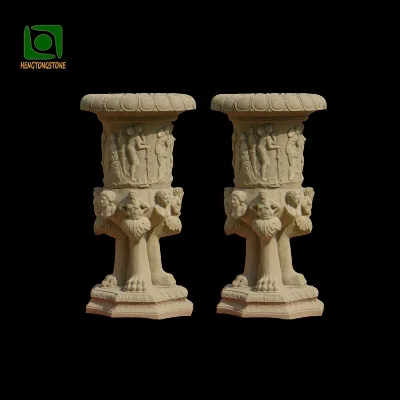

Comprehensive Sourcing Guide
Strategic Sourcing Guide for Artificial Stone Planters
The global market for artificial stone planters has expanded significantly as commercial and residential spaces seek durable, aesthetically pleasing alternatives to natural stone. For procurement professionals, the term "Artificial Stone Planter" often encompasses a complex range of materials, including iron, stone composites, and high-density plastics designed to mimic natural textures. Sourcing these items requires a disciplined approach to verify material composition, understand the distinction between hand-carved and machine-produced finishes, and navigate the logistical realities of international trade. This guide outlines the critical factors buyers must evaluate when selecting suppliers for these specific decorative items, ensuring that the final procurement aligns with both design intent and operational constraints.
Material Composition and Technical Specifications
The foundation of any successful procurement strategy for artificial stone planters lies in the precise definition of material composition. The market presents a dichotomy between products labeled as "Stone" and those constructed from "Iron" or "Plastic" with stone-like finishes. Buyers must scrutinize product specifications to distinguish between genuine stone composites and manufactured alternatives. For instance, some listings explicitly identify the primary material as "Iron," often utilized for structural frames or specific decorative elements, while others specify "Stone" as the core component. Conversely, "Plastic" variants are frequently engineered to offer lightweight durability, with volume capacities ranging from 1 to 25 gallons, customizable to specific planting needs.
When evaluating technical specifications, the shape and size are paramount. The market offers a variety of geometric forms, including "Round" and "Rectangular" configurations. The "Round" shape is often associated with European styling and traditional garden aesthetics, whereas "Rectangular" designs may align with modern, simple styles suitable for urban plazas or hotel lobbies. Size specifications can vary drastically, from standard dimensions to "Large" formats that may require custom manufacturing. Buyers should verify if the product standard allows for customization, such as heights of "H120CM or according to your request," rather than relying solely on off-the-shelf inventory. Furthermore, the finishing process is a key differentiator; high-end options often feature "Hand Carved" and "Polished" techniques to achieve a "Very Detailed Carving" effect, while others may utilize mass-production methods that lack this tactile depth.
Design Aesthetics and Application Scenarios
The visual appeal of artificial stone planters is driven by their intended application scene and stylistic classification. The "European Style" is a prevalent design language in this category, characterized by intricate detailing and classical proportions. This style is particularly effective for "Home Gardening," "Hotel," "Plaza," and "Home" decoration, where the planter serves as a focal point. The "Simple" style, often associated with "Plastic" or "Iron" frames, caters to contemporary settings where minimalism is preferred.
Buyers must align the product's application with its physical attributes. For example, planters designed for "Floor Type" usage require a specific base stability and weight distribution, often achieved through the use of "Iron Frame" construction or heavy stone composites. The "Application" field in supplier data often lists "Flowers/Plants," confirming the functional utility of the vessel. However, the aesthetic integration is equally critical. Products marked with "Hande Made" attributes and "Hand Carved" processes are typically positioned as premium decor items, suitable for high-visibility areas like hotel entrances or luxury residential gardens. In contrast, items with "Simple" styles and "Plastic" materials may be better suited for large-scale landscaping projects where cost-efficiency and ease of maintenance are prioritized over artisanal detail.
Compliance, Certification, and Quality Assurance
Navigating the compliance landscape is essential for B2B procurement, particularly when importing goods from manufacturing hubs. Certification serves as a proxy for ethical labor practices and quality management systems. The "BSCI" (Business Social Compliance Initiative) certification is a notable standard observed in the supply chain for these products. This certification indicates that the supplier adheres to specific social compliance standards regarding labor conditions, which is a critical requirement for many international retailers and corporate buyers.
Beyond social compliance, buyers must verify the "prod_standard" to ensure the product meets the required physical specifications. Some suppliers offer standards that "can be customized," allowing for flexibility in dimensions and design, while others adhere to specific internal benchmarks like "Dadi." Quality assurance also extends to the finishing process. The presence of "Hand Carved" and "Polished" techniques suggests a higher level of quality control, as these processes are labor-intensive and prone to variation. Buyers should request evidence of the "Special" attributes, such as "Very Detailed Carving," to ensure the final product matches the visual expectations set during the sampling phase. Additionally, the "Insurance" coverage, such as "Cover All Risks," provides a layer of financial protection during transit, which is particularly relevant for fragile items like stone composites or intricate ironwork.
Cost Drivers and Supply Chain Logistics
Understanding the cost structure of artificial stone planters requires an analysis of material, labor, and logistics. The "Direct Factory Supplying" model is often cited as an advantage, potentially reducing intermediary markups. However, the cost is heavily influenced by the "Hande Made" nature of the product. Items that are hand-carved and polished incur higher labor costs compared to mass-produced plastic or iron alternatives. The "Lead Time" is another significant cost driver; typical delivery windows range from "45-60 days" for complex, customized orders to "Within 3-4 Weeks" for standard inventory. These timelines are contingent on the "Fob Port," which is frequently listed as "Ningbo," a major shipping hub in China.
The "MOQ" (Minimum Order Quantity) varies widely, with observed ranges from "1-1000" units. Some suppliers offer a low barrier to entry with a "Min Order" of "1PC/1pair," while others enforce a stricter "MOQ" of "300 PCS." This variance impacts the total landed cost, as smaller orders may not benefit from economies of scale. Packaging is another logistical factor; products are shipped in "Carton," "Wooden Crate," or "Pallet/Carton/Bag" configurations. The choice of packaging, such as a "Wooden Crate with Soft Form Inside," directly affects shipping costs and the risk of damage during transit. Buyers should also consider the "Sample Charge," which is often "Free," allowing for cost-effective evaluation before committing to a large order.
Supplier Evaluation and Operational Capabilities
Evaluating suppliers requires a deep dive into their operational capabilities and customization potential. A robust supplier should demonstrate flexibility in "Customization," offering options for "OEM&ODM" services. This capability is crucial for buyers seeking unique designs or specific branding. The "Farming Policy" and "Power Source" attributes, while seemingly unrelated to planters, indicate the supplier's broader manufacturing scope, potentially including "Tractor" powered machinery for "Dry Cultivating Machinery" or "Plant Protection Machinery." This suggests a versatile manufacturing base capable of handling diverse product lines.
Buyers should verify the "prod_origin" and specific location of the manufacturing facility. While "China" is the general origin, specific provinces like "Heibei" may be highlighted for particular expertise in stone or iron processing. The "Operation" mode, described as "Continuous Running Operation," implies a high-volume production capacity, which is beneficial for large orders but may require careful scheduling to accommodate custom requests. The "Remark" section often contains vital information, such as the ability to "Design and Make Different Dimension Sculpture," which is a key differentiator for custom projects. Suppliers who explicitly state "Advantage: Direct Factory Supplying" and offer "Cover All Risks" insurance demonstrate a commitment to reliability and risk management.
Long-Term Procurement and Maintenance Considerations
Sourcing artificial stone planters is not merely a transactional event but a long-term partnership that requires consideration of maintenance and lifecycle management. The "Use Type" and "Application Scene" dictate the durability requirements. For "Home Gardening" or "Plaza Decoration," the planters must withstand environmental exposure, including UV radiation, rain, and temperature fluctuations. The "Finishing" process, whether "Hand Carved" or "Polished," impacts the long-term aesthetic retention. High-quality finishes resist fading and chipping, ensuring the planter remains visually appealing over years of use.
Buyers should also consider the "prod_packing" and "prod_standard" in the context of storage and installation. "Wooden Crate" packaging offers superior protection for delicate items but increases disposal costs. Conversely, "Carton" or "Pallet" packaging may be more sustainable but offers less protection. The "Standard" of "H120CM or according to your request" highlights the importance of standardization in inventory management. For large-scale deployments, maintaining a consistent standard across all units is vital for uniformity. Finally, the "Lead Time" of "45-60 days" necessitates advanced planning to avoid stockouts, especially for seasonal peaks in gardening and landscaping projects. By understanding these long-term factors, buyers can build a resilient supply chain that supports their decorative and functional needs effectively.
Comparative Analysis of Product Attributes
To facilitate decision-making, the following table summarizes the key attributes observed in the market for artificial stone planters, highlighting the variations in material, style, and logistics.
| Attribute Category | Product Variant A | Product Variant B | Product Variant C |
|---|---|---|---|
| Primary Material | Iron / Stone Composite | Plastic | Stone / Composite |
| Production Technique | Hand Carved, Polished | Mass Production | Hand Carved, Detailed |
| Shape | Round | Rectangular | Custom / Large |
| Style | European Style | Simple | Custom / Detailed |
| Application Scene | Home Gardening, Hotel | General Decoration | Garden, Plaza, Home |
| MOQ | 300 PCS | 1 PC / 1 Pair | 300 PCS |
| Lead Time | 45-60 Days | 3-4 Weeks | 45-60 Days |
| Packaging | Wooden Crate | Carton / Pallet | Wooden Crate with Soft Form |
| Certification | BSCI | Standard | BSCI |
| Customization | Available | OEM/ODM Available | Custom Dimensions |
This comparison underscores the diversity within the Artificial Stone Planter market. Buyers must carefully match these attributes to their specific project requirements, balancing the aesthetic demands of "European Style" and "Hand Carved" details against the logistical constraints of "Lead Time" and "MOQ." By adhering to these evidence-based criteria, procurement professionals can secure high-quality planters that meet both design and operational standards.
FAQs
What materials are used for artificial stone planters?
Artificial stone planters are constructed from iron, stone composites, or high-density plastic. Some variants feature iron frames while others use stone or plastic to mimic natural textures for durability and aesthetic appeal.
Can these planters be customized for specific dimensions?
Yes, customization is available for dimensions and styles. Suppliers can design different dimension sculptures and offer standards like H120CM or specific requests to match unique project requirements.
Which certification ensures ethical labor practices for these products?
The BSCI certification indicates adherence to social compliance standards regarding labor conditions. This certification is a notable standard observed in the supply chain for these decorative items.
How long does delivery take for custom orders?
Typical delivery windows range from 45 to 60 days for complex, customized orders. Some standard inventory may be delivered within 3 to 4 weeks depending on the specific order details.
What is the minimum order quantity for these planters?
Minimum order quantities vary significantly between 1 piece and 1000 units. Some suppliers enforce a strict MOQ of 300 pieces, while others offer low barriers with a minimum of 1 pair.
How are these planters packaged for international shipping?
Products are shipped in cartons, wooden crates, or pallets with soft forms inside. The choice of packaging, such as a wooden crate, directly affects shipping costs and the risk of damage during transit.
Where are these artificial stone planters manufactured?
The general origin is China, with specific manufacturing hubs located in Heibei. These locations are often highlighted for particular expertise in stone or iron processing for decorative items.