Source Automatic Cabinet Water Softener for Hotels, Hospitals, and Offices
Explore 28 listings of Automatic Cabinet Water Softener units featuring ion exchange technology and various flow capacities. Buyers can compare models like SOFT-BX2 and KM-SOFT series with certifications such as CE, RoHS, and UL for diverse water treatment needs.
Key considerations
Products List


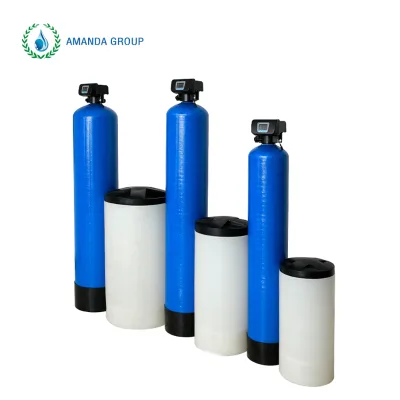
Compact Cabinet Water Softener, Automatic Water Softener for Easy Installation
$207.00 - $215.00
MOQ: 5 Pieces




Comprehensive Sourcing Guide
Strategic Sourcing Guide for Automatic Cabinet Water Softeners
Understanding the Technical Architecture of Automatic Systems
When sourcing an Automatic Cabinet Water Softener, the primary objective is to identify a unit that aligns with specific hydraulic requirements and operational workflows. The core mechanism for these systems typically relies on the ion exchange principle, where hard water minerals are replaced with sodium or potassium ions. In the current market, buyers encounter distinct configurations ranging from compact floor-standing units to larger cabinet-style installations designed for integrated plumbing.
A critical technical differentiator is the flow capacity, which dictates the system's ability to handle demand without pressure drops. Available data indicates units with flow capacities ranging from 800 liters per hour up to 2.5 tons per hour (2500 liters per hour). This variance suggests that a single specification does not fit all applications; a residential or small commercial setup may require the lower capacity units, while industrial or high-volume commercial facilities necessitate the 2.5T/H models. The regeneration process is another vital technical attribute. Modern automatic systems often feature automatic regeneration cycles to ensure continuous operation without manual intervention. Specific configurations observed include automatic flushing mechanisms that can operate via down-flow or up-flow methods, ensuring thorough resin cleaning and extending the lifespan of the filtration media.
The physical installation style is equally significant. While some units are designed as standalone floor-standing dispensers, the "cabinet" designation often implies a built-in or enclosed design that integrates seamlessly into kitchen or utility room aesthetics. The working principle remains consistent across most models, utilizing ion exchange resin. However, the resin quality and volume vary; for instance, specific high-capacity models may utilize 25 liters of resin from reputable manufacturers like Purolite, housed within a Fiber Reinforced Plastic (FRP) tank, such as the 1035 series. The motive force for these automatic systems is predominantly electric power, driving the control valves and regeneration timers. Buyers must verify that the inlet mode matches their infrastructure, with pipeline connections being the standard for these automatic units.
Compliance and Certification Verification Protocols
Navigating the regulatory landscape is essential for B2B procurement, particularly when importing water treatment equipment. The market data reveals a diverse array of certifications that suppliers may claim, including CE, RoHS, UL, GS, SASO, and WQA. These certifications are not merely marketing labels but indicate compliance with specific regional safety and environmental standards. For example, the CE mark is frequently cited alongside RoHS, indicating conformity with European health, safety, and environmental protection standards. In markets requiring electrical safety verification, the UL certification is a critical benchmark, often appearing in conjunction with CE and RoHS.
The presence of the WQA (Water Quality Association) standard is particularly relevant for water treatment devices, as it often pertains to the specific performance of the filtration and softening capabilities. Similarly, the SASO certification is a mandatory requirement for products entering the Saudi Arabian market, indicating adherence to local safety and quality norms. The GS mark represents German safety certification, which is highly regarded in the European market. Buyers must understand that while a supplier may list multiple certifications, the specific validity and scope of these certifications for the exact model being purchased must be verified. It is not assumed that every listed product satisfies every standard mentioned in a general catalog; rather, the certification status should be confirmed for the specific model number, such as SOFT-BX2 or KM-SOFT-XB2.
Furthermore, the product standards listed often include CE and ROHS, which serve as baseline requirements for electrical and chemical safety. When evaluating a supplier, procurement teams should request valid certification documents for the specific batch or model. The absence of a specific certification, such as UL or GS, does not necessarily disqualify a product for all markets, but it may restrict sales to regions where those specific marks are mandatory. Therefore, the verification process involves cross-referencing the supplier's claimed certifications against the regulatory requirements of the destination country.
Cost Drivers and Pricing Structure Analysis
The pricing of automatic cabinet water softeners is influenced by a complex interplay of factors, including flow capacity, material quality, certification breadth, and packaging specifications. The observed price range in the market spans from approximately $20 to $3,600 USD. This wide disparity reflects the difference between basic, low-capacity units and high-performance, industrial-grade systems with advanced automation and robust construction.
Flow capacity is a primary cost driver. Units with a capacity of 800L/H are generally positioned at the lower end of the price spectrum, while those capable of 2.5T/H command significantly higher prices due to the larger resin volume, larger FRP tanks, and more sophisticated control valves. The type of resin used also impacts cost; systems utilizing branded resins like Purolite may carry a premium over generic resin options. Additionally, the inclusion of advanced features such as automatic regeneration, specific flushing modes (down or up flow), and multi-temperature capabilities (cold, warm, and hot) can increase the manufacturing cost and, consequently, the retail price.
Packaging and customization options further influence the final cost. While standard units may come in neutral boxes or simple cartons, custom OEM packaging or color boxes can add to the unit price. The Minimum Order Quantity (MOQ) is another critical financial consideration. The market shows an MOQ range from 1 to 1000 units. Buyers seeking small quantities may face higher per-unit costs, whereas bulk purchases often benefit from economies of scale. However, the specific MOQ and pricing tiers are supplier-dependent and should be negotiated based on the total order value and the complexity of the customization required.
Typical Applications and Operational Scenarios
Automatic cabinet water softeners are versatile solutions deployed across various sectors, each with unique water quality challenges. The primary application is in environments where hard water causes scaling issues in pipes, appliances, and fixtures. The "cabinet" style is particularly suited for residential kitchens, commercial restaurants, and small-to-medium industrial facilities where space optimization and aesthetic integration are priorities.
In residential settings, these units protect water heaters, dishwashers, and washing machines from scale buildup, extending the lifespan of these appliances. The ability to provide cold, warm, and hot water in some configurations makes them ideal for comprehensive kitchen water systems. In commercial applications, such as hotels and restaurants, the higher flow capacity models (e.g., 2.5T/H) are essential to handle the high volume of water usage during peak hours without interruption. The automatic regeneration feature ensures that the system can operate continuously, which is critical for businesses that cannot afford downtime for manual maintenance.
Industrial applications often require specialized configurations. For instance, the "Environmental Protection" usage category suggests that these units are also employed in processes where water quality is critical for environmental compliance or product quality. The ion exchange resin is particularly effective in removing calcium and magnesium ions, which are the primary causes of hardness. The specific model selection depends on the water source quality and the required output volume. Buyers should assess their specific water hardness levels and flow demands to select the appropriate model, ensuring that the system's capacity matches or exceeds the peak usage requirements of the facility.
Supplier Evaluation and Quality Assurance Framework
Evaluating a supplier for automatic cabinet water softeners requires a rigorous assessment of their technical capabilities, production standards, and quality control measures. The origin of the products is a key indicator of manufacturing standards, with major production hubs identified in Zhejiang and Ningbo, China. These regions are known for their established manufacturing ecosystems for water treatment equipment. However, the specific origin should be verified for each order to ensure consistency in quality.
Quality control should focus on the materials used in construction. The FRP (Fiber Reinforced Plastic) tank is a critical component, and its specifications, such as the 1035 series, should be confirmed to ensure durability and resistance to corrosion. The resin quality is another focal point; buyers should verify the brand and specifications of the resin, such as the 25L Purolite resin mentioned in some high-end models. The packaging method, whether it is a carton, neutral box, or color box, also reflects the supplier's attention to detail and their ability to protect the product during transit.
When evaluating suppliers, buyers should request detailed product specifications, including the model number (e.g., SOFT-BX2, KM-SOFT-C1), flow capacity, and working principle. It is crucial to verify that the supplier can provide the necessary certifications for the target market. The presence of certifications like CE, UL, and RoHS should be backed by valid documentation. Additionally, the customization capabilities of the supplier should be assessed, as many buyers require OEM packaging or specific modifications to meet their branding and functional needs.
Long-Term Procurement and Maintenance Considerations
Sourcing an Automatic Cabinet Water Softener is not just a one-time purchase but a long-term investment that requires careful consideration of maintenance and operational costs. The automatic regeneration feature is a significant advantage, reducing the need for manual intervention and ensuring consistent water quality. However, the frequency of regeneration and the consumption of salt or other regenerants are factors that impact long-term operating costs. Buyers should inquire about the regeneration cycle settings and the expected lifespan of the resin.
The working principle of ion exchange means that the resin will eventually become saturated and require replacement. The volume of resin, such as the 25L option, influences the frequency of regeneration and the overall service life of the system. Buyers should also consider the availability of replacement parts, such as control valves and resin, to ensure that the system can be maintained over its lifespan. The "No" cooling mode in some models indicates that these units are designed specifically for softening, not for temperature control, which is a critical distinction for buyers looking for integrated hot and cold water solutions.
Furthermore, the installation type, such as the cabinet type or floor-standing design, affects the ease of maintenance. Systems designed for cabinet installation may require specific access points for servicing the internal components. Buyers should ensure that the supplier provides clear installation manuals and maintenance guides. The lead time and production capacity of the supplier are also important for long-term procurement planning, especially for large-scale projects that require multiple units. By understanding these long-term considerations, buyers can make informed decisions that balance initial costs with operational efficiency and maintenance requirements.
Comparative Analysis of Key Product Attributes
To facilitate a clear comparison of available options, the following table summarizes the key attributes observed in the market for automatic cabinet water softeners. This comparison highlights the variations in model specifications, certifications, and functional capabilities that buyers should consider during the selection process.
| Attribute | Model A (SOFT-BX2) | Model B (SOFT-XB2) | Model C (KM-SOFT-XB2) | Model D (KM-SOFT-C1) |
|---|---|---|---|---|
| Flow Capacity | 800L/H | 2500L/H | 2.5t/H | 0.5 Ton/H |
| Certifications | CE, RoHS, WQA | CE, UL, RoHS, SASO | CE, GS, UL, RoHS, SASO | CE, UL, RoHS |
| Installation Style | Cabinet | Cabinet | Cabinet | Cabinet |
| Resin Volume | Not Specified | 25L (Purolite) | Not Specified | Not Specified |
| Regeneration | Automatic | Automatic | Automatic | Automatic |
| Flushing Mode | Not Specified | Down or Up Flow | Not Specified | Not Specified |
| Water Temp | Cold | Cold, Warm & Hot | Not Specified | Not Specified |
| Origin | Zhejiang | Zhejiang, China | Ningbo, China | China |
| Packing | Carton | Neutral Boxes / OEM | Color Box or Carton | 1PC/Carton |
This table illustrates the diversity in specifications available to buyers. While some models focus on high flow capacity and advanced flushing modes, others prioritize a broader range of certifications or specific temperature capabilities. The variation in resin volume and origin also underscores the importance of verifying the specific details of each model before making a procurement decision. By carefully analyzing these attributes, buyers can select the most suitable Automatic Cabinet Water Softener for their specific operational needs and regulatory requirements.
FAQs
What certifications do automatic cabinet water softeners typically hold?
Many units carry CE, RoHS, and UL certifications to meet international safety standards. Some models also include WQA, GS, or SASO marks depending on the target region and specific product configuration.
How is the regeneration process managed in these systems?
Modern systems feature automatic regeneration cycles to ensure continuous operation without manual intervention. Specific configurations may include automatic flushing via down-flow or up-flow methods for thorough resin cleaning.
Which flow capacities are available for automatic cabinet water softeners?
Available units range from 800 liters per hour up to 2.5 tons per hour. Lower capacity models suit residential needs, while higher capacity units serve commercial or industrial facilities with greater water demand.
Can buyers request customization for these water softener units?
Yes, customization is available for various product attributes and packaging requirements. Buyers can often specify OEM packaging or modify features to align with their specific branding and operational needs.
What is the typical minimum order quantity for these products?
The minimum order quantity ranges from 1 to 1000 units depending on the supplier and specific model. Smaller orders may have higher per-unit costs, while bulk purchases often benefit from economies of scale.
Where are these automatic cabinet water softeners typically manufactured?
Major production hubs for these units are located in Zhejiang and Ningbo, China. These regions are known for established manufacturing ecosystems specifically designed for water treatment equipment production.
How much does an Automatic Cabinet Water Softener cost?
Prices in the market span from approximately 20 to 3600 USD per unit. The cost varies significantly based on flow capacity, material quality, certification breadth, and specific packaging specifications.