Source Automatic Commercial Carrot Peeler for Restaurants, Catering, and Food Processing
Explore 30 listings for the Automatic Commercial Carrot Peeler designed for diverse food production needs. Buyers can compare specifications such as capacity, voltage, and material to find the ideal unit for vegetable processing operations.
Key considerations
Products List


Carrot Peeling Machine High Capacity Commercial Carrot Peeler for Kitchen
$2470.00 - $2500.00
MOQ: 1 Pieces

High Speed Carrot Peeler, Automatic Radish Peeling Machine for Mass Production
$2470.00 - $2500.00
MOQ: 1 Pieces


Onion Peeling Machine Skin Peeler Commercial Potato Peeler Machine Carrot Peeler
$9000.00 - $9500.00
MOQ: 1 Sets


Industrial Carrot Peeler Machine / White Radish Peeler / Asparagus Peeling Machine
$3750.00 - $4500.00
MOQ: 1 Sets


Commercial Potato Peeler / Potato Cleaning Machine / Carrot Peeling Machine
$899.00 - $1300.00
MOQ: 1 set


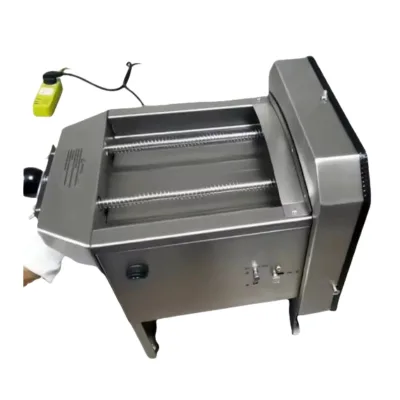


Commercial Vegetable Peeling Machine Eggplant Lettuce Yam Radish Carrot Peeler
$4050.00 - $7500.00
MOQ: 1 Sets

Comprehensive Sourcing Guide
Strategic Sourcing Guide for Automatic Commercial Carrot Peelers
Understanding Technical Specifications and Operational Capabilities
When sourcing an Automatic Commercial Carrot Peeler, the primary objective is to align machine capabilities with specific production throughput requirements. The market presents a diverse array of models, each defined by distinct operational parameters. Buyers must scrutinize the core functional attributes, as these directly dictate the machine's suitability for a given facility. The fundamental function of these units is the automated removal of the outer skin from root vegetables, specifically carrots, utilizing mechanical abrasion or cutting mechanisms.
A critical differentiator among available units is the power configuration. Observed specifications indicate that machines may operate on varying voltage standards, including 220V and 380V configurations. This variance necessitates a rigorous audit of the facility's electrical infrastructure prior to procurement. A mismatch between the machine's voltage requirement and the plant's power supply can lead to operational failure or the need for costly transformer installations. Similarly, power consumption ratings vary, with observed units ranging from 0.75KW to 1.5KW. While lower wattage units may appear more energy-efficient, the total power draw must be balanced against the required processing speed and the mechanical load of the peeling rollers.
Throughput capacity is another paramount specification. Data indicates that capacity metrics are expressed in different units depending on the model, such as 1800-2000 pieces per hour or 500kg per hour. For large-scale processing lines, the piece-per-hour metric is often more relevant for inventory planning, whereas the kilogram-per-hour metric provides a direct correlation to raw material consumption. Buyers should verify the specific capacity of the model under consideration, as some units offer adjustable ranges, such as 500-1000kg/H, which allows for flexibility during different production cycles.
The physical dimensions of the equipment are equally critical for facility layout planning. Observed standard dimensions for various models range significantly, from compact units measuring approximately 18943103cm to larger industrial units spanning 220011001950mm. The footprint must accommodate not only the machine itself but also the necessary clearance for operator access, maintenance, and the integration of upstream and downstream conveyor systems. Weight is a secondary but important factor for installation, with observed units ranging from 120kg to 500kg. Heavier machines often imply a more robust frame, which can contribute to stability during high-speed operation, but they may require reinforced flooring or specialized lifting equipment for installation.
Material Construction and Component Durability
The longevity and food safety compliance of a commercial peeler are inextricably linked to the materials used in its construction. The industry standard for food processing equipment, particularly for direct contact with produce, is stainless steel. Observed specifications confirm that many units utilize SUS304 Stainless Steel, a grade known for its corrosion resistance and ease of cleaning. This material choice is essential for preventing rust and ensuring that the machine can withstand frequent washdowns required by food safety protocols.
Beyond the general material grade, the thickness of the steel components plays a significant role in durability. Some specifications note a material thickness of 5mm, which suggests a heavy-duty build capable of withstanding the mechanical stress of continuous operation. The core components of these machines often include a PLC (Programmable Logic Controller) and spiral brush systems. The spiral brush, or wool roller, is the primary mechanism for peeling. The number of these rollers can vary, with options such as 8, 12, or 14, and some models offer customizability in this regard. A higher number of rollers may increase the surface area contact, potentially improving peeling efficiency for larger batches, but it also increases the complexity of the cleaning process.
The design of the spiral hair rollers themselves is a specific technical detail to consider. Dimensions such as 120*1000mm are observed for these components. The precision of these rollers determines the uniformity of the peel and the amount of waste generated. Furthermore, the presence of sprinkler heads, with counts like 14 heads (also customizable), indicates the integration of water management systems. These systems are crucial for flushing away peelings and maintaining a clean working environment, but they require careful integration to prevent waterlogging or excessive moisture in the final product.
Compliance, Certification, and Safety Standards
Navigating the regulatory landscape is a non-negotiable aspect of B2B procurement for food processing machinery. While specific certification statuses can vary by supplier and region, buyers should look for evidence of compliance with international safety and quality standards. Observed data points to the presence of CE and SGS certifications on certain models. The CE marking indicates conformity with health, safety, and environmental protection standards for products sold within the European Economic Area, while SGS certification often relates to quality assurance and testing.
However, the presence of a certification mark on a product listing should be treated as an observation rather than a guaranteed attribute for every unit. Buyers must verify the validity of these certifications for the specific model they intend to purchase. This involves requesting current certificates from the supplier and confirming that the testing bodies are accredited. Additionally, the warranty of core components is a key indicator of manufacturer confidence. A standard warranty period of 1 year for core components like the PLC and spiral brush is observed, which serves as a baseline for after-sales support expectations.
Safety features are often integrated into the design to protect operators. The "Automatic" operation mode observed in several models implies the presence of safety interlocks and emergency stop mechanisms. Buyers should inquire about the specific safety protocols built into the control system, ensuring that the machine complies with local occupational health and safety regulations. The "Video Outgoing-Inspection" feature noted in some listings suggests that manufacturers are willing to provide visual verification of the machine's condition before shipment, which can be a valuable tool for remote quality assurance.
Cost Drivers and Pricing Dynamics
The pricing of automatic commercial carrot peelers is influenced by a complex interplay of factors, including material costs, manufacturing complexity, and the level of customization offered. The observed price range in the market spans from 215 USD to 9599 USD. This wide disparity highlights the difference between entry-level or smaller capacity units and high-end, fully automated industrial systems. The lower end of the spectrum may correspond to simpler mechanical designs or smaller capacities, while the higher end likely reflects advanced automation, larger dimensions, and more robust construction.
Minimum Order Quantity (MOQ) is another critical cost driver. In the observed data, the MOQ is consistently listed as 1 unit, indicating that suppliers are generally willing to sell single units. This flexibility is beneficial for small to medium-sized enterprises or for buyers testing a new technology before scaling up. However, buyers should be aware that while the MOQ is low, the unit price may be higher for single-unit purchases compared to bulk orders, although specific volume discounts are not explicitly detailed in the available data.
Customization is a significant factor that can drive up costs. Attributes such as "Customized" and "Available" customization options suggest that buyers can tailor the machine to their specific needs, such as adjusting the number of spiral rollers or modifying dimensions. While this adds value, it inevitably increases the production time and cost. The "Matching Gas Source" and "Matching Flow Rate" specifications, such as 0.8MPa and 2m³/Min, indicate that some models may require specific utility connections, which could add to the total cost of ownership if the facility requires infrastructure upgrades.
Typical Applications and Operational Context
Automatic commercial carrot peelers are designed for a variety of applications within the food processing industry. The primary application is the preparation of fruits and vegetables, with a specific focus on root vegetables like carrots. These machines are essential for commercial kitchens, food processing plants, and large-scale catering operations where manual peeling is inefficient and inconsistent. The "High Efficiency" and "Nice Performance" attributes observed in the product descriptions suggest that these machines are optimized for high-volume production environments.
The versatility of these machines is often enhanced by their ability to handle different sizes and shapes of carrots. The adjustable nature of some components, such as the number of sprinkler heads and spiral rollers, allows the machine to adapt to different product specifications. This flexibility is crucial for facilities that process a variety of root vegetables or different grades of carrots. The "High Productivity" key selling point underscores the machine's ability to maintain a steady output, which is vital for meeting the demands of commercial supply chains.
Furthermore, the location of showrooms in countries like the United Kingdom, United States, and Germany suggests that these machines are marketed globally and are expected to meet diverse regional standards. The origin of the products, primarily from China and specifically Shandong Province, indicates a strong manufacturing base in this region. Buyers should consider the logistical implications of sourcing from this location, including shipping costs and lead times, although specific lead times are not provided in the current data.
Supplier Evaluation and Quality Assurance Protocols
Selecting the right supplier is as important as selecting the right machine. Buyers should prioritize suppliers who demonstrate transparency and a commitment to quality. The availability of "Video Outgoing-Inspection" is a strong indicator of a supplier's confidence in their product and their willingness to engage in remote quality verification. This feature allows buyers to visually inspect the machine's assembly, finish, and functionality before it leaves the factory, reducing the risk of receiving a defective unit.
When evaluating suppliers, buyers should look for evidence of a robust quality control process. This includes checking for the "Warranty of Core Components" and understanding the terms of the warranty. A 1-year warranty on critical parts like the PLC and spiral brush is a standard benchmark, but buyers should clarify what is covered and the process for claiming warranty services. Additionally, the "Marketing Type" designation of "New Product 2022" suggests that some models are relatively recent innovations, which may imply the use of newer technology and design improvements.
The "Plywooden" and "Wooden Case" packing options observed in the specifications are standard for international shipping, protecting the machine from damage during transit. However, buyers should verify that the packing is sufficient for the specific shipping route and that the machine is properly secured to prevent shifting. The "Customized" nature of some products also requires clear communication with the supplier to ensure that all custom specifications are accurately documented and manufactured.
Long-Term Procurement and Maintenance Considerations
Long-term success with an Automatic Commercial Carrot Peeler depends on effective maintenance and the availability of spare parts. The "Core Components" such as the PLC and spiral brush are critical to the machine's operation and should be prioritized in maintenance schedules. Buyers should inquire about the availability of replacement parts and the expected lifespan of these components. The "Spiral Brush" is a consumable part that will require periodic replacement, and the cost and availability of these brushes should be factored into the total cost of ownership.
The "Automatic" operation mode implies a reliance on electronic controls, which may require specialized technical support for troubleshooting. Buyers should ensure that the supplier provides adequate training and technical documentation to facilitate in-house maintenance. The "High Efficiency" and "High Productivity" claims are only valid if the machine is maintained according to the manufacturer's guidelines. Regular cleaning of the spiral rollers and sprinkler heads is essential to prevent clogging and ensure consistent performance.
Finally, buyers should consider the scalability of their procurement strategy. While the MOQ is low, the ability to purchase multiple units or upgrade to larger models as production needs grow is a key consideration. The "Customization" options allow for future-proofing the investment, ensuring that the machine can adapt to changing production requirements. By carefully evaluating the technical specifications, compliance status, and supplier reliability, buyers can make informed decisions that align with their operational goals and budget constraints.
FAQs
What voltage options are available for automatic commercial carrot peelers?
Machines operate on either 220V or 380V voltage standards depending on the specific model. Buyers must verify their facility's electrical infrastructure before procurement to ensure compatibility and prevent operational failure or the need for costly transformer installations.
Which material is used for the main construction of these peelers?
The primary construction material is SUS304 Stainless Steel, which ensures corrosion resistance and food safety compliance. This grade is essential for withstanding frequent washdowns and preventing rust during continuous industrial processing of root vegetables.
How much capacity can an Automatic Commercial Carrot Peeler process per hour?
Capacity varies by model, ranging from 1800 to 2000 pieces per hour or 500 to 1000 kilograms per hour. Some units offer adjustable ranges to accommodate different production cycles and specific throughput requirements for large-scale processing lines.
Can the number of spiral wool rollers be customized for specific needs?
Yes, the number of spiral wool rollers is customizable with options including 8, 12, or 14 rollers. This flexibility allows buyers to adjust the surface area contact for different batch sizes while maintaining high efficiency in the peeling process.
What certifications are typically found on these commercial peeling machines?
Observed models often carry CE and SGS certifications indicating conformity with safety and quality standards. Buyers should verify the validity of these certificates for the specific model intended for purchase to ensure compliance with regional regulations.
What is the typical weight range for these industrial peeling units?
Unit weights range from 120kg to 500kg depending on the model and build robustness. Heavier machines often imply a more stable frame for high-speed operation but may require reinforced flooring or specialized lifting equipment for proper installation.
How is the packaging handled for shipping these automatic peeling machines?
Products are typically packed in plywood cases or wooden boxes to ensure safe transit. This robust packaging protects the machinery during shipping and is standard for units originating from manufacturing hubs in China before reaching global destinations.