Source Automatic Corner Rounding Machine for Book Covers, Panels, and Edging
Find and compare 30 automatic corner rounding machines for book covers, panels, and edging. Buyers can evaluate specifications like motor speed, panel thickness, and packing options from verified suppliers in China.
Key considerations
Products List


Corner Rounding Manual Trimming Machine for Edge Banding End Round Cutting
$300.00 - $1000.00
MOQ: 1 Pieces


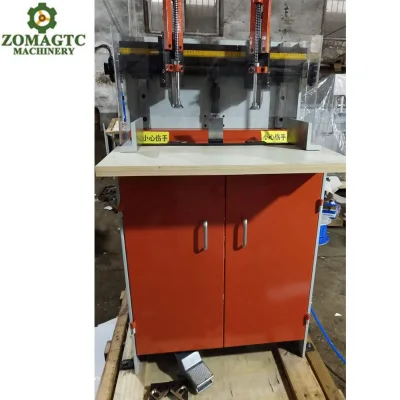


Automatic Pressing Corner Rounding Machine Book Case Make Round Corner Machine
$2500.00 - $3100.00
MOQ: 1 Pieces

Hot Sale Automatic Book Cover and Case Rounding Corner Machine Hardcover Rounding Cutting Machine
$6000.00 - $6900.00
MOQ: 1 Pieces

Comprehensive Sourcing Guide
Strategic Sourcing Guide for Automatic Corner Rounding Machines
The global manufacturing landscape increasingly demands precision in edge finishing, particularly within the furniture, cabinetry, and bookbinding sectors. An Automatic Corner Rounding Machine serves as a critical piece of equipment designed to transform sharp, potentially hazardous edges into smooth, uniform curves. For procurement professionals, sourcing this machinery requires a nuanced understanding of technical capabilities, compliance frameworks, and supply chain reliability. This guide synthesizes observed market data and industry standards to provide a structured approach for evaluating potential suppliers and selecting equipment that aligns with specific production requirements.
Technical Specifications and Operational Capabilities
When evaluating an Automatic Corner Rounding Machine, the primary focus must be on the technical specifications that dictate its operational scope. The market presents a variety of models, each tailored to different material thicknesses and production speeds. A critical parameter is the maximum workpiece thickness the machine can accommodate. Data indicates that certain models are engineered to handle panels with thicknesses ranging up to 60mm, while others may specify a panel thickness range of 10-60mm. Buyers must verify that the selected unit matches the thickest material in their production line to prevent mechanical strain or incomplete rounding.
The feeding mechanism is another vital technical consideration. The efficiency of the machine is often defined by its panel feeding speed. Observed specifications suggest a feeding rate of approximately 13 meters per minute for specific portable or semi-automatic units. However, high-volume production lines may require machines with significantly higher throughput, potentially measured in pieces per minute, with some models capable of processing 20 to 30 pieces per minute. The motor speed, which directly influences the rounding precision, is another key metric. Units with a motor speed of 3200 revolutions per minute are available, offering a balance between speed and control.
Dimensional constraints are equally important. The physical footprint of the machine, often described by its standard dimensions, varies significantly. Some units measure approximately 1020 x 750 x 1420 mm, while more compact models might occupy a space of 600 x 500 x 500 mm. Buyers must ensure their facility has adequate floor space and clearance for the machine's operational envelope. Additionally, the cutting size or the radius of the corner being rounded is a specific specification that must align with the product design. For instance, certain machines are designed to produce radii ranging from r6 to r10, while others may handle larger dimensions up to 310mm in maximum size.
Compliance, Certification, and Safety Standards
In the realm of industrial machinery, compliance with international safety and quality standards is non-negotiable. Procurement teams must prioritize suppliers who can provide verifiable certification documents. The most common certifications observed in the market for corner rounding machines include CE (Conformité Européenne) and ISO (International Organization for Standardization) certifications. These marks indicate that the machine meets specific European safety requirements and adheres to international quality management systems, respectively.
The origin of the machine also plays a role in compliance verification. While some units are manufactured in China, with specific origins noted in Zhejiang province, buyers must ensure that the export version of the machine complies with the safety regulations of the destination country. For example, machinery exported to the European Union must strictly adhere to CE directives, while those destined for North America may require UL or other regional certifications. It is imperative to request copies of these certificates before finalizing a purchase, as the absence of such documentation can lead to regulatory hurdles, insurance issues, or safety liabilities.
Furthermore, the material composition of the machine itself can impact its longevity and safety. Structural components, such as the frame or piping, are often constructed from galvanized steel to resist corrosion and ensure durability. The electrical systems must also be rated for the specific voltage and frequency of the buyer's location. While a specific power consumption of 440W is noted for certain models, the total power requirement for a production line may vary based on the number of units and auxiliary equipment. Buyers should verify that the electrical specifications match their facility's infrastructure to avoid the need for costly retrofits.
Cost Drivers and Pricing Variables
The pricing of automatic corner rounding machines is influenced by a complex array of factors, making it difficult to establish a single market rate without specific model details. The observed price range in the market spans from 0 to 25,000 USD, reflecting the vast difference between basic manual or semi-automatic units and fully automated, high-precision systems. Several key variables drive these costs.
First, the level of automation is a primary cost driver. Machines labeled as "Portable" or those with simpler feeding mechanisms generally fall on the lower end of the price spectrum. In contrast, units featuring advanced contour tracking, automatic feeding, and integrated dust collection systems command higher prices. The customization options available also significantly impact the final cost. While standard models are available, many suppliers offer "Customized" solutions tailored to specific production lines, which involves additional engineering and manufacturing time.
Second, the build quality and material specifications affect pricing. Machines constructed with heavy-duty components, such as robust wooden cases or export-grade plywood boxes for shipping, often reflect a higher initial investment but promise better long-term value. The weight of the machine, ranging from 35kg for portable units to 100kg for heavier industrial models, is a proxy for the amount of material used and the machine's stability. Heavier machines typically offer better vibration damping, which is crucial for precision rounding, but they also incur higher shipping costs.
Finally, the packaging and logistics requirements contribute to the total cost of ownership. Some units are shipped in wooden cases, while others use carton boxes or export plywood boxes. The volume of the packaging, measured in cubic meters (CBM), such as 0.2 CBM or 2 CBM, directly influences freight charges. Buyers should consider the total landed cost, including shipping, insurance, and customs duties, rather than focusing solely on the unit price.
Typical Applications and Industry Use Cases
Automatic corner rounding machines are versatile tools employed across various industries where edge finishing is critical. The most prominent application is in the furniture and cabinetry sector. Here, these machines are used to round the corners of wooden panels, particle boards, and MDF sheets. The ability to handle panel thicknesses up to 60mm makes them suitable for a wide range of furniture components, from thin drawer fronts to thick tabletops. The "Contour Tracking" feature allows the machine to follow the edges of irregularly shaped panels, ensuring a consistent finish even on complex geometries.
Another significant application area is the bookbinding industry. Specialized corner rounding machines are designed to create rounded corners on book covers, enhancing the aesthetic appeal and durability of the final product. These units often feature specific settings for hard covers and cardboard paper types. The process typically involves perfect binding followed by corner rounding, with machines capable of handling sizes between 100mm and 310mm. The surface finish, such as film lamination, is often applied before or after the rounding process, requiring the machine to be compatible with these materials.
In addition to furniture and bookbinding, these machines are utilized in the manufacturing of signage, display stands, and architectural panels. The ability to produce precise radii, such as r6 to r10, ensures that the finished products meet safety standards and design specifications. The "Corner Rounding Machine" is also known by other names, such as "Round Corner Making Machine," reflecting its specialized function. Whether for industrial mass production or small-batch custom work, the machine's ability to handle minimum panel widths of 50mm and maximum cutting sizes of 80mm makes it a flexible asset for diverse manufacturing needs.
Supplier Evaluation and Selection Criteria
Selecting the right supplier is as critical as selecting the right machine. Buyers should adopt a rigorous evaluation process that goes beyond price comparisons. The first step is to verify the supplier's track record and reputation. While specific supplier names should not be relied upon, buyers should look for evidence of consistent delivery and customer satisfaction. The presence of certifications like CE and ISO is a strong indicator of a supplier's commitment to quality and safety.
The supplier's ability to provide customization is another key evaluation point. Many buyers have unique requirements that standard models cannot meet. A supplier that offers "Customized" solutions, such as specific motor speeds, feeding speeds, or dimensional adjustments, demonstrates technical competence and flexibility. Buyers should inquire about the lead time for custom orders and the supplier's capacity to handle modifications without compromising quality.
Logistics and after-sales support are also vital considerations. The packaging method, whether it is a wooden case, plywood box, or carton box, indicates how well the supplier protects the machine during transit. A supplier that uses robust packaging, such as "Export Plywood Box" or "1PCS/Wooden Case," reduces the risk of damage during shipping. Furthermore, the availability of spare parts and technical support is essential for minimizing downtime. Buyers should ask about the warranty period, the availability of replacement parts, and the supplier's response time for technical issues.
Quality Control and Long-Term Procurement Strategy
Implementing a robust quality control (QC) strategy is essential for ensuring that the purchased machine meets expectations. Upon delivery, buyers should conduct a thorough inspection of the machine against the provided specifications. This includes verifying the dimensions, checking the motor speed, and testing the feeding speed to ensure they match the agreed-upon values. The weight of the machine should also be confirmed, as discrepancies can indicate missing components or substandard materials.
Long-term procurement considerations involve planning for maintenance and upgrades. The machine's design, such as the use of galvanized steel for piping, suggests a focus on durability, but regular maintenance is still required. Buyers should establish a maintenance schedule that includes lubrication, cleaning, and inspection of critical components. The availability of technical documentation, including user manuals and maintenance guides, is crucial for this process.
Additionally, buyers should consider the scalability of their procurement strategy. As production volumes increase, the need for additional machines or upgrades may arise. A supplier that offers a range of models, from portable units to high-capacity industrial machines, allows for a phased approach to expansion. This flexibility ensures that the buyer can adapt to changing market demands without incurring significant costs or disruptions.
In conclusion, sourcing an Automatic Corner Rounding Machine requires a comprehensive understanding of technical specifications, compliance requirements, and supplier capabilities. By carefully evaluating these factors, buyers can make informed decisions that enhance their production efficiency and product quality. The market offers a wide range of options, from basic models to highly customized solutions, and the key to success lies in matching the right machine to the specific needs of the production line.
FAQs
What certifications do automatic corner rounding machines typically have?
Most automatic corner rounding machines carry CE and ISO certifications to ensure safety and quality compliance. These marks verify that the equipment meets European safety directives and international management standards, which is essential for export and operational safety in industrial settings.
How thick can the panels be for automatic corner rounding?
Specific models can handle panel thicknesses ranging from 10mm up to 60mm depending on the machine configuration. Buyers must verify that the selected unit matches the thickest material in their production line to prevent mechanical strain or incomplete rounding operations.
Which dimensions are standard for these corner rounding machines?
Standard dimensions vary significantly, with some units measuring 1020 x 750 x 1420 mm while others are compact at 600 x 500 x 500 mm. Buyers must ensure their facility has adequate floor space and clearance for the specific machine's operational envelope.
Can these machines be customized for specific production needs?
Yes, many suppliers offer customized solutions tailored to specific production lines with adjustable features. This customization allows for unique motor speeds, feeding rates, or dimensional adjustments to align with the buyer's specific manufacturing requirements and workflow.
What is the typical feeding speed for these machines?
Feeding speeds vary by model, with some portable units operating at approximately 13 meters per minute. High-volume production lines may require machines capable of processing 20 to 30 pieces per minute to meet throughput demands.
How are these machines typically packaged for shipping?
Machines are commonly shipped in wooden cases, plywood boxes, or carton boxes depending on the model and weight. Robust packaging like export plywood boxes helps protect the equipment during transit and reduces the risk of damage before arrival.