Source Automatic Electric Centrifugal Spray Dryer for Food, Medicine, Chemical
Compare 30 listings for the Automatic Electric Centrifugal Spray Dryer suitable for food, medicine, and chemical applications. Buyers can evaluate specifications like heat source, atomization type, and material status to find the right equipment.
Key considerations
Products List


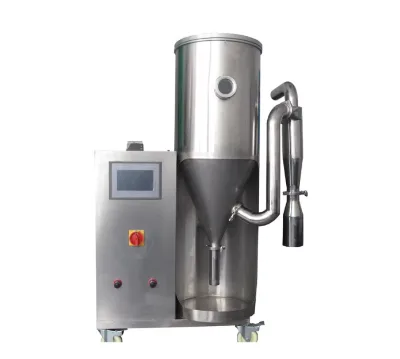


High Speed Centrifugal Spray Dryer for Egg White Powder Production
$5000.00 - $150000.00
MOQ: 1 Pieces


Advanced Electric Steam Spray Dryer for Efficient Industrial Drying Operations
$5200.00 - $91000.00
MOQ: 1 Pieces


Comprehensive Sourcing Guide
Strategic Sourcing Guide for Automatic Electric Centrifugal Spray Dryers
Understanding Core Technical Specifications and Variants
When sourcing an Automatic Electric Centrifugal Spray Dryer, buyers must first distinguish between the specific operational mechanisms and model families available in the current market. The core keyword implies a machine that utilizes centrifugal force to atomize liquid feed into a fine mist, which is then dried by a heated gas stream. Based on available product data, the industry offers distinct configurations, primarily categorized by their atomization method and flow dynamics. While the primary focus is on centrifugal units, it is critical to verify that the specific supplier listing explicitly states "Centrifugal Spray" rather than "Pressure Spray," as the latter utilizes high-pressure nozzles and operates on different principles.
The technical architecture of these units often varies regarding the heat source. Buyers should expect options that include electricity, natural gas, coal gas, steam, or fuel. For facilities prioritizing electrical automation, the "Electricity" heat source is a standard requirement, often paired with specific voltage configurations such as 220 V, 380 V, or a broader range of 110V-415V. The control systems are increasingly sophisticated, with many units featuring PLC Automatic Digital Control Panels to ensure precise temperature and feed rate management.
Flow patterns within the drying chamber are another critical specification. The observed market data indicates the availability of both Cross Flow and Parallel Flow designs. In a parallel flow configuration, the hot air and the atomized droplets move in the same direction, which is often preferred for heat-sensitive materials to prevent overheating. Conversely, cross flow systems may be selected for specific throughput requirements. The material of construction is equally vital; the market standard for food and pharmaceutical applications typically involves SUS304 or 304/316 Stainless Steel, with some specialized units offering Titanium Material for highly corrosive environments. The physical dimensions of these machines can vary significantly, with some standards citing dimensions around 4000x4000x10000 mm, while others are defined by their hourly processing capacity, ranging from 5L/h to 2000L/h.
Operational Capabilities and Material Compatibility
The versatility of an Automatic Electric Centrifugal Spray Dryer is defined by its ability to handle various material statuses and end-use applications. The supply chain data confirms that these units are designed to process inputs in multiple states, including Solution, Bulk, Strap, Cream, and Powder. This flexibility allows a single facility to potentially handle different product lines without extensive retooling. The atomization speed is a key performance indicator, with specific models achieving speeds up to 18000rpm, which directly influences the particle size distribution of the final powder.
Particle size is a critical quality attribute for the end product. The observed specifications indicate that these dryers can produce particles in the range of 1-100µM. This capability is essential for industries requiring specific solubility or flow characteristics. The intended applications are broad, covering the Chemical Industry, Medicine, and Food sectors. Specific usage examples found in the market include processing Milk, Coffee, Pig Blood, Juice, and various Proteins. This wide applicability suggests that the equipment is robust enough to handle diverse viscosities and thermal sensitivities.
However, buyers must be cautious not to assume that every listed unit meets every application requirement. The "Material Status" and "Usage" fields in supplier listings are often observations of specific models rather than universal claims. For instance, a unit listed for "Foodstuff Industry" specialization might not be certified for "Pharmaceutical" use without specific validation. The heating mode is another variable; while some units utilize transmission heating, others rely on convective heating. Understanding the specific heating mode is essential for energy efficiency calculations and process control strategies. The color of the equipment is typically customizable according to design requirements, but the internal contact surfaces must remain compliant with hygiene standards.
Compliance, Certification, and Regulatory Verification
Navigating the compliance landscape for industrial drying equipment requires a rigorous verification process, as the market data presents mixed signals regarding certifications. While some background information mentions CE certification, this should be treated as a low-confidence indicator that requires direct confirmation from the supplier. Buyers should not assume a unit is CE compliant based solely on general category knowledge or unverified listings. Instead, procurement teams must request specific test reports and certification documents that correspond to the exact model number being purchased.
The manufacturing origin is a significant factor in regulatory compliance. The observed data points to production locations in Jiangsu Changzhou and Shanghai, China. While these are established industrial hubs, the regulatory framework of the destination country will dictate the necessary certifications. For example, exporting to the European Union requires strict adherence to CE standards, while other regions may have different safety and electrical compliance requirements. The warranty period observed in the market is typically 1 Year, which serves as a baseline for supplier confidence but does not replace the need for a comprehensive service agreement.
Standards and model specifications provide a framework for compliance but do not guarantee it. The "prod_standard" field often lists model series like LPG-5 to LPG-2000 or specific dimensions like 4000x4000x10000. These are descriptive standards rather than regulatory ones. Buyers must verify if the machine meets the specific safety standards of their local jurisdiction, such as electrical safety codes or pressure vessel regulations. The "application" field sometimes lists "Other," which is a red flag for buyers seeking specific industry compliance. It is imperative to clarify that the equipment is intended for the specific industry, such as "Food / Pharmaceutical / Chemical," and to request documentation proving that the design meets the hygiene and safety protocols of that sector.
Cost Drivers and Pricing Structure Analysis
The pricing for automatic electric centrifugal spray dryers exhibits a vast range, with observed listings spanning from $1 to $150,000 USD. This extreme variance is not indicative of a single product tier but rather reflects the diversity in capacity, material quality, and customization levels. The Minimum Order Quantity (MOQ) is consistently observed as 1, indicating that these are typically custom-built or semi-custom industrial assets rather than mass-produced consumer goods. This one-to-one purchasing model means that pricing is highly negotiable and dependent on the specific configuration requested.
Several factors drive the cost of these units. The primary driver is the hourly processing capacity, which ranges from 5L/h to 2000L/h. A unit capable of 2000L/h will naturally command a higher price than a 5L/h pilot unit due to the scale of the drying chamber, the size of the atomizer, and the power requirements of the heating system. The material of construction is the second major cost driver. Units constructed with 316 Stainless Steel or Titanium Material will be significantly more expensive than those using standard SUS304, particularly for applications involving corrosive chemicals or high-purity pharmaceutical requirements.
Additional cost factors include the complexity of the control system. A basic unit with manual controls will be cheaper than one equipped with a PLC Automatic Digital Control Panel that offers automated temperature and feed rate regulation. The heat source also impacts cost; electric heating elements may have different upfront and operational costs compared to systems designed for natural gas or steam. Packaging is another variable, with options ranging from "in Bulk" to "Wooden Box" or "Wooden Package." While this may seem minor, the cost of specialized export packaging and the logistics of shipping a 500kg unit or larger must be factored into the total landed cost. Buyers should request a detailed breakdown of costs to understand how much of the price is attributed to the drying chamber, the atomizer, the heating system, and the control panel.
Supplier Evaluation and Manufacturing Capabilities
Evaluating suppliers for automatic electric centrifugal spray dryers requires a deep dive into their manufacturing capabilities and track record. The observed data indicates that production takes place in specific regions like Jiangsu Changzhou and Shanghai. While these locations are known for industrial manufacturing, buyers must verify the specific factory's capacity to handle custom orders. The "Customization" attribute is listed as available, which is a positive sign, but buyers should inquire about the extent of this customization. Can the supplier modify the flow pattern? Can they alter the atomizer speed or material composition?
The "Be Specialized in" attribute, such as "Foodstuff Industry," suggests a focus, but it does not preclude the supplier from serving other sectors. However, a supplier specializing in foodstuff may have different hygiene standards compared to one specializing in chemical processing. Buyers should request case studies or references from clients in their specific industry to ensure the supplier understands the unique challenges of their application. The "Type" of equipment listed, such as "Spray Drying Equipment," is generic; buyers must ensure the supplier explicitly lists "Centrifugal Spray" to avoid receiving a pressure spray system by mistake.
Lead times and delivery terms are critical components of supplier evaluation. While specific lead times are not provided in the data, the complexity of customizing a 4000x4000x10000 mm unit suggests a significant manufacturing timeline. Buyers should ask for a detailed production schedule that includes raw material sourcing, fabrication, assembly, and testing phases. The "prod_packing" options, such as "Wooden Box" or "Wooden Package," indicate that the supplier has experience with heavy industrial shipping, but the buyer must verify the packaging standards to ensure the equipment arrives without damage. The "Selling Units" being listed as "Single item" reinforces the custom nature of the transaction, meaning the supplier should provide a dedicated project manager rather than a standard sales representative.
Quality Control and Long-Term Procurement Strategy
Ensuring the quality of an Automatic Electric Centrifugal Spray Dryer involves a multi-stage verification process. The "Material Status" and "Usage" fields provide clues about the intended performance, but physical testing is required to confirm these claims. Buyers should insist on a Factory Acceptance Test (FAT) before the equipment leaves the manufacturing site. This test should verify the atomizer speed, particle size distribution (1-100µM), and the stability of the heating system under load. The "Control Method" involving a PLC panel should be tested for responsiveness and accuracy in maintaining set temperatures.
Long-term procurement considerations extend beyond the initial purchase price. The "warranty" period of 1 Year is a standard baseline, but buyers should negotiate extended service agreements that cover critical components like the atomizer and heating elements. The "Heat Source" compatibility is also a long-term factor; if the facility relies on electricity, the efficiency of the electric heating system will impact operational costs over the life of the machine. Buyers should also consider the availability of spare parts. Since the "prod_model" can vary (e.g., LPG, YPG, GRT-LPG150), ensuring that the supplier maintains a stock of model-specific parts is essential for minimizing downtime.
The "Place of Production" and "prod_origin" being China suggests that buyers must factor in import duties and logistics costs. The "weight" of the unit, observed at 500kg for some models, indicates that shipping and installation will require specialized equipment and planning. Buyers should also consider the "Color" customization; while this is a cosmetic feature, it may be required for brand alignment or safety color coding in the facility. Finally, the "Flow" type (Cross Flow vs. Parallel Flow) should be selected based on long-term process stability. A wrong choice in flow dynamics can lead to inefficient drying, product degradation, or excessive energy consumption, making the initial technical selection a critical long-term decision.
Comparative Analysis of Key Configuration Options
To assist buyers in making informed decisions, the following table summarizes the key configuration options observed in the market for automatic electric centrifugal spray dryers. This comparison highlights the variability in specifications and helps buyers identify the features that align with their specific process requirements.
| Feature Category | Option A (Standard/Small Scale) | Option B (High Capacity/Custom) | Option C (Specialized Material) |
|---|---|---|---|
| Atomization Type | Centrifugal Spray | Centrifugal Spray | Centrifugal Spray |
| Heat Source | Electricity, Natural Gas | Natural Gas, Coal Gas, Steam | Steam, Electricity |
| Voltage | 220 V, 380 V | 110V-415V | 220 V, 380 V |
| Material Status | Solution, Powder | Bulk, Strap, Cream, Solution | Bulk, Powder |
| Flow Pattern | Parallel Flow | Cross Flow | Parallel Flow |
| Processing Capacity | 5L/h - 1000L/h | 5L/h - 2000L/h | Variable (Model Dependent) |
| Material Construction | SUS304 | 304/316 Stainless Steel | Titanium Material |
| Control System | PLC Automatic Digital | PLC Automatic Digital | PLC Automatic Digital |
| Particle Size | 1-100µM | 1-100µM | 1-100µM |
| Typical Application | Food, Chemical | Food, Pharmaceutical, Chemical | Specialized Chemical/Pharma |
| Packing | Wooden Package | Wooden Box | In Bulk |
| Warranty | 1 Year | 1 Year | 1 Year |
This table illustrates that while the core technology remains consistent (Centrifugal Spray), the specific configuration can vary widely based on the buyer's needs. The "Option B" column represents the high-capacity, customizable end of the spectrum, suitable for large-scale industrial operations. "Option C" highlights the importance of material selection for corrosive or high-purity applications. Buyers should use this framework to filter supplier listings and ensure that the proposed solution matches their specific technical and operational constraints. By focusing on these verified attributes, procurement teams can navigate the complex market of spray drying equipment with confidence and precision.
FAQs
What heat sources are available for automatic electric centrifugal spray dryers?
These units support multiple heat sources including electricity, natural gas, coal gas, steam, and fuel. Buyers must verify the specific model listing to confirm which energy options are compatible with their facility infrastructure and local regulations.
Which atomization methods are used in centrifugal spray drying equipment?
Centrifugal spray dryers utilize rotary atomization to create fine mist droplets. Some listings may also mention pressure atomization, so buyers must ensure the product type explicitly states centrifugal spray to match their process requirements.
Can these dryers handle different material statuses like solution or powder?
Yes, the equipment is designed to process inputs in various states including solution, bulk, strap, cream, and powder. The specific material status capability depends on the model configuration and the atomizer speed, which can reach up to 18000rpm.
What is the typical particle size range produced by this equipment?
The observed specifications indicate a particle size range of 1 to 100 micrometers. This range is critical for industries requiring specific solubility or flow characteristics in the final dried product.
Where are automatic electric centrifugal spray dryers typically manufactured?
Production locations include Jiangsu Changzhou and Shanghai in China. Buyers should verify the place of origin for each specific listing to ensure compliance with their regional import regulations and quality standards.
What is the warranty period for these industrial drying machines?
The standard warranty period observed in the market is 1 year. This baseline coverage does not replace the need for a comprehensive service agreement, so buyers should clarify specific terms with the supplier.
How is the equipment typically packed for shipping?
Packing options include bulk, wooden boxes, or wooden packages depending on the specific model and order requirements. The packaging method must be confirmed to ensure the equipment arrives without damage during transit.