Source Automatic Endoscope Washer Disinfector for Hospitals, Clinics, and Labs
Compare 30 Automatic Endoscope Washer Disinfector units from verified Chinese manufacturers. Buyers can evaluate models like CHI-A16 and Yj-G16 based on sterilization class, capacity, and power specifications for medical and surgical applications.
Key considerations
Products List
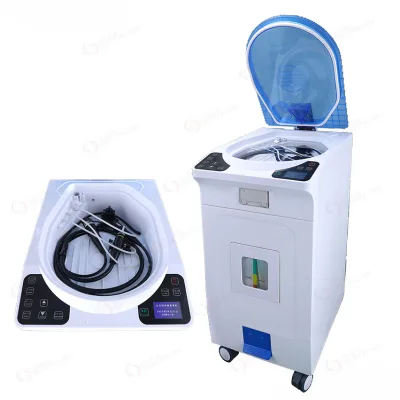

Automatic Endoscope Washer Endoscope Washer Machine Endoscope Disinfector
$1999.00 - $4999.00
MOQ: 1 Pieces

Automatic Flexible Endoscope Processor Endoscope Washer Disinfector Washing Disinfection Machine
$2000.00 - $9000.00
MOQ: 1 Pieces


Auto Flexible Endoscope Washer-Disinfector Washing and Disinfection Machine
$3752.00 - $4583.00
MOQ: 1 Set


Best Price Automatic Flexible Endoscope Processor Endoscope Washer Disinfector
$2000.00 - $5000.00
MOQ: 1 Pieces


Immersion/Spraying Type Endoscope Cleaning Machine Washer Disinfector with Automatic Door
$6000.00 - $11000.00
MOQ: 1 Pieces

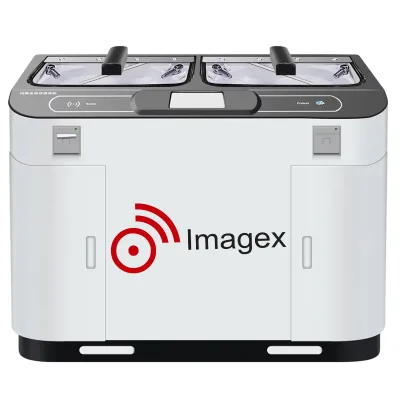

Full Automatic Washer Disinfector for Surgical Instrument Department
$12000.00 - $15000.00
MOQ: 1 Pieces

High Performance Endoscope Washer Disinfector for Hospital Endoscopy Room
$12000.00 - $15000.00
MOQ: 1 Pieces

160L Automatic Instrument Washer Disinfector for Surgical Instruments Use
$12000.00 - $15000.00
MOQ: 1 Pieces

Endoscope Washer Disinfector Automatic Medical Washing Machine for Hospital
$12000.00 - $15000.00
MOQ: 1 Pieces

High-Level Cleaning and Disinfection Various Type Soft Endoscopy Washer-Disinfector
$4500.00 - $5000.00
MOQ: 1 Pieces

Hewd-1000 China Good Quality Medical LCD Screen Auto Endoscope Washer Disinfector
$4500.00 - $5000.00
MOQ: 1 Pieces


High-Efficiency Fully Automatic Endoscope Washer with Disinfection & Drying Integration
$1999.00 - $4999.00
MOQ: 1 Pieces

Auto Endoscope Washer with 10-12L Capacity and Automatic Sterilization Equipment
$1999.00 - $3999.00
MOQ: 1 Pieces


Comprehensive Sourcing Guide
Strategic Sourcing Guide for Automatic Endoscope Washer Disinfectors
Procuring an Automatic Endoscope Washer Disinfector is a critical decision for healthcare facilities, surgical centers, and medical device reprocessing departments. These specialized machines are designed to clean, disinfect, and dry flexible endoscopes, ensuring patient safety by eliminating pathogens that could cause severe infections. The market for these devices is characterized by a wide range of specifications, varying certification statuses, and diverse operational capabilities. Buyers must navigate a complex landscape of technical attributes, regulatory requirements, and supplier reliability to secure equipment that meets stringent medical standards. This guide provides a structured approach to evaluating and sourcing these essential medical devices, focusing on verified facts and industry best practices.
Technical Specifications and Operational Capabilities
When evaluating an Automatic Endoscope Washer Disinfector, the primary focus must be on the machine's technical specifications, which directly influence its efficacy and suitability for specific clinical workflows. The classification of the equipment is a fundamental starting point. Products in this category are often identified as Class I instruments regarding their risk profile, yet they operate using Class B sterilization cycles, which are essential for achieving high-level disinfection and drying of complex lumens. The working temperature range is a critical parameter; observed operational data indicates a working temperature range of 0-35 degrees Celsius, which ensures the device functions effectively within standard hospital environments without requiring extreme climate control.
Power consumption and physical dimensions are also vital for facility planning. Units vary significantly in power requirements, with specific models operating at 500W or 600W, and others drawing up to 10A of current. The physical footprint is equally important; a typical unit may weigh approximately 45kg, necessitating a stable floor surface and adequate space for operation and maintenance. The capacity of the processing chamber is another key differentiator. While some systems offer a capacity of 12 liters, others are designed with a "many" capacity designation, suggesting scalability for high-volume reprocessing needs. Additionally, the inclusion of an alcohol capacity of 1.7 liters and a disinfectant dosage of 10 liters highlights the specific chemical requirements for the disinfection cycle.
The interface and control systems have evolved to include advanced features such as LCD displays and 7-inch touch screens, allowing for intuitive operation and real-time monitoring. The noise level during operation, particularly during the blow-drying phase, is typically maintained at or below 70dB, ensuring a quiet environment for staff. Furthermore, the ability to print sterilization information and results automatically provides a crucial audit trail for compliance purposes. The material construction is predominantly stainless steel, offering durability and resistance to corrosion from harsh cleaning agents. Buyers should verify the specific model number, such as CHI-A16, Yj-G16, FN-16, LP-160, LGJH-3, or THR-EW21, as these identifiers often correlate with specific feature sets and regional availability.
Compliance and Certification Verification
Navigating the regulatory landscape is perhaps the most challenging aspect of sourcing medical reprocessing equipment. The validity of certifications must be rigorously verified before any purchase is finalized. The supplied data indicates that various models carry certifications such as CE, FDA, and ISOCE. It is imperative for buyers to understand that the presence of a certification mark does not guarantee universal compliance; rather, it indicates that the specific unit has met certain standards at the time of testing. For instance, while ISO 9001 and ISO 13485 are frequently cited in the broader industry as standards for quality management and medical device safety, the specific certification status of a listed product must be confirmed against the actual documentation provided by the manufacturer.
Buyers should not assume that a product listing implies compliance with all international standards. The observed data lists certifications like CE and FDA, but the specific scope of these approvals can vary. For example, a device may be CE certified for the European market but lack FDA clearance for the United States. Similarly, while ISO 15883 is a standard specifically for washer-disinfectors, its presence in a product listing should be treated as a claim that requires verification against the official certificate. The "Low-confidence background" section of available data lists various ISO standards, but these should not be treated as confirmed attributes of every product unless explicitly stated in the product's official compliance documentation.
The classification of the sterilization process is another compliance factor. The distinction between Class B and Class S sterilization classes is significant. Class B cycles are generally preferred for endoscopes as they account for air removal and ensure complete sterilization of porous materials and lumens. Buyers must ensure that the specific model they are considering supports the required sterilization class for their intended application. The "Theory" of operation, often listed as "Autoclave," should be cross-referenced with the actual cycle parameters to ensure they align with current medical guidelines for endoscope reprocessing.
Cost Drivers and Pricing Structures
The pricing of automatic endoscope washer disinfectors is influenced by a multitude of factors, resulting in a wide observed range from 1 to 25,000 USD. This broad spectrum reflects differences in technology, capacity, automation level, and brand positioning. Lower-priced units may offer basic functionality with limited automation, while higher-priced models likely include advanced features such as integrated touch screens, comprehensive data logging, and higher capacity chambers. The minimum order quantity (MOQ) also plays a role in the total cost of acquisition, with observed ranges spanning from 1 to 10,000 units. For most healthcare facilities, the MOQ is likely to be a single unit, but bulk purchasing for large hospital networks could negotiate different terms.
Beyond the unit price, buyers must consider the total cost of ownership. This includes the cost of consumables, such as disinfectants and alcohol, which are specified in the product data (e.g., 10L dosage and 1.7L alcohol capacity). The energy consumption, determined by the rated power (500W to 600W), contributes to ongoing operational expenses. Additionally, the warranty period, typically observed as 1 year, is a factor in the initial investment. A longer warranty might indicate higher confidence in the product's durability but could come at a premium price. The packaging type, whether a wooden case or standard export packing, can also impact shipping costs, especially for international procurement.
Customization availability is another cost driver. Some suppliers offer customization options, which can increase the unit price but may be necessary to meet specific facility requirements. The brand name, such as ICLEAR or Forermed, can also influence pricing, with established brands often commanding a premium due to perceived reliability and after-sales support. Buyers should request a detailed breakdown of costs, including the base price, shipping, installation, and any potential customization fees, to make an informed financial decision.
Typical Applications and Clinical Integration
Automatic endoscope washer disinfectors are primarily designed for use in hospital medical devices departments and endoscopic surgical units. The application scope is broad, covering the reprocessing of flexible endoscopes used in gastroenterology, pulmonology, urology, and other specialties. The device's ability to handle complex lumens and prevent secondary infections is paramount. Features such as the electric switch for the lid, which prevents secondary infection when picking up the endoscope, are specifically designed to enhance patient safety in high-risk surgical environments.
The ambient temperature range of 5℃~40℃ indicates that these machines are suitable for a wide variety of clinical settings, from cold storage areas to warm operating rooms. However, the working temperature of 0-35 suggests that the internal processing cycle operates within a controlled range to ensure effective disinfection. The inclusion of an ultra-high temperature alarm is a critical safety feature for applications where thermal damage to delicate endoscopes must be avoided. The ability to print sterilization results automatically supports the documentation requirements of endoscopic surgical procedures, ensuring that every instrument is traceable and verified before use.
The classification of the equipment as "Pressure Steam Sterilization Equipments" or "Automatic Flexible Endoscope Processor" highlights its dual role in cleaning and sterilization. In high-volume surgical centers, the efficiency of the machine is crucial. The capacity of 12 liters or higher allows for the processing of multiple instruments in a single cycle, reducing turnaround time. The noise level of ≤70dB ensures that the machine can operate in open ward environments without disrupting patient care or staff communication.
Supplier Evaluation and Geographic Considerations
When evaluating suppliers, the place of origin is a significant factor. The observed data indicates that products originate from various regions in China, including Guangdong, Henan, and Jiangsu. Each region may have different manufacturing capabilities and supply chain efficiencies. Guangdong, for instance, is known for its advanced manufacturing infrastructure, while Henan and Jiangsu also host significant industrial bases. Buyers should verify the specific location of the manufacturing facility to assess logistics, lead times, and the potential for site visits.
Supplier reliability is often indicated by the after-sales service provided. The availability of online technical support is a standard feature observed in the market, but the depth and responsiveness of this support can vary. Buyers should inquire about the availability of local technicians, the duration of the warranty, and the process for handling spare parts. The warranty period of 1 year is common, but some suppliers may offer extended warranties for an additional fee.
The certification status of the supplier is also crucial. While the product may carry certifications like CE or FDA, the supplier's own quality management systems should be verified. The presence of ISO standards in the background data suggests that many suppliers adhere to these guidelines, but buyers should request current certificates to confirm compliance. The brand name, whether ICLEAR, Forermed, or others, should be researched to understand their reputation in the medical device market.
Quality Control and Long-Term Procurement
Ensuring the quality of the Automatic Endoscope Washer Disinfector requires a robust quality control strategy. The material of construction, typically stainless steel, must be verified for grade and thickness to ensure resistance to corrosion and wear. The electric tension of 220V is a standard requirement, but buyers should confirm that the unit is compatible with their local power grid. The rated frequency and current must also align with the facility's electrical infrastructure to prevent operational issues.
Long-term procurement considerations include the availability of spare parts and the ease of maintenance. The product packing, whether a wooden case or standard export packing, should be evaluated for its ability to protect the equipment during shipping. The model number, such as FN-16 or THR-EW21, should be used to track the specific configuration and ensure that future replacements or upgrades are compatible. The ability to customize the machine allows for long-term adaptability to changing clinical needs.
Buyers should also consider the environmental impact of the machine. The noise level and energy consumption are factors that contribute to the overall sustainability of the facility. The automatic printing of disinfection results reduces paper waste and ensures accurate record-keeping. By focusing on these long-term factors, healthcare facilities can ensure that their investment in automatic endoscope washer disinfectors provides value over the lifespan of the equipment.
Comparative Analysis of Key Models
To assist in the decision-making process, the following table compares key attributes of observed models based on the provided data. This comparison highlights the diversity in specifications and helps buyers identify the most suitable option for their specific needs.
| Attribute | Model CHI-A16 | Model Yj-G16 | Model FN-16 | Model LP-160 | Model LGJH-3 | Model THR-EW21 |
|---|---|---|---|---|---|---|
| Brand | ICLEAR | Forermed | N/A | N/A | N/A | N/A |
| Origin | Guangdong | Henan | Jiangsu | N/A | N/A | N/A |
| Capacity | Many | 12 L | N/A | N/A | N/A | N/A |
| Power | 500W | N/A | 600W | N/A | N/A | N/A |
| Certification | ISOCE | N/A | FDA, ISOCE | N/A | CE | N/A |
| Display | N/A | LCD | N/A | N/A | N/A | 7-inch Touch |
| Sterilization | Class B | Class S | N/A | N/A | N/A | Autoclave |
| Weight | 45kg | N/A | N/A | N/A | N/A | N/A |
This table illustrates that while some models share common features like LCD displays or specific certifications, others offer unique capabilities such as 7-inch touch screens or specific power ratings. Buyers should use this data as a starting point for deeper inquiry, verifying each attribute against the specific product documentation before making a final selection. The diversity in specifications underscores the importance of matching the equipment to the specific operational requirements of the healthcare facility.
FAQs
What certifications do automatic endoscope washer disinfectors typically have?
These devices often carry CE, FDA, and ISOCE certifications. Buyers must verify specific model documentation as certifications vary by unit and region rather than applying universally to all listed products.
How much power do these sterilization machines consume?
Power consumption ranges from 500W to 600W depending on the specific model. This variation affects operational costs and requires checking the rated power for each unit before installation.
Which sterilization class is required for endoscope processing?
Class B sterilization cycles are essential for high-level disinfection and drying of complex lumens. Some models may also be classified as Class S, requiring careful selection based on clinical needs.
Can these machines operate in varying ambient temperatures?
Yes, they function within an ambient temperature range of 5℃ to 40℃. This ensures suitability for diverse hospital environments without requiring extreme climate control measures for the facility.
What is the typical weight of an automatic endoscope washer?
A typical unit weighs approximately 45kg. This weight necessitates a stable floor surface and adequate space for safe operation and routine maintenance within the medical facility.
How is sterilization information recorded and printed?
The machines feature automatic printing of disinfection results and sterilization information recording. This provides a crucial audit trail for compliance purposes and ensures traceability of every instrument processed.