Source Battery Powered Reusable Sagittal Saw for Orthopedic Surgery, Bone Cutting, and Joint Replacement
Find 30 listings for the Battery Powered Reusable Sagittal Saw designed for orthopedic applications. Buyers can compare specifications including brushless motor performance, lithium battery capacity, and autoclavable features from verified suppliers in China.
Key considerations
Products List


Metal Cutting Battery Reciprocating Electric Sawzall Tool Battery Reciprocating Saw
$22.68 - $29.48
MOQ: 1 Pieces

Rechargeable Reciprocating Saw 20V Cordless Saber Saw Multifunctional Electric Saw
$33.28 - $43.27
MOQ: 5 Pieces

Lithium-Ion Brushless Circular Saw Customizable Portable Cordless Circular Saw
$52.91 - $58.20
MOQ: 1 Pieces


Power Saw Machine Wood Cutting Jigsaw Cordless Jigsaw Jig Saw Power Tool
$40.79 - $42.02
MOQ: 2 Pieces


Autoclavable Medical Oscillating Saw with Two Saw Blades and Two Batteries
$1000.00 - $1500.00
MOQ: 1 Pieces

Surgical Electric Oscillating Saw Battery Operated with Good Performance
$1500.00 - $2000.00
MOQ: 1 Pieces

Cordless Portable Reciprocating Saw Handheld Lithium Battery Cutting Sabre Saw
$24.50 - $35.00
MOQ: 10 Pieces


Metal Wood Cutting 12V Rechargeable Lithium Battery Cordless Reciprocating Power Saw
$10.00 - $20.00
MOQ: 5 Pieces

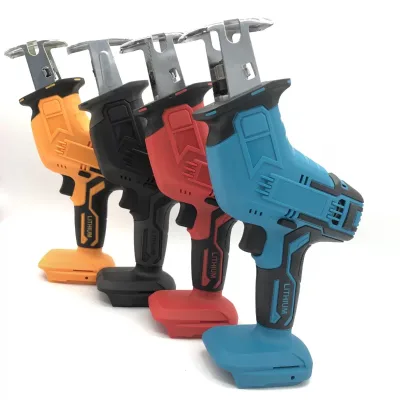

20V Electric Battery Powered Cordless Reciprocating Saw Portable Electric Woodworking Saw
$18.00 - $20.00
MOQ: 100 Pieces


Cordless Battery Powered 18V 21V Reciprocating Saw
$34.00 - $36.00
MOQ: 50 Pieces
Ningbo Eastar Electromechanical Industrial Trading Co., Ltd.


Cordless Reciprocating Saw for Construction Cutting with Battery Charger
$35.00 - $40.00
MOQ: 500 Pieces


Comprehensive Sourcing Guide
Strategic Sourcing Guide for Battery Powered Reusable Sagittal Saws
Understanding the Technical Profile of Modern Surgical Saws
When sourcing a battery-powered reusable sagittal saw, buyers must first distinguish between general industrial cutting tools and specialized medical-grade orthopedic equipment. The core keyword implies a device designed for surgical precision, specifically for cutting bone during orthopedic procedures. Based on the available product data, the technical architecture of these devices centers on a brushless motor system, which offers superior efficiency and longevity compared to brushed alternatives. The observed specifications indicate a rated speed of approximately 11,400 to 11,700 r.p.m., a critical parameter for ensuring clean cuts through dense bone tissue without generating excessive heat that could damage surrounding structures.
The power source is a lithium battery with a capacity of 2600mA/H, providing the necessary energy density for extended surgical sessions. A key operational advantage noted in the product attributes is variable speed control, allowing surgeons to adjust the cutting speed based on the specific bone density and the stage of the procedure. The device is designed to be portable, weighing approximately 1.46kg, which reduces surgeon fatigue during long operations. The unit is rechargeable, with a charging time of no more than 1.5 hours, ensuring rapid turnaround between cases. Furthermore, the device is constructed to withstand the rigorous demands of a sterile environment, with an autoclavable rating of 135°C, a standard requirement for surgical instruments that must be sterilized between uses.
Compliance and Certification Verification Protocols
In the medical device sector, compliance is not merely a formality but a fundamental requirement for market entry and patient safety. The sourcing guide must prioritize verification of specific regulatory certifications. The provided data explicitly lists FDA and ISO certifications as present attributes for these products. Buyers should treat these as high-confidence indicators but must still request current, valid documentation for each specific unit or batch purchased. The FDA certification indicates compliance with United States regulatory standards, while ISO certification suggests adherence to international quality management systems.
It is crucial to distinguish between general ISO standards and those specific to medical devices. While the data mentions "ISOCE" and general "ISO" tags, buyers should specifically verify if the manufacturer holds ISO 13485, the international standard for quality management systems specific to medical devices. Although the background information lists ISO 13485 as a low-confidence fact, the explicit product data confirms "ISO" as a certification. The absence of a specific ISO 13485 number in the high-confidence list means buyers must request the certificate number directly from the supplier to confirm the scope of certification. Additionally, the product data mentions a "Medical Device Regulatory Type" of "Saw," which reinforces the classification of the item as a regulated medical device rather than a general industrial tool.
Cost Drivers and Economic Considerations
The pricing landscape for battery-powered reusable sagittal saws is influenced by several distinct factors. The observed price range in the market spans from $8.97 to $2,000. This wide disparity suggests that the "saw" category includes both basic industrial cutting tools and high-end, certified medical-grade surgical instruments. For a procurement strategy focused on a medical application, the lower end of this price range likely represents non-medical or industrial-grade saws that lack the necessary sterilization capabilities, regulatory certifications, or precision engineering required for orthopedic surgery.
The primary cost drivers for genuine medical-grade units include the brushless motor technology, the high-capacity lithium battery, and the complex engineering required to achieve the 135°C autoclavable rating. The "Reusable" feature is a significant cost component, as it requires durable materials and robust sealing to withstand repeated sterilization cycles. The "Factory Direct Supply" advantage mentioned in the data can help mitigate costs, potentially offering better pricing for bulk orders. However, buyers must be wary of prices that seem too low, as they may indicate a lack of necessary certifications or the use of inferior battery technology that could fail during a critical procedure. The Minimum Order Quantity (MOQ) varies from 1 set to 500 sets, allowing flexibility for both single-hospital procurement and large-scale distribution networks.
Typical Applications and Operational Environments
The application scope for these devices is primarily orthopedic, as indicated by the product attributes. The saw is designed for surgical procedures involving bone cutting, such as spinal surgeries or limb reconstruction. The "Sagittal" designation implies a specific cutting motion suitable for splitting bone or making precise cuts along a specific plane. The device is explicitly categorized under "Adult" applications, suggesting it is sized and powered for adult skeletal structures.
The operational environment is strictly controlled. The device is designed to function within an ambient temperature range of 5°C to 35°C, which covers standard operating room conditions. The noise level is specified as ≤75db, a critical factor for maintaining a calm surgical environment and ensuring clear communication among the surgical team. The color options, including Black, Silvery, and Tawny, are likely chosen for visibility and professional aesthetics in a clinical setting. The "Customized" attribute allows for branding or specific configuration requests, which is common in hospital procurement where equipment may need to match existing inventory or specific surgeon preferences.
Supplier Evaluation and Verification Criteria
Selecting the right supplier requires a rigorous evaluation process that goes beyond the basic product listing. Buyers should prioritize suppliers who can provide transparent documentation regarding the origin of the product. The data indicates the product origin is Xian, China, or generally China. While this is a common manufacturing hub, buyers must verify the specific factory's capability to produce medical-grade devices. The "Customized Logo" and "Customized" attributes suggest the supplier offers OEM services, which is a positive sign of flexibility but requires strict quality control to ensure customization does not compromise the device's integrity.
The warranty period is a key metric for supplier confidence. The observed warranty is 2 years, which is a standard expectation for medical equipment. Buyers should verify if this warranty covers the battery, the motor, and the handpiece separately, as these are the components most prone to wear and tear. The "Advantage" of "Factory Direct Supply" should be validated to ensure the buyer is dealing with the manufacturer or an authorized distributor, reducing the risk of counterfeit products. Additionally, the delivery date of 5-30 days should be confirmed as a realistic lead time for the specific region and order volume, considering potential customs and logistics delays.
Quality Control and Long-Term Procurement Strategy
Quality control for reusable medical devices is an ongoing process rather than a one-time check. The "Autoclavable: 135°C" specification is a critical quality benchmark. Buyers must ensure that the sealing and material integrity of the handpiece can withstand repeated exposure to high temperatures and pressure without degradation. The "Brushless Motor" and "Variable Speed Control" features should be tested for consistency over time to ensure the device maintains its rated speed of 11,400-11,700 r.p.m. throughout its lifecycle.
For long-term procurement, the availability of spare parts and service support is essential. The "Reusable" nature of the device means it will require maintenance, such as battery replacement or motor servicing. Buyers should inquire about the availability of replacement batteries and the cost of servicing the brushless motor. The "Low Noise" and "High Power" advantages should be monitored to ensure they remain consistent after multiple sterilization cycles. Finally, the "Condition: New" attribute implies that buyers should receive brand-new units, but they must verify the packaging and handling procedures to ensure the device arrives in optimal condition, free from any pre-existing damage or battery degradation.
Comparative Analysis of Product Specifications
To facilitate decision-making, the following table summarizes the key technical and commercial attributes observed in the market for battery-powered reusable sagittal saws. This comparison highlights the critical parameters that distinguish medical-grade devices from general industrial tools.
| Attribute | Medical-Grade Observation | Industrial/General Observation |
|---|---|---|
| Certification | FDA, ISO (Specific Medical Standards) | General ISO, CE (if applicable) |
| Application | Orthopedic, Adult Surgery | Wood, Metal, Stone, Tile Cutting |
| Motor Type | Brushless Motor | Brushed or Brushless |
| Speed | 11,400 - 11,700 r.p.m. | Variable, often lower for heavy materials |
| Autoclavable | 135°C (Required) | Not Applicable or Lower Temp |
| Battery | 2600mA/H Lithium | Varies, often standard Li-ion |
| Weight | Approx 1.46kg | Varies significantly |
| Warranty | 2 Years | 1 Year or less |
| MOQ | 1 Set | 1-500 Sets |
| Origin | Xian, China | Various |
This table underscores that while the physical form factor may appear similar, the functional specifications and regulatory compliance differ significantly. Buyers must ensure that the device selected meets the specific medical requirements of their facility, particularly regarding sterilization and regulatory approval. The "Saw Type" listed as "Saw" in the medical context differs from "Reciprocating Saw" or "Circular Saw" found in industrial listings, further emphasizing the need for precise specification matching.
Final Procurement Recommendations
In conclusion, sourcing a battery-powered reusable sagittal saw requires a meticulous approach that balances technical performance with regulatory compliance. The observed data confirms the existence of high-quality devices with brushless motors, variable speed control, and robust sterilization capabilities. However, the wide price range and the presence of industrial-grade alternatives necessitate a careful vetting process. Buyers should prioritize suppliers who can provide verifiable FDA and ISO certifications, a clear 2-year warranty, and detailed technical specifications regarding the motor and battery performance. By focusing on these core attributes and avoiding assumptions about unverified standards, procurement teams can secure reliable equipment that meets the rigorous demands of modern orthopedic surgery. The final decision should be based on a comprehensive review of the supplier's ability to support the device throughout its lifecycle, ensuring patient safety and operational efficiency.
FAQs
What certifications do battery powered reusable sagittal saws have?
These devices typically hold FDA and ISO certifications for medical use. Buyers must verify specific certificate numbers for each batch to ensure compliance with current regulatory standards for orthopedic surgery applications.
How long does it take to charge the lithium battery?
The charging time is no more than 1.5 hours for a full recharge. This rapid turnaround supports efficient surgical workflows by ensuring the 2600mA/H battery is ready for the next procedure quickly.
Can the handpiece withstand autoclave sterilization at high temperatures?
Yes, the handpiece is designed to be autoclavable at 135 degrees Celsius. This feature ensures the reusable unit maintains sterility and structural integrity through repeated surgical cycles without degradation.
What is the rated speed of the brushless motor?
The rated speed ranges from 11,400 to 11,700 r.p.m. for optimal bone cutting performance. Variable speed control allows surgeons to adjust this output based on specific bone density requirements during orthopedic procedures.
Which customization options are available for the saw?
Customization is available for logos and specific configurations to match hospital branding. Suppliers offer these services while maintaining the core technical specifications required for medical device safety and regulatory approval.
What is the minimum order quantity for purchasing this saw?
The minimum order quantity can be as low as 1 set for single units. However, bulk orders may vary up to 500 sets depending on the specific supplier and their production capacity constraints.
How heavy is the portable handpiece unit?
The handpiece weighs approximately 1.46kg to reduce surgeon fatigue. This lightweight design facilitates precise handling during extended orthopedic surgeries while maintaining the power needed for cutting dense bone tissue.