Source Automatic Insulation Foam Sheet and Tube Production Line for HVAC, A/C Pipe, Thermal Insulation
Compare 30 listings for the Automatic Insulation Foam Sheet and Tube Production Line featuring NBR and EPDM materials. These machines support horizontal structures with customizable dimensions for thermal insulation and A/C pipe applications.
Key considerations
Products List


Multifunctional Rubber and Plastic Foam Insulation Pipe/Sheet Production Line
$450000.00 - $600000.00
MOQ: 1 Sets


Plastic Machine Rubber and Plastic Foam Insulation Pipe Production Line
$400000.00 - $600000.00
MOQ: 1 Sets


EPDM Foam Tube/Sheet Making Machine, NBR &PVC Insulation Pipe/Sheet Production Line
$400000.00 - $500000.00
MOQ: 1 Sets


Factory Provided Elastomeric Thermal Insulation Foam Tube and Sheet Production Line with Formula
$100000.00 - $550000.00
MOQ: 1 Sets


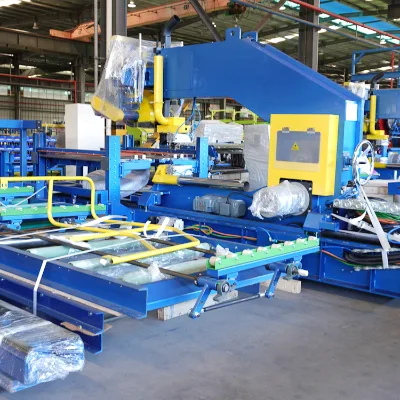

Rigid Foam Sheet Production Line Solid PVC Board and Sheet Making Machine
$86000.00 - $96000.00
MOQ: 1 Pieces


Comprehensive Sourcing Guide
Strategic Sourcing Guide for Automatic Insulation Foam Sheet and Tube Production Lines
Procuring an Automatic Insulation Foam Sheet and Tube Production Line represents a significant capital investment for manufacturers in the HVAC, construction, and industrial piping sectors. The decision to automate this process requires a rigorous evaluation of technical capabilities, material compatibility, and compliance standards. Buyers must navigate a complex landscape where "automatic" implies varying degrees of integration, from semi-automated extrusion to fully intelligent manufacturing lines. This guide synthesizes observed market data and technical attributes to provide a structured framework for evaluating potential suppliers and machinery configurations without relying on unverified claims.
Technical Architecture and Production Capabilities
The core of any automated insulation line lies in its extrusion technology and the specific mechanical parameters that define its output. In the current market, the term "Automatic Grade" is frequently associated with lines capable of continuous, high-volume processing. Observed configurations indicate that modern lines often utilize a "Comprehensive" automatic production line structure, ensuring that the transition from raw material feeding to final product winding is seamless. A critical technical attribute to verify is the "Transmission Type," which should ideally be "Flexible" to accommodate different product geometries and material viscosities.
When evaluating the extruder component, buyers must scrutinize the screw diameter and the L/D (Length to Diameter) ratio, as these directly influence the melting and mixing efficiency of materials like NBR (Nitrile Butadiene Rubber) and EPDM. Specific observed models feature a screw diameter of 150mm with an L/D ratio of 20:1, paired with a power rating of 160kw. These specifications suggest a robust capacity for processing thick-walled tubes or wide sheets. Furthermore, the presence of a "Vacuum System" is a vital indicator of quality control, as it ensures the removal of air bubbles and voids during the extrusion process, which is essential for thermal insulation performance.
The physical footprint of the machinery is another decisive factor. Observed dimensions for high-capacity units can reach approximately 4200mm in length, 1600mm in width, and 1500mm in height, with a total weight around 6500kgs. This substantial mass indicates a heavy-duty frame designed to minimize vibration during high-speed operation. Buyers should also verify the "Screw Speed" range, which typically spans from 0 to 45 RPM, allowing for precise control over the extrusion rate. The "Gear Reducer" ratio, observed at 18.5:1, further dictates the torque delivery, ensuring the machine can handle the resistance of dense rubber compounds.
Material Compatibility and Product Specifications
The versatility of an automatic production line is often defined by its ability to handle specific raw materials and produce varied product dimensions. The primary materials observed in this sector are NBR and EPDM, often used in combination or as distinct blends to achieve specific thermal and chemical resistance properties. The "Main Material" for the final product is frequently listed as NBR or PVC, while the production line itself must be capable of processing EPDM/NBR compounds.
Product specifications vary significantly based on the end application. For tube insulation, the "Tube Dia." range is a critical metric. Market data shows a broad spectrum of capabilities, with some lines supporting diameters from 6mm up to 108mm, while others focus on a narrower range of 12-50mm or 10-114mm. Similarly, sheet production is defined by width and thickness. Observed "Sheet Width" capabilities range from 500mm to 1500mm, with some models offering a "Max Sheet Width" of 1500mm. The "Tube Thickness" can vary from 3mm to 50mm, allowing for the production of both thin, flexible insulation and heavy-duty protective casings.
The "Product Application" for these lines is predominantly "Thermal Insulation" and "A/C Pipe Insulation," though they are also utilized for "Aircondition Cooper Protector" applications. The "Products" generated include "Rubber Insulation Tube" and "Rubber Insulation Sheet." Buyers must ensure that the line's "Customization" capabilities align with their specific needs, as "Customized" models are available to meet unique dimensional or material requirements. The "Color" of the final product is often "Based on Customer Demand," requiring the line to support color masterbatch integration or co-extrusion techniques.
Compliance, Certification, and Standards Verification
In the B2B machinery market, certification serves as a proxy for safety and operational reliability. While specific certification status can vary by manufacturer, high-confidence observations indicate that compliant lines often carry "ISO" and "CE" certifications. These are not merely marketing labels but essential requirements for international trade and operational safety. The "CE" mark, in particular, confirms that the machinery meets European Union safety, health, and environmental protection requirements.
Standards compliance extends beyond the machine itself to the output products. The "prod_standard" for the machinery or the resulting products may be listed as "1200" or "1500," which likely refers to specific industry codes or dimensional standards. However, in many cases, the standard is defined as "according to customer's demand," indicating a high degree of flexibility. Buyers must verify that the supplier can adhere to specific international standards relevant to their target market, such as ASTM or EN standards for rubber insulation.
The "prod_packing" method is also a compliance indicator. "Exporting Packing" and "Standard Package" are common terms, but the specific use of "Wrapping Film" suggests attention to moisture protection during transit. Additionally, the "prod_origin" is a critical data point for trade compliance; observed origins include "Qingdao, China," a major manufacturing hub. Buyers should confirm the origin to assess potential tariffs, shipping logistics, and supply chain resilience.
Cost Drivers and Economic Considerations
The pricing of automatic insulation production lines is influenced by a complex matrix of factors, including automation level, material capacity, and customization. The observed listed price range in the market is extremely wide, spanning from $1.3 to over $801,000 USD. This disparity highlights the difference between small-scale or semi-automated units and fully integrated, high-capacity intelligent manufacturing lines. The lower end of the spectrum may represent basic extruders or auxiliary equipment, while the upper end reflects complete production lines with advanced control systems, vacuum systems, and high-power motors.
The "MOQ" (Minimum Order Quantity) for such capital equipment is typically low, with observed ranges starting at 1 unit and extending up to 15,000 units, though the latter likely refers to production capacity rather than a purchase requirement for a single line. Buyers should be wary of pricing structures that do not clearly delineate the scope of the "Automatic Production Line." Factors such as the "Power" consumption (e.g., 160kw) and the "Weight" of the unit (e.g., 6500kgs) directly impact shipping costs and installation requirements, which are often excluded from the base machinery price.
Furthermore, the "After-sales Service" availability is a hidden cost driver. Lines that offer an "Overseas Service Center Available" may command a premium but reduce long-term operational risks. The "Production Scope" and "Rhythm" of the line, described as "Flow Production Line" or "Intelligent Manufacturing," also influence the total cost of ownership. A line with "Flexible Production" capabilities may have a higher upfront cost but offers greater adaptability to market changes, potentially lowering the cost per unit over the machine's lifecycle.
Supplier Evaluation and Operational Readiness
Evaluating a supplier for an automatic insulation line requires looking beyond the basic product listing. Key attributes to assess include the "Brand" reputation, with "Huashida" being one observed entity, and the specific "Model Number" of the equipment, such as "HSD," "HSD NBR-1000," or "SJ-65/30." These model identifiers often correlate with specific capabilities, such as the "Type" of machine (e.g., "Rubber Extruder") and its specific "Dimension(LWH)."
The "Capacity" of the production line is a critical metric for operational planning. Observed capacities range from 150-200m³/Day to 200-240m³/Day. Buyers must align this capacity with their projected market demand to avoid underutilization or bottlenecks. The "Automatic Production Line" should be described as "Comprehensive," indicating that it includes all necessary stages from extrusion to cooling and cutting. The "Flexible Production" aspect, linked to "Intelligent Manufacturing," suggests the use of advanced PLC controls and automation sensors, which reduce labor costs and human error.
Suppliers should also demonstrate a clear "Production Scope" that covers the entire "Product Line," ensuring that the machinery is not just a single component but a cohesive system. The "Transmission Type" being "Flexible" is a positive indicator of the machine's ability to handle various product configurations without extensive retooling. Buyers should request detailed documentation on the "Gear Reducer" and "Screw Speed" capabilities to ensure the machine can handle the specific viscosity of their chosen rubber compounds.
Quality Control and Long-Term Procurement Strategy
Quality control in the production of insulation tubes and sheets is paramount. The "Structure" of the machine, often described as "Horizontal," facilitates easier maintenance and material flow. The "Condition" of the equipment is typically "New," but buyers must verify the source of the machinery to ensure it has not been refurbished or modified in ways that compromise safety. The "Customized" nature of the product allows for specific "Tube Dia." and "Sheet Width" requirements, but this customization must be validated against the machine's physical limits.
Long-term procurement considerations include the availability of spare parts and the "After-sales Service" infrastructure. The presence of an "Overseas Service Center" is a significant advantage for international buyers, reducing downtime in the event of mechanical failure. The "prod_packing" method, such as "Wrapping Film" or "Exporting Packing," ensures that the machinery arrives in optimal condition, ready for installation.
Buyers should also consider the "Standard" compliance of the final product. While some standards are fixed (e.g., "1200" or "1500"), others are "according to customer's demand." This flexibility allows manufacturers to tailor their products to specific regional regulations. The "Color" options, which are "Based on Customer Demand," add value to the final product, allowing for branding and differentiation in the market.
Comparative Analysis of Production Line Configurations
To assist in decision-making, the following table summarizes key technical and operational attributes observed in the market for automatic insulation production lines. This comparison highlights the variability in specifications and helps buyers identify the configuration that best matches their operational needs.
| Attribute | Configuration A (High Capacity) | Configuration B (Standard) | Configuration C (Customized) |
|---|---|---|---|
| Model Number | HSD NBR-1000 | SJ-65/30 | HSD |
| Screw Diameter | 150mm | 65mm | Variable |
| Power Rating | 160kw | Standard | Based on Demand |
| Tube Dia. Range | 6-50mm | 12-108mm | Custom |
| Sheet Width | 1500mm | 500-1500mm | Custom |
| Certification | ISO, CE | ISO | ISO, CE |
| Production Type | Intelligent Manufacturing | Flow Production Line | Flexible |
| Origin | Qingdao, China | Qingdao, China | Variable |
| Packing | Wrapping Film | Standard Package | Exporting Packing |
| After-sales | Overseas Service Center | Standard | Customized |
This table illustrates that while there is a common baseline of ISO and CE certification, the specific technical parameters vary widely. Buyers must carefully match these specifications to their production goals, ensuring that the "Automatic Grade" of the line aligns with their volume requirements and material constraints. By focusing on these verified attributes, procurement teams can make informed decisions that mitigate risk and ensure long-term operational success.
FAQs
What certifications do automatic insulation foam sheet and tube production lines typically have?
These lines typically hold ISO and CE certifications to ensure safety and compliance. The observed data confirms that compliant machinery often carries both ISO and CE marks, which are essential for international trade and operational reliability in the HVAC and construction sectors.
Which materials can the production line process for insulation tubes and sheets?
The line can process NBR, EPDM, and PVC materials for various insulation applications. Observed specifications indicate that the main materials include NBR and PVC, while the production capability extends to EPDM/NBR blends for thermal insulation and A/C pipe protection.
How large is the typical capacity of an automatic production line for daily output?
Typical capacity ranges from 150 to 240 cubic meters per day depending on the model. Specific observed configurations list capacities between 150-200m3/Day and 200-240m3/Day, allowing manufacturers to align production with projected market demand.
Can the production line be customized for specific tube diameters and sheet widths?
Yes, the production line offers customization for tube diameters and sheet widths based on customer demand. Observed attributes confirm that customization is available, with tube diameters ranging from 6mm to 108mm and sheet widths up to 1500mm.
What is the origin location for these automatic production lines?
The observed origin location for these lines is Qingdao, China. This major manufacturing hub is frequently listed as the prod_origin, indicating the supply chain source for the machinery and its associated logistics considerations.
How much power does a standard rubber extruder in this line consume?
A standard rubber extruder in this line typically consumes 160kw of power. Specific model data shows a power rating of 160kw, which supports the processing of dense rubber compounds and ensures efficient melting and mixing during operation.