Source Automatic Instant Rice Making Machine for Hotels, Retail, and Catering
Find and compare 30 Automatic Instant Rice Making Machine options from verified suppliers. Evaluate capacities ranging from 150kg/H to 3000kg/H, stainless steel construction, and extrusion technology to select the right nutritional rice production equipment for your business needs.
Key considerations
Products List


Fortified Artificial Rice Production Line Instant Rice Making Machine
$30000.00 - $80000.00
MOQ: 1 Sets


Artificial Rice Making Machine Instant Nutrition Rice Extruder Food Machine
$30000.00 - $60000.00
MOQ: 1 Sets




Comprehensive Sourcing Guide
Automatic Instant Rice Making Machine Sourcing Guide
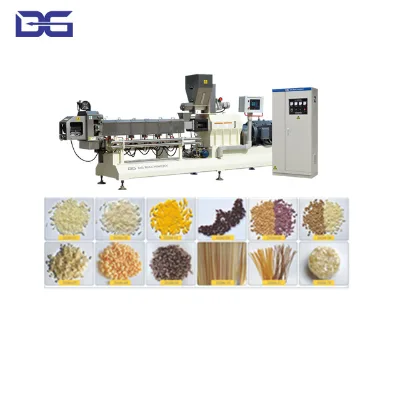
Procuring an Automatic Instant Rice Making Machine requires a clear understanding of the distinction between traditional parboiled rice processing and the extrusion-based production of nutritional or artificial rice. The core technology relies on twin-screw food extruders to transform raw ingredients such as rice flour, corn flour, and grain powders into structured, enriched rice products. Buyers must recognize that these machines are not designed for processing whole grain kernels but rather for creating reconstituted nutritional rice from powdered bases, often fortified with vitamins and minerals to meet specific dietary standards.
The sourcing landscape for this equipment is dominated by manufacturers primarily located in China, with significant production hubs in regions like Jinan, Shandong. These facilities typically offer a range of models, including the DLG and SLG series, which vary in capacity and configuration. Understanding the specific output requirements, such as the desired shape and size of the final artificial rice product, is critical before engaging with suppliers, as the molding process is often customized to meet specific market preferences for texture and appearance.
Product Scope and Observed Listing Signals
The observed market listings for automatic nutritional rice machines reveal a wide variance in capacity and pricing, indicating a segmented market catering to both small-scale pilot operations and large-scale industrial production. Prices for these systems range significantly, reflecting differences in automation levels, motor brands, and material construction. Buyers should note that while some listings advertise capacities as low as 150kg/Hr, others indicate much higher outputs, suggesting that the term "Automatic Instant Rice Making Machine" covers a broad spectrum of equipment from compact extruders to full production lines.
Listing signals also highlight the importance of raw material compatibility and final product versatility. Suppliers frequently emphasize the ability to process various grain powders and the option to design molds for specific rice shapes, which is a key differentiator for buyers targeting niche markets. The presence of multiple model numbers, such as DLG100, DLG150, and EXT-100, suggests that buyers must carefully match their production volume needs with the machine's rated capacity, as mismatching can lead to inefficiencies or bottlenecks in the production line.
Technical Specifications to Verify
When evaluating technical specifications, the construction material of the machine is a primary concern for food safety and durability. High-quality units typically utilize stainless steel, specifically SUS304 or similar food-grade alloys, for components that come into direct contact with the product. Buyers should verify the grade of stainless steel used in the main extruder barrel and screw components, as inferior materials can lead to contamination risks and reduced lifespan. The screw material itself is often cited as a critical factor, with options like 38CrMoAl alloy steel offering enhanced wear resistance and longevity under high-pressure extrusion conditions.
The power system and motor brand are equally important indicators of machine reliability and operational efficiency. Listings often specify the use of reputable motor brands such as Siemens or ABB, which are associated with consistent performance and energy efficiency. Buyers should confirm the total power consumption, which can vary significantly based on the machine's capacity, with some high-output models requiring up to 250kw. Additionally, the inclusion of high-quality inverters from brands like ABB or Delta can provide better control over the extrusion process, allowing for precise adjustments to temperature and pressure, which directly impacts the quality of the final nutritional rice product.
Compliance and Safety Documentation
Compliance with international safety and quality standards is a mandatory requirement for any food processing equipment. Buyers must ensure that the supplier provides valid certification documents, with CE marking being a common baseline for machines intended for the European market or those adhering to international safety norms. The presence of ISO certification further indicates that the manufacturer follows established quality management systems, which is crucial for maintaining consistent product quality and operational safety. Buyers should request copies of these certificates and verify their validity with the issuing bodies.
Beyond certifications, the documentation should include detailed technical manuals and safety guidelines for operation and maintenance. These documents are essential for training local staff and ensuring that the machine is operated within its designed parameters to prevent accidents or equipment failure. Buyers should also inquire about the availability of after-sales support documentation, such as video technical support or troubleshooting guides, which can be invaluable for resolving operational issues without immediate reliance on on-site engineering services.
Cost Drivers and Commercial Terms
The total cost of ownership for an Automatic Instant Rice Making Machine is influenced by several factors, including the machine's capacity, material construction, and the brand of key components like motors and inverters. Higher capacity models and those featuring premium brands for critical components will naturally command higher prices. Buyers should also consider the packaging requirements, as machines are typically shipped in wooden cases or boxes to protect them during transit, which can add to the overall logistics costs.
Commercial terms such as warranty and after-sales service are critical components of the procurement decision. A standard warranty period of one year after engineer-finished installation is common, but buyers should clarify the scope of this warranty, including what parts and labor are covered. Additionally, the availability of customized solutions, such as specific mold designs for artificial rice shapes, may incur additional costs. Buyers should negotiate clear terms regarding installation support, training, and the availability of spare parts to ensure long-term operational continuity.
Supplier Qualification and Quality Control
Supplier qualification involves verifying the manufacturer's production capabilities and quality control processes. Buyers should assess whether the supplier has a dedicated facility for manufacturing extruders and whether they have experience in producing machines for nutritional rice applications. Requesting references from existing clients, particularly those in similar geographic regions or with comparable production scales, can provide valuable insights into the supplier's reliability and the performance of their equipment in real-world conditions.
Quality control measures should be explicitly discussed during the procurement process. Buyers should inquire about the testing procedures conducted before shipment, including performance tests to verify capacity and output quality. It is also advisable to specify acceptance criteria in the purchase contract, such as maximum allowable deviation in product weight or shape consistency. Engaging a third-party inspection service for pre-shipment inspections can provide an additional layer of assurance, ensuring that the machine meets the agreed-upon specifications before it leaves the factory.
Long-Term Procurement Checks
Long-term procurement success depends on the availability of spare parts and the supplier's commitment to ongoing support. Buyers should establish a clear supply chain for critical spare parts, such as screws, barrels, and motor components, to minimize downtime in the event of wear or failure. It is advisable to purchase a starter kit of spare parts along with the machine, ensuring that immediate replacements are available without waiting for international shipping.
Furthermore, buyers should maintain a proactive relationship with the supplier for technical updates and potential upgrades. As technology evolves, suppliers may offer improvements to their extrusion systems that can enhance efficiency or product quality. Regular communication with the supplier can also help in troubleshooting any emerging issues and ensuring that the machine continues to operate at peak performance. By focusing on these long-term aspects, buyers can maximize the return on investment and ensure the sustained viability of their nutritional rice production operations.
FAQs
What raw materials are used to make artificial rice?
The machine processes rice flour, corn flour, and vitamins to produce nutritional rice. It also handles grain powder as a primary ingredient for creating the final enriched product.
Which motor brands are installed in this production line?
The equipment is equipped with motors from Siemens or ABB, which are recognized as famous brands. These components ensure reliable operation for the extrusion and mixing processes.
What is the production capacity of the artificial rice machine?
Available models offer capacities of 150kg/H, 250kg/H, or 500kg/H depending on the specific configuration. Some high-output versions can reach between 2500kg and 3000kg per hour.
Can the machine shape be customized for specific needs?
Yes, the mould can be designed according to your specific requirements to create different artificial rice shapes. Customization is available to meet unique product specifications.
What is the warranty period for the installation?
The machine comes with a one-year warranty after the engineer finishes the installation. This coverage ensures support for the initial operational phase of the equipment.
Which certifications does the artificial rice machine hold?
The product holds ISOCE and CE certifications to meet international safety and quality standards. These documents verify that the manufacturing process adheres to required regulatory guidelines.
What material is used for the main machine construction?
The main body is constructed from stainless steel, specifically SUS304, to ensure food grade safety. The screw materials use 38CrMoAl alloy steel for a long lifetime.