Source Automatic Instant Noodle Processing Line for Factories
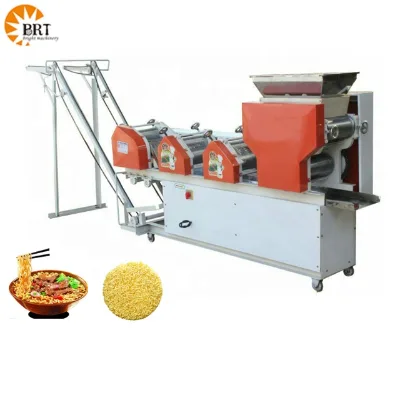
Find 26 listings for the Automatic Instant Noodle Processing Line designed for flour, beans, and wheat applications. Buyers can compare models like HK and FYJCMX-450, voltage options, and lead times from suppliers in Shandong and Zhengzhou.
Key considerations
Products List

Instant Noodle Production Line Automatic Fried Instant Noodle Processing
$5000.00 - $22000.00
MOQ: 1 set


Instant Noodle Making Machine with Hot Sale Instant Noodle Production Line
$5000.00 - $22000.00
MOQ: 1 set


Factory Instant Noodle Processing Plant Production Line with Steaming Boiler
$100000.00 - $1000000.00
MOQ: 1 Pieces


China High Capacity Automatic Instant Noodles Processing Production Line
$800000.00 - $2000000.00
MOQ: 1 Sets


Maximize Output and Quality of New-Generation Instant Noodle Processing Line
$350000.00 - $400000.00
MOQ: 1 Sets



Comprehensive Sourcing Guide
Strategic Sourcing Guide for Automatic Instant Noodle Processing Lines
Procuring an Automatic Instant Noodle Processing Line represents a significant capital investment for food manufacturing enterprises. The complexity of these systems, which integrate dough mixing, sheeting, cutting, steaming, frying or drying, and packaging, requires a rigorous evaluation framework. Buyers must navigate a landscape where technical specifications, material integrity, and compliance standards vary significantly between manufacturers. This guide provides a structured approach to sourcing these lines, grounded in observed market data and essential procurement principles, ensuring that the selected equipment aligns with production goals and regulatory requirements.
Technical Specifications and Configuration Analysis
The core of any instant noodle production line lies in its mechanical configuration and operational parameters. Based on available market data, the product type is consistently identified as "Instant Noodles Production," with specific models such as HK, HK-65/70/85, and FYJCMX-450 appearing in supplier catalogs. A critical technical differentiator is the voltage requirement. While some units operate on standard 380V industrial power, others are listed with 220V inputs or offer "Customized" voltage options. Procurement teams must verify the electrical infrastructure of their facility before finalizing an order to avoid costly retrofitting.
The physical dimensions and output capacity are equally vital. Observed product standards indicate a specific footprint of 850x530x1040mm for certain configurations, though other listings suggest "customized" standard dimensions. The automatic grade is a key performance indicator; the majority of modern lines are classified as "Automatic," featuring advanced control systems such as PLC (Programmable Logic Controllers) and automatic splicing systems. These features minimize human intervention and ensure consistent product quality.
Material selection is paramount for food safety and equipment longevity. The industry standard observed is the use of Stainless Steel, specifically grades 304 and 316 Ssl, or "Food Grade Stainless Steel." These materials resist corrosion and meet hygiene standards required for food processing. Specific components, such as calendering rollers, are often constructed from High Chromium Alloy Steel to withstand the high pressures of dough sheeting. The dough mixer configuration is frequently described as a "Horizontal Double Shaft" design, which ensures uniform mixing of flour, beans, and wheat. Additionally, the press series and energy sources vary, with some systems utilizing electric power while others support steam energy, impacting the overall energy efficiency and operational cost of the line.
Compliance, Certification, and Regulatory Standards
Navigating the regulatory landscape is a non-negotiable aspect of sourcing industrial food machinery. Buyers must demand verifiable documentation regarding certifications. The most frequently observed certifications in the market include CE and ISO. Specific listings mention "ISOCE" or "ISOCustomized," indicating that manufacturers may offer tailored compliance packages. However, the presence of a certification mark on a product page does not automatically guarantee that every unit in a batch meets the same standard. Buyers should request specific test reports and certificates of conformity that correspond to the exact model number being purchased.
Beyond general certifications, the "prod_standard" and "prod_model" fields often contain specific regulatory codes or internal manufacturer standards. For instance, the model designation "HK-intant noodles" suggests a specific configuration designed for instant noodle applications. It is essential to verify that the machinery complies with the food safety regulations of the destination country. While "CE" is a common observation, it primarily indicates compliance with European safety standards. If the equipment is destined for the United States or other regions, additional certifications may be required. The "Applicable Industry" is listed as "Food Processing Machine," which confirms the intended use but does not replace the need for local regulatory approval.
Cost Drivers and Financial Considerations
The financial landscape for automatic instant noodle lines is characterized by a wide variance in pricing and payment structures. Observed listed prices range significantly, from approximately $2,000 to $2,090,000 USD. This vast range reflects differences in automation levels, production capacity, material quality, and the inclusion of auxiliary systems. A lower price point may correspond to a semi-automatic line or a smaller footprint unit, whereas the upper end of the spectrum likely represents a fully integrated, high-capacity line with advanced PLC control and packaging integration.
Payment terms are another critical financial factor. The standard payment structure observed is a "30% TT Deposit in Advance." This is a common practice in international trade for heavy machinery, but buyers should negotiate terms that protect their interests, such as milestone payments tied to factory acceptance testing (FAT) or shipping. The Minimum Order Quantity (MOQ) is consistently observed as 1, indicating that suppliers are generally willing to sell single units, which is favorable for small to medium-sized enterprises. However, buyers should be aware that unit prices may decrease with volume orders, even if the MOQ is technically one.
Typical Applications and Production Capabilities
Understanding the specific applications of the machinery helps in selecting the right configuration. The primary application is the production of instant noodles, but the versatility of these lines is notable. The "Application" field lists "Flour, Beans, Wheat," indicating that the machinery can process various raw materials to create different types of noodles. The "Noodle Shape" attribute specifies that the lines can produce both "Square/Round" shapes, allowing manufacturers to diversify their product offerings without changing the core equipment.
The production process involves several distinct stages, each with specific technical requirements. The dough mixer prepares the raw material, followed by calendering rollers that shape the dough sheets. The drying efficiency is a crucial metric, with observed ranges of 45%~50% for certain drying systems. The cooling system often utilizes "Automatic Control Technology" to ensure the noodles reach the correct temperature before packaging. The "Energy" source can be either electric or steam, which impacts the operational flexibility of the plant. For facilities with access to steam, a steam-powered line might offer better energy efficiency, while electric systems provide easier installation in locations without steam infrastructure.
Supplier Evaluation and Geographic Considerations
Evaluating suppliers requires a focus on their geographic origin, trade marks, and customization capabilities. The majority of observed suppliers are located in China, with specific hubs in Shandong, Zhengzhou, and Qingdao. These regions are known for their manufacturing clusters in food processing machinery. The trade mark "Huake" is one specific brand observed in the market, but buyers should not limit their search to a single name. Instead, they should evaluate the supplier's ability to provide "Customized" solutions. The "Customerized" attribute is marked as "Yes" in many listings, suggesting that manufacturers are willing to adapt the line to specific production needs.
When evaluating a supplier, buyers should verify the "prod_packing" method. Standard options include "Standard Marine Packaging," "Wooden Case," or "Container" shipping. Proper packaging is essential to prevent damage during transit, especially for complex machinery with delicate components like PLCs and sensors. The "Condition" of the equipment is typically listed as "New," but buyers should request proof of this status, such as factory photos or videos, to ensure the machine has not been refurbished or used previously.
Quality Control and Inspection Protocols
Quality control must be integrated into the procurement process from the initial inquiry to final delivery. The "Condition" being "New" is a baseline expectation, but the internal quality of the components is what truly matters. Buyers should insist on a detailed Bill of Materials (BOM) that lists the brands and specifications of critical components, such as the PLC, motors, and bearings. The "Automatic Grade" and "Control System" specifications should be cross-referenced with the supplier's technical data sheets to ensure they match the advertised capabilities.
Inspection protocols should include a Factory Acceptance Test (FAT) before shipment. This test should verify the "Drying Efficiency," the functionality of the "Cooling System," and the accuracy of the "Noodle Shape" output. The "Lead Time" for production varies, with observed ranges of 7-14 working days, 7 working days, or up to 90 days for delivery. These discrepancies highlight the importance of clarifying the timeline with the supplier. A shorter lead time may indicate a standard model in stock, while a longer lead time could reflect a customized build. Buyers should establish clear milestones for the FAT and ensure that the "Delivery" timeline includes the time required for testing and packaging.
Long-Term Procurement and Maintenance Planning
The long-term success of an instant noodle production line depends on the availability of spare parts and the ease of maintenance. The "Material" composition, specifically the use of 304/316 Stainless Steel, suggests a long lifespan, but the wear and tear on moving parts like the "Calendering Rollers" and "Dough Mixer" must be managed. Buyers should inquire about the availability of spare parts and the lead time for their delivery. The "Standard Marine Packaging" is designed for transport, but the internal storage of spare parts should be considered for the factory floor.
Furthermore, the "Customization" aspect of the line should be documented thoroughly. If the machine is customized with specific dimensions or control logic, the supplier must provide detailed manuals and training. The "Trade Mark" and model number should be clearly recorded in the purchase order to ensure that future service requests are directed to the correct technical team. Finally, the "Payment" terms should be structured to include a retention clause, ensuring that a portion of the payment is held until the machine is fully operational at the buyer's facility. This approach aligns the supplier's incentives with the buyer's success, ensuring that the "Automatic Splicing System" and other critical features function as promised.
In conclusion, sourcing an Automatic Instant Noodle Processing Line requires a meticulous approach that balances technical specifications, regulatory compliance, and financial planning. By focusing on verified data such as material grades, voltage requirements, and certification status, buyers can mitigate risks and secure equipment that meets their production needs. The wide range of observed models and suppliers offers flexibility, but the key to success lies in rigorous due diligence and clear communication of requirements throughout the procurement lifecycle.
FAQs
What certifications are required for automatic instant noodle processing lines?
Most units carry CE and ISO certifications to ensure safety and quality compliance. Some listings show combined marks like ISOCE, but buyers must verify specific test reports for the exact model before purchase.
Which materials are used in the construction of these production lines?
The equipment is primarily constructed from food-grade stainless steel, specifically grades 304 and 316. This material ensures corrosion resistance and meets strict hygiene standards required for food processing applications.
Can the voltage be customized for different facility power requirements?
Yes, voltage customization is available for many models to match local infrastructure. While standard units often operate at 380V or 220V, buyers should confirm specific electrical needs with the supplier to avoid retrofitting costs.
What is the typical lead time for delivery of these machines?
Lead times vary significantly, ranging from 7 working days for standard models to 90 days for delivery. Buyers should clarify whether the timeline includes production, testing, and shipping to ensure accurate project planning.
How does the automatic grade affect the production process?
Automatic lines feature PLC control systems and automatic splicing systems to minimize human intervention. This configuration ensures consistent noodle shapes and improves overall efficiency compared to semi-automatic alternatives.
What payment terms are standard for purchasing this equipment?
The standard payment structure requires a 30% TT deposit in advance before production begins. Buyers should negotiate milestone payments tied to factory acceptance testing to protect their financial interests during the transaction.
Which noodle shapes can be produced by these processing lines?
The machinery is capable of producing both square and round noodle shapes to diversify product offerings. This flexibility allows manufacturers to adapt to different market demands without changing the core equipment configuration.