Source Automatic Pig Feed Doser for Sow, Nursery, and Finisher Farms
Find and compare 30 Automatic Pig Feed Doser options designed for sow, nursery, and finisher applications. These systems feature stainless steel construction, automatic operation, and customizable capacities to streamline feeding processes in modern pig farming operations.
Key considerations
Products List


$80.00 - $150.00
MOQ: 1 Pieces


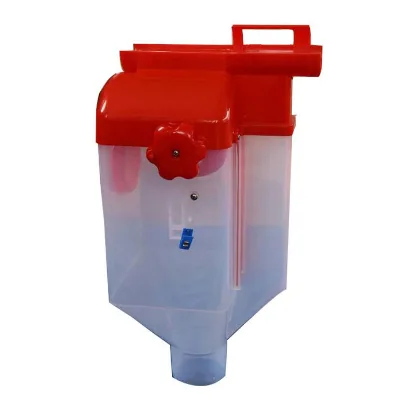


Wholesale Automatic Dry Feeding Pig Adjustable 6L Pig Drop Feed Doser Cups Dispensers
$500.00 - $1000.00
MOQ: 1 Pieces

Wholesale Dry Feeding Pig Adjustable 6L Pig Drop Feed Doser Cups Dispensers
$500.00 - $1000.00
MOQ: 1 Pieces


Automatic Dosing Animal Feed Premix Plant for Chicken Pig Fish Feed
$10000.00 - $100000.00
MOQ: 1 Sets


Automatic Polymer Dosing Machine for Pig Farm
$5000.00 - $60000.00
MOQ: 1 Pieces
Yixing Pioniere Environmental Protection Equipment Co., Ltd.

Large Volume Automatic Polymer Dosing Machine for Pig Farm
$5000.00 - $60000.00
MOQ: 1 Pieces
Yixing Pioniere Environmental Protection Equipment Co., Ltd.


Comprehensive Sourcing Guide
Automatic Pig Feed Doser Sourcing Guide
An Automatic Pig Feed Doser sits at the center of modern feeding lines, controlling how much feed reaches each trough, hopper, or pen without constant manual labor. For buyers building or upgrading pig farm systems, the doser is not an isolated accessory but a component that must integrate with silos, auger lines, pen layouts, and the overall automation strategy of the facility. Sourcing decisions made here directly affect feed conversion, labor costs, and the reliability of daily operations.
This guide walks procurement teams through the decisions that matter most when sourcing automatic dosers for pig feeding systems: defining the product scope, verifying technical specifications, checking documentation, understanding cost drivers, qualifying suppliers, and planning for long-term use. The guidance is deliberately conservative—every recommendation asks the buyer to verify a claim against the seller's actual documentation rather than trust listing text alone.
Product Scope and Observed Listing Signals
Automatic feed dosers in the pig farming category generally appear alongside complete feeding systems, stainless steel feeders, dry-wet feeder units, and dispensing components sized in liter capacities such as 8L, 6L, 60L, 100L, and 140L. Listings in this space commonly describe materials as PE plastic or stainless steel, frames built from SS304 or hot-galvanized steel, and configurations in single-side or double-side arrangements. Some products serve sows and swine specifically, while other feeding equipment in the same category also targets poultry, goats, and sheep, so buyers must confirm pig-specific suitability before ordering.
The listings also reveal commercial signals worth reading carefully. Many advertise customization as available, with customized sizing, different tier options, and models that can be adapted to specific farm designs. Product names such as "Pig Farm Automatic Plug Tray Feeding System" and "Pig Automatic Stainless Steel Feeder" indicate that dosers are often sold as part of broader systems rather than as standalone items. Buyers should decide early whether they need a discrete dosing component or an integrated feeding line, since this changes the specification process, packaging expectations (carton, box, wooden box/pallet, or bulk), and the scope of installation support required.
Technical Specifications to Verify
Material and construction are the first technical checkpoints. For dosers and feeders intended for pig environments, verify whether the wetted and load-bearing parts are PE plastic, stainless steel, or coated steel, and whether the steel frame is genuinely SS304 or hot-galvanized. Ask for material composition in writing, including grade designations for stainless components, because corrosion resistance in humid, acidic barn conditions depends on it. Also confirm the feed capacity standard—liter ratings such as 8L, 6L, 65L, 100L, or 140L appear across listings—matches the daily feed volumes of the target herd, whether sows, growers, or weaners.
Dosing accuracy and system integration come next. Ask the supplier to state the dosing mechanism, the adjustment range for feed portions, and how the unit connects to existing auger lines, drop tubes, or automatic control systems. For listings emphasizing "Automatic" as a key selling point, request clarification on what is actually automatic—portion dispensing only, or integration with sensors and controllers. Confirm power requirements, mounting style (ground installation is listed for some systems), and whether single-side or double-side configurations are needed for the pen layout. Finally, verify the condition (new) and the exact product model, such as HY-FD01, HY-DWPF, HYDF-01, or HY-PFS, so the delivered goods match the quoted specification.
Compliance and Safety Documentation
Do not assume certification status from listing keywords. Instead, ask each candidate supplier for the documents that would normally accompany feeding equipment for livestock: material safety or food-contact declarations for PE and stainless parts that touch feed, assembly and installation instructions, and any electrical certifications applicable if the doser includes powered components. If a seller claims a specific standard, request the certificate itself and check that the certificate's scope, model number, and holder name align with the product being quoted.
Safety documentation should also cover operating and cleaning procedures, since dosers handling feed must be cleaned and inspected regularly to prevent blockages and contamination. Request a written warranty of core components—some listings state a 1-year warranty on core components—and ensure the warranty terms specify what is covered, what voids coverage, and how replacement parts are supplied. If the supplier offers free installation training, as some do, confirm whether training materials, manuals, or remote guidance are provided in a language your team can use, and document these commitments in the purchase contract.
Cost Drivers and Commercial Terms
Price dispersion in this category is extremely wide—observed listings range from single-digit dollars to six-figure system-level quotations—because a "doser" listing may be a small dispensing component or an entire automated feeding line. Treat each quotation as a scope definition exercise: itemize what is included (doser body, mounting hardware, connecting pipes, control units, spare parts) and what is priced separately. Material choice is a major driver—stainless steel units command different pricing than PE or galvanized variants—so request quotes for the same capacity and material across suppliers before comparing.
Commercial terms should be negotiated explicitly rather than assumed. Confirm minimum order quantities (observed MOQs in this category range from 1 to 100 units depending on product type), packaging format (carton, box, plastic/pallet, wooden box/pallet, or bulk shipping), and who bears freight and customs costs. For customized designs, expect the supplier to state how customization affects unit price, tooling, and delivery timelines—do not accept vague "customization available" claims without a written quotation for your specific configuration. Payment milestones, inspection points before shipment, and remedies for non-conforming goods should all be recorded in the proforma invoice or contract.
Supplier Qualification and Quality Control
Supplier qualification starts with verifying manufacturer status. Several listings in this category state "Factory: Yes, We Are Manufacturer," and some claim experience in the pig farming industry dating back to 1996, with more than 20 years of service or 15+ years of operation, and cooperation with an animal husbandry university. These claims can be checked: request business registration documents, factory photos or a video audit, and evidence of the stated history such as early product records or trade references. A pre-shipment inspection—either by your own team or a third-party inspection service—is a low-cost control regardless of supplier size.
Quality control should extend across the ordering lifecycle. Before production, approve drawings or samples for customized sizes; during production, request photos or progress updates at agreed milestones; before shipment, inspect dimensional accuracy, material finish, welding quality on stainless frames, and functionality of dosing adjustments. For first orders, consider splitting the shipment into a pilot batch to validate performance in your barn conditions before committing to larger volumes. Suppliers offering free pig farm design before the sale and free installation training after the sale are signaling investment in the relationship—use these services, but verify that the design work accounts for your actual herd size, building dimensions, and feeding schedule rather than being generic template output.
Long-Term Procurement Checks
Long-term value depends less on the initial purchase price than on parts availability and service continuity. Before committing, ask the supplier how replacement components—dispensing mechanisms, seals, adjustment parts, and motor units if applicable—are supplied after the warranty period, and whether spare parts can be ordered in small quantities. Confirm the lead time for routine reorders, since a feeding line with a failed doser affects animal welfare daily, and long downtime is unacceptable. A supplier whose core component warranty is stated at 1 year should be able to explain what happens on day 366.
Finally, evaluate the supplier as a system partner rather than a one-time vendor. Farms grow and reconfigure; suppliers who support customized designs, offer tiered configurations (single and double side, 1-tier and multi-tier options), and provide ongoing installation training are better positioned to support expansions and retrofits. Keep a documented file for each procurement: approved specifications, material declarations, warranty terms, spare parts lists, and service contacts. Reassess supplier performance annually on delivery reliability, defect rates, and responsiveness, and maintain at least one qualified alternative source for critical dosing components to protect the operation against supply disruption.
FAQs
What models are available for Automatic Pig Feed Doser systems?
Several models are available including HY-FD01, HY-DWPF, HYDF-01, and HY-PFS. These units support various capacities such as 8L, 6L, 60L, 100L, and 140L. The systems are designed for automatic feeding in pig farms and can be customized to meet specific operational requirements.
Can the Automatic Pig Feed Doser be customized for my farm?
Yes, customization is available for these Automatic Pig Feed Doser systems. Buyers can request specific sizes, tiers, and configurations. The manufacturer supports customized designs and offers free pig farm design services to ensure the equipment fits the specific layout and needs of the facility.
What materials are used in the construction of these feeders?
The Automatic Pig Feed Doser systems are constructed using durable materials such as PE and Stainless Steel. The steel frame options include SS304 or hot galvanizing steel to ensure anti-corrosion properties. This construction ensures longevity and hygiene in demanding pig farming environments.
What after-sale services are provided for the Automatic Pig Feed Doser?
Providers offer free training for installation and more than 20 years of service experience. The warranty for core components is one year. Additionally, the manufacturer cooperates with animal husbandry universities, ensuring technical support and professional guidance for the Automatic Pig Feed Doser systems.
Where are these Automatic Pig Feed Doser systems manufactured?
These systems are manufactured in China, specifically in Henan. The products are exported globally and are suitable for various livestock applications including pigs, goats, and sheep. The origin ensures access to established manufacturing capabilities and supply chains for these agricultural equipment systems.
What is the typical packaging for the Automatic Pig Feed Doser?
Packaging options include bulk, carton, wooden box, pallet, and plastic/pallet configurations. The specific packaging depends on the model and size of the Automatic Pig Feed Doser. This ensures safe transport and protection of the equipment during shipping to international destinations.