Source Automatic Rectangular Reed Baler for Farming, Waste, and Recycling
Compare 30 Automatic Rectangular Reed Baler options from verified suppliers. Buyers can evaluate tractor-powered square balers and horizontal compression units with varying bale weights, dimensions, and hydraulic drive systems to match specific agricultural or waste management needs.
Key considerations
Products List




High Performance Automatic Horizontal Baler with Customized Specifications
$20000.00 - $100000.00
MOQ: 1 Pieces
Taixing Xianghong Environmental Protection Machinery Co., Ltd.


Premium Square Agricultural Baler for Quality Hay and Straw Production
$7200.00 - $8000.00
MOQ: 1 Sets


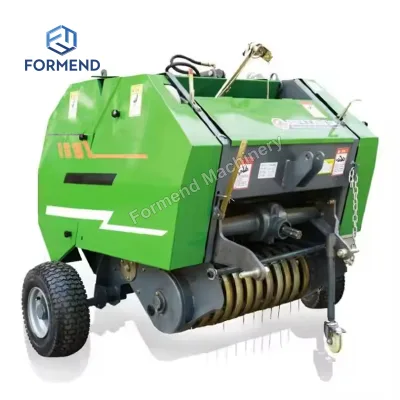
Highly Automated Mini Round Baler with Tight Bundling Tractor-Matching Features
$1950.00 - $2150.00
MOQ: 1 Pieces


Comprehensive Sourcing Guide
Strategic Sourcing Guide for Automatic Rectangular Reed Baler Systems
Understanding the Technical Landscape of Automatic Baling Solutions
The procurement of an Automatic Rectangular Reed Baler requires a deep understanding of the specific mechanical configurations and operational parameters that define modern agricultural and industrial baling machinery. In the current market, these systems are primarily categorized by their automation level, power source, and the specific geometry of the bale they produce. The core keyword "Automatic Rectangular Reed Baler" often intersects with broader categories such as square balers and fully automatic horizontal balers, each serving distinct processing needs.
A critical observation in the current product landscape is the diversity in power sources. While some units are designed to be tractor-mounted, relying on the tractor's power take-off (PTO) for operation, others are independent units driven by electric motors or hydraulic systems. For instance, specific models in the market are explicitly listed with a "Tractor" power source, featuring a matching power system range of 51 to 191 kilowatts. This indicates that for tractor-mounted units, the buyer must ensure their existing fleet has sufficient horsepower to drive the machine effectively. Conversely, other product listings highlight "Fully Automatic Horizontal Baler" models equipped with a motor power of 11 or 15 kilowatts, suggesting a self-contained electric drive system suitable for stationary processing facilities.
The automation grade is another pivotal technical specification. The market offers machines classified as "Automatic," which often include advanced features such as PLC automatic control systems and integrated automatic tie wire devices. These systems are designed to minimize manual intervention, enhancing throughput and consistency. The filling method for these machines can vary, with some utilizing a "4-Tooth Crank" mechanism to ensure efficient material intake. The operational speed is another vital metric; typical operating speeds for these units range from 2 to 5 kilometers per hour, a factor that directly influences the daily processing capacity, which can range from 160 to 240 pieces per hour depending on the specific model and material density.
Compliance, Certification, and Regulatory Standards
When sourcing industrial machinery, particularly equipment originating from major manufacturing hubs, verifying compliance with international and regional standards is non-negotiable. The safety and quality of the machinery are often validated through specific certifications that buyers must request and verify before finalizing a purchase. In the current product data, "CE" and "ISO" certifications are frequently cited as high-confidence attributes for these balers. The presence of CE certification implies that the machine meets the essential health, safety, and environmental protection requirements for products sold within the European Economic Area. Similarly, ISO certification indicates adherence to international standards for quality management and operational consistency.
Buyers should not assume that every listed product automatically satisfies all regulatory requirements based on a general listing. Instead, the procurement process must involve a direct request for the specific certificate documents corresponding to the exact model number. For example, while "CE" and "ISO" are observed as common attributes, the specific ISO standard (e.g., ISO 9001 for quality management) should be confirmed. Furthermore, the physical dimensions and weight of the machine are critical for logistics and facility planning. Specifications such as external dimensions of 1600kg (likely referring to weight in this context, though dimensionally listed as 388536502715mm for other models) and standard specifications like 3580×2610×1700mm must be cross-referenced with the buyer's facility constraints.
The origin of the machinery also plays a role in compliance. Many of the observed products originate from China, with specific mentions of Jiangsu as a manufacturing hub. Buyers should be aware that while the country of origin is a logistical fact, the specific export compliance and the validity of certifications in the buyer's home country must be independently verified. The "prod_standard" field often lists dimensions or capacity figures, but these should be treated as observations of specific listings rather than universal standards for the entire category.
Cost Drivers and Pricing Structures in the Baler Market
The pricing of automatic rectangular reed balers is influenced by a complex matrix of factors, including automation level, power source, bale capacity, and the complexity of the control systems. The observed price range in the market is substantial, spanning from 1,500 to 370,000 USD. This wide variance is not indicative of a single product line but rather reflects the spectrum from basic manual or semi-automatic units to high-end, fully automated industrial systems with significant compression pressures.
One of the primary cost drivers is the compression pressure and the resulting bale density. Models boasting a compression pressure of 40 tons or even 500 tons represent a significantly higher investment compared to standard agricultural balers. These high-pressure units are typically designed for industrial recycling or high-density reed processing, where the value of the compacted material justifies the capital expenditure. The drive system also impacts cost; hydraulic drive systems, often paired with PLC automatic control, offer superior control and force but come at a premium over simpler mechanical or tractor-driven systems.
Another significant factor is the packaging and shipping configuration. The market lists various packaging methods, including "Wooden Crate Packaging," "Nude," "Wrap Film," and "Standard Packaging or Customized." The choice of packaging affects the final landed cost, especially for heavy machinery weighing between 3 to 5 tons. Customized packaging or standard specifications that deviate from the norm can incur additional charges. Additionally, the "Bale Weight" specification, which ranges from 25 to 40 kg per bale for certain models, influences the machine's design and, consequently, its price. Larger, heavier bales require more robust frames and more powerful drive systems.
Buyers must also consider the Minimum Order Quantity (MOQ) and its impact on unit economics. In the current market, the observed MOQ is consistently 1 unit, which suggests a flexible purchasing environment. However, the unit price for a single unit may differ from bulk procurement rates, although specific bulk discounts are not explicitly detailed in the general product attributes. The "Processing Capacity," ranging from 1 to 1.5 tons per hour, is another variable that correlates with price; higher throughput machines generally command higher prices due to the increased engineering and material costs required to sustain such performance.
Typical Applications and Operational Use Cases
The application of automatic rectangular reed balers extends across various sectors, primarily driven by the need for efficient material handling and storage optimization. The primary use case for these machines is in agriculture, where they are employed to bale straw, hay, and reeds into compact, uniform shapes for easier transportation and storage. The "Square Baler" and "Hay Baler" classifications in the product data confirm their utility in agricultural settings. The specific "4-Tooth Crank" filling method is particularly suited for handling fibrous materials like reeds, ensuring that the material is fed consistently into the compression chamber.
Beyond traditional agriculture, these machines are increasingly utilized in industrial recycling and waste management sectors. The "Fully Automatic Horizontal Baler" models, with their high compression pressures and PLC controls, are ideal for compacting reed waste, paper, and other fibrous materials in manufacturing plants. The "Horizontal" orientation of these balers often allows for easier integration into production lines where material flows horizontally. The ability to produce bales with a specific weight (e.g., 25-40 kg) makes them suitable for applications where the end product needs to be easily handled by forklifts or automated conveyor systems.
The "Tie Wire Device" being integrated and automatic is a key feature for applications requiring high-speed, continuous operation. In large-scale reed processing facilities, the ability to automatically tie the bale without stopping the machine is crucial for maintaining productivity. The "Strapping Material" and "Strapping Mode" (Buckling Type) are also relevant for industries where the bales need to be secured for long-distance shipping or outdoor storage. The "Motor Power" and "Voltage" specifications (220V/380V) indicate that these machines can be adapted to different industrial power grids, making them versatile for use in various global locations.
Supplier Evaluation and Verification Protocols
Evaluating suppliers for automatic rectangular reed balers requires a rigorous approach to ensure that the machinery meets the buyer's specific operational needs. Since the market contains a wide range of products from different origins, primarily China, buyers must verify the supplier's ability to deliver consistent quality and support. The presence of "CE" and "ISO" certifications in the product listings is a positive indicator, but buyers should request the actual certification documents to verify their validity and scope.
The "Warranty" period is another critical factor in supplier evaluation. The observed warranty of 1 year is a standard baseline, but buyers should negotiate for extended warranty periods or specific service level agreements (SLAs) that cover critical components like the hydraulic system and PLC control units. The "Customization" attribute being available suggests that suppliers are willing to tailor the machine to specific requirements, such as adjusting the "Pickup Width" or "Take-up Drum Speed." Buyers should assess the supplier's flexibility in providing these customizations and the lead time required for such modifications.
Supplier location and logistics capabilities are also important. With origins listed as "China" and specifically "Jiangsu, China," buyers should consider the logistics of shipping heavy machinery. The "prod_packing" options, ranging from "Wooden Crate" to "Nude," indicate different levels of protection during transit. Buyers should evaluate the supplier's experience in exporting heavy machinery and their ability to handle the "Standard Packaging or Customized" requirements to ensure the machine arrives in perfect condition.
Quality Control and Performance Verification
Ensuring the quality of the Automatic Rectangular Reed Baler is essential to prevent operational downtime and ensure long-term reliability. Quality control should begin at the design and manufacturing stage, with a focus on the "Drive System" and "Control System." The "Hydraulic" drive system and "PLC Automatic Control" are complex components that require rigorous testing. Buyers should request detailed test reports or performance data for these systems, specifically regarding the "Compression Pressure" and "Operating Speed."
The "Number of Bullet Fragments Collected" and "Distance Between The Pickup" are specific technical parameters that may relate to the machine's efficiency in handling specific materials. While these terms are somewhat unique, they highlight the need for precise engineering in the pickup and feeding mechanisms. Buyers should verify that the "Pickup Width" of 1960mm and the "Rotation Radius of The Pickup" of 215mm are suitable for their specific material flow and field conditions.
Quality control also extends to the final product's dimensions and weight. The "Dimension" of 388536502715mm and the "Machine Weight" of 3-5 tons must be verified against the supplier's specifications. Any deviation could indicate quality issues or manufacturing inconsistencies. The "Bale Weight" consistency is also a key quality metric; a machine that produces bales varying significantly from the stated 25-40 kg range may have issues with its compression or tying mechanisms.
Long-Term Procurement and Lifecycle Management
Procuring an Automatic Rectangular Reed Baler is a long-term investment that requires careful consideration of lifecycle management. The "Warranty" of 1 year is a starting point, but buyers should plan for ongoing maintenance and spare parts availability. The "Motor Power" and "Voltage" specifications should be considered in the context of the facility's long-term energy costs and infrastructure.
The "Customization" availability suggests that the machine can be adapted for future needs, but buyers should ensure that the supplier can support these adaptations over the machine's lifespan. The "Processing Capacity" of 1-1.5 tons per hour should be evaluated against the buyer's projected growth; a machine that is too small may become obsolete quickly, while one that is too large may be underutilized.
Finally, the "Product Name" and "Keywords" such as "Horizontal Baler" and "Fully Automatic" indicate the technological level of the machine. Buyers should consider the obsolescence rate of these technologies and the availability of software updates for the "PLC Automatic Control" system. Long-term procurement success depends on selecting a supplier who offers not just a machine, but a comprehensive support package that includes training, maintenance, and parts supply for the duration of the machine's operational life.
FAQs
What certifications do automatic rectangular reed balers typically have?
These machines commonly carry CE and ISO certifications to ensure safety and quality compliance. Buyers should verify specific certificate documents for each model before purchase to confirm adherence to international standards.
How is the power source configured for tractor-mounted balers?
Tractor-mounted units rely on a matching power system ranging from 51 to 191 kilowatts for operation. The buyer must ensure their existing tractor fleet provides sufficient horsepower to drive the machine effectively.
What is the typical operating speed for these automatic balers?
Typical operating speeds range from 2 to 5 kilometers per hour depending on the specific model. This speed directly influences the daily processing capacity, which can vary from 160 to 240 pieces per hour.
Can these machines be customized for specific bale requirements?
Customization is available for various parameters such as bale dimensions and packing methods. Buyers can request tailored solutions like specific packaging types or adjusted specifications to meet unique operational needs.
What warranty period is standard for these industrial balers?
A standard warranty period of 1 year is typically offered for these machines. Buyers should negotiate for extended coverage on critical components like hydraulic systems and PLC control units during the procurement process.
How much does an Automatic Rectangular Reed Baler cost?
Prices in the market range from 1,500 to 370,000 USD based on automation and capacity. Higher compression pressures and advanced control systems significantly increase the capital expenditure required for the unit.
What is the minimum order quantity for purchasing these balers?
The minimum order quantity is consistently 1 unit, allowing for flexible single-unit purchases. This low threshold facilitates testing and integration without requiring large initial inventory commitments.
Where are these balers typically manufactured and shipped from?
Most units originate from China, with specific manufacturing hubs located in Jiangsu. Buyers must consider logistics for shipping heavy machinery weighing between 3 to 5 tons from these locations.