Source Automatic TCT Carbide Grinding Machine for Gear, Tool, and Saw Applications
Find 30 Automatic TCT Carbide Grinding Machine listings with varying precision, power, and customization options. Compare specifications for gear, tool, and saw blade processing to identify the right equipment for your manufacturing needs.
Key considerations
Products List


Tct Saw Blade Sharpening Machine Automatic Saw Blade Sharpening Machine Grinding Machine
$15000.00 - $25000.00
MOQ: 1 Pieces


Full Automatic Carbide Tip Sharpener Grinding Machine for Tct Circular Saw Production Center
$24700.00 - $30000.00
MOQ: 1 Pieces

CNC Alloy Steel Carbide Tct Circular Saw Blade Sharpener Grinding Machine
$5700.00 - $5900.00
MOQ: 1 Pieces

CNC Carbide Tct Circular Disc Round Saw Blade Sharpening Grinding Machine
$8500.00 - $8700.00
MOQ: 1 Pieces


Cemented Carbide Inserts Precision Double Disc Fine Grinding Machine
$69999.00 - $79999.00
MOQ: 1 Pieces
Dongguan KIZI Precision Lapping Mechanical Manufacture Co., Ltd.

Supply High Precision Silicon Carbide Double-Sided Grinding Machine
$30000.00 - $50000.00
MOQ: 1 Pieces

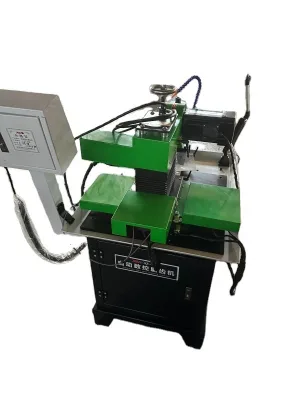
Comprehensive Sourcing Guide
Strategic Sourcing Guide for Automatic TCT Carbide Grinding Machines
Understanding the Technical Landscape of Automated Grinding Solutions
The procurement of an automatic TCT (Tungsten Carbide Tipped) carbide grinding machine requires a precise understanding of the specific mechanical configurations and operational parameters available in the current market. These machines are engineered to sharpen and restore the cutting edges of saw blades and tooling that feature carbide tips, a process that demands high precision to maintain cutting efficiency and tool life. The core technology involves automated systems capable of handling complex geometries, including the top angle, hook angle, and face bevel angle, which are critical for the performance of the final product.
Buyers must first distinguish between the various grinder types listed in the supply chain. The market offers distinct configurations such as the End Cylindrical Grinder, Universal Cylindrical Grinder, and Plunge Cylindrical Grinder. Each type serves a specific niche in the manufacturing workflow. For instance, the Universal Cylindrical Grinder is often preferred for its versatility in handling diverse workpiece geometries, while the Plunge Cylindrical Grinder may be selected for specific depth-cutting applications. Furthermore, the classification of the machine as a Surface Grinding Machine or a Tool Grinding Machine dictates the primary function. The specific model designations, such as QH650, CM650, QH650TF, and TF650, indicate variations in capacity and feature sets. The TF650, for example, is explicitly identified as a "Latest Saw Blade Grinding Machine," suggesting a focus on modern efficiency for saw blade applications.
The automation level is a critical differentiator. The "Automatic Grade" and "CNC System: Automated" attributes confirm that these machines utilize computer numerical control to execute grinding cycles with minimal human intervention. This automation extends to the controlling mode, which is consistently listed as CNC, ensuring repeatable accuracy. The grinding process itself targets specific surfaces, such as "Teeth Top and Face," which are the primary wear points on TCT blades. The machine's ability to handle a wide range of saw diameters, specifically from 110mm to 700mm, and bore diameters between 12mm and 120mm, highlights the flexibility required for a broad spectrum of industrial sawing tasks. The wheel speed, typically ranging from 4000 to 5000 revolutions per minute, and the grinding speed of 1 to 20mm per second, are operational parameters that buyers must verify against their specific production throughput requirements.
Precision Metrics and Operational Specifications
When evaluating the technical capabilities of an Automatic TCT Carbide Grinding Machine, precision is the paramount metric. The market data indicates a range of precision capabilities, with specific models claiming "High Precision" or standard "Precision" levels. Numerical accuracy is often expressed in microns, with observed values such as ≤0.02m and <0.025. It is essential for buyers to understand that these figures represent the tolerance levels achievable under optimal conditions. The "Accuracy" attribute of ≤0.02m suggests a high degree of repeatability, which is vital for maintaining the sharpness and balance of the saw blade.
The physical dimensions of the machine and its components are equally important for facility planning. The standard dimensions for these units vary, with examples including 1560mm in length, 950mm in width, and 2050mm in height, or alternative configurations like 1950mm by 1100mm by 1950mm. The weight of the machine, such as the 1600kg observed in specific models, impacts the foundation requirements of the installation site. Heavy machinery requires a reinforced floor to absorb vibrations and maintain stability during high-speed grinding operations.
The grinding wheel specifications are another critical area of technical assessment. The wheel size is a standard specification, with 125mm by 32mm being a common dimension. The wheel speed of 4000 to 5000r/Min is a standard operating range that must be matched with the material being ground. The angles of the grinding process are highly configurable. The hook angle can be adjusted from -27 to 0 degrees, the top angle from 8 to 30 degrees, the face bevel angle from -30 to 30 degrees, and the top chamfer angle from -45 to 45 degrees. These ranges allow the machine to accommodate various saw blade designs, from those requiring aggressive cutting angles to those needing fine finishing. The power consumption, observed in the range of 3.5kw to 4kw, indicates the energy requirements for the motor and control systems. Buyers should ensure their facility's electrical infrastructure can support a Three-Phase Five-Wire System (380V+220V) to safely operate these high-power industrial units.
Compliance, Certification, and Safety Standards
In the realm of industrial machinery, compliance with international standards and certifications is a non-negotiable aspect of the procurement process. The supply data indicates that products are available with specific certifications, including ISO GS and ISO CE. These certifications serve as indicators that the manufacturer has adhered to certain quality management and safety protocols. The presence of ISO CE certification suggests compliance with European safety directives, which is often a prerequisite for exporting machinery to international markets. Similarly, ISO GS certification points to adherence to specific quality assurance frameworks.
However, buyers must exercise caution when interpreting these certifications. While the data lists "ISO 9001" and "ISO9001:2015" as background standards, these should not be assumed to be present on every unit without explicit verification. The distinction between the machine's certification and the manufacturer's quality management system is crucial. A machine may be built by a company with ISO 9001 certification, but the specific unit sold must carry its own compliance marks, such as the CE mark, to be legally sold and operated in regulated jurisdictions.
Safety is intrinsically linked to these certifications. The automated nature of the machine, combined with high-speed rotating wheels and powerful motors, necessitates robust safety features. Buyers should verify that the machine includes emergency stop mechanisms, protective guards, and interlock systems that prevent operation when access doors are open. The "Video Outgoing-Inspection: Support" attribute is a valuable feature, indicating that the supplier provides visual documentation of the quality control process before shipment. This allows the buyer to verify the condition of the machine and the accuracy of its assembly prior to delivery.
The origin of the machinery, identified as China, is a significant factor in the supply chain. While this location is a major hub for manufacturing, it requires buyers to be diligent in verifying the specific factory's compliance record. The "Customization: Available" attribute suggests that buyers can request modifications to meet local safety standards or specific operational needs, which is a strong indicator of a flexible and responsive supplier.
Cost Drivers and Procurement Economics
The pricing structure for automatic TCT carbide grinding machines is influenced by a complex interplay of factors, including the level of automation, precision capabilities, and the specific model configuration. The observed price range in the market is vast, spanning from $0.5 to $79,999. This wide disparity indicates that the market includes everything from basic components or smaller auxiliary units to fully integrated, high-end industrial systems. For a complete automatic grinding machine, the price will likely fall in the higher end of this spectrum, driven by the inclusion of CNC systems, high-precision components, and advanced safety features.
The Minimum Order Quantity (MOQ) is another economic factor to consider. The observed MOQ range of 1 to 100 units suggests flexibility in purchasing. A buyer seeking a single unit for a pilot project or a small workshop can likely find suppliers with an MOQ of 1. Conversely, larger industrial buyers looking to equip multiple production lines may benefit from negotiating bulk pricing with an MOQ closer to 100. The "Customization: Available" attribute also plays a role in cost. Customized configurations, such as specific voltage requirements or unique wheel sizes, may incur additional costs compared to standard off-the-shelf models.
Packaging is a logistical cost driver that should not be overlooked. The observed packing methods include "Wooden Case" and "PE Bag and Wooden Cases." Wooden cases provide superior protection for heavy machinery during international shipping, reducing the risk of damage. However, this adds to the overall weight and volume of the shipment, potentially increasing freight costs. Buyers should factor in the cost of unpacking and disposal of the wooden packaging materials at their destination.
The power consumption of the machine, ranging from 3.5kw to 4kw, is a recurring operational cost. While the initial purchase price is a one-time expense, the energy cost over the lifespan of the machine can be significant. Buyers should calculate the total cost of ownership (TCO) by estimating the energy consumption based on their operating hours and local electricity rates. The "Speed: 3.5-20s/Tip" attribute indicates the cycle time, which directly impacts the throughput and, consequently, the return on investment. A faster cycle time allows for higher production volumes, potentially justifying a higher initial purchase price.
Typical Applications and Industry Use Cases
Automatic TCT carbide grinding machines are designed for a diverse range of industrial applications, primarily centered around the maintenance and production of cutting tools. The most common application is the sharpening of saw blades used in woodworking, metal cutting, and plastic processing. The ability to grind the "Teeth Top and Face" makes these machines ideal for restoring the cutting edge of circular saws, band saws, and other rotating cutting tools. The specific range of saw diameters from 110mm to 700mm allows these machines to handle everything from small hand-held saws to large industrial circular saws used in lumber mills.
Beyond saw blades, these machines are also used for tool grinding applications. The classification of the machine as a "Tool Grinding Machine" and "Sharpening Machine: Tool Grinding" suggests versatility in handling various types of cutting tools, including drills, reamers, and milling cutters. The adjustable angles for hook, top, and bevel allow for the customization of tool geometries to suit specific material cutting requirements. For example, a different hook angle might be required for cutting soft wood versus hard metal.
The "Cylindrical Grinder Type" variations, such as End, Universal, and Plunge, indicate specialized applications. End cylindrical grinders are often used for grinding the ends of shafts or gears, while universal grinders offer a broader range of applications. The "Processing Object: Gear" attribute confirms that these machines can also be used for gear manufacturing and repair, adding to their versatility in the automotive and machinery manufacturing sectors.
The "New" condition of the products listed suggests that these are modern machines designed for current production standards. The "Latest Saw Blade Grinding Machine" designation for the TF650 model implies that it incorporates recent technological advancements, such as improved control systems or enhanced precision, making it suitable for high-volume, high-quality production environments. Buyers in industries requiring tight tolerances, such as aerospace or precision engineering, will find these machines particularly valuable due to the "High Precision" and "Accuracy: ≤0.02m" specifications.
Supplier Evaluation and Quality Assurance Protocols
Evaluating a supplier for automatic TCT carbide grinding machines requires a multi-faceted approach that goes beyond the basic product specifications. The "Customization: Available" attribute is a strong indicator of a supplier's willingness to collaborate and adapt to specific buyer needs. Buyers should engage with suppliers to discuss their customization capabilities, including the ability to modify the CNC system, adjust the voltage requirements, or alter the wheel specifications.
The "Video Outgoing-Inspection: Support" feature is a critical quality assurance tool. It allows buyers to conduct a remote inspection of the machine before it is shipped. This inspection should verify the physical condition of the machine, the functionality of the CNC controls, and the accuracy of the grinding angles. Buyers should request detailed video footage that covers the machine from multiple angles, including close-ups of the grinding wheel, the control panel, and the safety guards.
The origin of the machine, China, is a significant factor in the supply chain. Buyers should verify the supplier's reputation and track record in the international market. While the "ISO GS" and "ISO CE" certifications provide a baseline of compliance, buyers should also request references from other international clients who have purchased similar machines. The "Weight: 1600kg" and the "Wooden Case" packaging indicate that the machine is heavy and requires careful handling. Buyers should ensure that the supplier has experience in packaging and shipping heavy industrial equipment to minimize the risk of damage during transit.
The "Condition: New" attribute confirms that the machines are not refurbished or used. However, buyers should verify the manufacturing date and the warranty terms. A reputable supplier should offer a comprehensive warranty that covers the CNC system, the motor, and the structural components. The "Accuracy: ≤0.02m" and "Grinding Precison: <0.025" specifications should be backed by a guarantee of performance. Buyers should request test reports or calibration certificates that demonstrate the machine's ability to meet these precision standards.
Long-Term Procurement and Maintenance Considerations
The long-term success of an Automatic TCT Carbide Grinding Machine depends on effective maintenance and the availability of spare parts. The "Grinding Wheel" is a consumable component that will require regular replacement. Buyers should inquire about the availability of replacement wheels and the recommended replacement schedule. The "Wheel Size: 125mm*32mm" and "Wheel Speed: 4000~5000r/Min" are standard specifications that should be easily sourced from third-party suppliers, but it is advisable to purchase from the original manufacturer to ensure compatibility.
The "CNC System: Automated" nature of the machine implies that software updates and technical support will be essential. Buyers should ensure that the supplier provides ongoing software support and training for their operators. The "Three-Phase Five-Wire System (380V+220V)" voltage requirement is a standard industrial configuration, but buyers should verify that their facility's electrical infrastructure is compatible. The "Power: 3.5kw" to "4kw" range indicates a moderate energy consumption, but the efficiency of the machine will depend on the quality of the components and the maintenance practices.
The "Standard: 1560L950W2050H" and "Standard: 1950mm1100mm1950mm" dimensions highlight the importance of space planning. Buyers should ensure that their facility has sufficient space for the machine, including room for maintenance access and material handling. The "PE Bag and Wooden Cases" packaging suggests that the machine is well-protected, but buyers should plan for the storage and disposal of the packaging materials.
Finally, the "Customization: Available" attribute offers a pathway for future upgrades. As production requirements change, buyers may need to modify the machine's capabilities. A supplier that offers customization is more likely to support these future needs, ensuring that the machine remains a valuable asset for the long term. Buyers should establish a long-term relationship with the supplier to facilitate ongoing support, spare parts procurement, and potential upgrades. This strategic approach ensures that the investment in the Automatic TCT Carbide Grinding Machine yields maximum value over its operational lifespan.
FAQs
What precision levels are available for Automatic TCT Carbide Grinding Machine models?
Models offer precision ranging from standard to high precision with accuracy values as tight as 0.02mm. Some units specify grinding precision under 0.025mm to ensure sharp cutting edges for saw blades.
Which certifications do Automatic TCT Carbide Grinding Machine manufacturers provide?
Products are available with ISO GS and ISO CE certifications to meet international safety and quality standards. Buyers should verify specific unit markings as background standards like ISO 9001 may not apply to every individual machine.
How can I find Automatic TCT Carbide Grinding Machine suppliers with customization options?
Customization is available for these machines to adapt to specific operational needs or local voltage requirements. Buyers can request modifications for wheel sizes, angles, or control systems directly from the supplier.
What is the typical power consumption for an Automatic TCT Carbide Grinding Machine?
Power ratings typically range from 3.5kw to 4kw depending on the specific model configuration. These units require a Three-Phase Five-Wire System operating at 380V plus 220V for safe operation.
Can I source automatic tct carbide grinding machines with a minimum order of one unit?
Yes, the market supports a minimum order quantity of one unit for single purchases or pilot projects. Bulk orders may involve higher quantities up to 100 units for better pricing or logistics efficiency.
What grinding angles can an Automatic TCT Carbide Grinding Machine adjust?
The machine adjusts hook angles from -27 to 0 degrees and top angles from 8 to 30 degrees. Additional settings include face bevel angles between -30 and 30 degrees and top chamfer angles from -45 to 45 degrees.