Source Automatic Tattoo Ink Mixer for cosmetic, body art, skin care
Find and compare 30 Automatic Tattoo Ink Mixer options for cosmetic, body art, and skin care applications. Buyers can evaluate models with varying materials, battery capacities, and stroke settings to match specific workflow needs.
Key considerations
Products List


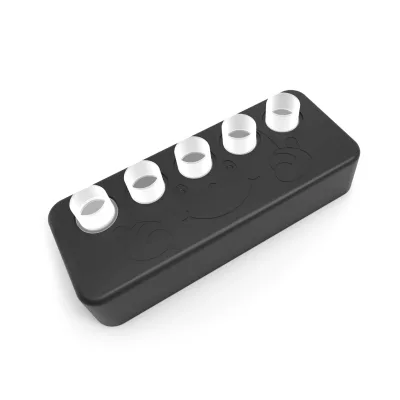
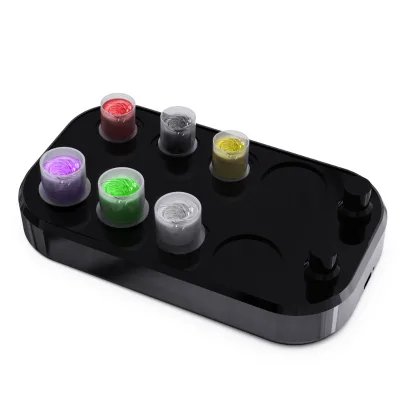
Tattoo Ink Pigment Magnetic Mixer Automatic Ink Stirring Machine Ink Cup Mixer
$26.00 - $34.73
MOQ: 1 Pieces


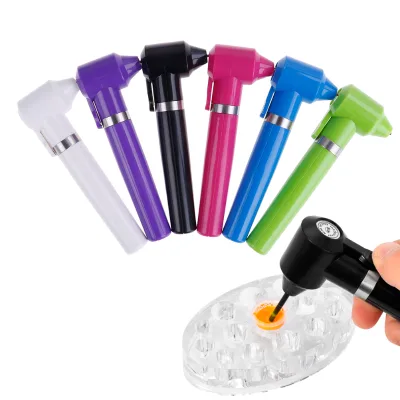
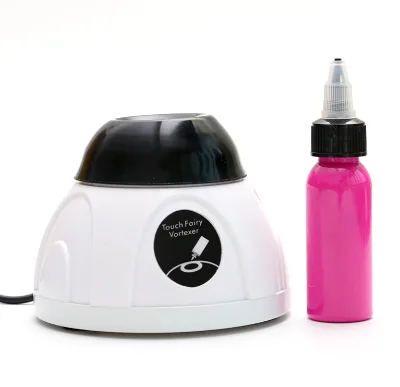


Professional Makeup Tool Electric Tattoo Ink Mixer Shake Pigment Agitator
$16.30 - $16.90
MOQ: 10 Pieces


Comprehensive Sourcing Guide
Strategic Sourcing Guide for Automatic Tattoo Ink Mixers
Understanding the Product Category and Technical Variants
The Automatic Tattoo Ink Mixer represents a specialized category of equipment designed to streamline the preparation of pigments for cosmetic tattooing, body art, and skin care applications. Unlike manual stirring methods, these devices utilize mechanical agitation to ensure consistent pigment dispersion, which is critical for color accuracy and client safety. The market presents a diverse array of units, ranging from compact handheld mixers to larger benchtop systems.
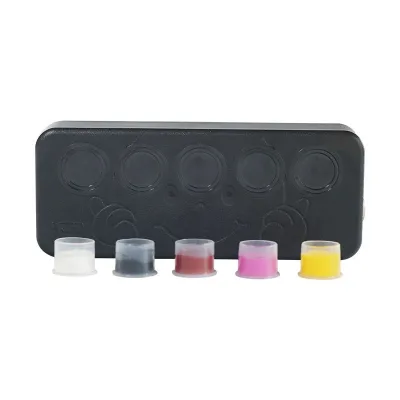
Technical specifications vary significantly across available models. For instance, some units are constructed with a plastic housing, weighing approximately 0.65kg, while others may utilize metal components. A specific model identified in the current market data, the "Five-star magnetic ink mixer," features a black finish and a weight of 0.65kg. In contrast, other devices in the broader tattoo equipment ecosystem, such as tattoo machines, utilize materials like stainless steel or aluminum, highlighting the material diversity within the sector.
When evaluating an automatic ink mixer, buyers must scrutinize the power source and operational voltage. Some devices operate on a low-voltage battery system, such as a 3.7V or 2200mAh battery configuration, offering portability. Others may require a wider operating voltage range, such as 3-5V or 4-12V, to accommodate different power adapters or battery types. The working time is another critical specification; certain units advertise a working duration of 5-6 hours per battery charge, while charging times can range from 2.5 hours to longer periods depending on the battery capacity.
The physical dimensions of the mixer are equally important for studio integration. Compact units may measure around 13x8x2.2cm, whereas larger or differently configured models might reach dimensions of 20.5x9.2x3cm. Buyers should verify that the device's footprint aligns with their workspace constraints. Furthermore, the stroke or mixing mechanism, often found in related tattoo machines with adjustable strokes ranging from 2.4mm to 4.2mm, indicates the precision of the mechanical action, though this specific metric is more commonly associated with the tattoo gun itself rather than the mixer.
Compliance, Safety Standards, and Material Verification
In the B2B procurement of equipment used for cosmetic and body art applications, compliance with safety standards is paramount. The primary concern is ensuring that all materials coming into contact with inks and pigments are non-toxic and chemically inert. The supplied data indicates that some products are constructed from plastic, while others in the broader category utilize stainless steel or aluminum. For ink mixers, the material composition must be verified to ensure it does not react with the chemical components of tattoo inks, which can vary widely in formulation.
Buyers must also consider the standardization of the product. While some data points reference specific standards like "1.5g" or "136*38mm," these often refer to weight or dimensional specifications rather than formal safety certifications like ISO or CE. It is crucial for procurement teams to request explicit documentation regarding material safety certifications. The absence of a listed certification in a product description should not be interpreted as a lack of compliance but rather as a requirement for the buyer to verify this information directly with the supplier.
Disposable versus non-disposable attributes also play a role in compliance. While some tattoo machines are categorized as non-disposable, the ink mixer itself may have components that require regular replacement or cleaning. If a product is labeled as "Disposable," it implies a single-use or limited-use lifecycle, which impacts waste management and cost-per-use calculations. Conversely, non-disposable units require rigorous sterilization protocols to meet health and safety regulations in professional studios.
The origin of the product, often listed as Zhejiang or China, provides context for the manufacturing environment but does not guarantee specific regulatory adherence. Buyers should verify that the supplier adheres to the import regulations of their target market, including electrical safety standards for battery-operated devices. The battery capacity, such as 1800 mAh or 2200 mAh, must also comply with international shipping regulations for lithium-ion batteries, which often dictate specific packaging and labeling requirements for air and sea freight.
Cost Drivers and Pricing Dynamics
The pricing of automatic tattoo ink mixers is influenced by a complex interplay of factors, including material quality, technological sophistication, and order volume. The observed price range in the market spans from $0.73 to $850, indicating a vast disparity between entry-level and high-end professional units. This wide range suggests that price is not solely a function of the device's core function but is heavily dependent on build quality, brand positioning, and included accessories.
Material costs are a primary driver. Units constructed with stainless steel or high-grade aluminum typically command higher prices than those made from standard plastic. The "Five-star magnetic ink mixer," described as plastic, likely falls on the lower end of the cost spectrum compared to metal-bodied alternatives. Additionally, the inclusion of advanced features, such as high-capacity batteries with long working times (e.g., 5-6 hours), can significantly increase the unit cost.
Minimum Order Quantity (MOQ) requirements also impact the effective cost per unit. Data indicates MOQs ranging from 1 piece to 50 pieces. Suppliers with a high MOQ, such as 50 PCS, often offer lower per-unit pricing for bulk buyers, making them suitable for large distributors or chains. Conversely, suppliers accepting single-piece orders (1 PCS) cater to individual buyers or small studios but may charge a premium due to the lack of economies of scale.
Shipping and packaging costs are additional variables. Products are typically packed in boxes and shipped via express, air, sea, or train. The choice of shipping method, influenced by the weight of the unit (ranging from 0.5kg to 0.65kg), will affect the total landed cost. For heavier or bulkier items, sea freight may be more economical, while urgent orders may require air or express shipping, increasing the overall expense.
Typical Applications and Operational Context
Automatic tattoo ink mixers are primarily designed for use in professional environments where precision and efficiency are critical. The core applications include cosmetic tattooing, body art, and skin care procedures. In these settings, the consistent mixing of pigments is essential to prevent color separation, ensure uniform saturation, and maintain the integrity of the ink formulation.
For cosmetic tattooing, such as microblading or permanent makeup, the mixer ensures that pigments are thoroughly blended before application, reducing the risk of uneven color results. In body art studios, where a wide variety of ink colors and brands are used, the mixer allows artists to quickly prepare custom shades without the labor-intensive process of manual stirring. This efficiency is particularly valuable in high-volume environments where time is a critical factor.
The portability of battery-operated mixers makes them suitable for mobile tattoo artists or pop-up events. Devices with a working time of 5-6 hours and a weight of around 0.6kg offer the flexibility to operate away from a fixed power source. However, for stationary studios, plug-in models with higher power output may be preferred for continuous use.
The operational context also dictates the need for specific features. For instance, the "Easy Operation" and "Low Noise" advantages listed for related tattoo machines are desirable traits for ink mixers as well, ensuring a comfortable working environment for the artist and minimizing distraction for the client. The ability to customize the product, such as through OEM services, allows studios to brand the equipment with their own logos, enhancing professional identity.
Supplier Evaluation and Procurement Strategy
Evaluating suppliers for automatic tattoo ink mixers requires a rigorous approach to ensure reliability and product quality. Buyers should prioritize suppliers who offer OEM services, as this indicates a level of manufacturing capability and flexibility. The acceptance of OEM orders suggests that the supplier can customize product attributes, such as color (e.g., Green, Black, Blue) or packaging, to meet specific buyer requirements.
The origin of the product, often Zhejiang or China, provides a starting point for supplier research, but buyers must conduct due diligence beyond geographic location. Key evaluation criteria include the supplier's response time, communication clarity, and willingness to provide detailed product specifications. The availability of a specific product model, such as the "JBQ-001" or "SL-M2-E96," should be verified, along with the consistency of the specifications provided.
MOQ flexibility is another critical factor. Suppliers offering an MOQ of 1 PCS are ideal for testing new products or for small-scale buyers, while those with a 50 PCS MOQ are better suited for bulk procurement. Buyers should negotiate terms that align with their inventory needs, balancing the cost benefits of bulk orders against the risk of overstocking.
Shipping and delivery times are also essential considerations. The observed delivery time of 1-7 working days suggests a relatively fast turnaround for certain suppliers, but this can vary based on the shipping method chosen. Buyers should confirm the lead time for their specific order size and destination to ensure timely delivery. The availability of multiple shipping options, including DHL, EMS, UPS, and FedEx, provides flexibility in managing logistics.
Quality Control and Long-Term Procurement Considerations
Implementing a robust quality control (QC) process is essential for mitigating risks associated with the procurement of automatic tattoo ink mixers. Given the wide range of observed specifications, buyers should establish clear acceptance criteria before placing orders. This includes verifying the physical dimensions, weight, and material composition against the product description. For example, if a product is listed as weighing 0.65kg, the received units should fall within an acceptable tolerance range.
Battery performance is a common point of failure in electronic devices. Buyers should test the charging time and working time of the batteries to ensure they meet the advertised specifications of 2.5 hours for charging and 5-6 hours for operation. Inconsistent battery performance can lead to device failure during critical procedures, necessitating a reliable QC protocol that includes functional testing of a sample batch.
Long-term procurement considerations involve assessing the durability and maintenance requirements of the equipment. Non-disposable units require regular cleaning and potential part replacement, so buyers should inquire about the availability of spare parts and the ease of maintenance. The "Box Package" and "Send by Express" shipping methods suggest that the products are designed for safe transport, but buyers should also consider the long-term storage conditions to prevent damage to the battery or internal components.
Finally, buyers should monitor the market for changes in standards and regulations. As the industry evolves, new safety standards or material restrictions may be introduced. Maintaining a relationship with a supplier who is responsive to regulatory changes ensures that the procurement strategy remains compliant and effective over time. By focusing on these quality and long-term factors, buyers can secure a reliable supply of automatic tattoo ink mixers that meet the demands of professional cosmetic and body art applications.
FAQs
What materials are used for automatic tattoo ink mixers?
These devices are commonly constructed from plastic, stainless steel, or aluminum. Buyers should verify the specific material composition to ensure chemical inertness and durability for professional studio use.
Can these mixers operate on battery power?
Yes, many models feature built-in batteries with capacities like 1800 mAh or 2200 mAh. These units typically offer a working time of 5-6 hours per charge, supporting portable applications.
Which customization options are available for these products?
OEM customization is accepted for many models, allowing buyers to specify colors like green, black, or blue. Suppliers can often tailor packaging and branding to meet specific studio requirements.
How does the minimum order quantity affect sourcing?
Minimum order quantities vary significantly, ranging from 1 piece to 50 pieces depending on the supplier. Lower MOQs suit small studios, while higher MOQs often provide better per-unit pricing for bulk buyers.
What is the typical delivery time for these mixers?
Delivery times can range from 1 to 7 working days for certain suppliers. Actual lead times depend on the shipping method chosen, such as express, air, sea, or train freight.
Are these devices suitable for cosmetic and body art applications?
Yes, they are explicitly designed for cosmetic, body art, and skin care usage. The mechanical agitation ensures consistent pigment dispersion required for high-quality color results in professional procedures.