Source Automobile Snap Ring for Axles, Shafts, and Seals
Compare 30 verified listings for Automobile Snap Ring options including steel, stainless steel, and carbon steel variants. Buyers can evaluate specifications like DIN standards, surface treatments, and MOQs to find suitable parts for axle assemblies and sealing applications.
Key considerations
Products List


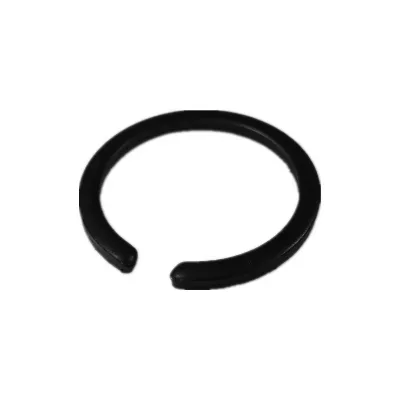


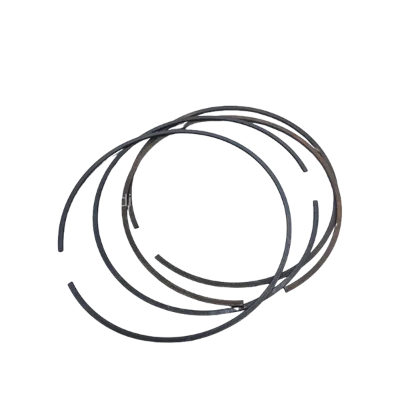

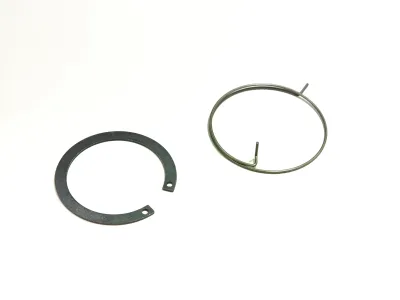


Comprehensive Sourcing Guide
Strategic Sourcing Guide for Automobile Snap Rings
Understanding Technical Specifications and Material Variability
When sourcing automobile snap rings, buyers must navigate a complex landscape of material compositions and dimensional standards that directly impact component performance. The provided product data reveals a significant divergence in material specifications, ranging from Carbon Steel to Stainless Steel and general Steel variants. This variability is not merely a listing inconsistency but reflects the distinct operational requirements of different automotive subsystems. Carbon Steel components, often treated with Zinc Plating or Self Finish and Oil, are typically selected for high-strength applications where cost-efficiency is paramount, such as in general suspension or transmission housings. Conversely, Stainless Steel options are critical for environments demanding corrosion resistance, such as under-hood components exposed to moisture or chemical agents.
The dimensional specifications further complicate the sourcing process. The data indicates a vast range of available models, including DIN471, DIN7993A, and custom designations like XZY226 and hld-snap01. These model numbers often correspond to specific industry standards, yet the listings also reference "Unstandard" or "according to buyer's request" configurations. This suggests that while standard DIN and GB/T specifications exist, a significant portion of the market relies on proprietary or OEM-specific dimensions. Buyers must verify the exact model number against their engineering drawings, as the difference between a DIN471 external ring and a DIN7993A internal ring dictates the retention method and load distribution. Furthermore, the surface finishing processes listed, such as Gold Plated, Zinc Plated, and Self Finish with Oil, serve specific functional roles. Gold plating may indicate a requirement for low friction or specific electrical conductivity, while oil finishes are standard for preventing rust during storage and initial assembly.
Compliance Framework and Certification Verification
In the automotive sector, compliance is not optional; it is a prerequisite for supply chain integration. The observed product data lists several certifications, including ISO, CE, RoHS, and GS. However, the presence of these certifications in a listing does not guarantee that every SKU meets these standards. Buyers must treat these as potential attributes that require verification rather than absolute guarantees. The ISO certification is particularly critical, as it indicates adherence to international quality management systems, which is often a baseline requirement for Tier 1 automotive suppliers. The CE marking suggests compliance with European health, safety, and environmental protection standards, which is vital for components destined for the European market.
RoHS compliance is another non-negotiable factor for modern automotive electronics and mechanical assemblies, ensuring that the snap rings do not contain restricted hazardous substances. The data also references specific Chinese National Standards (GB/T), such as GB/T884, GB/T20057, and GB/T886. These standards define the geometric tolerances, material properties, and surface treatments for snap rings. For instance, GB/T884 specifically addresses surface finishing, while GB/T20057 relates to usage in automobile and industrial contexts. A robust sourcing strategy requires cross-referencing the supplier's claimed certifications with the specific GB/T or DIN standard applicable to the part number. Relying solely on a generic "ISO" claim without verifying the specific standard number (e.g., ISO 9001) can lead to compliance gaps during customer audits.
Cost Drivers and Economic Factors in Procurement
The economic landscape of snap ring procurement is influenced by several interconnected factors, primarily material costs, surface treatment complexity, and order volume. The observed price range of 0.01 to 999 USD highlights the extreme variance in unit costs, which is driven by the material type and the scale of the order. Carbon Steel components generally offer a lower cost base compared to Stainless Steel, but the added value of surface treatments like Gold Plating or specialized Oil finishes can significantly increase the unit price. Buyers must understand that the lowest listed price often corresponds to the most basic configuration (e.g., Carbon Steel, Zinc Plated, Standard Packaging), while premium applications require higher investment.
Order volume plays a decisive role in cost optimization. The data indicates a Minimum Order Quantity (MOQ) range of 1 to 10,000 units, with specific listings citing an MOQ of 300kgs. This wide range suggests that suppliers are willing to accommodate small-batch prototyping as well as high-volume production runs. However, the economic efficiency is typically realized at higher volumes. The packaging methods, ranging from "Carton+Pallet" to "Bulk or Carton" and "Half a Pack," also impact the landed cost. Bulk packaging reduces material and labor costs for the supplier, which can be passed on to the buyer, whereas individual carton packaging adds to the unit price but may be necessary for automated assembly lines. Buyers should negotiate based on their projected annual consumption to secure favorable tiered pricing structures.
Typical Applications and Functional Requirements
Automobile snap rings serve critical functions across various vehicle systems, primarily acting as retaining devices for shafts, bearings, and gears. The observed product attributes highlight applications in "Automobile" and "Industrial" sectors, with specific mentions of "Shaft Sealing" and "Fixture&Sealing" effects. This indicates that these components are not merely passive retainers but often play a role in the sealing integrity of the assembly. In transmission systems, snap rings secure gears and bearings in place, absorbing axial loads that could otherwise cause component displacement. The "Single Axle" and "Max Payload: 2000kg" attributes found in the data suggest that some listed products are designed for heavy-duty applications, potentially in commercial vehicle suspensions or heavy machinery integrated into automotive logistics.
The "Effect: Fixture&Sealing" attribute is particularly noteworthy, implying that certain snap rings are engineered to work in conjunction with seals to prevent fluid leakage or contamination ingress. This dual functionality requires precise dimensional tolerances and material integrity. For example, a snap ring used in a differential housing must withstand high torque and vibration while maintaining a seal against gear oil. The "Combination Washer Structure: B Type" and "Spring Washer Type: Standard" further illustrate the diversity of designs available. Buyers must match the specific application requirements—such as the need for high axial load capacity versus the need for corrosion resistance—to the correct snap ring configuration. Misalignment between the component's design and the application's stress profile can lead to premature failure and costly recalls.
Supplier Evaluation and Operational Capabilities
Evaluating a supplier for automobile snap rings requires a deep dive into their operational capabilities, customization options, and logistical reliability. The data confirms that "OEM/ODM" and "Customization" services are available, indicating that suppliers can produce parts to specific buyer drawings or modify existing designs. This flexibility is essential for the automotive industry, where proprietary component designs are common. However, buyers must verify the supplier's capacity to handle these custom requests, including their engineering support and tooling capabilities. The "Service: OEM/ODM" attribute suggests a willingness to collaborate, but the extent of this service varies by supplier.
Logistical factors are equally critical. The observed delivery times range from 7 to 15 days, with specific mentions of a "Delivery Date: 15 Days." This lead time is relatively short, suggesting efficient production cycles, but buyers must account for potential delays in international shipping. The origin locations, specifically "Jinan" and "Wenzhou," are known manufacturing hubs in China, but the diversity of origins implies a fragmented supply chain. Buyers should verify the specific factory location to assess the proximity to ports and the reliability of local logistics infrastructure. Additionally, the "prod_packing" options, which include "Carton; Pallet; Barrel; Container," indicate that suppliers offer various shipping configurations. Ensuring that the packaging is robust enough to prevent damage during transit is vital, especially for precision components like snap rings that can be easily deformed.
Quality Control and Long-Term Procurement Considerations
Maintaining consistent quality in snap ring procurement requires a rigorous quality control (QC) framework. The data lists various standards, including "Standard," "Unstandard," and specific GB/T references. Buyers must establish a clear QC protocol that verifies the material composition, dimensional accuracy, and surface treatment quality against the agreed-upon specifications. The presence of "ISO, GS, CE" certifications is a positive indicator, but on-site audits or third-party testing are often necessary to validate these claims. For instance, verifying the "Zinc Plated" thickness or the "Self Finish and Oil" application ensures that the component meets the required corrosion resistance and friction properties.
Long-term procurement considerations extend beyond the initial purchase. The "Customized" nature of many products means that the supply chain relationship is often long-term. Buyers should prioritize suppliers who demonstrate stability in their production processes and a commitment to continuous improvement. The ability to scale production from small batches to 10,000 units without compromising quality is a key differentiator. Furthermore, the "Standard: GB/T20057-GB/T886-GB/T884..." listing suggests that some suppliers adhere to a comprehensive set of standards, which is beneficial for maintaining consistency across different product lines. Buyers should also consider the supplier's ability to provide traceability data, ensuring that every batch of snap rings can be traced back to its raw material source and production batch. This level of transparency is crucial for automotive manufacturers facing strict regulatory requirements and the need for rapid root-cause analysis in the event of a quality issue.
Comparative Analysis of Product Attributes
To facilitate decision-making, the following table summarizes the key attributes observed in the product data, highlighting the variability buyers must navigate.
| Attribute Category | Observed Variations | Sourcing Implication |
|---|---|---|
| Material | Carbon Steel, Stainless Steel, General Steel | Select based on corrosion resistance and load requirements. |
| Standards | DIN471, DIN7993A, GB/T884, GB/T20057, Unstandard | Verify exact standard against engineering drawings; avoid generic assumptions. |
| Surface Finish | Zinc Plated, Gold Plated, Self Finish & Oil | Match finish to environmental exposure (e.g., oil for storage, zinc for rust). |
| Packaging | Carton+Pallet, Bulk, Barrel, Half a Pack | Align packaging with automated assembly needs and shipping constraints. |
| Certifications | ISO, CE, RoHS, GS | Require specific certificate copies; do not rely on listing claims alone. |
| MOQ | 1 to 10,000 units; 300kgs specific | Negotiate tiered pricing based on volume commitments. |
| Lead Time | 7-15 Days | Plan inventory buffers; verify if lead time includes shipping. |
| Origin | China (Jinan, Wenzhou) | Assess logistics routes and potential tariffs based on specific city. |
This comparison underscores the necessity of a detailed specification sheet before engaging with suppliers. The diversity in attributes means that a "one-size-fits-all" approach to sourcing is ineffective. Buyers must clearly define their technical requirements, including material, standard, and finish, to ensure they receive quotes that are directly comparable. By adhering to a disciplined evaluation process and leveraging the available data, procurement teams can secure high-quality automobile snap rings that meet the rigorous demands of the automotive industry.
FAQs
What materials are available for automobile snap rings?
Automobile snap rings are available in Carbon Steel, Stainless Steel, and general Steel. Buyers must select the material based on specific corrosion resistance needs and load requirements, as Carbon Steel is cost-effective while Stainless Steel offers superior durability in harsh environments.
Which certifications do these snap ring products hold?
Products commonly hold ISO, CE, RoHS, and GS certifications. Buyers should verify that the specific batch meets these standards, as ISO indicates quality management adherence while CE and RoHS ensure compliance with European safety and environmental regulations for automotive applications.
How long is the delivery time for custom orders?
The standard delivery time ranges from 7 to 15 days. This timeline applies to most orders, but custom requests or large volumes may require specific scheduling, so buyers should confirm the exact date with the supplier before finalizing the purchase agreement.
Can suppliers provide OEM and ODM customization services?
Yes, suppliers accept OEM and ODM services with customization available. Buyers can request specific dimensions or designs, but they must provide detailed drawings or requirements to ensure the manufacturer can produce parts that meet their exact engineering specifications and standards.
What is the minimum order quantity for these parts?
The minimum order quantity ranges from 1 to 10,000 units depending on the supplier. Some listings specify an MOQ of 300 kilograms, so buyers should clarify the specific unit or weight requirement to ensure the order meets the supplier's production thresholds.
Where are the manufacturers of these snap rings located?
Manufacturers are primarily located in Jinan and Wenzhou, China. These regions are known manufacturing hubs, and buyers should verify the specific factory location to assess logistics efficiency and shipping costs when planning their supply chain for automotive components.
Which surface finishes are offered for these rings?
Surface finishes include Zinc Plated, Gold Plated, and Self Finish with Oil. The choice depends on the application, as oil finishes prevent rust during storage while plating offers specific corrosion resistance or low friction properties required for different automotive subsystems.