Find Balance Test Equipment with Controller Box for rotors, fans, and motors
Source 30 units of Balance Test Equipment with Controller Box for dynamic rotor balancing, fan assembly, and motor testing. Compare models like YLD series and LBC-1 with varying workpiece capacities and control systems to match your production needs.
Key considerations
Products List

Automatic Balance Testing Equipment for Dynamic Balancing Testing Equipment
$3000.00 - $10000.00
MOQ: 1 Sets


Racket Weight Balance Tester/Intelligent Control Racket Balance Testing Machine
$1200.00 - $2000.00
MOQ: 1 Pieces

Balancing Machine in Test Equipment
$1.00 - $2.00
MOQ: 1 Pieces
Shanghai Jianping Dynamic Balancing Machine Manufacturing Co., Ltd.

Rotor Balance Machine with Belt Drive
$1.00 - $2.00
MOQ: 1 Pieces
Shanghai Jianping Dynamic Balancing Machine Manufacturing Co., Ltd.


Balancing Machine with Ce Certificate
$1.00 - $2.00
MOQ: 1 Pieces
Shanghai Jianping Dynamic Balancing Machine Manufacturing Co., Ltd.
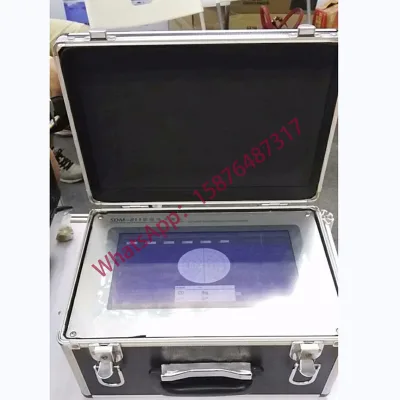


$150.00 - $500.00
MOQ: 1 Pieces

$150.00 - $500.00
MOQ: 1 Pieces


$150.00 - $500.00
MOQ: 1 Pieces
Comprehensive Sourcing Guide
Strategic Sourcing Guide for Balance Test Equipment with Controller Box
The procurement of balance test equipment with a controller box represents a critical investment for manufacturers seeking to ensure rotor integrity and operational safety. In the industrial sector, dynamic balancing is not merely a maintenance task but a fundamental quality assurance process that prevents catastrophic mechanical failure. Buyers entering this market must navigate a landscape defined by varying technical specifications, diverse control architectures, and strict compliance requirements. This guide provides a disciplined approach to sourcing, grounded in observable product attributes and verified industry standards, ensuring that procurement decisions are based on factual data rather than speculative claims.
Technical Architecture and Control Systems
The core of any effective balance test system lies in its control architecture and measurement precision. Modern units typically integrate a dedicated controller box that interfaces with the balancing machine to process data in real-time. When evaluating technical specifications, buyers should prioritize the type of control system employed. High-performance models often feature computer control systems, which allow for complex data analysis and automated correction processes. The interface is equally critical; advanced units may utilize a 3.5-inch color touch screen to facilitate intuitive operation, while others rely on digital displays that provide essential readouts.
Power requirements vary significantly depending on the scale of the equipment. While some compact units operate on standard AC220V power sources, larger industrial machines designed for heavy-duty applications frequently require AC380V inputs to sustain the necessary motor power, often rated around 1.1 Kw. The loading method is another distinguishing technical factor. Systems may employ dynamic load mechanisms or electronic load ways to simulate real-world operating conditions. Buyers must verify the maximum diameter of the workpiece the machine can accommodate, as this dictates the range of rotors that can be processed. Observed specifications in the market range from 500mm to 1200mm, with specific models capable of handling workpieces up to 700mm or 1200mm in diameter.
Furthermore, the accuracy of the balancing process is paramount. The minimum achievable residual unbalance is a key performance indicator, with high-grade units capable of achieving values as low as 3G.mm/Kg. The unbalance reduction rate, often exceeding 90%, indicates the machine's efficiency in correcting imbalances. The balance speed, measured in revolutions per minute (R/Min), typically spans a range of 250 to 1500, allowing for flexibility across different rotor types. The mass scope of the workpiece is another critical constraint, with many units designed for rotors weighing less than 900kg, while specific models may handle weights between 0-100Kg or 1000-2000Kg.
Compliance, Certification, and Standards Verification
In the realm of industrial machinery, compliance is not optional; it is a prerequisite for market entry and operational safety. When sourcing balance test equipment, buyers must rigorously verify the certifications held by the manufacturer. Trusted certifications such as CE, ISO, SGS, and BV are common indicators of a supplier's commitment to quality and safety standards. These certifications ensure that the equipment meets international safety regulations and quality management protocols. For instance, some suppliers explicitly list their adherence to ISO standards, which validates their quality control processes.
Product standards also play a vital role in defining the physical and operational parameters of the equipment. Dimensions and packaging standards are often specified to ensure safe transport and integration into existing facilities. Observed product standards include specific dimensional requirements such as 6306701600mm or 1100800740mm for larger units, while smaller devices may adhere to compact dimensions like 30.00cm * 20.00cm * 15.00cm. Packaging standards are equally important; equipment is typically shipped in wooden boxes that meet export requirements, fumigated wood boxes, or plywood cases to prevent damage during transit.
Buyers should also investigate the origin of the equipment. Many high-volume suppliers are located in China, with specific manufacturing hubs in regions like Shanghai. While the origin provides context for logistics and supply chain dynamics, it does not inherently guarantee quality. Instead, the focus should remain on the certifications and the specific standards the product claims to meet. The presence of a warranty, often lasting one year, serves as an additional layer of assurance regarding the manufacturer's confidence in their product's durability and performance.
Cost Drivers and Pricing Dynamics
Understanding the cost structure of balance test equipment is essential for budgeting and financial planning. The price of these machines is influenced by a multitude of factors, including the complexity of the control system, the maximum capacity of the workpiece, and the level of automation. The observed price range in the market is extensive, spanning from 1 USD to 35,000 USD, reflecting the diversity of available solutions from basic manual units to sophisticated automated systems.
Several specific attributes drive these costs. The inclusion of a computer control system and a high-resolution color touch screen typically increases the price due to the advanced electronics involved. Similarly, machines capable of handling larger workpieces with higher weight capacities, such as those exceeding 1000KN or accommodating workpieces up to 1200mm in diameter, command a premium. The power source and motor specifications also contribute to the overall cost; units requiring AC380V and higher motor power ratings are generally more expensive than those operating on standard AC220V.
The minimum order quantity (MOQ) is another significant factor in the total cost of ownership. While some suppliers offer flexible MOQs starting at just one set, others may have higher thresholds. The unit product gross weight, which can range from 50kg to over 700kg, impacts shipping costs and logistics planning. Buyers should consider the total landed cost, including freight, insurance, and customs duties, which can vary significantly based on the equipment's weight and dimensions. Additionally, the delivery time, which can be as short as 20 days for certain models, affects the urgency and overall timeline of the procurement process.
Typical Applications and Industry Use Cases
Balance test equipment with controller boxes serves a wide array of industries where rotational symmetry is critical for performance and safety. The primary application is in the manufacturing and maintenance of rotors for electric motors, pumps, fans, and turbines. In these sectors, even minor imbalances can lead to excessive vibration, premature wear, and potential system failure. The ability of these machines to reduce unbalance by 90% or more makes them indispensable for maintaining high operational standards.
Specific applications vary based on the machine's capacity and accuracy. Models with a maximum workpiece diameter of 500mm are often suitable for smaller components found in automotive or light machinery industries. Conversely, units capable of handling diameters up to 1200mm and weights approaching 900kg are essential for heavy industrial applications, such as large-scale generators and industrial fans. The factor accuracy of 0.02 and current accuracy of 0.5% are particularly relevant in precision manufacturing environments where tight tolerances are required.
The versatility of these machines is further enhanced by their ability to handle different loading methods and balance speeds. Whether the application requires dynamic loading for high-speed rotors or electronic loading for sensitive components, the right equipment can be selected to match the specific needs of the operation. The presence of a controller box allows for the integration of these machines into broader production lines, enabling automated data logging and quality control reporting.
Supplier Evaluation and Quality Assurance
Selecting the right supplier is as critical as selecting the right machine. Buyers should evaluate potential suppliers based on their transparency regarding product attributes and their ability to provide verifiable data. A reputable supplier will clearly list the product model, such as YLD-100A, YLD-200A, or LBC-1, along with detailed specifications for each unit. The availability of customization options is another positive indicator, suggesting that the supplier is flexible and responsive to specific buyer requirements.
Quality assurance processes should be a central part of the supplier evaluation. Buyers should request documentation that confirms the accuracy grade, specifically noting whether the control system is computer-controlled. The presence of a warranty, typically one year, is a standard expectation, but the terms and conditions should be carefully reviewed. Additionally, the number of packing units and the specific packaging materials used, such as export wood cases or fumigated wood boxes, should be verified to ensure the equipment arrives in pristine condition.
Suppliers should also be assessed on their ability to provide clear information regarding the delivery time and lead times. A consistent delivery time of 20 days, for example, indicates a reliable supply chain. However, buyers must remain cautious of inflated claims and should cross-reference any performance data with independent testing or third-party verification. The focus should always be on observable facts and documented standards rather than marketing assertions.
Long-Term Procurement and Operational Considerations
Beyond the initial purchase, long-term procurement considerations are vital for maximizing the return on investment. The maintenance requirements of balance test equipment can vary significantly depending on the complexity of the system. Units with computer control and touch screen interfaces may require regular software updates and calibration, which should be factored into the total cost of ownership. The availability of spare parts and technical support is also crucial; a supplier that offers a comprehensive warranty and accessible technical assistance can significantly reduce downtime.
Scalability is another important factor. As a business grows, its balancing needs may change, requiring equipment with higher capacities or more advanced features. Buyers should consider whether the current supplier can provide upgrades or additional units that integrate seamlessly with existing systems. The flexibility of the equipment to handle different workpiece masses and diameters ensures that the investment remains relevant as production requirements evolve.
Finally, the environmental and safety implications of the equipment should not be overlooked. The power consumption, noise levels, and the materials used in construction all contribute to the overall environmental footprint. By selecting equipment that adheres to strict standards and certifications, buyers can ensure that their operations remain sustainable and compliant with evolving regulations. The long-term success of any procurement strategy depends on a holistic approach that balances immediate technical needs with future operational goals.
Comparative Analysis of Key Specifications
To facilitate informed decision-making, the following table summarizes key specifications observed in the market for balance test equipment with controller boxes. This comparison highlights the diversity of options available and helps buyers identify the most suitable equipment for their specific needs.
| Specification Category | Model A (Compact) | Model B (Standard) | Model C (Heavy Duty) |
|---|---|---|---|
| Product Model | LBC-1 | YLD-100A | YLD-500A |
| Max Diameter | 500mm | 700mm | 1200mm |
| Workpiece Weight | 0-100Kg | <900kg | <1000KN |
| Power Source | AC220V | AC380V | AC380V |
| Control Type | Computer Control | Computer Control | Computer Control |
| Display | 3.5 Inch Touch Screen | Digital | Digital |
| Residual Unbalance | ≤3G.mm/Kg | ≤3G.mm/Kg | ≤3G.mm/Kg |
| Packing | Export Wood Case | Wooden Boxes | Fumigated Wood Box |
| Origin | China | China | Shanghai China |
| Warranty | 1 Year | 1 Year | 1 Year |
This table illustrates that while the core functionality remains consistent across models, the capacity and power requirements vary significantly. Buyers must align these specifications with their operational requirements to ensure optimal performance and efficiency. By carefully analyzing these attributes, procurement professionals can make data-driven decisions that enhance productivity and maintain high standards of quality in their manufacturing processes.
FAQs
What control systems are available for balance test equipment?
Computer control systems are available for these machines to ensure precise data processing. High-performance models often integrate a dedicated controller box with a 3.5-inch color touch screen for intuitive operation and automated correction processes.
Can these machines handle workpieces up to 1200mm in diameter?
Yes, specific models like the YLD-500A can accommodate workpieces with a maximum diameter of 1200mm. Other models support smaller ranges, such as 500mm or 700mm, depending on the specific unit selected for your application.
What certifications do the manufacturers typically hold?
Trusted manufacturers often hold certifications including CE, ISO, SGS, and BV. These documents verify that the equipment meets international safety regulations and quality management protocols required for industrial machinery operations.
How fast can the balance speed operate on these units?
The balance speed typically ranges from 250 to 1500 revolutions per minute. This flexibility allows the equipment to process various rotor types efficiently while maintaining the required unbalance reduction rate of at least 90 percent.
What is the minimum order quantity for purchasing a machine?
The minimum order quantity is one set for the rotor dynamic balancing machine. This low threshold allows buyers to acquire a single unit without needing to meet higher volume requirements for initial procurement.
How long is the delivery time for these products?
The standard delivery time is approximately 20 days for certain models. Buyers should verify this timeline as it may vary based on the specific product configuration and the current production schedule of the supplier.