Find Barbecue Brush for Food, Wood, and Grill Cleaning
Source 30 Barbecue Brush options from verified suppliers. Compare features like heat resistance, material types including stainless steel and nylon, and customization availability for food and wood applications.
Key considerations
Products List


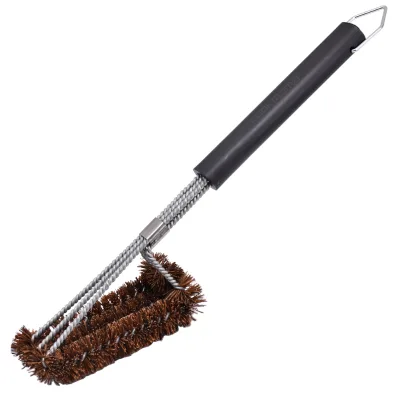
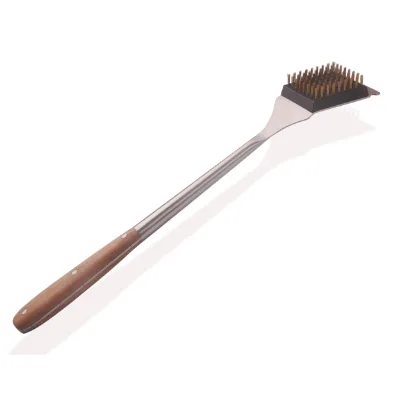

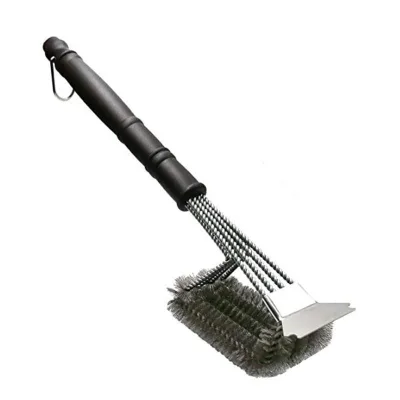
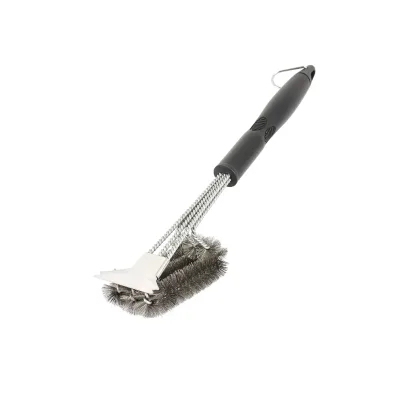


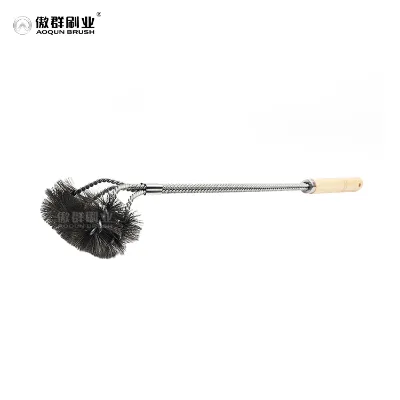


Barbecue Use Grill Brush for Cleaning Barbecue Grill, BBQ Cleaning Tool
$0.66 - $1.68
MOQ: 1000 Pieces

Heat-Resistant Grill Brush for Barbecue, Bristle Free BBQ Cleaning Brush
$3.05 - $3.38
MOQ: 1000 Pieces
Comprehensive Sourcing Guide
Strategic Sourcing Guide for Barbecue Cleaning Brushes
Understanding Product Variants and Technical Specifications
The global market for barbecue cleaning brushes presents a diverse array of products, ranging from manual bristle brushes to specialized tool sets. When initiating a procurement strategy for this category, the first critical step is defining the specific technical requirements based on the intended application. The observed product landscape includes items explicitly categorized as "Barbecue Cleaning Brush" and "BBQ GRILL cleaning brush," indicating a primary function focused on outdoor cooking surfaces. However, the technical specifications vary significantly between individual listings, necessitating a careful review of material composition and structural design.
Material selection is a primary differentiator in this sector. Analysis of available data reveals that bristle composition is a critical factor, with "Bristle" and "Nylon" listed as distinct material options. Nylon is often preferred for its heat resistance and durability against high temperatures, whereas natural bristles may offer different cleaning characteristics. Furthermore, the handle and structural components are frequently constructed from "Stainless Steel" or general "Metal," ensuring longevity in harsh outdoor environments. The "Wire Material" attribute suggests that some products may utilize wire bristles, which require specific safety considerations regarding potential shedding.
Physical dimensions and form factors also play a pivotal role in usability. The product attributes indicate a "Long" shape, which is essential for maintaining a safe distance from high-heat grills. Standard dimensions are not uniform; one specification lists a size of "21088102MM," while another notes "Multi-size" availability. Buyers must verify if the specific model number, such as "CBB-20A" or "ZX50507P7," aligns with their operational needs. Additionally, the presence of a "20V" battery attribute in some listings suggests the existence of electric or battery-operated variants, which differ fundamentally from manual tools in terms of power source and maintenance.
Compliance, Certification, and Safety Standards
In the realm of food-contact equipment, compliance and safety are paramount. While the supplied data does not explicitly list specific certification bodies (such as FDA or LFGB), the application of these brushes to "Food&Drinks" and "Wooden Furniture" implies a need for rigorous safety verification. Procurement teams must ensure that any bristle material, particularly nylon or wire, is certified as food-safe and non-toxic. The risk of bristle shedding is a well-documented hazard in the industry; therefore, verifying that the product features "Welded" construction or secure bristle attachment is essential to prevent contamination of food products.
The "Condition" of the product is listed as "New," which is a baseline requirement for all B2B transactions, but the "Finishing" process also warrants attention. One observed attribute notes "Not Coated," which may impact the corrosion resistance of metal components. For products intended for repeated exposure to moisture and cleaning agents, a coated finish or high-grade stainless steel is typically required to prevent rust. Buyers should request documentation confirming that the materials used meet international food safety standards, even if the specific certification is not immediately visible in the product listing.
Furthermore, the "Standard" attribute in the data refers to dimensions (e.g., "21088102MM") rather than regulatory standards. This distinction is crucial for procurement professionals. Regulatory compliance regarding food contact materials is distinct from physical product standards. Buyers must explicitly ask suppliers for test reports verifying that the bristles and handles do not leach harmful substances when exposed to heat or cleaning solvents. The "Heat Resistance" feature listed in multiple entries is a performance claim that must be substantiated by independent testing data, especially for brushes used on high-temperature grills.
Cost Drivers and Pricing Dynamics
The pricing structure for barbecue cleaning brushes is influenced by several variables, including material quality, manufacturing complexity, and order volume. The observed price range in the market spans from $0.10 to $14.90 USD, a wide spectrum that reflects the diversity of product types. The lower end of this range likely corresponds to basic manual brushes with simple nylon or bristle heads and minimal packaging. In contrast, the higher end may encompass tool sets, electric variants with battery components, or premium models featuring specialized handles and enhanced durability.
Order Volume is a significant cost driver, as evidenced by the wide range of Minimum Order Quantities (MOQ) observed, from 1 piece to 30,000 pieces. Suppliers offering an MOQ of 1 piece are typically targeting small retailers or drop-shippers, often at a higher unit cost. Conversely, suppliers with an MOQ of 1,000 or 2,000 pieces are geared toward bulk buyers and wholesalers, offering lower per-unit prices in exchange for volume commitment. The "Selling Units" attribute, which sometimes specifies "Single item," further indicates that pricing models can vary between single-unit sales and bulk packaging.
Packaging also impacts the final cost. The data shows variations between "Color Box" and "OPP" (polypropylene) packaging. Color boxes generally add to the manufacturing cost but provide better protection and retail presentation, whereas OPP bags are more economical for bulk shipping. Buyers must balance the cost of packaging against the retail requirements of their target market. Additionally, the "Customization" attribute appears in conflicting forms, with some listings offering "Available" customization and others stating "Non-Customized." Customized orders, which may involve branding or specific design changes, typically incur higher setup costs and potentially higher unit prices, but they can offer a competitive advantage in the market.
Typical Applications and Usage Scenarios
The application of barbecue cleaning brushes extends beyond simple grill maintenance. The product attributes explicitly mention usage in "Barbecue Outdoor Cooking," "Barbeque Baking," and "Food&Drinks" preparation. This indicates that these tools are integral to the food service industry, including commercial restaurants, catering services, and large-scale outdoor events. The "Function" of "Easily Cleaned" and "Heat Resistance" suggests that these brushes are designed for high-temperature environments where grease and carbon buildup are common.
In addition to food preparation, the data notes an application for "Wooden Furniture." This suggests a secondary market for these brushes, potentially for cleaning outdoor wooden decks or furniture that may have accumulated debris or grime. However, buyers must exercise caution when marketing a brush for both food and non-food applications. Cross-contamination risks are significant; a brush used on a grill should never be used on furniture, and vice versa. Clear labeling and distinct product lines are necessary to prevent misuse.
The "Type" of product also varies, with some listings classified as "Tools" and others as "Tool Sets." Tool sets often include complementary items such as spatulas or tongs, providing a comprehensive solution for barbecue enthusiasts. These sets are particularly popular in the retail sector, where consumers prefer purchasing complete kits rather than individual components. The "Style" of the product, described as "Modern" in some listings, appeals to consumers looking for aesthetically pleasing kitchenware that matches contemporary outdoor cooking trends.
Supplier Evaluation and Origin Verification
When evaluating potential suppliers for barbecue cleaning brushes, the "Place of Origin" is a critical factor. The data indicates that a significant portion of these products originate from "China," specifically from the "Guangdong" region. Guangdong is a known manufacturing hub for various consumer goods, including kitchen tools. While this location offers access to a robust supply chain and competitive pricing, it also requires diligent due diligence regarding quality control and ethical manufacturing practices.
Supplier reliability can be assessed through their "Customization" capabilities and "MOQ" flexibility. Suppliers offering "Customized" options with a "Yes" status demonstrate a willingness to adapt to buyer requirements, which is valuable for brands seeking private label solutions. However, the presence of conflicting data, such as "Customized: Yes" versus "Customized: Non-Customized," suggests that buyers must verify the specific capabilities of each supplier individually. A supplier that claims customization availability may have limitations on minimum order quantities or design changes.
The "Brand Name" attribute, such as "COOKMAMA," indicates that some suppliers operate under established brands, while others may offer unbranded or generic products. For buyers seeking to build their own brand, unbranded suppliers are preferable. However, working with established brands can sometimes guarantee a baseline level of quality and market recognition. Buyers should also check the "Condition" of the products, ensuring they are "New" and not refurbished or overstocked items, as this affects the perceived value and reliability of the supply chain.
Quality Control and Long-Term Procurement Considerations
Ensuring consistent quality is essential for maintaining customer satisfaction and brand reputation. The "Feature" attributes, such as "Easily Cleaned" and "Heat Resistance," are performance claims that must be validated through rigorous quality control processes. Buyers should request samples to test the durability of the bristles under heat and the structural integrity of the handle. The "Wire Material" and "Bristle" composition should be inspected for signs of wear, shedding, or corrosion after repeated use.
Long-term procurement considerations include the stability of the supply chain and the ability to scale orders. The observed "MOQ" range of 1 to 30,000 pieces suggests that suppliers have varying capacity levels. Buyers should assess whether a supplier can consistently meet demand during peak seasons, such as summer months when barbecue activity is highest. Lead times, while not explicitly provided in the data, are a critical factor in inventory management. Buyers should establish clear communication channels with suppliers to confirm production schedules and delivery timelines.
Furthermore, the "Packing" method, whether "Color Box" or "OPP," should be evaluated for its ability to protect the product during transit. Damaged goods can lead to returns and customer dissatisfaction. Buyers should also consider the environmental impact of their procurement choices, such as the recyclability of packaging materials and the sustainability of the bristle materials. As the market evolves, suppliers who can offer eco-friendly options may gain a competitive edge.
Comparative Analysis of Product Attributes
To facilitate decision-making, the following table summarizes key attributes observed in the product listings, highlighting the variations that buyers must navigate.
| Attribute Category | Observed Variations | Procurement Implication |
|---|---|---|
| Material | Bristle, Nylon, Stainless Steel, Metal | Verify food safety and heat resistance; Nylon often preferred for durability. |
| Model Number | CBB-20A, ZX50507P7, 74425-D, 76041 | Specific models may have unique features; verify compatibility with needs. |
| Dimensions | 21088102MM, Multi-size | Ensure handle length and head size suit the grill type and user preference. |
| MOQ | 1 PCS, 1000pcs, 2000pcs, 30000 | Align order volume with budget and storage capacity; lower MOQs for testing. |
| Packaging | Color Box, OPP | Color boxes for retail; OPP for bulk; affects unit cost and protection. |
| Customization | Available, Yes, Non-Customized | Confirm ability to brand or modify design; check associated costs. |
| Origin | China, Guangdong | Verify supplier reputation and compliance with import regulations. |
| Battery | 20V, 1.5ah | Identify electric vs. manual tools; check power requirements and charging. |
This comparative overview underscores the importance of detailed specification review. By systematically evaluating these attributes, buyers can select products that align with their specific operational requirements, ensuring a successful procurement outcome in the competitive barbecue cleaning brush market.
FAQs
What materials are used for Barbecue Brush bristles?
Bristles are commonly made from Nylon or natural Bristle materials. Some listings also specify Wire Material for specific cleaning needs. Buyers should verify the material composition to ensure it meets food safety standards and heat resistance requirements for their specific application.
Can I find barbecue brushes with custom branding options?
Yes, some suppliers offer customization services for branding and design. However, other listings indicate non-customized options only. Buyers must verify the specific customization availability and minimum order quantities before proceeding with a private label request.
What is the typical minimum order quantity for these brushes?
Minimum order quantities vary significantly, ranging from 1 piece to 30,000 pieces depending on the supplier. Some vendors accept single items for testing, while bulk buyers may face MOQs of 1,000 or 2,000 pieces. Check specific listings for the exact threshold.
How are these cleaning brushes packaged for shipping?
Packaging options include Color Box and OPP bags. Color boxes provide better retail presentation, while OPP bags are more economical for bulk shipping. The choice of packaging often influences the final unit cost and protection level during transit.
Which product models are available for barbecue cleaning?
Available models include CBB-20A, ZX50507P7, and 74425-D. These models feature different specifications such as multi-size options or specific dimensions like 210*88*102MM. Select the model that aligns with your operational requirements and physical constraints.
Are there battery-operated Barbecue Brush options available?
Yes, some listings indicate a 20V battery with a 1.5ah capacity. These electric variants differ from manual tools and require specific power source considerations. Verify the battery specifications and compatibility with your existing equipment before purchasing.