Source PVC Reducer Adapters for Plumbing, Irrigation, and HVAC
Compare 30 listings of PVC Reducer Adapters from suppliers in China. Buyers can review specifications like size, material, and standards to find suitable fittings for plumbing, irrigation, and HVAC applications.
Key considerations
Products List


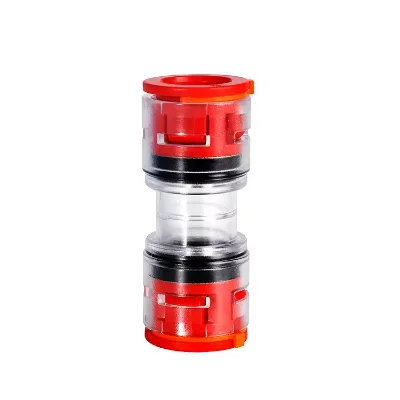
PVC Adaptor UPVC Fittings Plastic Adaptor for Water Supply with Watermark
$0.56 - $1.25
MOQ: 100 Pieces


$0.24 - $0.90
MOQ: 3000 Pieces





Comprehensive Sourcing Guide
Strategic Sourcing Guide for PVC Reducer Adapters
Navigating the global market for PVC Reducer Adapters requires a disciplined approach that balances technical compatibility, regulatory compliance, and supply chain reliability. These fittings, essential for transitioning between pipe diameters in fluid transport systems, are ubiquitous in industrial, municipal, and residential applications. The following guide synthesizes observed market data and technical requirements to assist procurement professionals in making informed decisions without relying on unverified claims or speculative pricing models.
Technical Specifications and Material Compatibility
The foundation of a successful procurement strategy lies in understanding the precise technical specifications of the components. PVC Reducer Adapters are primarily manufactured from rigid plastic materials, specifically Polyvinyl Chloride (PVC) and its chlorinated variant, CPVC. The distinction between these materials is critical, as CPVC offers enhanced thermal resistance compared to standard PVC. Market observations indicate that standard PVC units typically operate within a temperature range of -15°C to 60°C, whereas CPVC variants can withstand higher thermal loads, extending up to 95°C in specific configurations. Buyers must verify the specific polymer grade before finalizing orders, as using standard PVC in high-temperature environments can lead to structural failure.
The geometric design of these adapters is equally significant. The core function of a reducer adapter is to connect pipes of different sizes, and the market offers both concentric and eccentric designs. Concentric reducers maintain a common centerline, which is often preferred for horizontal piping to prevent air pockets, while eccentric reducers are utilized where a flat bottom is required to avoid sediment accumulation. The observed product data highlights specific size configurations, such as transitions from 3/4" to 1/2" or 1" to 3/4", as well as metric ranges spanning 20mm to 63mm. Wall thickness is another vital parameter; many units adhere to Schedule 40 (Sch40) standards, ensuring sufficient pressure ratings for general applications.
Manufacturing techniques also vary, with injection molding and casting being the most prevalent methods observed. Injection molding is typically associated with high-volume production of complex geometries, such as reducing fittings with specific head codes like round or square profiles. Conversely, casting may be employed for larger or custom-engineered components. The connection type is another decisive factor; fittings are available with male or female threads, and the head code—whether round or square—must align with the mating hardware in the existing infrastructure.
Compliance and Certification Verification
In the B2B sector, regulatory compliance is not merely a formality but a prerequisite for market access and liability protection. When sourcing PVC Reducer Adapters, buyers must rigorously verify that suppliers adhere to recognized international and regional standards. The market data indicates a prevalence of certifications such as ISO 9001, which validates the manufacturer's quality management systems. Additionally, specific product standards like CE marking and various national standards, including UK Standards and BS4346, are frequently cited. It is important to note that while some listings mention NBR5648, buyers should confirm the applicability of this standard to their specific regional requirements, as standards vary by jurisdiction.
Certification verification should extend beyond the product itself to the manufacturing process. Suppliers often provide evidence of ISO 9001 certification, but buyers must ensure this is current and covers the specific production facility. The presence of a "Nonstandard" designation in some listings suggests that custom specifications are available, but these items may not carry the same level of pre-verified compliance as standard catalog items. In such cases, the burden of proof shifts to the buyer to request third-party test reports or material certificates.
The color of the fittings can also serve as an indicator of compliance or intended use. While standard colors include grey and white, the market also offers blue, green, and brown variants. These colors often correspond to specific industry standards regarding fluid type (e.g., blue for potable water, green for irrigation). Buyers should confirm that the color coding aligns with local plumbing codes and safety regulations to avoid costly rework or rejection during inspections.
Cost Drivers and Pricing Dynamics
Understanding the cost structure of PVC Reducer Adapters is essential for budgeting and negotiation. The observed price range in the market is exceptionally broad, spanning from $0.03 to $5,000 per unit. This variance is not indicative of a single product but rather reflects the diversity of the category, ranging from small, standard injection-molded fittings to large, custom-cast industrial components. The "Favorable Price" attribute often seen in listings is a relative term and should not be interpreted as a fixed discount without context.
Several factors drive the final cost of these components. Material composition is a primary driver; CPVC is generally more expensive than standard PVC due to the additional processing required for chlorination. Manufacturing technique also plays a role; custom casting or forging processes typically incur higher unit costs compared to high-volume injection molding. Furthermore, the complexity of the design, such as specific head codes or non-standard sizes, can increase tooling and production expenses.
Minimum Order Quantities (MOQ) significantly impact the effective unit price. The market observes MOQs ranging from a single unit to 10,000 units. Suppliers often offer tiered pricing structures where the cost per unit decreases as the order volume increases. For instance, an MOQ of 5 cartons may be the threshold for standard pricing, while larger orders might unlock more favorable terms. Buyers should also consider the impact of packaging; options range from simple plastic bags to customized cartons, and the latter can add to the overall cost. Payment terms, such as T/T or L/C, also influence the financial dynamics, with letters of credit often involving bank fees that affect the total landed cost.
Typical Applications and Industry Use Cases
PVC Reducer Adapters are integral to a wide array of industries, each with unique operational requirements. In the municipal sector, these fittings are commonly used in water distribution networks to manage flow rates and connect different pipe diameters. The ability to handle temperatures up to 65°C makes them suitable for hot water supply lines in residential and commercial buildings. The "Vertical" structure and "Equal" or "Reducing" shapes observed in the market data suggest their utility in complex piping layouts where space is constrained.
Industrial applications often demand higher performance standards. The use of CPVC in these environments allows for the transport of corrosive chemicals and hot fluids that would degrade standard PVC. The working temperature range of -20°C to 65°C for certain grades ensures reliability in fluctuating environmental conditions. In construction, the "Male" and "Female" connection types facilitate quick assembly with threaded pipes, reducing installation time and labor costs. The "Rigid" nature of these fittings ensures structural integrity under pressure, making them ideal for high-pressure fluid transport systems.
The specific model numbers, such as C17 and C07, often correspond to specific industry applications or legacy system requirements. Buyers should match these model numbers to their existing infrastructure to ensure compatibility. The "Concentric" and "Reducing" attributes highlight the versatility of these components in optimizing flow dynamics and minimizing pressure drops in piping systems. Whether for irrigation, chemical processing, or general plumbing, the correct selection of reducer adapters is crucial for system longevity and safety.
Supplier Evaluation and Sourcing Strategy
Selecting the right supplier is a critical step in the procurement process. The market data indicates that suppliers are primarily located in Huangyan, Taizhou, Zhejiang, China, a region known for its manufacturing capabilities in plastic fittings. However, the presence of a specific location does not guarantee quality; buyers must evaluate suppliers based on their production capacity, quality control measures, and track record. The "Sam-UK" brand name observed in the data suggests that some suppliers may operate under specific branding, but buyers should not rely on brand names alone as a proxy for quality.
When evaluating potential suppliers, buyers should request detailed documentation regarding their manufacturing processes. This includes verifying the "Technics" used, such as injection molding or casting, and ensuring they align with the required product specifications. The ability to offer "Customized" solutions is a valuable attribute, allowing buyers to tailor fittings to specific project needs. However, customization often comes with longer lead times and higher costs, so it should be weighed against the benefits.
Logistics and delivery capabilities are also paramount. The observed delivery time of 30 days is a common benchmark, but buyers should confirm this for their specific order volume and customization requirements. The "Place of Origin" and "Port of Entry" (e.g., Ningbo/Shanghai) are critical for calculating freight costs and estimating arrival times. Suppliers with a history of reliable delivery and transparent communication are preferable, as they reduce the risk of supply chain disruptions.
Quality Control and Long-Term Procurement Considerations
Ensuring the quality of PVC Reducer Adapters requires a proactive approach to quality control. Buyers should implement a rigorous inspection protocol that includes visual checks for defects, dimensional verification, and material testing. The "Wall Thickness" of Sch40 should be confirmed through non-destructive testing to ensure it meets the specified standards. Additionally, verifying the "Working Temperature" limits through thermal testing can prevent failures in high-temperature applications.
Long-term procurement considerations involve building a sustainable relationship with suppliers. This includes establishing clear communication channels, agreeing on consistent quality standards, and negotiating favorable payment terms. The "Payment Term" options of T/T and L/C offer flexibility, but buyers should assess the financial implications of each. Furthermore, maintaining a buffer stock of critical components can mitigate the risk of supply shortages.
The "prod_packing" options, ranging from cartons to customized packaging, should be selected based on the shipping requirements and the fragility of the components. Proper packaging ensures that the fittings arrive in pristine condition, reducing the risk of damage during transit. Finally, buyers should stay informed about changes in industry standards and regulations, as these can impact the compliance and usability of the products. By maintaining a vigilant approach to quality and supplier management, buyers can ensure the reliability and efficiency of their PVC reducer adapter procurement.
FAQs
What materials are used for PVC Reducer Adapters?
These adapters are primarily manufactured from rigid PVC and CPVC materials. CPVC variants offer enhanced thermal resistance compared to standard PVC, allowing operation up to 95°C while standard PVC typically handles up to 60°C.
Which manufacturing techniques are common for these fittings?
The most prevalent techniques observed are injection molding and casting. Injection molding is typically used for high-volume production of complex geometries, while casting may be employed for larger or custom-engineered components.
What certifications should I verify for compliance?
Buyers must verify recognized certifications such as ISO 9001, CE, and specific national standards like BS4346 or UK Standards. These documents validate the manufacturer's quality management systems and product adherence to regional regulations.
Can I order customized PVC Reducer Adapters?
Yes, customization is available for specifications, colors, and packaging. Buyers can request specific sizes, head codes, or colors like grey, white, blue, green, or brown, though custom orders may involve longer lead times.
What is the typical delivery time for these products?
The standard delivery time is approximately 30 days from order confirmation. This duration may vary based on order volume, customization requirements, and the specific logistics route from the manufacturing origin in China.
Which size ranges are available for these adapters?
Available sizes include transitions like 3/4 inch to 1/2 inch and metric ranges from 20mm to 63mm. Many units adhere to Schedule 40 wall thickness standards to ensure sufficient pressure ratings for general applications.