Source Bathroom Accessory Set for Hotel, Home, and Commercial Use
Explore 30 options for a bathroom accessory set, including zinc alloy and ceramic designs. Compare modern styles, polished finishes, and customization features for household or commercial applications. Select from various sets that include towel bars, soap dishes, and robe hooks to meet specific project needs.
Key considerations
Products List


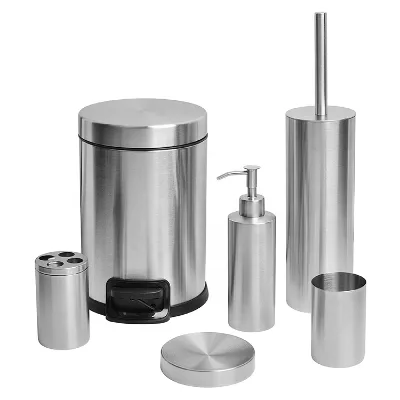


Comprehensive Sourcing Guide
Bathroom Accessory Set Sourcing Guide
Buyers must first distinguish between commercial-grade zinc alloy units and household ceramic options, as the supplied data indicates distinct material profiles for different market segments. The observed listings reveal that commercial applications often utilize polished zinc alloy with specific model numbers like 18700-C, while household and hotel settings frequently feature ceramic sets in colors such as pink or brushed nickel. Understanding this material divergence is critical because it dictates the durability requirements and aesthetic compatibility for the intended installation environment.
Procurement teams should also evaluate the customization capabilities listed in the product attributes, which range from logo acceptance to custom shape and color support. The data confirms that many suppliers offer flexible design options, including customized logos and shapes, which allows buyers to align the accessory sets with specific brand identities or interior design themes. This flexibility is particularly valuable for hotel chains or large commercial projects that require uniform branding across multiple locations, ensuring that the final product meets both functional and marketing objectives.
Product Scope and Observed Listing Signals
The observed product scope encompasses a wide variety of configurations, including complete sets that feature towel bars, rings, soap dishes, robe hooks, and paper holders. Some listings specifically highlight three-piece sets or combinations that include soap dispensers, indicating that buyers can source either comprehensive packages or modular components depending on their inventory needs. The presence of both "Commercial" and "Household" usage tags suggests that the market offers versatile solutions capable of withstanding high-traffic environments while maintaining the aesthetic appeal required for residential spaces.
Listing signals also reveal significant variation in packaging standards, ranging from simple poly bags to standard export cartons and plywood boxes. These packaging differences often correlate with the product's fragility and the intended shipping destination, with ceramic items requiring more robust protection than metal fixtures. Buyers should carefully review the packing specifications for each model, such as the "1PC/ Poly Bag+Brown or White Box" format, to ensure that the logistics plan accounts for potential damage during transit and that the unboxing experience aligns with the product's premium positioning.
Technical Specifications to Verify
Technical verification must begin with the material composition, as the data explicitly lists both zinc alloy and ceramic as primary materials for these accessory sets. Buyers should confirm the specific alloy grade for metal components to ensure resistance to corrosion in humid bathroom environments, while ceramic items require inspection for glaze integrity and chip resistance. The surface treatment of polished finishes is another critical specification, as it affects both the visual appeal and the ease of cleaning, making it essential to request physical samples to validate the quality of the polish before placing large orders.
Dimensional and model specifications are equally important, with observed listings citing specific model numbers like 11800-G and WBC0577D alongside standard dimensions such as 64278. Since some suppliers indicate that sizes can be customized, buyers must verify the exact tolerances and mounting requirements for their specific installation sites. The "One Set" standard mentioned in some listings implies a complete unit, but procurement teams should clarify whether this includes all necessary mounting hardware and if the dimensions match the intended wall spacing to avoid installation failures.
Compliance and Safety Documentation
While the supplied facts do not explicitly confirm specific certification statuses, buyers should request documentation proving that the products meet relevant safety and environmental standards for the target market. The observation of "Eco-Friendly" features in some listings suggests that certain manufacturers may adhere to stricter environmental guidelines, but this claim requires verification through independent testing reports or supplier declarations. It is prudent to ask for material safety data sheets (MSDS) to ensure that the finishes and coatings used on the zinc alloy or ceramic do not contain hazardous substances that could violate local regulations.
Safety documentation should also address the structural integrity of the mounting systems, particularly for commercial applications where heavy usage is expected. Buyers must ensure that the suppliers provide evidence of load-bearing capacity tests for items like towel bars and robe hooks, as these components are subject to significant stress. Although specific certification marks like CE are mentioned in background notes, they should not be assumed without direct confirmation from the supplier, and procurement teams should insist on valid test reports that demonstrate compliance with international safety norms.
Cost Drivers and Commercial Terms
Cost drivers for bathroom accessory sets are heavily influenced by the choice of material, with zinc alloy and ceramic items often commanding different price points based on manufacturing complexity and raw material costs. The observed price range of 0.99 to 60.5 USD reflects this disparity, where basic metal fixtures may be priced lower than intricate ceramic designs or sets with advanced customization features. Buyers should analyze the cost structure relative to the observed Minimum Order Quantities (MOQ), which range from 1 to 3000 units, to determine the most economical order size that balances inventory costs with unit pricing.
Commercial terms also play a significant role in the total cost of ownership, with payment methods like T/T being standard in the observed listings. The flexibility in MOQ allows buyers to test the market with smaller orders, but larger volumes often unlock better pricing tiers and more favorable shipping terms. Procurement teams should negotiate based on the specific customization requirements, as features like custom logos, colors, and shapes may incur additional setup fees that impact the final unit cost and should be factored into the budget planning.
Supplier Qualification and Quality Control
Supplier qualification should focus on verifying the origin and production capabilities, as the data indicates that many products originate from Wenzhou, Zhejiang, and other regions in China. Buyers must assess the supplier's ability to maintain consistent quality across different production runs, especially when dealing with customized designs and colors. The presence of "Customized Logo Acceptable" and "Support Custom Color" attributes suggests that the supplier has the necessary infrastructure for personalization, but this capability must be validated through a rigorous quality control audit of their production lines.
Quality control protocols should include pre-shipment inspections that verify the surface treatment, dimensional accuracy, and packaging integrity of the bathroom accessory sets. Given the variation in packing standards, from poly bags to plywood boxes, it is essential to ensure that the packaging is sufficient to protect the products during international shipping. Buyers should also request samples of the customized items to confirm that the final output matches the approved design specifications, particularly for high-end applications where aesthetic consistency is paramount.
Long-Term Procurement Checks
Long-term procurement success depends on establishing a reliable supply chain that can consistently deliver products meeting the specified technical and aesthetic requirements. Buyers should implement a system for periodic re-verification of supplier performance, focusing on their ability to maintain the "High-End" advantage and "Eco-Friendly" claims observed in the market. Regular audits of the production process will help ensure that the customization capabilities, such as custom shapes and logos, remain consistent and that the quality of materials like zinc alloy and ceramic does not degrade over time.
Sustainability and adaptability are also key factors for long-term partnerships, as the market demand for eco-friendly and customizable products continues to evolve. Buyers should maintain open communication channels with suppliers to stay informed about new material technologies and design trends that could enhance their product offerings. By monitoring the supplier's adherence to standards and their ability to scale production, procurement teams can ensure a steady supply of high-quality bathroom accessory sets that meet the changing needs of their commercial and residential clients.
FAQs
What materials are used for bathroom accessory sets?
Bathroom accessory sets are commonly crafted from zinc alloy or ceramic. Zinc alloy options often feature a polished surface treatment for a modern aesthetic, while ceramic sets provide a durable and eco-friendly alternative. Both materials are suitable for household and commercial applications, ensuring longevity and style in various bathroom environments.
Can I customize the logo on these sets?
Yes, customized logos are acceptable for many bathroom accessory sets. Manufacturers support personalized branding to meet specific business needs. This customization option allows buyers to enhance brand visibility. It is important to confirm the specific logo requirements with the supplier during the ordering process to ensure accurate production and timely delivery.
What is the typical MOQ for these products?
The minimum order quantity varies by product type. For instance, some ceramic sets require an MOQ of 300 units, while other items may have different thresholds. Buyers should check the specific MOQ for each model, as it can range from small quantities to larger bulk orders depending on the manufacturer's policies and production capabilities.
Which sets include robe hooks and paper holders?
Several bathroom accessory sets include robe hooks and paper holders as part of their configuration. For example, zinc alloy sets often feature these items alongside towel bars and rings. Ceramic sets may also offer similar combinations. Buyers should review the specific set contents to ensure the included accessories match their functional requirements and design preferences.
Are these sets suitable for commercial use?
Yes, many bathroom accessory sets are designed for commercial use. Zinc alloy and ceramic options are frequently marketed for both household and commercial applications. Their durable construction and modern styles make them ideal for hotels and public facilities. Buyers should verify the specific usage recommendations with the supplier to ensure suitability for their intended environment.
What packaging options are available for these sets?
Packaging options typically include standard export cartons, plywood boxes, or individual poly bags with brown or white boxes. The specific packaging depends on the product model and manufacturer. Buyers should confirm the packaging details to ensure safe transit and compliance with their storage or retail requirements. Custom packaging may also be available for larger orders.