Source Bath Set for Home, Hotel, and Gift Giving Needs
Compare 30 available Bath Set options featuring ceramic materials, custom designs, and eco-friendly features. Buyers can evaluate specifications like thermostatic faucets, square shapes, and various packing styles from Chinese manufacturers.
Key considerations
Products List
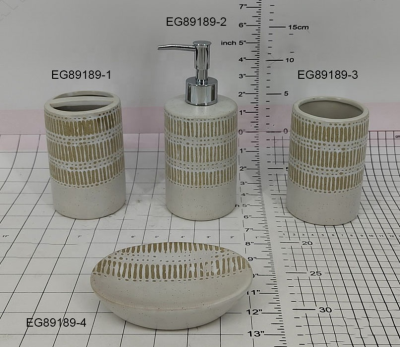


Modern 4 Piece Bath Set White Ceramic Bathroom Sets for Bath and Hotel
$2.00 - $12.00
MOQ: 1000 Pieces

Luxury New Home Decorative Designed Bathroom Set Ceramic Bath Set for Home
$2.00 - $12.00
MOQ: 1000 Pieces


Comprehensive Sourcing Guide
Strategic Sourcing Guide for Bath Set Procurement
Navigating the global market for bath sets requires a disciplined approach that balances aesthetic customization with rigorous technical verification. For procurement professionals, the core keyword "Bath Set" encompasses a diverse range of products, from complete bathroom fixture collections to coordinated accessory sets. The supply landscape is characterized by significant variability in material composition, finishing processes, and customization capabilities. Buyers must distinguish between general market observations and verified product attributes to mitigate risk. This guide outlines the essential factors for sourcing bath sets, focusing on the specific data points available in current market listings while adhering to strict evidence-based procurement standards.
Material Composition and Structural Integrity
The foundation of any Bath Set procurement strategy lies in the verification of material composition. In the current market, ceramic is a dominant material for bathroom accessories and sets, offering durability and a classic aesthetic. Listings frequently identify the primary material as ceramic, which is suitable for items such as soap dishes, dispensers, and toothbrush holders. However, buyers must not assume that all bath sets are exclusively ceramic; the term often applies to mixed-material collections where metal fixtures accompany ceramic accessories.
When evaluating material quality, the distinction between "non-disposable" and disposable items is critical. Bath sets intended for long-term use in residential or hospitality environments must be classified as non-disposable. This classification ensures that the product possesses the structural integrity to withstand repeated cleaning cycles and daily wear. The material selection also dictates the surface finishing process. Common finishes observed in the market include chrome plating and polished treatments, which provide a reflective, hygienic surface. Other processes, such as painting, may be applied to specific components, requiring verification of paint adhesion and resistance to moisture.
Buyers should verify the specific alloy or ceramic grade used in the product. While "ceramic" is a standard descriptor, the density and firing temperature of the ceramic can vary significantly between suppliers. For metal components, the thickness of the chrome plating is a key indicator of corrosion resistance. Procurement teams must request technical data sheets that specify the material grade and the thickness of any surface treatments to ensure the product meets the longevity requirements of the intended application.
Technical Specifications and Customization Parameters
Technical specifications for bath sets are highly variable, often driven by the buyer's need for customization. The market supports a wide range of customizations, including shape, color, and logo placement. Standard shapes observed include square and classic designs, while modern styles are also prevalent. Color options typically encompass black, blue, and white, but the ability to support custom colors is a significant differentiator for bulk orders.
Customization extends beyond aesthetics to functional dimensions. Specifications such as "100ml" for dispensers or specific dimensional ranges like "675570" for sets indicate that products can be tailored to specific volume or spatial requirements. The "customized any size" standard suggests flexibility in manufacturing, allowing buyers to adjust dimensions to fit unique bathroom layouts. However, this flexibility requires precise communication of requirements to avoid production errors.
The production model numbers, such as "JBL26059" or "WBP0218A," serve as unique identifiers for specific product configurations. These codes often correspond to specific sets of components, such as a "Four-Piece Set" or a "Ceramic Bathroom Set." Buyers must ensure that the model number selected aligns with the exact components required, such as a soap dish, soap dispenser holder, and other matching accessories. The unit of measurement is typically defined as "1 Set," which simplifies inventory management but requires clear definition of what constitutes a complete set in the purchase order.
Compliance, Certification, and Safety Standards
Compliance and certification are paramount in the bathroom fixture industry, where products are exposed to constant moisture and potential chemical exposure from cleaning agents. While general market data may reference certifications like CE, buyers must treat such references with caution. A mention of a certification in a general context does not guarantee that a specific batch of goods is certified. Procurement teams must request valid, current certification documents for the specific products being ordered.
Safety standards for bath sets often relate to the materials used and the surface finishes. For instance, chrome plating must be free of heavy metals that could leach into water or cause skin irritation. Ceramic products must be non-porous to prevent bacterial growth. Buyers should verify that the supplier adheres to relevant international safety standards for bathroom fixtures, such as those governing water contact materials and surface durability.
In the absence of specific test results in the provided data, buyers should insist on third-party testing reports. These reports should cover lead content, durability of the finish, and resistance to thermal shock for ceramic components. The "Eco-Friendly" feature observed in some listings suggests a potential alignment with environmental standards, but this claim requires substantiation through verified lifecycle assessments or material safety data sheets. Procurement contracts should explicitly state the required certifications and the consequences of non-compliance to ensure accountability.
Cost Drivers and Pricing Dynamics
The pricing of bath sets is influenced by a complex interplay of factors, including material costs, customization levels, and order volume. The observed price range in the market spans from $0.30 to $69.90, reflecting the vast diversity in product complexity and quality. Lower-priced items typically represent basic ceramic accessories with standard finishes and minimal customization. Higher-priced items often involve complex designs, premium materials, or extensive custom branding.
Order volume is a primary driver of unit cost. The Minimum Order Quantity (MOQ) ranges from 1 to 5000 units, indicating that suppliers cater to both small-scale retailers and large-scale distributors. Buyers purchasing in smaller quantities may face higher per-unit costs due to the setup costs for customization. Conversely, large orders can leverage economies of scale, but they require significant capital commitment and storage capacity.
Customization adds a layer of cost complexity. Accepting a customized logo, shape, or color typically incurs additional fees for mold creation, design work, and setup. The "Customized Logo Acceptable" and "Support Custom Color" attributes highlight that these services are available but not free. Buyers must factor in these variable costs when budgeting for a project. Additionally, the packing method, whether standard export cartons, plywood boxes, or brown color boxes, can impact the final landed cost due to differences in material and shipping volume.
Supplier Evaluation and Operational Capabilities
Evaluating suppliers requires a focus on their operational capabilities and geographical location. The majority of Bath Set manufacturers are located in China, with specific hubs in Zhejiang and Guangzhou. These regions are known for their established manufacturing ecosystems and supply chain efficiency. However, the "Place of Origin" and "Prod Origin" must be verified to ensure the products are sourced from the intended facilities.
Production lead times are a critical operational metric. Suppliers indicate a production window of "Within 30 Days," which is a standard benchmark for customized orders. Buyers must confirm this timeline during the negotiation phase, as delays can disrupt project schedules. The ability to handle "Customized Stock" suggests that suppliers can manage inventory flexibly, but this requires clear communication regarding delivery dates.
Supplier reliability is further assessed by their ability to meet specific packing and shipping requirements. The variety of packing options, from "Normal Carton" to "Plywood Box," indicates that suppliers have the infrastructure to protect goods during transit. Buyers should evaluate the supplier's experience with international shipping standards, particularly for fragile items like ceramic sets. The "Standard Export Carton" specification implies a baseline level of protection, but high-value or fragile items may require reinforced packaging solutions.
Quality Control and Inspection Protocols
Quality control (QC) is essential to ensure that bath sets meet the specified standards and aesthetic requirements. Given the "Non-Disposable" nature of the products, QC must focus on durability and finish consistency. Inspections should verify the absence of cracks, chips, or glaze defects in ceramic components. For metal parts, checks should confirm the uniformity of the chrome or polished finish and the absence of corrosion or plating defects.
Visual inspection is particularly important for customized items. Buyers must ensure that the "Customized Logo" is printed or embossed correctly, with clear alignment and legibility. The "Accept Customized Designs" attribute means that the final product must match the approved design specifications exactly. Any deviation in shape, color, or dimension must be addressed before shipment.
Third-party inspection services are recommended for large orders to provide an unbiased assessment of quality. These inspections should cover random sampling based on accepted statistical standards, such as AQL (Acceptable Quality Limit). The inspection report should document any defects found and provide a recommendation for acceptance or rejection. Buyers should also verify the "Stock" status to ensure that the inventory available matches the order requirements, preventing delays caused by stock shortages.
Long-Term Procurement and Application Strategy
The long-term success of a Bath Set procurement strategy depends on aligning the product with its intended application. Bath sets are commonly used in "Home," "Hotel," and "Household" settings, with some applications extending to "Gift Giving." The choice of product must reflect the specific demands of these environments. For example, hotel-grade sets may require higher durability and resistance to heavy use, while home sets might prioritize aesthetic variety.
The "Unisex" and "Adult" age group specifications indicate that these products are designed for general adult use, making them suitable for a wide range of residential and commercial applications. The "Thermostatic Faucets" function mentioned in some listings suggests that bath sets may include functional fixtures, not just accessories. Buyers must ensure that any functional components meet the necessary performance standards for water temperature control and safety.
Sustainability is becoming an increasingly important factor in procurement. The "Eco-Friendly" feature observed in the market aligns with growing demand for environmentally responsible products. Buyers should explore suppliers who prioritize sustainable manufacturing practices, such as energy-efficient firing processes for ceramics or the use of recyclable packaging materials. Long-term contracts should include clauses that encourage continuous improvement in sustainability metrics.
Comparative Analysis of Product Attributes
To facilitate decision-making, buyers can compare key attributes across different product listings. The following table summarizes the observed variations in material, customization, and application:
| Attribute | Observation 1 | Observation 2 | Observation 3 |
|---|---|---|---|
| Material | Ceramic | Ceramic | Ceramic |
| Customization | Available | Customized Logo Acceptable | Support Custom Color |
| Usage | Home | Home, Hotel | Household |
| Shape | Customized Shape | Square | Classic/Modern |
| Packing | Standard Export Carton | Plywood Box | Brown Color Box |
| Origin | China (Mainland) | Zhejiang, China | Guangzhou |
| Feature | Eco-Friendly | - | - |
This comparison highlights the need for precise specification when placing orders. While the core material remains consistent, the variations in usage, shape, and packing require careful selection to match the buyer's specific needs. Buyers should use this framework to validate that the selected product meets all functional and aesthetic requirements before finalizing the purchase.
Conclusion
Sourcing bath sets requires a meticulous approach that prioritizes verified data over general market assumptions. By focusing on material integrity, technical specifications, and supplier capabilities, procurement professionals can secure high-quality products that meet their specific requirements. The variability in customization options and pricing necessitates clear communication and rigorous quality control. As the market continues to evolve, maintaining a disciplined, evidence-based strategy will ensure successful procurement outcomes and long-term supplier relationships.
FAQs
What materials are used for bath sets?
The primary material used is ceramic, offering durability for home and hotel use. These sets are non-disposable and designed for long-term daily wear in residential or commercial environments.
Can I customize the logo and design?
Yes, customized logos and designs are acceptable for these bath sets. Buyers can request specific shapes and colors, including black, blue, or white, to match their branding needs.
What is the production lead time?
Production typically occurs within 30 days for customized orders. This timeline applies to standard export cartons or plywood boxes depending on the specific packing requirements of the order.
Which sizes are available for bath sets?
Standard sizes include 100ml for dispensers and 67*55*70 for sets, though any size can be customized. The unit is sold as one set, often including items like soap dishes and holders.
Where are the manufacturers located?
Manufacturers are located in China, specifically in Zhejiang and Guangzhou regions. These hubs provide established supply chains for ceramic bathroom sets and fixtures with chrome or polished finishes.
What is the minimum order quantity?
The minimum order quantity ranges from 1 to 5000 units depending on the supplier. This flexibility allows buyers to source small batches or large volumes for wholesale distribution.
Are these bath sets suitable for hotels?
Yes, these sets are suitable for home, hotel, and household applications. They are designed as non-disposable items with eco-friendly features and can be used for gift giving or daily use.