Source Bias Tubeless Off-Road Mud Tire for Trucks, SUVs, and ATVs
Compare 30 listings for Bias Tubeless Off-Road Mud Tire options featuring radial and bias beltled designs. Buyers can review specifications like tire width, diameter, and certifications including ECE and DOT for various vehicle applications.
Key considerations
Products List


Lt235/85r16 Lt245/75r16 Lt305/70r16 Lt315/75r16 Mud M+S Offroad Tyre/Tire
$16.00 - $25.00
MOQ: 300 Pieces


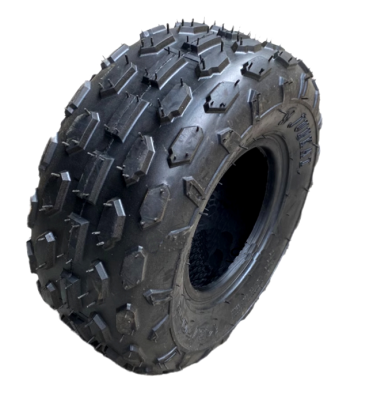


Duraturn Lt245/75r16 Mt off-Road Mud Terrain Tubeless Tyre Are Hot Sale
$30.00 - $55.00
MOQ: 1 container


Comprehensive Sourcing Guide
Strategic Sourcing Guide for Bias Tubeless Off-Road Mud Tires
The procurement of bias tubeless off-road mud tires represents a complex intersection of rugged durability, specific tread engineering, and rigorous compliance verification. Buyers targeting this niche must navigate a market where product attributes often vary significantly between listings, even within the same category. The core keyword "Bias Tubeless Off-Road Mud Tire" implies a vehicle component designed for severe terrain, yet the supplied data reveals a diverse landscape of specifications, certifications, and packaging standards. This guide synthesizes observed market facts with trusted procurement principles to provide a disciplined framework for sourcing these critical automotive parts.
Technical Specifications and Design Architecture
When evaluating bias tubeless off-road mud tires, the primary technical differentiator lies in the tire design and construction method. The supplied data indicates a clear distinction between radial and bias-belted constructions. While radial tires are prevalent in modern passenger car applications, the specific requirement for "bias" tires suggests a need for the robust sidewall strength characteristic of bias-belted designs. The observed product attributes confirm the existence of "Bias Belted Tyre" options alongside "Radial Tyre" listings, necessitating a careful selection process to ensure the buyer receives the intended structural integrity.
The tread pattern is another critical specification. For off-road mud applications, the "Highway Tread Pattern" observed in some listings may be insufficient for deep mud or loose terrain. Conversely, the "Transverse Pattern" noted in the data is often more suitable for self-cleaning and traction in muddy conditions. Buyers must verify that the specific unit selected matches the intended terrain. Furthermore, the diameter specifications vary widely, ranging from 13-14 inches for smaller vehicles to 17 inches, and extending to 22 inches or larger for heavy-duty applications. The width also fluctuates, with observed ranges spanning from 165-195mm up to 225mm, and specific models like the 235/45R20 or 305/45R22 indicating high-performance or heavy-load capabilities.
The inner tube configuration is a frequent point of confusion in this category. The data presents a dichotomy where some products are listed as "Without Inner Tube" (Tubeless) while others explicitly state "Inner Tube" or "Tube." A "Bias Tubeless" tire, by definition, should not require a separate inner tube, yet the presence of "Tube" and "Inner Tube" attributes in the dataset suggests that some suppliers may be listing hybrid configurations or mislabeling tube-type bias tires. Procurement teams must explicitly confirm the "Type" attribute, ensuring it aligns with the "Tubeless" requirement to avoid compatibility issues with the vehicle's rim and inflation system.
Compliance and Certification Verification
Navigating the regulatory landscape for off-road tires requires a meticulous review of certification marks. The supplied facts list a comprehensive array of certifications, including ECE, CCC, ISO, CE, DOT, RoHS, GS, and FCC. While the presence of these marks is a positive indicator, the buyer must understand their specific applicability. For instance, DOT (Department of Transportation) certification is mandatory for tires sold in the United States, while ECE (Economic Commission for Europe) is required for European markets. The data shows multiple instances of these certifications, but it does not guarantee that every listed product possesses all of them simultaneously.
The "Standard" attribute in the data provides further insight into compliance. Listings reference standards such as "1X2.2M," "LT265/70R18," "235/45R20," and "23.5-25." These codes often correspond to specific industry standards or model designations that dictate the tire's load index and speed rating. For heavy-duty off-road applications, the "LT" (Light Truck) designations like LT265/70R18 and LT245/70R16 are particularly relevant, as they indicate tires built to withstand higher loads and more severe operating conditions than standard passenger car tires. Buyers should verify that the certification documents provided by the supplier match the specific model number and standard code listed on the product.
It is crucial to note that the presence of "FCC" (Federal Communications Commission) in the certification list is unusual for tires, as FCC typically governs electronic devices. This discrepancy suggests that the supplier may be listing a broad range of product certifications or that the data aggregates information from a mixed catalog. Procurement teams must request specific test reports for the tire itself, rather than relying on a generic list of certifications, to ensure the product meets the safety and performance standards of the target market.
Cost Drivers and Pricing Dynamics
The pricing for bias tubeless off-road mud tires is influenced by a complex matrix of factors, including size, material composition, and certification complexity. The observed price range in the market spans from $4.77 to $1,499 USD. This vast disparity highlights the difference between small, light-duty tires and large, heavy-duty off-road units. The lower end of the spectrum likely corresponds to smaller diameter tires or those with simpler construction, while the upper end reflects large-diameter tires (e.g., 22 inches or larger) or specialized heavy-load models.
Material costs play a significant role in pricing. The data identifies "Nylon" as a cord material, which is a standard reinforcement layer in tire construction. However, the quality and density of the nylon, as well as the rubber compound used for the tread, are not detailed in the public listings. Buyers should understand that tires with higher load ratings or specialized mud-tread compounds will command a premium. Additionally, the "Customization" attribute is marked as "Available" for some products, while others are "Non-Customized." Customized tires, which may feature specific tread patterns, sidewall lettering, or unique dimensions, will inherently carry a higher cost due to the setup and production adjustments required.
The "MOQ" (Minimum Order Quantity) is another critical cost driver. The observed range is 1 to 500 units. Some suppliers offer single-unit purchases, which is ideal for prototyping or small fleet replacements, while others require bulk orders, such as "One Container." Ordering a full container can significantly reduce the per-unit cost, but it requires a substantial upfront capital investment and storage capacity. Buyers must balance the unit price savings against the cash flow implications of large MOQs. The "Payment" terms, listed as "Tt/LC" (Telegraphic Transfer / Letter of Credit), also impact the financial structure of the deal, with LCs offering more security for large transactions but potentially incurring banking fees.
Typical Applications and Operational Context
Understanding the intended application is essential for selecting the correct bias tubeless off-road mud tire. The data includes specific model numbers like "23.5-25," which is a common size for heavy machinery, loaders, and mining equipment. These tires are designed for extreme conditions where durability and puncture resistance are paramount. In contrast, models like "235/45R20" or "LT265/70R18" are more typical of SUVs, light trucks, and off-road vehicles used in recreational or light commercial settings.
The "Season" attribute is listed as "All Season Tire," which suggests versatility. However, for dedicated mud applications, buyers should verify that the tire's tread pattern and rubber compound are optimized for wet and muddy conditions, rather than just general all-season performance. The "Kind" attribute identifies some products as "Low Pressure Tire," which is a critical feature for off-road mobility. Low-pressure tires allow for better traction on soft surfaces like sand and mud by increasing the contact patch, but they require specific rim compatibility and inflation management.
The "Condition" is uniformly listed as "New," which is standard for procurement. However, buyers should be aware that "New" does not guarantee the absence of manufacturing defects or storage degradation. The "Spare Tire" attribute varies, with some listings offering "Full-size Spare Tire" options and others noting "Non-Spare Tire." For off-road expeditions, having a matching full-size spare is often a safety requirement, making this a key specification to confirm during the sourcing process.
Supplier Evaluation and Production Capabilities
Evaluating suppliers for bias tubeless off-road mud tires requires a focus on their production capabilities and logistical reliability. The "prod_origin" is consistently listed as "China," indicating that the vast majority of these products are manufactured in Chinese facilities. While China is a global hub for tire manufacturing, buyers must assess the specific factory's capacity to produce bias-belted tires, as this technology is less common than radial construction in some regions.
The "prod_packing" standards vary between "Bulk," "Simple Packaging," and "Standard Packing." For international shipping, "Standard Packing" is generally preferred to ensure the tires are protected from moisture and physical damage during transit. "Bulk" packing might be suitable for large container shipments where individual tire protection is less critical, but it increases the risk of cosmetic damage. The "Delivery Time" is observed to be 7-15 days, which is a relatively short lead time for manufacturing and shipping. However, this timeframe may vary based on the order size and the specific production schedule of the supplier.
The "Sample" attribute is marked as "Ok," indicating that suppliers are generally willing to provide samples for quality verification. This is a vital step in the sourcing process, allowing buyers to physically inspect the tread pattern, sidewall strength, and overall build quality before committing to a large order. Buyers should request samples that match the exact model number and specification of the final order to ensure consistency.
Quality Control and Long-Term Procurement Strategy
Implementing a robust quality control (QC) strategy is essential for mitigating risks associated with off-road tire procurement. Given the wide range of certifications and the potential for attribute inconsistencies (such as the mix of tube and tubeless types), buyers should establish a clear QC protocol. This should include pre-shipment inspections that verify the tire dimensions, tread depth, and certification labels against the purchase order. The "Test Results" and "Performance Claims" are not explicitly detailed in the supplied data, so buyers must request third-party test reports to validate claims regarding durability, traction, and load-bearing capacity.
Long-term procurement considerations involve building a sustainable relationship with suppliers who can consistently deliver high-quality products. The "Customization" availability suggests that suppliers are flexible, which is beneficial for buyers with specific branding or design requirements. However, customization can introduce variability in production times and quality. Buyers should establish clear specifications and quality benchmarks in their contracts to minimize these risks.
The "Lead Time" of 7-15 days is a significant advantage for maintaining inventory levels, but buyers should plan for potential delays due to raw material shortages or logistical disruptions. Maintaining a buffer stock of critical spare tires, especially for off-road operations where downtime is costly, is a prudent strategy. Additionally, buyers should monitor the "MOQ" requirements and negotiate terms that allow for flexible ordering as market demands fluctuate.
In conclusion, sourcing bias tubeless off-road mud tires requires a disciplined approach that balances technical specifications, regulatory compliance, and supplier reliability. By carefully analyzing the observed data and applying rigorous quality control measures, buyers can secure tires that meet the demanding requirements of off-road applications while managing costs and risks effectively. The diversity in the market offers opportunities for tailored solutions, but it also demands a high level of due diligence to ensure the selected products perform as expected in the field.
FAQs
What certifications are required for bias tubeless off road mud tires?
Required certifications include ECE, CCC, ISO, CE, DOT, RoHS, and GS. Buyers must verify that specific model numbers match the certification documents provided by the supplier to ensure compliance with target market regulations.
Which tire design is suitable for bias tubeless off road mud applications?
Bias Belted Tyre designs are suitable for this application, offering robust sidewall strength. While Radial Tyre options exist, buyers must explicitly confirm the design matches the intended rugged terrain requirements.
Can buyers find bias tubeless off road mud tires with inner tubes?
Yes, some listings specify Inner Tube or Tube types alongside tubeless options. Procurement teams must explicitly confirm the Type attribute to ensure the unit aligns with the tubeless requirement and avoids compatibility issues.
How does the MOQ affect the cost of bias tubeless off road mud tires?
MOQ ranges from one unit to one full container, impacting per-unit costs significantly. Ordering a full container reduces the unit price but requires substantial upfront capital and storage capacity for the buyer.
What is the typical lead time for sourcing bias tubeless off road mud tires?
The typical delivery time is 7 to 15 days for manufacturing and shipping. This timeframe may vary based on the specific order size and the production schedule of the Chinese-based supplier.
Which specifications are available for Bias Tubeless Off-Road Mud Tire diameters?
Available diameters range from 13-14 inches up to 22 inches or larger. Specific models include 17-inch options and heavy-duty sizes like 23.5-25 for machinery, requiring careful selection based on vehicle needs.