Source Bidirectional 11kw EV Onboard Charger for cars, buses, and boats
Compare 26 listings for Bidirectional 11kw EV Onboard Charger units with varying power ratings, cooling types, and output voltages. Buyers can review specifications for EV cars, buses, and boats to find suitable options.
Key considerations
Products List

EV Battery Chargers Obc 6.6kw on Board Charger 108V High Voltage 6.6kw Obc Charger
$205.00 - $250.00
MOQ: 2 Pieces

EV on Board Charger 11kw 20kw Electric Vehicle Portable Obc Battery Charger
$205.00 - $250.00
MOQ: 2 Pieces


3.3kw 6.6kw Obc 2-in-1 EV Car Charger 72V 144V 336V 600V Onboard Chargers
$205.00 - $250.00
MOQ: 2 Pieces


Fast Charging 10kw on Board Charger for Electric Boat and Logistics Vehicle
$900.00 - $1500.00
MOQ: 1 Pieces


Landworld Bidirectional 11kw on Board Charger 3kw DC/DC 2 in 1 Integration for EV
$3500.00 - $4100.00
MOQ: 5 Pieces

Landworld Bidirectional 2 in 1 Integration 22kw Onboard Charger 3kw DC/DC for EV
$5300.00 - $5850.00
MOQ: 5 Pieces


3.3kw 48V 72V 96V 144V 312V 540V 650V on Board Charger for Electric Vehicle
$346.80 - $386.30
MOQ: 1 Pieces


Comprehensive Sourcing Guide
Strategic Sourcing Guide for Bidirectional 11kW EV Onboard Chargers
Understanding the Technical Landscape of 11kW Onboard Charging Systems
The core keyword "Bidirectional 11kw EV Onboard Charger" represents a critical component in the modern electric vehicle ecosystem, specifically designed to manage power flow between the grid and the vehicle battery. While the supplied product data indicates a wide spectrum of power ratings ranging from 800W up to 20kW, the 11kW tier is a standard for Level 2 AC charging in many global markets. Buyers must distinguish between unidirectional and bidirectional capabilities, as the latter enables Vehicle-to-Grid (V2G) or Vehicle-to-Home (V2H) functionality, allowing the EV battery to discharge energy back to the grid or a building during peak demand.
The supplied facts highlight that input voltage capabilities vary significantly across listings, with observed ranges including 90VAC~265VAC and specific configurations for 110VAC, 220VAC, and 230VAC. When sourcing an 11kW unit, verifying the input voltage compatibility with the target market's grid infrastructure is the first technical step. The data also notes output voltage options ranging from 48V up to 100V, with specific mentions of 72V and 48V configurations. An 11kW charger typically interfaces with higher voltage battery packs (often 300V to 800V ranges) compared to the lower voltage examples listed, so buyers must ensure the specific model supports the vehicle's battery voltage architecture.
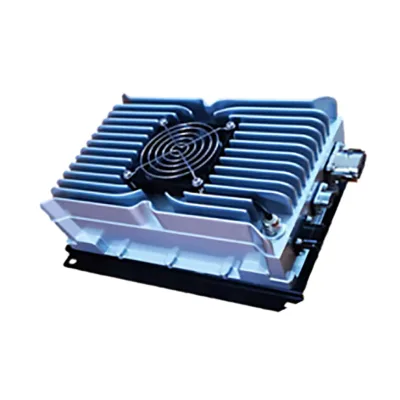
Cooling mechanisms are another vital technical differentiator. The product observations list both "Air Cooling" and "Liquid Cooling" options, with some entries specifying "Force Air Cooling." For an 11kW unit, thermal management is more demanding than for lower wattage chargers. Liquid cooling is generally preferred for higher power densities to maintain efficiency and longevity, whereas air cooling may suffice for lower duty cycles. The buyer must verify the thermal design of the specific 11kW model to ensure it can sustain continuous charging without overheating, especially in hot climates or high-humidity environments.
Compliance and Certification Verification Protocols
Navigating the regulatory landscape is essential for importing EV components. The supplied product facts list several certifications, including CE, MSDS, UN38.3, ISO, and RoHS. These are critical indicators of compliance but require careful validation. CE marking suggests conformity with health, safety, and environmental protection standards for products sold within the European Economic Area. However, buyers should not assume that a single listing's certification covers all jurisdictions; specific regions may require additional local approvals.
The presence of MSDS (Material Safety Data Sheet) and UN38.3 certification is particularly relevant for lithium-ion battery systems, as these documents address the safe transport of hazardous materials. UN38.3 specifically relates to the testing of lithium batteries for transport safety. While the data confirms these certifications are available in the market, the procurement team must request the actual test reports for the specific 11kW model to be sourced. It is crucial to verify that the certification applies to the exact model number and not just a generic product family.
Furthermore, the product data mentions "L294W210H111mm" and other dimensional standards. While these are physical specifications, they often correlate with mounting standards and safety clearances required by local building codes. Buyers should cross-reference the physical dimensions and mounting holes of the selected unit against the installation site requirements. The "IP67" rating mentioned in the data indicates a high level of protection against dust and temporary immersion in water, which is a desirable trait for outdoor or ruggedized charging stations, though the specific application (e.g., indoor garage vs. outdoor parking) will dictate the necessity of this rating.
Cost Drivers and Pricing Structure Analysis
The observed listed price range in the market data spans from 100 to 5850 USD, reflecting the vast diversity of product capabilities, from low-power auxiliary chargers to high-performance industrial units. For an 11kW bidirectional charger, the price will likely fall toward the higher end of this spectrum due to the complexity of the bidirectional power electronics and the associated thermal management systems.
Several factors drive the cost of these units. First, the power rating is a primary determinant; an 11kW unit requires significantly more robust components than a 3.3kW or 6.6kW unit. Second, the cooling method impacts cost; liquid-cooled systems are generally more expensive than air-cooled alternatives due to the need for pumps, radiators, and coolant management. Third, the inclusion of bidirectional functionality adds complexity to the control software and hardware, necessitating more sophisticated circuitry to manage power flow in both directions safely.
The data also notes that "Small Orders: Accepted" and MOQs range from 1 to 100 units. This flexibility suggests that buyers can source samples or small batches without a massive upfront commitment, which is beneficial for prototyping or pilot programs. However, the unit price for small orders may be higher than for bulk purchases. Buyers should also consider the "Mating Connectors Kits: Provided Free" attribute mentioned in the data, as this can reduce the total cost of ownership by eliminating the need to source separate connector hardware.
Typical Applications and Use Case Scenarios
The supplied facts list applications ranging from "EV Car Charing" to "EV/Bus/Boat/Truck." This indicates that the technology is versatile and applicable across various sectors of the transportation industry. For the specific 11kW bidirectional charger, the primary application is likely passenger electric vehicles (EVs) and light commercial vehicles. The ability to charge at 11kW allows for a full charge of a typical EV battery within a reasonable timeframe, making it suitable for overnight home charging or workplace charging stations.
The mention of "Bus" and "Truck" in the application list suggests that similar technology is scaled for larger vehicles, though 11kW may be on the lower end for heavy-duty trucks which often require higher power levels. However, for city buses or smaller electric delivery vans, 11kW bidirectional charging can be highly effective for fleet management, allowing vehicles to stabilize the local grid during peak hours. The "Boat" application also highlights the potential for marine use, where shore power needs to be managed efficiently, and bidirectional capability can support onboard systems when docked.
The data also references "Slow EV Charging Station" as a product type. This aligns with the 11kW rating, which is considered Level 2 charging. Unlike DC fast chargers that deliver power in minutes, 11kW chargers are designed for longer duration charging events, such as those occurring while a vehicle is parked for several hours. This makes them ideal for residential garages, office parking lots, and public parking facilities where dwell time is sufficient to utilize the full charging capacity.
Supplier Evaluation and Quality Control Standards
When evaluating suppliers for 11kW bidirectional chargers, buyers must look beyond the basic product listing. The data indicates that products originate from "China" and specifically "Hunan China," which is a known manufacturing hub for electronics. While this provides access to a robust supply chain, it necessitates rigorous supplier vetting. Buyers should verify the manufacturer's production capacity, quality control processes, and after-sales support structure. The data mentions "12 Months" of after-sales support, which is a standard baseline; however, buyers should negotiate for extended warranty periods or service level agreements (SLAs) that cover critical failure modes.
Quality control should focus on the materials and construction. The "Main Material" is listed as "PC, PA66+GF25%, Copper Alloy," which suggests a robust housing and high-conductivity internal components. Buyers should request material certificates to ensure these specifications are met. Additionally, the "prod_packing" varies from "Wooden Box/Carton" to "Foam & Plywood Case" and "Cotton." Proper packaging is essential to prevent damage during transit, especially for sensitive electronic components. Buyers should specify packaging requirements in the purchase order to ensure the unit arrives in pristine condition.
The "Control Method" is listed as "Can Bus Control/Enable," which is a standard communication protocol for automotive electronics. Buyers must verify that the supplier's implementation of CAN Bus is compatible with the vehicle's existing network architecture. Incompatibility can lead to communication failures, rendering the charger inoperable. Furthermore, the "Efficiency" is noted as 94% in the data. While this is a strong figure, buyers should request efficiency curves or test data for the specific 11kW model to ensure it maintains high efficiency across the entire load range, not just at peak power.
Long-Term Procurement and Integration Considerations
Sourcing an 11kW bidirectional charger is not just a one-time transaction but the beginning of a long-term integration process. The "Output Voltage" options listed (48V to 100V, and up to 540V/72V in other entries) highlight the need for precise matching with the vehicle's battery management system (BMS). Buyers must ensure that the charger's output voltage range aligns perfectly with the battery pack's nominal voltage and maximum charging voltage. Mismatched voltages can lead to inefficient charging or potential damage to the battery cells.
The "Model Number" variations, such as "CTS-OBC," "HE-W-EU-A110," and "LWD3KCB11KC-D14C380/640/750-W," indicate that different models are tailored for specific voltage inputs and applications. For an 11kW bidirectional unit, the model number is a critical identifier. Buyers should select a model that explicitly supports bidirectional flow and matches the required input voltage (e.g., 230VAC or 400VAC three-phase). The "Standard" dimensions provided in the data (e.g., 369x238x98mm) are useful for planning the physical installation space, but buyers must confirm the exact dimensions of the selected model to avoid integration issues.
Finally, the "Small Orders: Accepted" feature allows for a phased procurement strategy. Buyers can start with a small batch to test the units in real-world conditions before committing to a large-scale deployment. This approach mitigates risk and allows for the identification of any unforeseen technical issues. The "Mating Connectors Kits: Provided Free" attribute is also a significant long-term benefit, as it simplifies the supply chain and reduces the total cost of the installation. By carefully analyzing the technical specifications, certifications, and supplier capabilities, buyers can secure a reliable supply of 11kW bidirectional chargers that meet the demands of modern electric mobility.
| Feature Category | Observed Data Points | Procurement Verification Requirement |
|---|---|---|
| Power Rating | 800W to 20kW (Target: 11kW) | Confirm specific 11kW bidirectional model availability. |
| Input Voltage | 90VAC~265VAC, 110/220/230VAC | Verify compatibility with local grid standards (e.g., 230V single-phase or 400V three-phase). |
| Output Voltage | 48V to 100V, 72V, 540V | Match with vehicle battery pack nominal and max voltage. |
| Cooling Type | Air Cooling, Liquid Cooling, Force Air | Select based on thermal requirements and installation environment. |
| Certifications | CE, MSDS, UN38.3, ISO, RoHS | Request valid test reports for the specific model and batch. |
| IP Rating | IP67 | Confirm if required for the intended installation location. |
| Dimensions | Various (e.g., 369x238x98mm) | Verify exact dimensions for mounting and enclosure planning. |
| Control Protocol | CAN Bus Control/Enable | Ensure compatibility with vehicle BMS and communication protocols. |
| Warranty | 12 Months (Standard) | Negotiate extended warranty or service terms if needed. |
| Packaging | Wooden Box, Carton, Foam & Plywood | Specify packaging requirements to prevent transit damage. |
FAQs
What certifications are available for these chargers?
Available certifications include CE, MSDS, UN38.3, ISO, and RoHS. Buyers must verify that these documents apply to the specific 11kW model rather than a generic product family before proceeding with procurement.
Which cooling types are supported for 11kW units?
Options include Air Cooling, Liquid Cooling, and Force Air Cooling. Liquid cooling is generally preferred for higher power densities to maintain efficiency and longevity during continuous charging operations.
Can I order small quantities for testing purposes?
Yes, small orders are accepted with minimum order quantities ranging from 1 to 100 units. This flexibility allows buyers to source samples or small batches without a massive upfront commitment.
What input voltage ranges do these chargers support?
Input voltages vary from 90VAC to 265VAC, with specific configurations for 110VAC, 220VAC, and 230VAC. Buyers must verify compatibility with the target market's grid infrastructure before selection.
How long is the after-sales support period?
Standard after-sales support covers a period of 12 months. Buyers should negotiate for extended warranty periods or service level agreements that cover critical failure modes for long-term reliability.
What is the typical efficiency rating for these units?
The observed efficiency rating is 94%. Buyers should request efficiency curves or test data for the specific 11kW model to ensure it maintains high efficiency across the entire load range.