Source Portable NEMA 14-50 EV Charger for Home, Travel, and Backup
Find and compare 30 Portable NEMA 14-50 EV Charger options featuring quick charge, app control, and IP65/IP66 ratings. Evaluate models like A6 Pro and M16 for home, travel, and backup needs with customizable cable lengths and multiple input voltages.
Key considerations
Products List


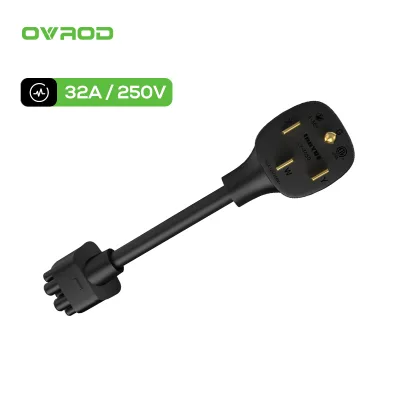

Portable EV Charger NEMA 14 50 7kw CCS2 for Byd EV Charge Cost-Saving IP65
$55.00 - $57.00
MOQ: 50 Pieces


Can This Portable EV Charger Charge Two Evs Simultaneously with Split Cables?
$129.00 - $139.00
MOQ: 50 Pieces


Type 1 Electric Vehicle Charging Portable EV Charger for NEMA 14-50 Plug
$90.00 - $105.00
MOQ: 1 Pieces

Portable EV Charger Box for Electric Vehicle with Type 1 Plug NEMA Outlet 10A
$80.00 - $95.00
MOQ: 1 Pieces

Besen Type1 Portable EV Charger for Electric Vehichle EV Charging Box 10/16A NEMA
$90.00 - $105.00
MOQ: 1 Pieces


Type 1 Portable Charger EV Car Charger with LCD 10/16A NEMA6-20 Standard
$90.00 - $105.00
MOQ: 1 Pieces
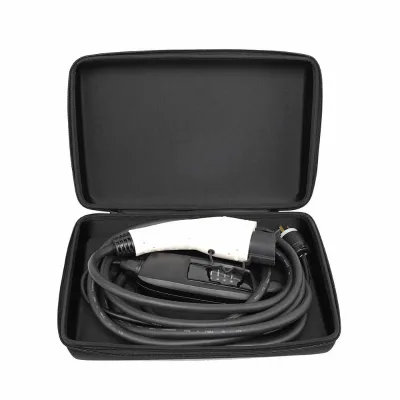

Mobile EV Charger for Electric Vehicle Charging with Easy Operation
$11241.00 - $12500.00
MOQ: 1 Pieces

Versatile Mobile Charger for Electric Vehicles with IP54 Protection
$11241.00 - $12500.00
MOQ: 1 Pieces

Reliable Mobile Charger for Electric Vehicles with IP54 Protection
$11241.00 - $12500.00
MOQ: 1 Pieces

Comprehensive Sourcing Guide
Portable NEMA 14-50 EV Charger Sourcing Guide
Procuring a portable NEMA 14-50 EV charger requires careful evaluation of units designed for flexible installation in private residential settings. The observed market data indicates a strong focus on products labeled for private use, featuring quick charge capabilities and APP control start modes. Buyers must distinguish between models offering single charging interfaces versus those supporting multiple charges from a single pile, as this directly impacts simultaneous vehicle charging capacity.
The supply landscape reveals significant variation in input voltage compatibility, ranging from specific 200-220V inputs to broader AC120V-240V universal ranges. This distinction is critical for ensuring the charger functions correctly with local grid infrastructure without requiring additional transformers. Additionally, the presence of customizable cable lengths and various interface standards, including Type 2, suggests that buyers should prioritize suppliers who can tailor physical dimensions to specific garage or driveway layouts.
Product Scope and Observed Listing Signals
Buyers should verify that the product condition is explicitly listed as new and that the intended purpose aligns strictly with EV charging applications. The observed listings frequently highlight specific materials like TPU and Copper Alloy, which are essential for durability and conductivity in high-current environments. Understanding the distinction between models like the A6 Pro and A2Pro helps in selecting the appropriate unit, as these models may differ in their charging interface configurations and control mechanisms.
The packaging and physical specifications provide early indicators of product quality and logistics requirements. Listings often specify sponge packaging or box packaging with dimensions around 40x30x10cm, which influences shipping costs and storage needs. Furthermore, the weight of approximately 2kg suggests a portable design, yet buyers must confirm if the installation type is truly portable or if it requires permanent mounting, as this affects the final deployment strategy and safety compliance.
Technical Specifications to Verify
Technical due diligence must begin with the output power and current ratings, which vary between 3.5kW and 7kW in the observed market. The input current capabilities, noted as AC16A or 32A, must match the NEMA 14-50 outlet capacity to prevent overheating or tripping breakers. Buyers should also scrutinize the output voltage range, ensuring it supports the specific AC120V-240V requirements of their local electrical system to guarantee safe and efficient energy transfer.
Cable length and interface standard are equally critical technical parameters that define the usability of the charger. While some models offer a standard 5-meter cable, others provide customizable lengths up to 3.5 meters or more, allowing for greater flexibility in vehicle positioning. The interface standard, often Type 2, must be compatible with the vehicle's charging port, and the presence of leakage protection types A and C is a non-negotiable safety feature for high-voltage applications.
Compliance and Safety Documentation
Safety compliance is paramount when sourcing high-power charging equipment, particularly regarding IP ratings and leakage protection mechanisms. The observed data shows a mix of IP65, IP66, and IP55 ratings, indicating varying levels of dust and water resistance. Buyers must verify that the selected unit meets the specific environmental requirements of its intended installation location, whether it is a covered garage or an exposed outdoor area, to ensure long-term reliability.
Documentation regarding frequency and voltage stability is essential for international procurement to avoid equipment failure. The observed frequency range of 50/60Hz suggests broad compatibility, but buyers should confirm that the unit's internal components can handle local grid fluctuations. Additionally, the presence of specific protection features like Type A+C leakage protection must be validated through supplier documentation to ensure the device meets rigorous safety standards for residential use.
Cost Drivers and Commercial Terms
Pricing in this category is influenced heavily by customization options, material quality, and the complexity of the control systems. The observed price range spans from $0.5 to $12,500, reflecting a vast difference between basic cables and fully featured smart charging stations with APP integration. Buyers should analyze whether the higher price points correlate with tangible benefits like remote control capabilities, book charging features, or enhanced durability materials like PC9010.
Commercial terms such as MOQ and lead times are significant factors in the total cost of ownership. The observed MOQ range of 1 to 500 units allows for both small-scale testing and bulk procurement, but buyers must negotiate based on their specific volume needs. Customization requests, such as specific cable lengths or branding, may incur additional costs or extend lead times, so these variables should be clarified before finalizing any purchase agreement to avoid budget overruns.
Supplier Qualification and Quality Control
Supplier qualification should focus on the origin and manufacturing consistency of the products, with Guangdong, China, being a primary hub for these components. Buyers must verify that the supplier can consistently deliver units with the specified materials and electrical ratings, as variations in copper alloy quality or TPU insulation can lead to performance issues. The presence of multiple product models like M16 and T8 indicates a supplier with a diverse portfolio, which can be advantageous for sourcing complementary accessories.
Quality control processes must be explicitly defined to ensure that every unit meets the stated specifications before shipment. Buyers should request evidence of testing for IP ratings and electrical safety, as these are critical for preventing fire hazards and equipment damage. The use of standardized packaging and clear labeling, such as the "Ovrod" brand name, can serve as an initial indicator of a supplier's attention to detail and commitment to maintaining product integrity throughout the supply chain.
Long-Term Procurement Checks
Long-term procurement success depends on establishing a reliable supply chain that can support future maintenance and replacement needs. Buyers should assess the supplier's ability to provide consistent stock of specific models like the A2Pro or M16, ensuring that spare parts and compatible accessories remain available over the product's lifecycle. This foresight is crucial for maintaining operational continuity and avoiding downtime caused by obsolete or unavailable components.
Regular performance audits and feedback loops are necessary to validate that the chargers continue to meet safety and efficiency standards over time. Buyers should monitor the actual performance of the units against the observed specifications, such as the 16A current rating and 3.5kW power output, to identify any degradation or manufacturing drift. Establishing a clear communication channel with the supplier for addressing any quality issues ensures that problems are resolved quickly and that the procurement relationship remains robust.
FAQs
What is the output power of the portable EV charger?
The portable EV charger offers an output power of 3.5kw or 7kw depending on the specific model selected. This power range supports efficient charging for most electric vehicles. The device is designed to handle AC output currents, ensuring compatibility with standard home electrical systems. Buyers should verify the exact power rating required for their vehicle's onboard charger before purchasing.
Can the charger be controlled via a mobile application?
Yes, the charger supports APP control as a start mode for operation. This feature allows users to initiate charging sessions remotely through a smartphone interface. Some models also offer remote control and book charging options for added convenience. This digital integration enhances user experience by enabling scheduled charging and real-time monitoring of the charging process from anywhere.
What is the cable length and material composition?
The cable length is available in 5 meters or customizable options to suit different parking scenarios. The material composition includes TPU and copper alloy for the cable, ensuring durability and efficient conductivity. The housing is made from PC9010 material, providing robust protection against environmental factors. This combination ensures reliable performance and longevity for frequent use in various conditions.
Is the charger suitable for private home use?
Yes, the charger is explicitly designated for private use, making it ideal for home installations. It features a portable installation type with a plug connection for easy setup. The device operates on input voltages ranging from 200-220V or AC120V-240V, fitting standard residential outlets. Its compact design and IP65/IP66 rating ensure safe operation in typical home garage or driveway environments.
What safety protections are included in the charger?
The charger includes leakage protection of Type A+C to ensure user safety during operation. It features an IP65 or IP66 rating, protecting against dust and water ingress. The device supports frequencies of 50/60Hz and handles input currents of 16A or 32A. These safety features help prevent electrical hazards and ensure stable performance when charging electric vehicles in various environmental conditions.
What is the packaging and weight of the unit?
The unit weighs approximately 2kg, making it lightweight and easy to transport. Packaging options include sponge packaging or boxes, depending on the specific model and supplier. The standard package size is around 40*30*10cm, facilitating convenient storage and shipping. This compact packaging ensures the charger remains protected during transit while maintaining its portability for users who need to move it between locations.