Source Bimetallic Injection Molding Screw and Barrel for pipes, bottles, and containers
Find 30 listings for Bimetallic Injection Molding Screw and Barrel designed for pipes, bottles, and containers. Compare specifications like screw diameter, nitrided hardness, and certifications from verified Chinese manufacturers.
Key considerations
Products List


60mm Bimetallic Screw and Barrel for Nanrong Injection Moulding Machine
$1200.00 - $2500.00
MOQ: 1 Sets


High Wear Resistant Screw Barrel Plastic Screw and Barrel Bimetallic Screw Barrel and Barrel
$500.00 - $2000.00
MOQ: 10 Pieces


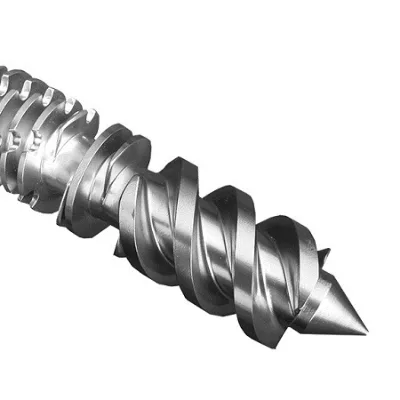


Plastic Single Screw Moulding Machine Bimetallic Twin Screw Barrel for Injection
$500.00 - $5000.00
MOQ: 1 Sets

Bimetallic Single Screw Barrel for Plastic Moulding Injection Extruder Machine
$500.00 - $5000.00
MOQ: 1 Sets
Comprehensive Sourcing Guide
Strategic Sourcing Guide for Bimetallic Injection Molding Screw and Barrel Systems
Understanding Technical Specifications and Performance Metrics
When sourcing bimetallic injection molding screws and barrels, buyers must first distinguish between the specific mechanical configurations and material properties that define high-performance equipment. The core of this component lies in the screw barrel assembly, which is engineered to handle thermoplastic materials with precision. Based on observed market data, the available configurations include single-screw barrels designed specifically for blowing molding machines and injection molding machines. The distinction is critical, as the mechanical requirements for extrusion versus injection molding differ significantly in terms of shear stress and pressure handling.
The dimensional specifications for these components vary widely to accommodate different machine capacities. Observed product models indicate a diameter range spanning from 20mm up to 500mm, with specific standard sizes often cited at 60mm, 75mm, and a broader range of 20mm to 300mm. This variability necessitates that buyers verify the exact diameter required for their specific injection molding press before placing an order. The screw type is predominantly single-screw, which is the industry standard for processing thermoplastics such as PP, PVC, and PE. The plasticizing mechanism typically utilizes a screw type design, ensuring efficient melting and homogenization of the polymer melt.
Surface finish and geometric precision are paramount for the longevity and output quality of the screw. High-performance units often feature a surface roughness of Ra0.4, which minimizes material degradation and ensures smooth flow. Linearity is another critical specification, with observed tolerances as tight as 0.015mm. This level of precision prevents uneven wear and maintains consistent injection volumes over time. The structural design of the barrel system may also vary, with some configurations offering vertical and horizontal composite structures to enhance stability during high-pressure operations.
Compliance, Certification, and Standard Verification
Navigating the regulatory landscape for industrial machinery components requires a rigorous verification of certifications and adherence to international standards. The market data indicates that suppliers often align their products with ISO 9001 standards, with specific references to ISO 9001:2008 and general ISO 9001 compliance. These certifications are essential for verifying that the manufacturing process meets quality management requirements. However, buyers should treat these as observations of supplier claims rather than guaranteed attributes of every listed product.
In addition to quality management systems, functional certifications are frequently cited. Observed listings mention certifications such as CE, BV, SGS, and TUV. These marks suggest that the equipment may meet specific safety and performance criteria relevant to the European market and other international regions. The clamping way associated with these systems can be either mechanical or hydraulic, a distinction that influences the certification path and the operational safety of the molding machine.
Standard compliance is another area where buyers must exercise caution. The observed data lists standards including JIS, DIN, and GB (Guobiao). The presence of these standards indicates that the products are manufactured to meet specific national or regional engineering requirements. For instance, the GB standard is prevalent in the Chinese market, while JIS and DIN are common in Japan and Germany, respectively. Buyers sourcing from China (Mainland) or Wenzhou, Zhejiang, should verify that the specific product batch adheres to the standard required by their local regulatory body. It is imperative to confirm that the "ISO 9001: 2008 approved" status applies to the specific screw and barrel unit being purchased, rather than just the general factory certification.
Cost Drivers and Pricing Dynamics
The pricing structure for bimetallic injection molding screws and barrels is influenced by a complex interplay of material costs, manufacturing complexity, and customization requirements. The observed price range in the market is extensive, spanning from $100 to $50,000 USD. This wide variance reflects the difference between standard off-the-shelf components and highly customized, large-diameter units designed for heavy-duty industrial applications. The base material plays a significant role in cost; observed specifications list 38CrMoAlA and 42CrMo as common base materials. These alloy steels are selected for their hardness and wear resistance, but the cost fluctuates based on the grade and quantity of the alloy used.
Customization is a major cost driver. The availability of customization options allows buyers to tailor the screw geometry, flight depth, and compression ratio to their specific processing needs. However, this flexibility often comes with a premium. The production process involves advanced metallurgical techniques, such as nitriding, which adds to the manufacturing cost. The nitrided layer depth, observed to be between 0.5mm and 0.8mm, and the nitrided hardness, ranging from 900HV to 1050HV, are critical factors that determine the component's lifespan and, consequently, its price.
Packaging and logistics also contribute to the final cost. Products are typically shipped in plywood cases, wooden cases, or wrapped in film with slushing oil to prevent corrosion during transit. The choice of packaging can vary based on the destination and the value of the component. Additionally, the minimum order quantity (MOQ) is observed to range from 1 to 10 units. For buyers requiring a single unit for replacement, the unit cost may be higher due to the lack of economies of scale, whereas bulk orders may benefit from reduced per-unit pricing. Buyers should be aware that the "Standard" packing option may differ from the "Wooden Case" option, impacting both the initial cost and the protection level of the goods.
Typical Applications and Material Compatibility
The versatility of bimetallic injection molding screws and barrels makes them suitable for a wide array of industrial applications. The primary application area is the processing of thermoplastic materials, with specific compatibility noted for PP (Polypropylene), PVC (Polyvinyl Chloride), and PE (Polyethylene). The ability to process these diverse materials depends on the screw's design and the barrel's surface treatment. For instance, the processing of PVC often requires specific screw geometries to prevent degradation, while PP and PE may require different compression ratios for optimal melting.
The type of molding process also dictates the application. The observed data includes products designed for injection blow molding and piston extruder applications. This indicates that the screws are not limited to standard injection molding but are also used in more specialized processes like blow molding. The "Disposable" feature mentioned in some product attributes suggests that certain components may be designed for short-run production or specific disposable item manufacturing, such as medical devices or packaging.
Furthermore, the "Recycle" feature highlights the growing trend of using these screws in recycling applications. Bimetallic screws are increasingly used in the reprocessing of plastic waste, where the wear resistance provided by the nitrided layer is crucial for handling abrasive recycled materials. The application scope extends to various industries, including automotive, packaging, and consumer goods, where high-precision molding is required. Buyers should ensure that the screw's application matches their specific production needs, particularly regarding the type of plastic and the molding process employed.
Supplier Evaluation and Geographic Considerations
Evaluating suppliers for bimetallic injection molding screws requires a focus on geographic origin and production capabilities. The observed data indicates that the majority of these products originate from China, specifically from regions like Wenzhou, Zhejiang. This region is a known hub for machinery manufacturing, offering a competitive advantage in terms of cost and supply chain efficiency. However, buyers must verify the specific location of the manufacturer to ensure they are dealing with a legitimate production facility rather than a trading company.
Supplier evaluation should also consider the automation and computerization levels of the manufacturing process. Products are described as "Automatic" and "Computerized," suggesting that the production of these screws involves advanced CNC machinery and automated quality control systems. This level of automation is essential for maintaining the tight tolerances required for linearity and surface roughness. Buyers should inquire about the specific machinery used and the extent of computerization to gauge the consistency of the product quality.
The structure of the screw barrel is another evaluation criterion. The "Vertical and Horizontal Composite" structure observed in some listings indicates a sophisticated design approach that may offer enhanced durability. Buyers should request detailed technical drawings and structural diagrams to understand how the composite structure contributes to the overall performance of the screw. Additionally, the presence of certifications like CE, BV, SGS, and TUV should be verified through direct communication with the supplier to ensure they are current and applicable to the specific product batch.
Quality Control and Long-Term Procurement Considerations
Quality control is the backbone of a successful procurement strategy for injection molding screws and barrels. The observed specifications for nitrided hardness (900-1050HV) and brittleness (Less Than Grade 1) provide a benchmark for quality. Buyers should insist on test reports that verify these parameters for each batch. The linearity of 0.015mm is another critical quality metric that must be validated through precision measurement tools. Without such verification, the risk of premature wear and production downtime increases significantly.
Long-term procurement considerations involve the balance between initial cost and lifecycle value. While a lower-priced screw may be attractive, the cost of frequent replacements and the associated production losses can outweigh the initial savings. The use of high-quality base materials like 38CrMoAlA and 42CrMo, combined with a robust nitriding process, ensures a longer service life. Buyers should also consider the availability of spare parts and the supplier's ability to provide technical support for maintenance and troubleshooting.
Packaging plays a vital role in preserving the quality of the screws during transit. The use of slushing oil coating and film wrapping in wooden cases is designed to prevent corrosion and physical damage. Buyers should ensure that the packaging method aligns with the shipping conditions and the duration of transit. Finally, the customization options available should be leveraged to optimize the screw for specific production needs, ensuring that the investment yields the highest possible return in terms of product quality and operational efficiency.
FAQs
What certifications do Bimetallic Injection Molding Screw and Barrel suppliers typically hold?
Suppliers typically hold ISO 9001 certifications, including specific versions like ISO 9001:2008. Additional functional certifications such as CE, BV, SGS, and TUV are also frequently observed in product listings to verify safety and performance standards for international markets.
Which specifications define the diameter range for these screw and barrel systems?
The diameter range spans from 20mm up to 500mm, with specific standard sizes often cited at 60mm and 75mm. Buyers must verify the exact diameter required for their specific injection molding press before ordering to ensure compatibility with their machinery.
How is the nitrided layer hardness specified for high-performance units?
The nitrided hardness ranges from 900HV to 1050HV, depending on the specific product configuration. This high hardness, combined with a layer depth of 0.5mm to 0.8mm, ensures durability and resistance to wear during the processing of thermoplastic materials.
Can buyers request customization for these injection molding screw and barrel systems?
Yes, customization is available to tailor the screw geometry and dimensions to specific processing needs. This flexibility allows buyers to adjust parameters like flight depth and compression ratio, though it may influence the final unit cost and lead time.
What base materials are used for manufacturing these screw and barrel assemblies?
Common base materials include 38CrMoAlA and 42CrMo alloy steels selected for their hardness and wear resistance. These materials form the foundation for the bimetallic structure, ensuring the component can withstand the high pressures and shear stresses of injection molding.
Which standards are referenced for the production of these industrial components?
Products are manufactured to meet various standards including JIS, DIN, and GB. The presence of these standards indicates compliance with specific national or regional engineering requirements, which buyers should verify against their local regulatory body needs.