Source Bimetallic Conical Double Screw and Barrel for WPC, PVC, and PE Extrusion
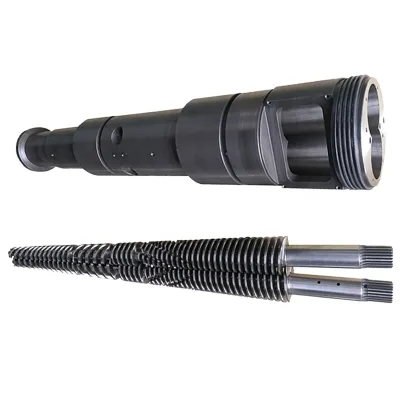
Find and compare 30 listings for Bimetallic Conical Double Screw and Barrel components designed for WPC, PVC, and PE extrusion lines. Evaluate options featuring twin-screw designs, deep screw channels, and various material treatments like nitriding and hard chrome plating to match your specific extruder requirements.
Key considerations
Products List


Great Abrasive Resistance Bimetal Quality Twin Conical Screw and Barrel
$2000.00 - $20000.00
MOQ: 1 Sets


Bimetallic Conical Twin Screw and Barrel for Tube and Plate Extruder
$3000.00 - $5000.00
MOQ: 1 Pieces


Bimetallic Conical Twin Screw Barrel for Rubber Extrusion Applications
$500.00 - $10000.00
MOQ: 1 Pieces


ISO Certified PP&PE High Precision Bimetallic Parallel Twin Screw Barrel
$6000.00 - $20000.00
MOQ: 1 Sets




Comprehensive Sourcing Guide
Bimetallic Conical Double Screw and Barrel Sourcing Guide
Sourcing high-performance extrusion components requires a precise understanding of the mechanical and metallurgical demands placed on twin-screw systems. The Bimetallic Conical Double Screw and Barrel assembly is a critical configuration for processing challenging polymer blends, particularly those involving wood-plastic composites (WPC), polyvinyl chloride (PVC), and other rigid or semi-rigid thermoplastics. Buyers must recognize that this specific geometry combines the mixing efficiency of a twin-screw design with the pressure-building capabilities of a conical profile, making it suitable for applications requiring high shear and uniform dispersion. The "bimetallic" designation indicates that the screw and barrel surfaces are treated with specialized alloys to resist abrasion and corrosion, a necessity when processing filled or corrosive materials.
Procurement decisions for these components should be grounded in verified technical specifications rather than generic marketing claims. The observed market data indicates a wide variance in product models, ranging from specific dimensional codes like 24/52-110/220 to broader categories such as 65/120 or 75mm diameters. This diversity suggests that buyers must align their existing extruder machinery or new production line requirements with exact dimensional and geometric standards. Furthermore, the availability of customization options, including OEM and ODM services, allows for tailored solutions, but it also introduces complexity in quality assurance. Buyers must ensure that any custom modifications do not compromise the integrity of the bimetallic bond or the precision of the screw channel structure, which is often described as a deep screw design for enhanced material throughput.
Product Scope and Observed Listing Signals
The current market landscape for bimetallic conical double screws and barrels reveals a concentration of suppliers originating from China, with products categorized under various industry applications including WPC, SPC, PVC, PP, and PE processing. Listings frequently highlight the use of stainless steel or iron-based materials, processed through casting or forging techniques, and finished with treatments such as nitriding, hard chrome plating, or carburizing. The observed price range is extensive, spanning from approximately $20 to $50,000 USD, reflecting the difference between simple replacement parts and complete, high-precision extruder assemblies. This variance underscores the importance of distinguishing between basic screw elements and fully integrated, computerized extruder systems that may include automatic feeding modes and separate type assembly structures.
Buyers should carefully evaluate the listed standards and certifications to ensure compatibility with their operational environment. Commonly cited standards include JIS, DIN, GB, BS, ANSI, ASTM, and GOST, indicating that suppliers cater to diverse international regulatory and engineering frameworks. The presence of features such as "recycle" attributes and "multiple feed" modes suggests that these components are designed for modern, sustainable manufacturing processes that handle recycled materials or complex multi-input streams. Additionally, the observation of specific model numbers like "BLM" or dimensional standards like 40x40x200 and 25/50~185/340 mm provides concrete reference points for verification. Buyers must cross-reference these identifiers with their technical drawings to avoid mismatches in screw pitch, flight depth, or barrel length, which are critical for maintaining extrusion stability.
Technical Specifications to Verify
Verifying the metallurgical composition and heat treatment processes is paramount when sourcing bimetallic components. The supplied data indicates that materials such as 38CrMoAlA, 40Cr, SKD61, and Sacm645 are commonly used, each offering distinct advantages in terms of toughness, wear resistance, and corrosion protection. Buyers must confirm the specific nitrided case depth, which is observed to range between 0.45 and 0.7 mm, and the resulting surface hardness, often cited as HV 850 to 1000 or HRC values. These parameters directly influence the lifespan of the screw and barrel under abrasive processing conditions. It is essential to request material test reports that validate the hardness gradient and the integrity of the bimetallic layer, ensuring that the coating does not delaminate under high thermal and mechanical stress.
The geometric and mechanical design of the screw assembly also requires rigorous scrutiny. Key attributes to verify include the engagement system, which is often described as "full intermeshing," and the screw channel structure, which may be optimized as a "deep screw" for specific throughput requirements. The assembly structure is frequently noted as a "separate type extruder," implying modular components that facilitate maintenance and replacement. Buyers should confirm the exact dimensions of the conical profile, such as the 24/52-110/220 or 65/120 specifications, and ensure that the exhaust systems and automation features, such as computerized controls, are compatible with their existing plant infrastructure. Misalignment in these technical details can lead to inefficient mixing, excessive wear, or catastrophic mechanical failure during operation.
Compliance and Safety Documentation
Ensuring that the supplied components meet relevant international standards is a critical step in mitigating procurement risk. While specific certification statuses like CE or ISO 9001:2008 are mentioned in background data, buyers must independently verify the current validity of these certifications for the specific supplier and product batch. Compliance with standards such as JIS, DIN, GB, and ANSI is not merely a formality but a guarantee that the manufacturing processes adhere to recognized engineering practices. Buyers should request documentation that proves the components meet the specific safety and performance criteria required by their local regulatory environment, particularly regarding electrical safety for automated systems and mechanical safety for high-speed rotating assemblies.
Documentation should also cover the traceability of materials and the quality control procedures employed during production. Buyers must ensure that the supplier provides certificates of analysis for the raw materials, such as the specified steel grades, and records of the heat treatment processes, including carburizing, nitriding, quenching, and tempering. This level of documentation is essential for maintaining the integrity of the supply chain and for troubleshooting any performance issues that may arise post-installation. Without comprehensive compliance documentation, buyers risk encountering components that do not meet the advertised specifications, leading to production downtime and potential safety hazards in the manufacturing facility.
Cost Drivers and Commercial Terms
The cost of bimetallic conical double screws and barrels is influenced by several factors, including the complexity of the design, the quality of the bimetallic materials, and the extent of customization required. The observed minimum order quantity (MOQ) ranges from 1 to 10 sets, indicating that suppliers are flexible in accommodating both small replacement orders and larger production runs. However, buyers should be aware that lower MOQs may come with higher unit prices, while larger orders might offer economies of scale. The delivery time, typically observed to be between 30 and 45 working days, also impacts cash flow and inventory management, requiring buyers to plan their procurement cycles accordingly.
Commercial terms should be clearly defined to avoid disputes and ensure smooth transaction processes. Buyers must negotiate payment terms, warranty conditions, and liability clauses that protect their interests in case of defects or non-conformance. The packaging method, often described as plywood cases, wooden packages, or wooden cases with anti-rust oil, is a critical consideration for protecting the components during transit, especially given the precision and sensitivity of the bimetallic surfaces. Buyers should specify packaging requirements in the purchase order to prevent damage and corrosion during shipping, and they should verify that the supplier provides adequate insurance coverage for high-value shipments.
Supplier Qualification and Quality Control
Evaluating supplier qualifications is essential to ensure that the sourced components meet the required technical and quality standards. Buyers should assess the supplier's manufacturing capabilities, including their ability to perform precision machining, heat treatment, and bimetallic coating processes. The presence of advanced features such as computerized automation and automatic feeding modes suggests that the supplier has invested in modern production technologies, which can be an indicator of their overall quality management system. Buyers should request evidence of their quality control procedures, including in-process inspections and final product testing, to ensure that the components meet the specified dimensional and metallurgical requirements.
Quality control should also extend to the supplier's ability to handle customization requests. Since many suppliers offer OEM and ODM services, buyers must ensure that the supplier has the engineering expertise to translate their specific requirements into manufacturable designs. This includes verifying the supplier's ability to maintain tight tolerances for screw pitch, flight depth, and barrel diameter, which are critical for the performance of the extrusion system. Buyers should also consider the supplier's after-sales support, including technical assistance and spare parts availability, to ensure long-term operational reliability. A qualified supplier will provide comprehensive support throughout the lifecycle of the product, from initial design to installation and maintenance.
Long-Term Procurement Checks
Establishing a robust long-term procurement strategy for bimetallic conical double screws and barrels requires ongoing monitoring of supplier performance and product quality. Buyers should implement regular audits and performance reviews to ensure that the supplier continues to meet the agreed-upon standards and specifications. This includes verifying that the materials and processes used in production remain consistent over time, and that any changes in design or manufacturing are communicated and approved in advance. Buyers should also track the performance of the components in their own operations, monitoring metrics such as wear rate, maintenance frequency, and production efficiency to identify any potential issues early.
Continuous improvement and relationship management are key to maintaining a successful procurement partnership. Buyers should engage in regular communication with their suppliers to discuss performance data, address any concerns, and explore opportunities for optimization. This may include collaborating on new designs or materials that can enhance the performance and longevity of the components. By fostering a collaborative relationship, buyers can benefit from the supplier's expertise and innovation, leading to improved product quality and reduced total cost of ownership. Long-term procurement checks should also include periodic re-evaluation of the supplier's compliance with relevant standards and certifications, ensuring that they remain aligned with evolving regulatory and industry requirements.
FAQs
What materials are used for Bimetallic Conical Double Screw and Barrel?
The product is constructed from stainless steel, iron, 38crmoala, 40cr, SKD61, and Sacm645. These materials undergo specific heat treatments like carburizing and nitriding to ensure durability and performance in extrusion applications.
Which standards apply to the Bimetallic Conical Double Screw and Barrel?
The equipment complies with JIS, DIN, GB, BS, ANSI, GOST, and ASTM standards. Specific model standards include 24/52-110/220, 65/120, 75mm, and 40x40x200, ensuring international compatibility and quality assurance.
Can the Bimetallic Conical Double Screw and Barrel be customized?
Yes, customization is available with OEM and ODM services accepted. Buyers can request specific configurations to meet unique production needs while maintaining the core bimetallic and twin-screw design features.
How is the Bimetallic Conical Double Screw and Barrel packed for shipping?
The product is packed in plywood cases, wooden packages, or wooden cases with anti-rust oil. This packaging ensures protection during transit and prevents corrosion for the sensitive mechanical components.
What is the lead time for the Bimetallic Conical Double Screw and Barrel?
The delivery time is typically 30 to 45 working days. This timeframe accounts for manufacturing, quality control, and preparation for shipment from the origin in China to the buyer's location.
Which industries utilize the Bimetallic Conical Double Screw and Barrel?
This equipment is designed for the WPC, SPC, PVC, PP, and PE industries. It serves as a granulating or sheet extruder for processing various plastic materials efficiently.
What is the minimum order quantity for the Bimetallic Conical Double Screw and Barrel?
The minimum order quantity is 1 set. This low MOQ allows buyers to test the equipment or purchase small batches without committing to large initial volumes.