Source Black ABS EAS System with Hard Tag for Supermarket Garment Jewelry
Compare 30 listings for Black ABS EAS System with Hard Tag designed for retail security. Buyers can evaluate specifications like detection frequency, material composition, and mounting types across suppliers in China.
Key considerations
Products List







Comprehensive Sourcing Guide
Strategic Sourcing Guide for Black ABS EAS Systems with Hard Tags
Procuring Electronic Article Surveillance (EAS) systems, specifically those utilizing black ABS hard tags, requires a disciplined approach to align technical specifications with operational security needs. The market for these anti-theft solutions is diverse, ranging from retail environments to high-value asset protection in warehouses. Buyers must navigate a landscape where product attributes vary significantly between manufacturers. This guide synthesizes observed market data and technical standards to provide a framework for evaluating black ABS EAS hard tags, ensuring that procurement decisions are grounded in verified facts rather than unverified marketing claims.
Technical Architecture and Material Specifications
The core of a reliable EAS system lies in the physical construction of the hard tag and its compatibility with the detection system. For the specific keyword of "Black ABS EAS System with Hard Tag," the material composition is a primary differentiator. Observed data indicates that the standard material for these units is ABS plastic, a choice driven by its durability, impact resistance, and ability to be molded into precise shapes. The color specification is consistently noted as black, though some suppliers offer customization options for branding or color-coding purposes.
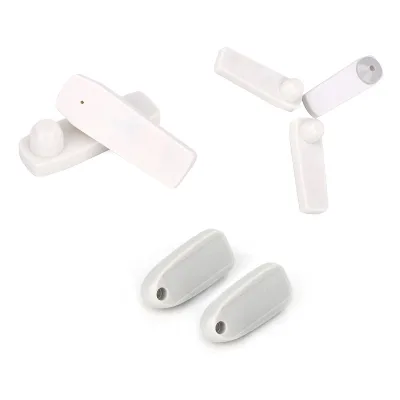
The physical dimensions of the hard tag are critical for both application and detection efficiency. Market observations reveal specific dimension ranges, such as 84x30x19mm for certain models, while others may be smaller, around 47x41mm. The weight of these units also varies; specific product instances show weights of 18.9g and 43.2g, suggesting that the internal mechanism and the size of the tag directly influence the mass. Buyers must verify the exact dimensions against their specific merchandise, as a tag that is too heavy may damage clothing, while one that is too small may be easily concealed or difficult to attach securely.
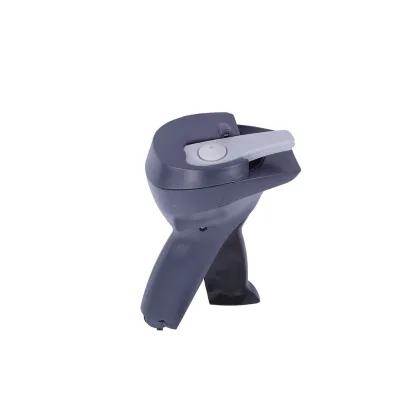
Furthermore, the internal technology of the tag determines its function. The data highlights two primary system designs: AM (Acousto-Magnetic) and RF (Radio Frequency). AM systems typically operate at a frequency of 58kHz, while RF systems function at 8.2MHz. The detection signal for these tags is either Acousto-Magnetic or Radio Frequency, depending on the system architecture. Understanding this distinction is vital, as a tag designed for an AM system will not trigger an alarm in an RF gate, and vice versa. The "hard tag" designation implies a reusable, robust construction, often featuring a locking mechanism that requires a specific remover tool, categorized as either a "Normal" or "Super Tag Remover" in the supply chain.
Compliance and Certification Verification
In the B2B procurement of security hardware, regulatory compliance is non-negotiable. The EAS hard tags and their associated systems must adhere to international safety and environmental standards to ensure marketability and legal operation. Based on available product facts, a robust supplier portfolio typically includes certifications such as RoHS (Restriction of Hazardous Substances), CE (Conformité Européenne), FCC (Federal Communications Commission), and IC (Industry Canada). These certifications indicate that the electronic components within the hard tags do not emit harmful levels of radiation and are constructed without restricted hazardous materials.
Additionally, for markets in China and other regions with specific regulatory frameworks, the CCC (China Compulsory Certification) is a critical standard. The presence of these certifications on product documentation is a strong indicator of a manufacturer's commitment to quality and safety. Buyers should explicitly request certification documents for the specific batch of goods being purchased. It is important to note that while some product listings mention "Certificated" status with these specific acronyms, the verification process must confirm that the certification applies to the exact model number and production batch. For instance, a model like "dyes213bw" or "FT844" may have different certification requirements depending on its specific electronic configuration.
The material standard for the ABS plastic used in the tags is also a point of verification. The standard "Material: ABS plastic" is frequently cited, but buyers should ensure that the specific grade of ABS meets the required fire resistance and mechanical strength standards for the intended application environment. In retail settings, tags are subjected to frequent handling and potential impact; therefore, the material must maintain its structural integrity to prevent the tag from breaking off, which would render the security measure useless.
Cost Drivers and Economic Factors
The pricing of black ABS EAS hard tags is influenced by several variables, including the complexity of the internal mechanism, the certification status, and the volume of the order. The observed market price range for these products spans from $0.01 to $194.85 USD. This wide disparity suggests that the market includes both simple, low-cost tags and highly specialized, integrated systems. The lower end of the spectrum likely represents basic hard tags with standard locking mechanisms, while the higher end may include tags with advanced features, such as integrated displays or specialized locking systems.
The Minimum Order Quantity (MOQ) is another significant cost driver. The observed MOQ range extends from 1 to 10,000 units. For small retailers or those testing a new security system, an MOQ of 1 allows for low-risk procurement. However, larger enterprises seeking to equip multiple locations will benefit from bulk purchasing, where the per-unit cost decreases significantly. The packing specifications also play a role in logistics costs; standard packaging is often 1000 pieces per carton, with a gross weight of 8kg to 16.2kg per carton. Buyers must calculate the total landed cost, including shipping, which is affected by the carton dimensions (e.g., 58x39x24cm or 43x29x25cm) and the weight per unit.
Customization is a key factor that can increase costs. While the standard color is black, the availability of customization options means that buyers requesting specific branding, unique shapes, or non-standard colors will likely face higher unit prices and potentially longer lead times. The warranty period, observed as 2 years in some listings, also impacts the long-term cost of ownership. A longer warranty or a more robust supplier support structure may justify a higher initial investment.
Typical Applications and Operational Context
The versatility of black ABS EAS hard tags makes them suitable for a wide array of retail and commercial environments. The data identifies specific application sectors, including jewelry stores, garment stores, supermarkets, shopping arcades, warehouses, video stores, and bookstores. In jewelry stores, the high value of the merchandise necessitates robust hard tags that are difficult to remove without the proper key. The AM system, with its 58kHz frequency, is particularly effective in these high-security environments due to its sensitivity and ability to distinguish between the tag and the merchandise.
For garment stores and clothing retailers, the weight and size of the tag are critical. A tag weighing 43.2g might be too heavy for delicate fabrics, whereas a lighter 18.9g tag is more suitable. The "Normal" or "Super Tag Remover" requirement ensures that the tags can be efficiently removed at the point of sale while remaining secure during the shopping process. In supermarkets and warehouses, the focus shifts to high-volume throughput and durability. The ABS material provides the necessary resistance to wear and tear associated with high-traffic areas.
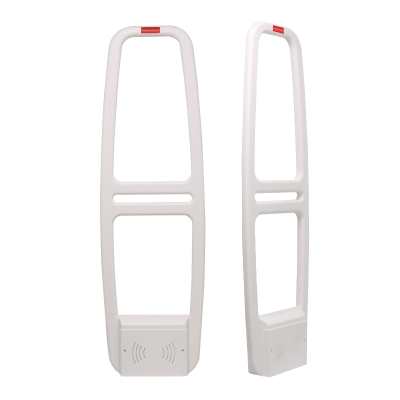
The mounting type is another consideration for application. While the data mentions "Slot-in" for other product types, hard tags for EAS systems are typically attached via a pin mechanism that pierces the merchandise or a clip-on design. The detection distance for these systems is observed to be between 1.2 and 2.0 meters, which is standard for retail exit gates. Buyers must ensure that the tag's detection signal is compatible with the gate's frequency to avoid false alarms or missed detections.
Supplier Evaluation and Quality Control
Selecting the right supplier for black ABS EAS hard tags requires a rigorous evaluation process. Buyers should prioritize suppliers who can provide transparent documentation regarding their production standards and quality control measures. The origin of the products is a key factor; observed data indicates that many of these products originate from China, specifically from regions like Shanghai. While this is a common manufacturing hub, buyers should verify the specific factory location and its track record for producing EAS components.
Quality control should focus on the consistency of the ABS material, the precision of the locking mechanism, and the reliability of the internal electronic components. Suppliers should be able to provide test results or quality assurance reports that confirm the tag's ability to withstand repeated use and environmental stress. The packing standards, such as the 1000 pieces per carton specification, should be consistent to ensure that the logistics chain is not disrupted by damaged goods.
Furthermore, the supplier's ability to support the product lifecycle is crucial. This includes the availability of spare parts, such as tag removers, and the responsiveness of their technical support team. A supplier that offers a 2-year warranty, as noted in some product listings, demonstrates confidence in their product's durability. Buyers should also evaluate the supplier's flexibility in handling customization requests, as this can be a differentiator in the competitive market.
Long-Term Procurement and System Integration
Long-term procurement of EAS hard tags involves more than just purchasing the physical units; it requires a strategic approach to system integration and maintenance. The compatibility of the tags with existing security infrastructure is paramount. Buyers must ensure that the chosen tags, whether AM or RF, are fully compatible with their current gate systems and software. The frequency of 58kHz for AM systems and 8.2MHz for RF systems must match the equipment already in place to avoid costly upgrades.
The scalability of the procurement plan is also important. As a business grows, the demand for tags will increase. A supplier that can handle large order volumes, such as the 10,000 unit MOQ observed in the market, is essential for scaling operations. Additionally, the standardization of the tags across different store locations can simplify training and maintenance. Using a single type of black ABS hard tag with consistent dimensions and locking mechanisms can reduce the complexity of the security system.
Finally, buyers should consider the environmental impact of their procurement choices. The RoHS certification ensures that the tags are manufactured without hazardous substances, aligning with global sustainability goals. The durability of the ABS material also contributes to a longer product lifecycle, reducing waste and the frequency of replacement. By focusing on these long-term considerations, buyers can build a resilient and efficient security system that protects assets while minimizing operational costs.
Comparative Analysis of Tag Specifications
To assist buyers in making informed decisions, the following table summarizes the key specifications observed in the market for black ABS EAS hard tags. This comparison highlights the variations in dimensions, weight, and system design that buyers must consider.
| Specification | Model A (Example) | Model B (Example) | Model C (Example) |
|---|---|---|---|
| Material | ABS Plastic | ABS Plastic | ABS Plastic |
| Color | Black | Black/Custom | Black |
| Dimensions | 84x30x19mm | 47x41mm | 84x30x19mm |
| Weight | 43.2g | 18.9g | 43.2g |
| System Design | AM (Acousto-Magnetic) | RF (Radio Frequency) | AM (Acousto-Magnetic) |
| Frequency | 58kHz | 8.2MHz | 58kHz |
| Detection Signal | Acousto-Magnetic | Radio Frequency RF | Acousto-Magnetic |
| Certifications | CE, RoHS, FCC, IC | CE, RoHS, CCC | CE, RoHS, FCC, IC |
| Warranty | 2 Years | 2 Years | 2 Years |
| Application | Jewelry, Garment, Supermarket | Garment, Supermarket, Warehouse | Jewelry, Garment, Supermarket |
This table illustrates that while the core material and color remain consistent, the internal technology and dimensions vary significantly. Buyers must match these specifications to their specific security requirements and existing infrastructure to ensure optimal performance. By carefully analyzing these factors, procurement professionals can select the most appropriate black ABS EAS hard tags for their organization's unique needs.
FAQs
What certifications do black ABS EAS hard tags typically have?
Black ABS EAS hard tags typically hold RoHS, CE, FCC, IC, and CCC certifications. These standards ensure the electronic components do not emit harmful radiation and are constructed without restricted hazardous materials for global market compliance.
Which frequency systems are used for black ABS hard tags?
Black ABS hard tags operate on either AM systems at 58kHz or RF systems at 8.2MHz. The detection signal is either Acousto-Magnetic or Radio Frequency, requiring the tag to match the specific gate architecture for effective anti-theft performance.
Can buyers customize the color of black ABS EAS hard tags?
Buyers can request customized colors for black ABS EAS hard tags beyond the standard black or gray options. Customization is available but may affect unit pricing and lead times compared to standard stock items with fixed specifications.
What is the typical weight range for these hard tags?
The typical weight for these hard tags ranges from 18.9g to 43.2g depending on the internal mechanism. Heavier tags may be suitable for high-value items, while lighter options are preferred for delicate garments to prevent fabric damage.
How is the packaging quantity defined for bulk orders?
Bulk orders are typically packed at 1000 pieces per carton with a gross weight between 8kg and 16.2kg. Carton dimensions vary, often measuring 58x39x24cm or 43x29x25cm, influencing shipping logistics and total landed costs for international buyers.
Which retail applications are suitable for these hard tags?
These hard tags are suitable for jewelry stores, garment stores, supermarkets, and warehouses. They provide robust protection for high-value merchandise in shopping arcades and video stores while maintaining durability for high-traffic retail environments.